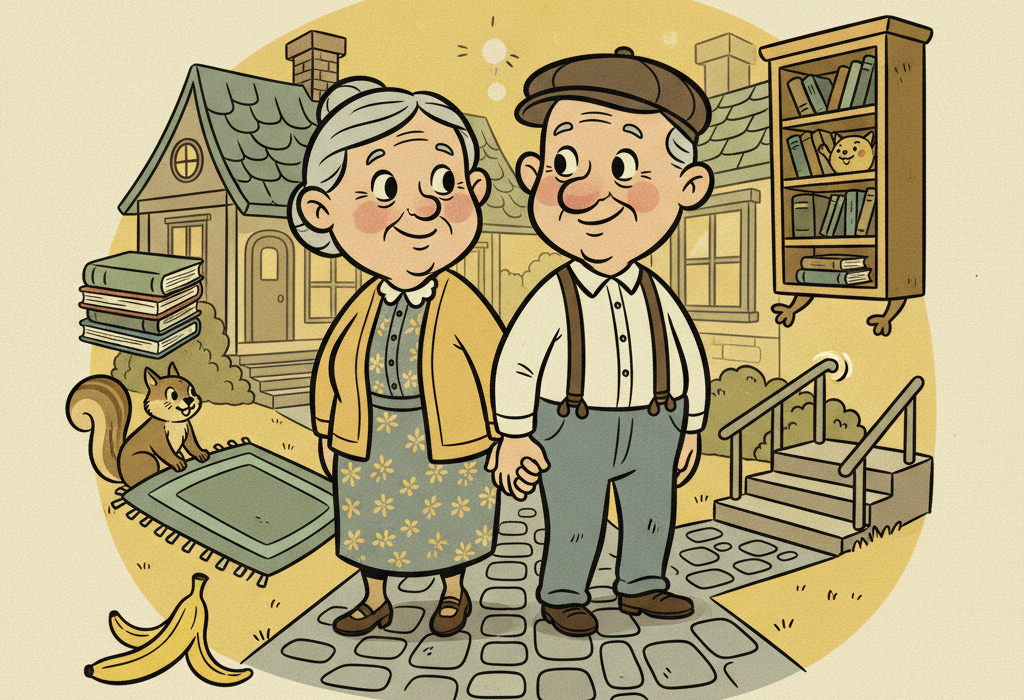
Every year, roughly one in three adults over 65 takes a fall. For many, it’s a life-changing event. Falls are the leading cause of injury-related death in older adults and the number one reason older people end up in emergency rooms. In the United States alone, falls among older adults cost over $30 billion in direct medical expenses annually.
But here’s the part that often gets overlooked: most falls are not random accidents. They result from a buildup of identifiable, often fixable risk factors. Research spanning decades now shows that the right combination of exercise, home modifications, medication reviews, and screening can significantly reduce the chance of falling.
This article breaks down what the science actually says about preventing falls in older adults, from the risk factors doctors look for to the exercise programs with the strongest evidence behind them.
Why Do Older Adults Fall So Often?
Falling is rarely caused by a single thing. It’s almost always the result of multiple factors stacking up at the same time. Researchers group these into two broad categories: intrinsic factors (things happening inside the body) and extrinsic factors (things in the environment).
A 2019 review in Clinics in Geriatric Medicine outlines the most common intrinsic contributors:
- Gait and balance problems. Changes in walking speed, stride length, and coordination are among the strongest predictors of falls.
- Muscle weakness. Sarcopenia (sar-koh-PEE-nee-uh), the age-related loss of muscle mass and strength, affects up to 30% of people over 60 and directly increases fall risk.
- Cognitive impairment. Dementia and even mild cognitive decline raise fall risk. Every one-point drop on the Mini Mental State Examination increases fall risk by about 20%.
- Vision problems. Poor depth perception, reduced contrast sensitivity, and conditions like glaucoma or cataracts all contribute.
- Medications. Taking four or more prescriptions (polypharmacy), especially sedatives, blood pressure medications, or psychotropic drugs, is a well-established risk factor.
- Orthostatic hypotension (or-tho-STAT-ik hy-po-TEN-shun), a sudden drop in blood pressure when standing, affects up to 30% of people over 65.
Extrinsic factors include poor lighting, loose rugs, clutter, slippery surfaces, and ill-fitting footwear. According to a 2007 review in International Nursing Review, environmental hazards are implicated in 33% to 50% of all falls, and most falls happen indoors, particularly in the bathroom, bedroom, and kitchen.
A 1996 review in Bone that examined 52 studies on fall risk factors found something important: the relationship between physical activity and falls is not straightforward. Older adults who are very inactive fall because of weakness and poor balance. But very active older adults can also fall more often simply because they are exposed to more situations where a fall could happen. The key is maintaining activity that specifically targets balance and strength, not just general movement.
What Are the Best Exercises to Prevent Falls?
Exercise is the single most studied and most consistently effective intervention for fall prevention. But not all exercise is equal. The type, intensity, and whether it’s tailored to the individual all matter.
The Otago Exercise Programme
One of the most well-researched fall prevention programs in the world is the Otago Exercise Programme (OEP), originally developed in New Zealand. A 2022 systematic review in Frontiers in Public Health that included 34 studies found that the OEP consistently improves balance, lower limb strength, cognitive function, and fall self-efficacy in older adults.
The OEP consists of four parts:
- 5 minutes of warm-up (head, neck, back, trunk, and ankle movements)
- 5 strength exercises (knee extensions, hip abductions, knee flexions, calf raises, toe raises)
- 12 balance exercises (one-foot stands, figure-eight walking, sideways walking, backward walking, heel-to-toe walking, stair climbing)
- 10 minutes of walking
The program is designed to be done at home, at least three times per week, and gradually increases in difficulty across four levels. In one study cited in the review, the average number of falls per person per year dropped from 1.4 to 0.5 after OEP intervention. Multiple studies found that Berg Balance Scale scores improved significantly (p < 0.001) after 12 weeks.
The OEP also appears to have psychological benefits. Several studies found it reduced fear of falling and improved depression scores, which matters because fear of falling often causes older adults to restrict their activities, creating a downward spiral of deconditioning and increased fall risk.
Tai Chi
A landmark Cochrane review of 62 trials found that a 15-week Tai Chi program reduced the rate of falling by 49% compared to controls (risk ratio 0.51, 95% CI 0.36 to 0.73). Tai Chi is particularly good for challenging balance in a controlled, low-impact way.
Individually Prescribed Home Exercise
The same Cochrane review found that individually prescribed programs of muscle strengthening and balance retraining, delivered at home by a trained professional, reduced the number of people who fell by 20% (pooled RR 0.80, 95% CI 0.66 to 0.98). These programs were more effective than group exercise classes that were not individually tailored.
Importantly, a 2014 randomized controlled trial of 62 elderly women in rural Korea found that a 12-week program combining strength training, balance exercises, and education significantly improved dynamic balance, reduced depression, decreased fear of falling, and increased fall self-efficacy. The program did not improve static balance, suggesting that dynamic (movement-based) exercises may be more protective against real-world falls.
| Exercise Type | Evidence of Benefit | Key Finding |
|---|---|---|
| Otago Exercise Programme | Strong (34 studies) | Reduces falls, improves balance and strength |
| Tai Chi | Strong (multiple RCTs) | ~49% reduction in fall rate |
| Individually prescribed home exercise | Strong (3+ RCTs) | 20% reduction in fallers |
| Group exercise (untargeted) | Mixed | May not reduce falls unless balance is specifically targeted |
| Progressive resistance training alone | Weak | Did not reduce falls on its own |
Related: Blood Flow Restriction Training: What the Research Says
Does Fixing the Home Environment Help?
Yes, but with a caveat. The Cochrane review found that home hazard assessment and modification reduced falls by 34% (RR 0.66, 95% CI 0.54 to 0.81), but only when the assessment was done by a trained professional (usually an occupational therapist) and only for people who already had a history of falling.
For people without a prior fall history, simply telling them to remove rugs and install grab bars did not make a significant difference. The assessment needs to be individualized, and the modifications need to be actually implemented and followed up on.
Common recommendations from home safety assessments include:
- Removing throw rugs and securing carpet edges
- Installing grab bars in bathrooms and by toilets
- Improving lighting, especially in hallways, staircases, and bathrooms
- Removing clutter from walkways
- Using non-slip mats in bathtubs and showers
- Ensuring handrails are on both sides of staircases
A 2017 review in Clinics in Geriatric Medicine confirmed that providing home environmental intervention reduced the risk of falls by 21% in a meta-analysis, with greater reductions in high-risk individuals.
Can Reviewing Medications Reduce Falls?
Medication review is one of the most impactful yet underused strategies. The Cochrane review found that gradual withdrawal of psychotropic medications (including benzodiazepines, sleep aids, and antidepressants) reduced the hazard of falling by 66% in one trial (relative hazard 0.34, 95% CI 0.16 to 0.74).
A 2019 review noted that tapering and discontinuing psychotropic medications over a 14-week period was associated with a 39% reduction in falling rate. The key medications to watch include:
- Sedatives and sleep aids
- Benzodiazepines
- Antidepressants (especially tricyclics)
- Opioids
- Diuretics and blood pressure medications (which can cause dizziness)
- Antihistamines
The challenge is that many older adults need these medications. As a 2010 article in JAMA put it, managing fall risk in older adults is “always a trade-off.” The goal is not necessarily to stop all medications but to review them carefully, reduce doses where possible, and avoid combinations that compound dizziness, sedation, or low blood pressure.
What About Vitamin D?
Vitamin D insufficiency is extremely common in older adults, and it plays a role in both bone health and muscle function. A 2017 review notes that supplementation with 800 IU of vitamin D combined with a calcium-rich diet is recommended for all older adults to optimize bone health.
However, the evidence that vitamin D supplementation directly prevents falls is mixed. Some meta-analyses have shown a modest benefit, while others have not. The Cochrane review classified vitamin D supplementation as being of “unknown effectiveness” for fall prevention specifically, based on the trials available at the time. It likely helps most in people who are actually deficient.
Related: Can Vitamin D Help Protect Your Kidneys?
How Do Doctors Screen for Fall Risk?
Most guidelines recommend that all adults over 65 be asked annually about falls. A 2015 review in Medical Clinics of North America and the 2017 review in Clinics in Geriatric Medicine both outline similar screening approaches.
The most widely used clinical test is the Timed Up and Go (TUG) test. The person sits in a chair, stands up, walks three meters, turns around, walks back, and sits down. If it takes longer than 12 seconds, it suggests increased fall risk.
A 2023 systematic review in Sensors examined 40 studies on the instrumented TUG (iTUG), which adds wearable sensors (usually attached to the lower back) to the standard test. The sensors capture detailed data about each phase of the movement, including how a person stands up, turns, and sits back down. The review found that iTUG can identify subtle gait and balance problems that the basic stopwatch version misses, with about 70% accuracy in predicting poor balance outcomes a year later.
The iTUG is still mainly a research tool, but it points toward a future where fall risk assessment could be much more precise and even done at home using smartphone sensors.
A 2020 article in the Singapore Medical Journal emphasizes that many elderly people are “silent fallers” who never report their falls unless they result in injury. Primary care doctors should ask about falls proactively and not wait for patients to bring it up.
Who Is at Highest Risk?
Not everyone over 65 has the same fall risk. Research consistently identifies several groups who need the most attention:
- People over 80. Fall rates climb steeply after age 70 and again after 80. About 40% of people aged 80+ fall each year.
- People who have already fallen. A prior fall is one of the strongest predictors of a future fall. People who have fallen in the past year are 2 to 3 times more likely to fall again.
- People with cognitive impairment. Even mild cognitive decline increases fall risk significantly.
- People taking multiple medications. Especially psychotropic drugs, sedatives, or blood pressure medications.
- People with depression. Depression is associated with slower gait, reduced dual-tasking ability, and impaired executive function, all of which increase fall risk.
- People living in nursing homes. Fall rates in residential care are roughly three times higher than in the community.
A 2022 article in The American Journal of Nursing that compared clinical guidelines found broad agreement on these high-risk groups, though guidelines differed in some specific recommendations.
Do Multifactorial Programs Work Better Than Single Interventions?
The strongest evidence supports combining multiple strategies rather than relying on any single one. The Cochrane review found that multifactorial programs that screen for and address multiple risk factors reduced falls by 27% in the general older population (pooled RR 0.73, 95% CI 0.63 to 0.85) and by 14% in those already at high risk.
A typical multifactorial program might include:
1. A clinical assessment of gait, balance, vision, and blood pressure
2. A medication review
3. An individualized exercise program targeting strength and balance
4. A home safety assessment by an occupational therapist
5. Referral for cataract surgery or vision correction if needed
6. Education about fall prevention behaviors
The 2010 JAMA article noted that while multifactorial interventions have the best evidence, they are also the most labor-intensive and expensive to implement. The challenge for healthcare systems is making these programs accessible and sustainable.
A 2004 editorial in BMJ cautioned that even in the best clinical trials, reductions in falls are usually modest, often less than 35%. This means expectations should be realistic, and that fall prevention is about reducing risk, not eliminating it entirely.
Common Questions About Fall Prevention
What is the single best thing an older adult can do to prevent falls?
Based on current evidence, a regular program of balance and strength exercises (like the Otago Exercise Programme or Tai Chi) has the most consistent benefit and is accessible to most people.
Do non-slip socks help prevent falls in hospitals?
A 2021 systematic review found some evidence that non-slip socks reduce recurrent falls (p=0.009), but the evidence is limited and more studies are needed. Safe, well-fitting footwear remains the primary recommendation.
Should older adults avoid physical activity to prevent falls?
No. Avoiding activity leads to deconditioning, which increases fall risk. The goal is to stay active with exercises that specifically challenge balance and build strength.
At what age should fall screening begin?
Most guidelines recommend annual screening for all adults aged 65 and older, or earlier if someone has known risk factors.
The Bottom Line
Falls in older adults are common, costly, and often preventable. The research is clear on several points:
- Exercise works. Programs that target balance and lower limb strength, especially when individually tailored, consistently reduce falls. Tai Chi and the Otago Exercise Programme have the strongest evidence.
- Home modifications help. But they need to be professionally assessed and targeted at people with a prior fall history to be effective.
- Medication review matters. Reducing or eliminating sedatives, sleep aids, and unnecessary blood pressure medications can significantly cut fall risk.
- Multifactorial programs are best. Addressing multiple risk factors at once produces the largest reductions in falls.
- Screening should be routine. All adults over 65 should be asked about falls and assessed for gait and balance at least once a year.
What remains uncertain is exactly which components of multifactorial programs are most important, how to maintain benefits over the long term, and how to effectively prevent falls in people with significant cognitive impairment. The evidence for vitamin D supplementation specifically preventing falls (as opposed to supporting bone health) is also still debated.
The most important takeaway: falling is not an inevitable part of aging. With the right interventions, many falls can be prevented.
Quick Reference: Key Studies
| Study Focus | Key Finding | Source |
|---|---|---|
| Cochrane review of 62 fall prevention trials | Multifactorial programs reduce falls by 27%; Tai Chi reduces falls by 49%; home modifications reduce falls by 34% in prior fallers | PMID 10796348 |
| Otago Exercise Programme (34 studies) | Improves balance, strength, cognition; reduces falls from 1.4 to 0.5 per person/year | PMID 36339194 |
| Instrumented TUG test (40 studies) | Wearable sensors improve fall risk prediction beyond standard TUG timing | PMID 37050485 |
| 12-week fall prevention program (RCT, n=62) | Improved dynamic balance, reduced depression and fear of falling in elderly women | PMID 25394805 |
| Balance and fall risk factors review | Gait/balance disorders, medications, sarcopenia, cognitive impairment are top risk factors | PMID 30929881 |
| Falls in the aging population review | One-third of community-dwelling adults over 65 fall yearly; 95% of hip fractures result from falls | PMID 28689568 |
| JAMA clinical review | Multifactorial interventions most effective; medication reduction and exercise have strongest evidence | PMID 20085954 |
| Community fall approach (Singapore) | Many elderly are “silent fallers”; primary care screening and optimization of modifiable risk factors is essential | PMID 32488276 |
| Fall risk assessment in primary care | Annual screening recommended for all adults 65+; TUG test is simple and reliable | PMID 25700584 |
| Risk factors for falls (52 studies) | Physical inactivity and high activity both associated with falls; targeted exercise reduces risk | PMID 8717552 |
| BMJ editorial on fall prevention | Even best trials show modest (<35%) reductions; interventions should target highest-risk individuals | PMID 15031213 |
| Hospital fall prevention | Multistrategy hospital programs reduced serious fall injuries by 77% in one quality improvement project | PMID 16618232 |
| Non-slip socks review | Some evidence of reduced recurrent falls (p=0.009), but more studies needed | PMID 35485055 |
| Clinical guidelines comparison | Broad agreement on exercise, medication review, and home assessment; some gaps remain | PMID 35200177 |
Last updated: February 2026
This article synthesizes findings from peer-reviewed research. It is for educational purposes only and does not constitute medical advice. Consult a healthcare provider before starting any new regimen.
Leave a Reply