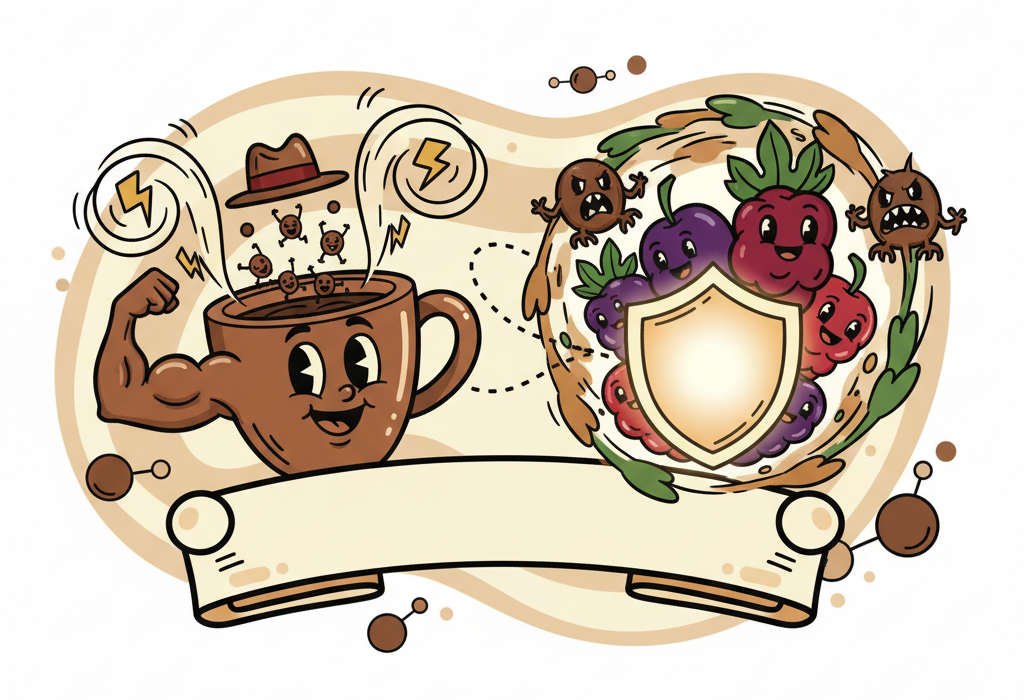
Most of us reach for a cup of coffee or tea to shake off morning grogginess. We value caffeine for its ability to keep us alert and focused. But inside your body, caffeine is doing a lot more than just waking up your brain. Scientists are increasingly studying this common compound not just as a stimulant, but as a cellular protector.
So, does caffeine actually act as an antioxidant? Yes. Research shows that caffeine and its byproducts can help neutralize harmful molecules in the body, reduce inflammation, and trigger cellular cleanup processes. This biological defense system helps protect the brain, skin, and liver from long-term damage.
To understand how your morning beverage protects your health, we need to look at what happens at the microscopic level.
How Caffeine Acts as a Cellular Shield
Every day, your body performs millions of chemical reactions just to keep you alive. A natural byproduct of these reactions is the creation of unstable molecules.
Before diving into the research, it helps to understand three key scientific terms:
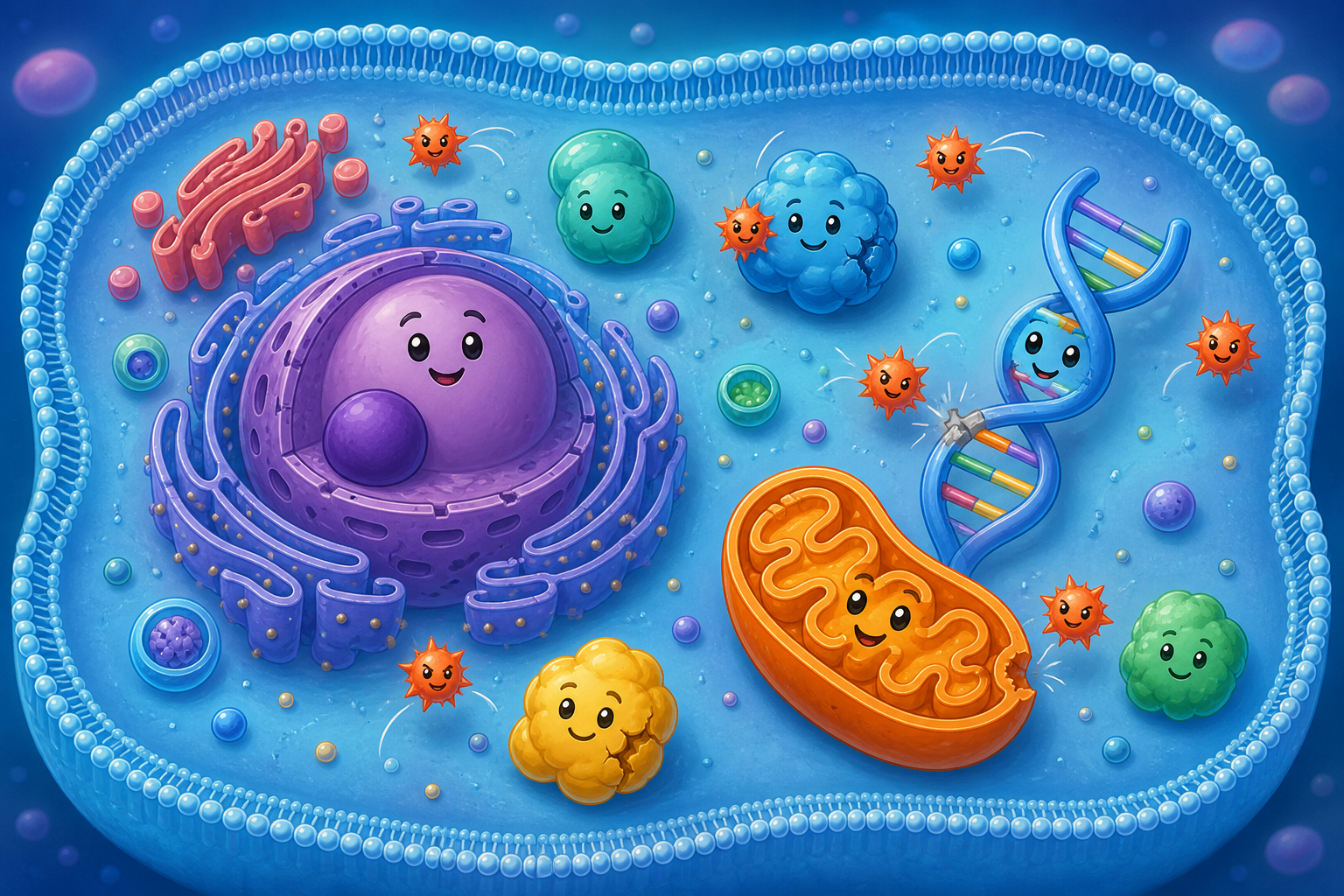
- Reactive oxygen species (ree-AK-tiv OX-ih-jen SPEE-sheez) – highly unstable molecules that bounce around inside your cells, damaging structures like DNA and proteins.
- Oxidative stress (ox-ih-DAY-tiv stress) – an unhealthy state that occurs when these harmful reactive molecules outnumber your body’s defensive antioxidants.
- Autophagy (aw-TOFF-uh-gee) – a natural cleanup process where cells break down and recycle their own damaged parts.
Related: How Your Gut Microbiome and Oxidative Stress Control Your Health
For a long time, scientists thought an antioxidant had to directly absorb reactive oxygen species, much like a sponge soaking up a spill. However, caffeine works a bit differently. While it has some direct neutralizing ability, its main strength is acting like an alarm system.
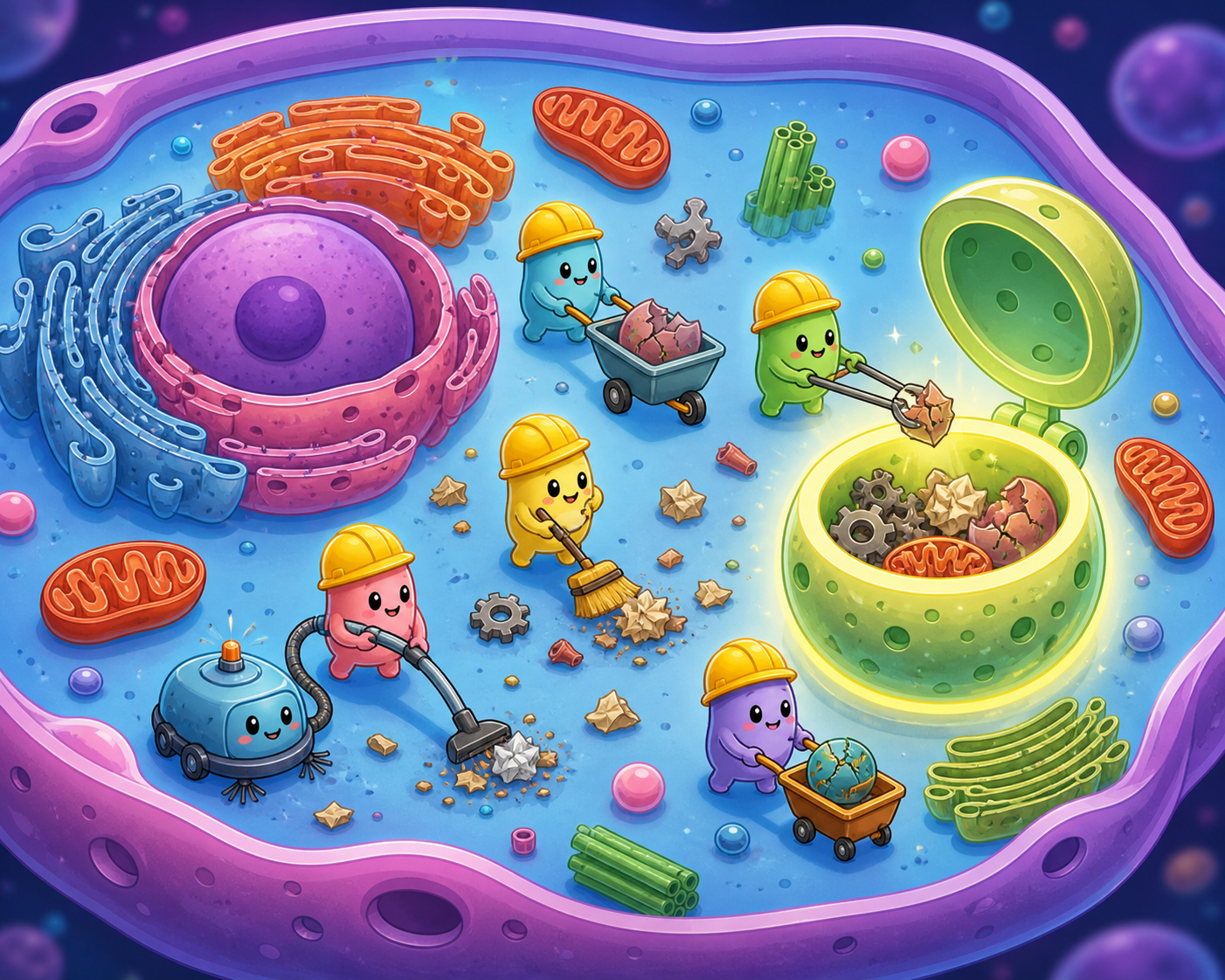
Research in Theranostics demonstrates that low doses of caffeine activate autophagy. Instead of fighting the damage directly, caffeine signals the cell’s internal cleanup crew to start removing damaged proteins and clearing out reactive oxygen species.
What the Research Shows
Scientists have studied the antioxidant and protective effects of caffeine across several different systems in the body. The results show a consistent pattern of cellular defense.
Brain Health and Aging
The brain requires a massive amount of oxygen to function, making it highly vulnerable to oxidative stress. Over time, this stress contributes to cognitive decline and neurodegenerative diseases.
A 2024 review in the International Journal of Molecular Sciences analyzed data from hundreds of thousands of people and found that regular caffeine consumption significantly reduces the risk of developing Parkinson’s disease and Alzheimer’s disease. The researchers noted that caffeine protects the brain in two ways. First, it blocks specific receptors that cause brain inflammation. Second, it increases the activity of natural antioxidant enzymes in the brain.
Animal studies support these findings. A 2025 study in Cell Communication and Signaling looked at mice with a condition similar to ALS (Lou Gehrig’s disease). The researchers found that administering caffeine significantly reduced reactive oxygen species in the spinal cord and delayed the decline of motor function.
Skin Protection from UV Damage
Your skin is constantly exposed to environmental stress, primarily from the sun’s ultraviolet (UV) rays. UV radiation creates a massive amount of reactive oxygen species in the skin, leading to premature aging and cellular damage.
A 2013 review in Skin Pharmacology and Physiology highlights that caffeine is increasingly used in cosmetics because it easily penetrates the skin barrier and slows down the photoaging process.
More recently, researchers mapped exactly how this works. The Theranostics study mentioned earlier found that applying low doses of caffeine to skin cells protected them from UV-induced aging. The caffeine triggered autophagy, allowing the skin cells to clear out the UV-damaged materials before they could cause permanent harm.
Related: The Science of Your Skin Barrier: How It Works and How to Protect It
Liver and Toxin Defense
The liver is the body’s primary filtration system, meaning it takes the brunt of chemical and toxin exposure. Caffeine appears to help the liver manage this heavy lifting.
A 2018 study in Life Sciences examined how caffeine interacts with acetaminophen (the active ingredient in Tylenol). High doses of acetaminophen can cause severe oxidative stress and liver damage. The researchers found that giving caffeine alongside the medication prevented lipid damage and reduced the production of reactive oxygen species in the liver.
Similarly, a 2025 study in Acta Neurobiologiae Experimentalis found that caffeine protected mice from the toxic effects of heavy metals. When exposed to cadmium, mice normally experience oxidative stress and memory impairment. Caffeine administration prevented this spatial memory loss by acting as an antioxidant shield.
Does the Source of Caffeine Matter?
People consume caffeine in many forms, including coffee, green tea, energy drinks, and supplements. When it comes to antioxidant benefits, the source matters heavily.
A 2022 review in the International Journal of Molecular Sciences points out that natural sources of caffeine, like coffee and tea, contain hundreds of other bioactive compounds. For example, coffee is rich in chlorogenic acid and polyphenols. These plant compounds are potent antioxidants on their own.
When you drink coffee or tea, the caffeine and the polyphenols work together. A 2020 study in Nutrients noted that this combination exerts strong anti-inflammatory effects in the gastrointestinal tract.
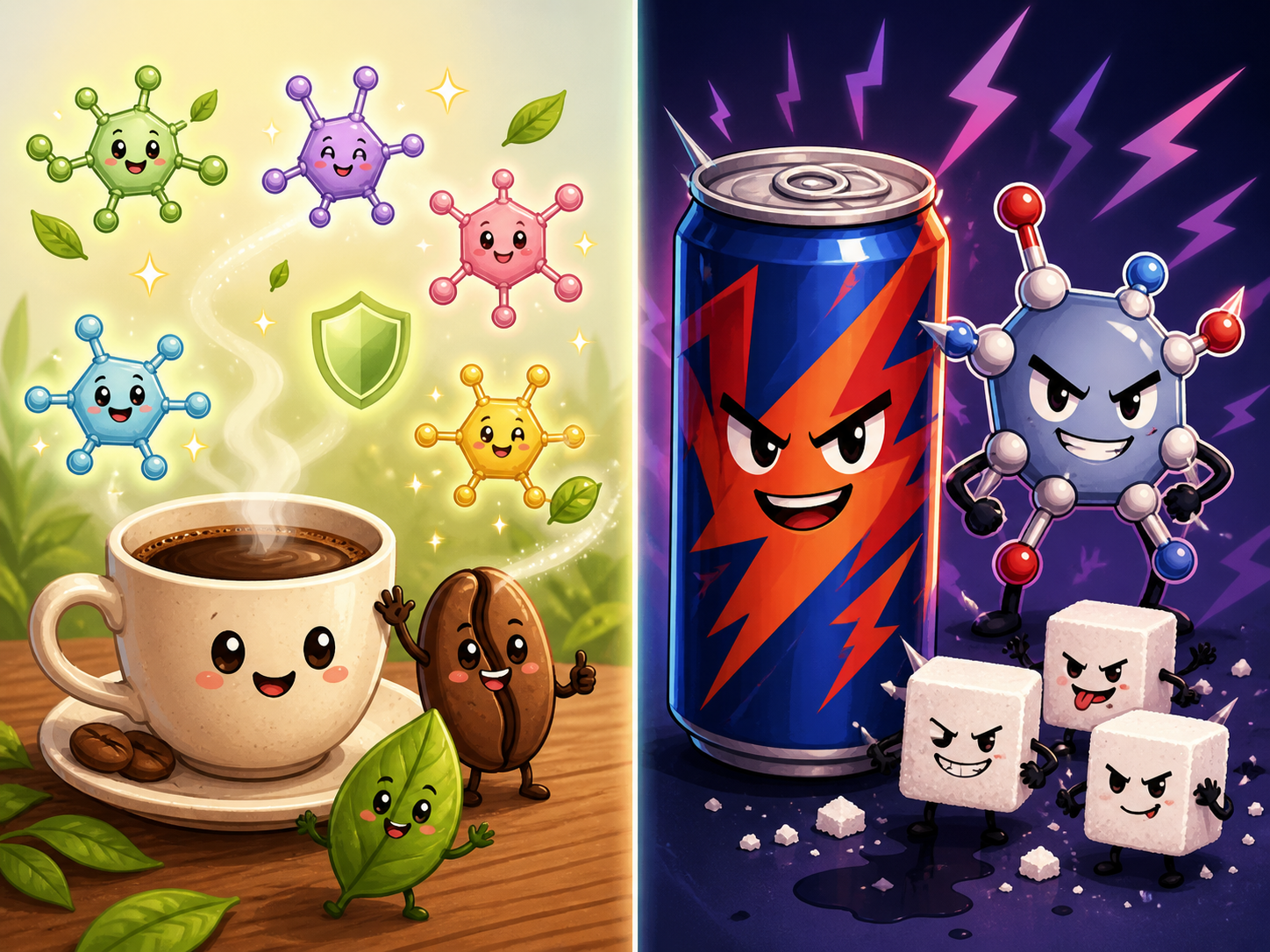
In contrast, energy drinks and pre-workout supplements often use synthetic caffeine. While a 2023 review in the Journal of the International Society of Sports Nutrition confirms that energy drinks effectively improve physical and mental performance, they lack the extra plant-based antioxidants found in brewed coffee or tea. Furthermore, the high sugar content in some commercial beverages can actually increase inflammation, canceling out caffeine’s protective benefits.
Who Benefits Or Needs Caution
While caffeine offers cellular protection, it is not a perfect fit for everyone. Genetics, age, and existing health conditions change how the body processes this compound.
| Population | Potential Benefit or Risk | What the Science Says |
|---|---|---|
| Older Adults | High Benefit | Regular, moderate intake is linked to a lower risk of cognitive decline, Alzheimer’s, and Parkinson’s disease. |
| Athletes | High Benefit | Improves aerobic and anaerobic performance, and aids in muscle glycogen recovery when paired with carbohydrates. |
| Pregnant Women | Needs Caution | Guidelines recommend limiting caffeine intake (usually under 200mg/day) as it crosses the placenta and takes much longer to metabolize. |
| People with Insomnia | Needs Caution | Caffeine blocks adenosine (the sleepiness chemical) and can severely disrupt the sleep-wake cycle if taken too late in the day. |
Where The Science Is Still Uncertain
While the antioxidant benefits of caffeine are well-documented, researchers are still mapping out its exact impact on human fertility and sleep timing.
For years, moderate caffeine intake was suspected to harm human fertility. However, a 2018 review in the American Journal of Obstetrics and Gynecology analyzed the available data and concluded that the evidence for moderate caffeine intake causing fertility issues is much weaker than once thought. Still, exact limits for couples actively trying to conceive remain a topic of ongoing study.
Additionally, caffeine has a profound impact on the body’s internal clock. A 2015 study in Science Translational Medicine found that consuming the caffeine equivalent of a double espresso three hours before bedtime delayed the body’s natural melatonin rhythm by about 40 minutes. This means evening caffeine does not just keep you awake; it physically shifts your biological clock backward.
Related: How Your Circadian Rhythm Controls Sleep (And What Science Says About Fixing It)
Common Questions About Caffeine and Antioxidants
How much caffeine is safe to consume daily?
Major health organizations, including the FDA, state that up to 400 milligrams of caffeine per day (about three to four 8-ounce cups of brewed coffee) is safe for most healthy adults.
Does caffeine dehydrate you?
While caffeine is a mild diuretic (meaning it makes you urinate), the water in a cup of coffee or tea usually makes up for the fluid lost. Moderate consumption does not lead to dehydration in healthy adults.
Are energy drinks just as good for you as coffee?
While energy drinks provide the same alertness and athletic performance benefits, they do not contain the natural polyphenols and plant antioxidants found in coffee and tea. They also frequently contain high amounts of added sugars.
The Bottom Line
Caffeine is much more than a simple stimulant. A growing body of evidence shows that it acts as a cellular protector by triggering cleanup processes like autophagy and reducing oxidative stress.
We know with high confidence that moderate caffeine consumption is linked to better brain health, a lower risk of neurodegenerative diseases, and protection against certain types of cellular damage. Natural sources like coffee and tea offer the most benefits because they pair caffeine with other plant-based antioxidants.
However, more caffeine is not always better. High doses can cause anxiety, disrupt your circadian rhythm, and interfere with sleep. Sticking to moderate amounts early in the day seems to be the best way to get the protective benefits without the drawbacks.
Quick Reference: Key Studies
| Study Focus | Key Finding | Source |
|---|---|---|
| Brain Health | Regular caffeine intake significantly reduces the risk of developing Parkinson’s and Alzheimer’s diseases. | PMID 39596082 |
| Skin Protection | Low doses of caffeine protect skin cells from UV-induced aging by activating autophagy. | PMID 30555576 |
| Circadian Rhythm | Caffeine consumed 3 hours before bed delays the human melatonin rhythm by about 40 minutes. | PMID 26378246 |
| Sports Performance | Caffeine safely enhances aerobic and anaerobic exercise performance at doses of 3-6 mg/kg of body weight. | PMID 36862943 |
| Liver Protection | Caffeine prevents lipid damage and reactive oxygen species production caused by acetaminophen toxicity. | PMID 29107792 |
Last updated: September 2026
This article synthesizes findings from peer-reviewed research. It is for educational purposes only and does not constitute medical advice. Consult a healthcare provider before starting any new regimen.
Leave a Reply