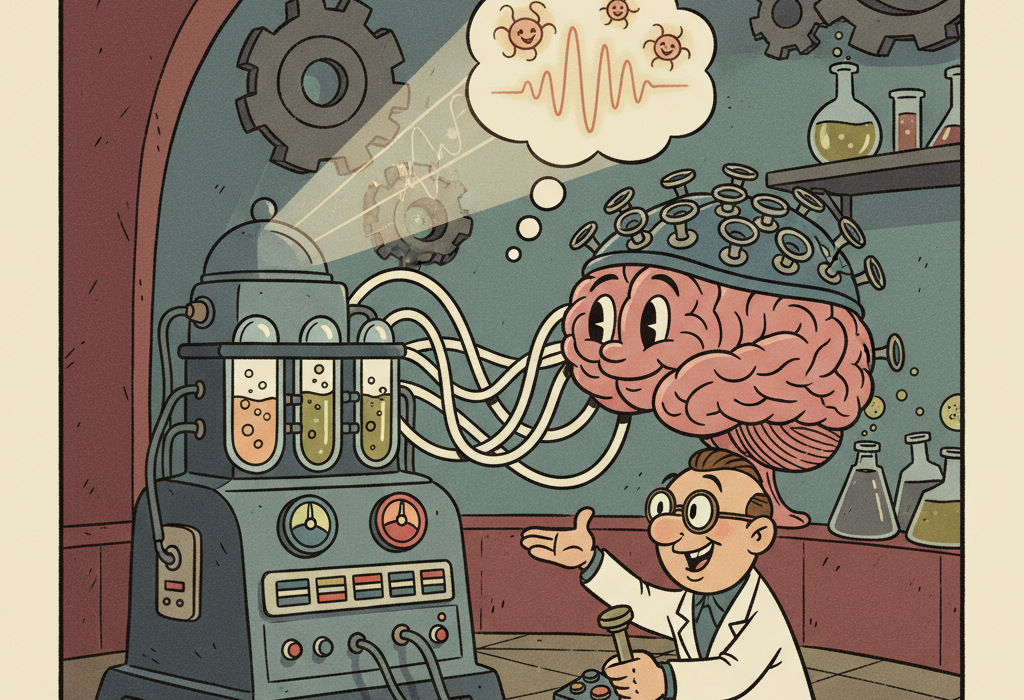
Imagine being able to see your brain activity on a screen and learning to control it like a muscle. That is the basic idea behind neurofeedback.
For decades, scientists have studied whether people can train their brains to improve focus, manage anxiety, or recover from injuries. If you are wondering whether this type of training actually works, the short answer is yes. Research shows that neurofeedback training can improve attention, reduce anxiety, and enhance motor skills. However, it is not a perfect solution. Studies also show that up to 30 percent of people do not respond to the training at all.
This article breaks down what the latest peer-reviewed research says about neurofeedback, how it affects the body, and what limitations you should know about.
How This Might Work: The Basics of Neurofeedback
To understand the research, it helps to know a few key terms.
- Neurofeedback (NUR-oh-FEED-back) is a type of biofeedback that uses real-time displays of brain activity to teach self-regulation.
- Electroencephalogram (ee-LEK-tro-en-SEF-uh-loh-gram) or EEG is a test that detects electrical activity in your brain using small sensors attached to your scalp.
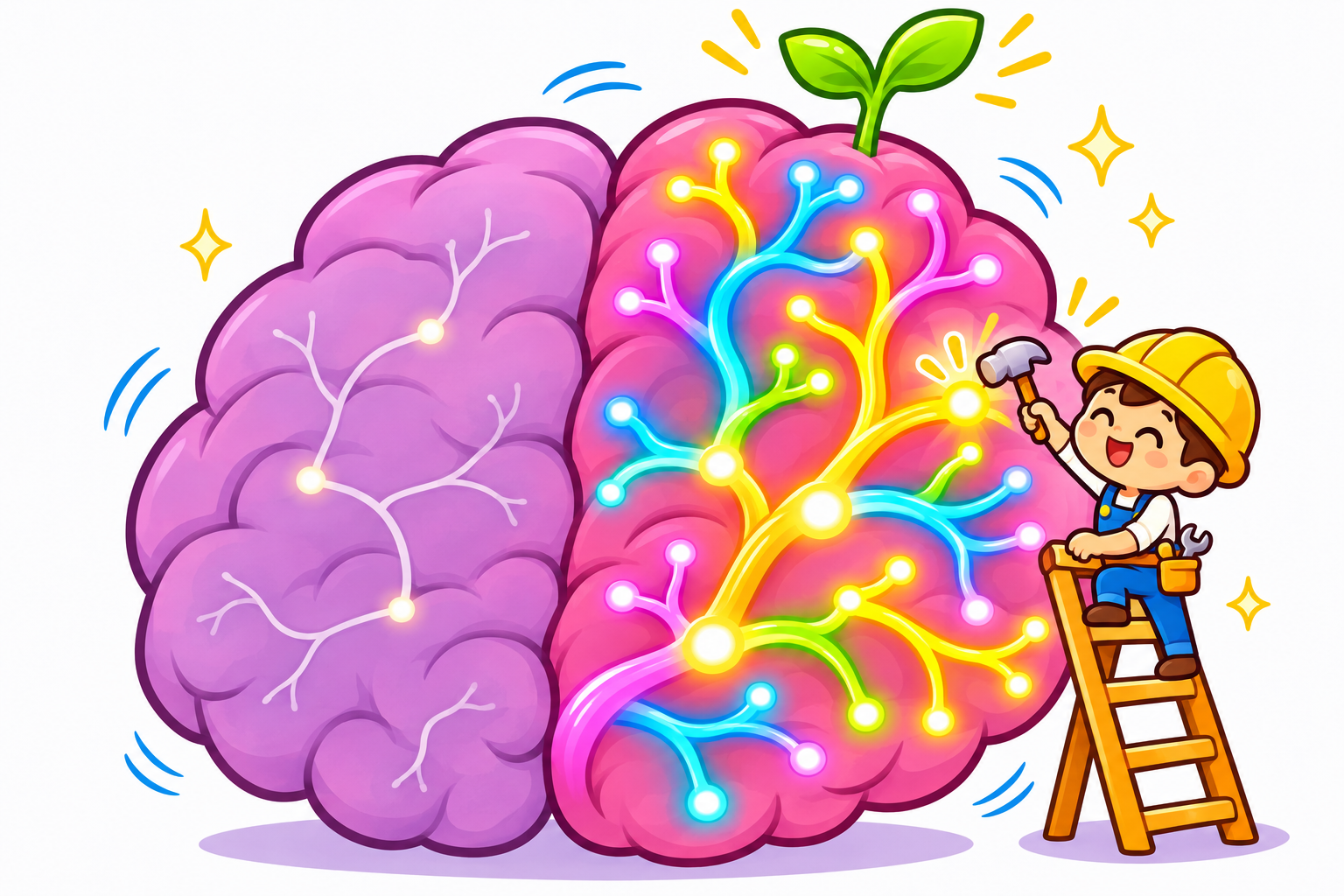
- Neuroplasticity (NUR-oh-plas-TISS-ih-tee) is the ability of the brain to reorganize itself by forming new neural connections.
During a typical session, a person wears an EEG cap that measures their brainwaves. They might look at a computer screen showing a simple game or a moving bar. When their brain produces the desired wave patterns, the game moves forward or a pleasant sound plays. This acts as a reward. Over time, the brain learns to produce these desired patterns more easily.
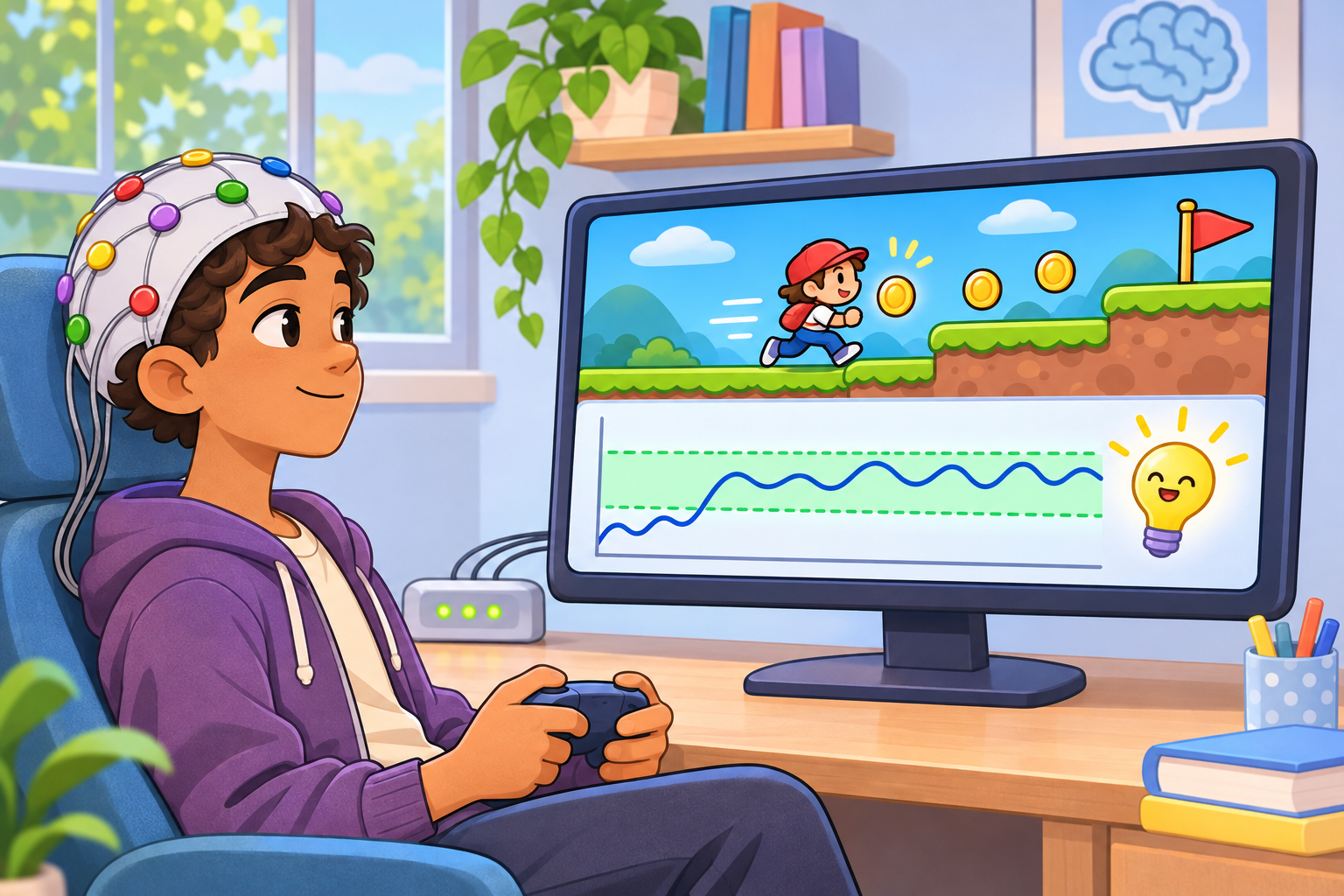
Scientists believe this works because of neuroplasticity. A 2021 review in Revue neurologique explains that neurofeedback activates the reinforcement learning networks in the brain. Over time, this training can actually change the physical structure of the brain, including gray matter volume and the strength of connections between different brain regions.
Does Neurofeedback Work for ADHD and Attention?
One of the most common uses for neurofeedback is treating attention deficits. People with Attention Deficit Hyperactivity Disorder (ADHD) often show a specific brainwave pattern. They tend to have higher amounts of slow brainwaves (theta waves) and lower amounts of fast brainwaves (beta waves).
Many studies use a “theta/beta protocol.” This means the training rewards the patient for decreasing theta waves and increasing beta waves.
What the Evidence Shows
A 2025 systematic review in Scientific reports looked at 17 randomized controlled trials involving 939 children with ADHD. The researchers found that neurofeedback significantly improved working memory and inhibitory control. Inhibitory control is the ability to stop yourself from acting on an impulse. The study noted that the benefits lasted for 6 to 12 months after the training ended.
However, the training requires a major time commitment. The same 2025 review found that working memory only showed significant improvement when the total training time exceeded 1,260 minutes.
How It Compares to Medication
While neurofeedback helps, it is important to compare it to standard treatments. A 2023 meta-analysis in Child psychiatry and human development compared theta/beta neurofeedback to other interventions for ADHD. The results showed that neurofeedback was superior to physical activity and waiting list groups. However, it was not superior to standard stimulant medications.
Neurofeedback can also help children with complex conditions. A 2024 pilot study in Child: care, health and development tested neurofeedback on children who had both cerebral palsy and attention deficits. After 20 sessions, the children showed improved attention levels and a better theta/beta brainwave ratio compared to a control group.
It is not just for clinical conditions. A 2023 study in the Journal of attention disorders tested school-based neurofeedback on general students. The researchers found that students who trained with a neurofeedback game for 35 sessions showed observable improvements in sustained attention, planning, and organization.
Can Neurofeedback Improve Sports Performance?
Athletes constantly look for ways to optimize their focus and reaction times. Because of this, sports scientists have studied neurofeedback as a way to train the brain for peak performance.
Motor Skills and Physical Performance
A 2025 systematic review in the Scandinavian journal of medicine & science in sports analyzed 25 studies on sports performance. The researchers found that neurofeedback had a moderate positive effect on motor tasks. Interestingly, the study noted that novices showed slightly larger improvements than expert athletes. This suggests that neurofeedback might be especially helpful during the early stages of learning a new physical skill.
A separate 2023 meta-analysis in NeuroImage looked at healthy adults learning motor skills. The researchers found a clear dose-response relationship. Participants needed more than 125 minutes of cumulative training time to see notable benefits in motor performance.
Real-World Sports Applications
Testing athletes in a lab is one thing, but testing them in the field is another. A 2024 study in Applied psychophysiology and biofeedback took neurofeedback out of the lab and into a soccer club. Researchers trained 41 elite soccer players in group settings using wireless headsets.
The athletes listened to music that changed quality based on their brain’s alpha wave activity. After the training program, the players showed a 34 percent increase in target alpha activity. They also scored better on cognitive tests measuring mental rotation and task switching. Furthermore, the athletes reported better sleep duration and a higher “feeling of control.”
Neurofeedback for Stroke Rehabilitation
Recovering from a stroke often involves intense physical and occupational therapy. Scientists are now testing whether combining physical therapy with brain training can speed up recovery.
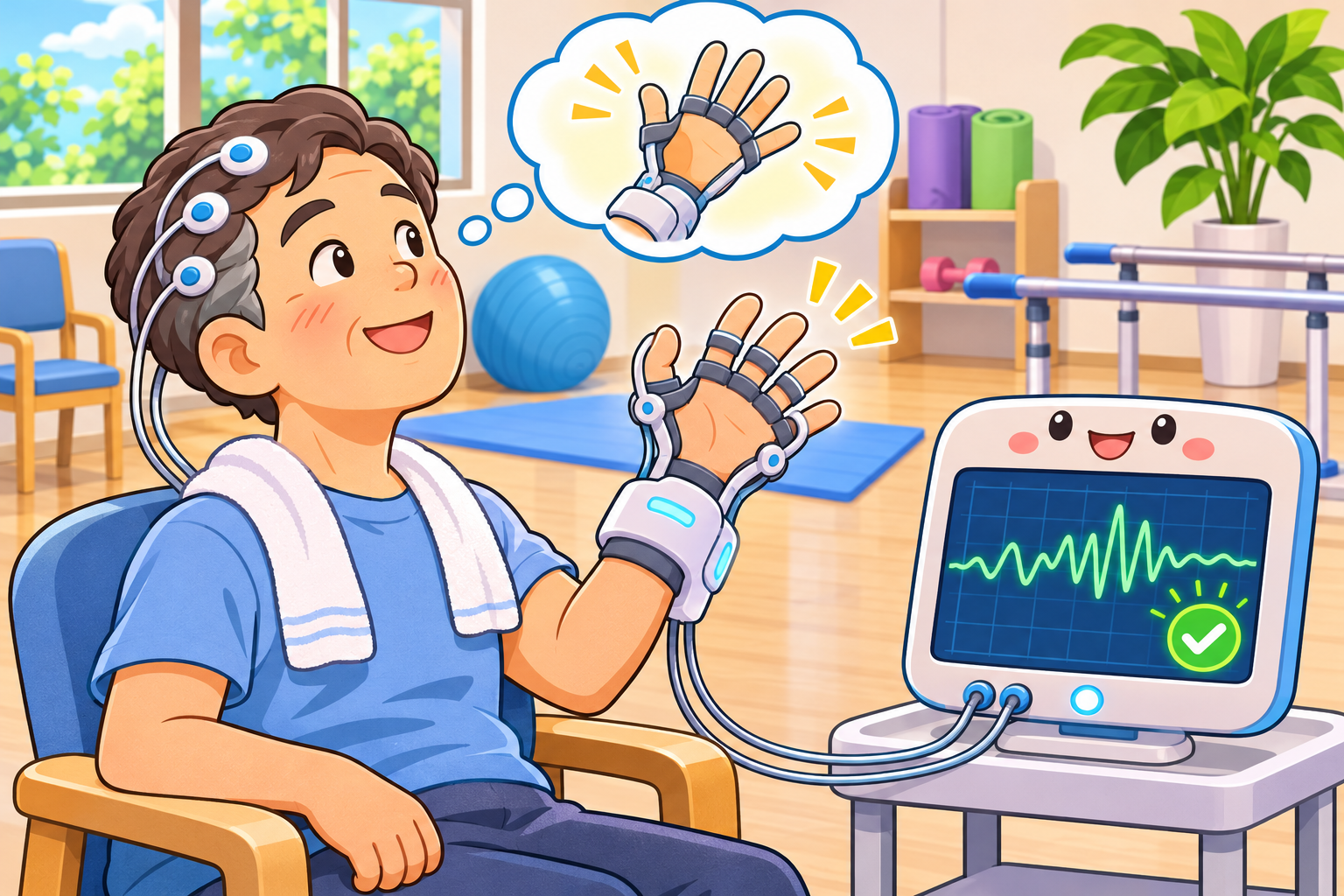
When a person imagines moving their hand, their brain produces a specific signal, even if the hand does not physically move. Neurofeedback can detect this signal and use it to control a robotic glove or a virtual reality game. This helps the brain practice sending motor signals.
A 2021 scoping review in NeuroRehabilitation examined 14 studies using EEG-based neurofeedback in occupational therapy for stroke patients. The review found that combining neurofeedback with traditional occupational therapy created a synergistic effect. Patients who used brain-computer interfaces combined with functional electrical stimulation showed better recovery in their upper limbs and hands compared to those doing standard therapy alone.
Similarly, a 2016 study in Der Nervenarzt highlighted that “closed-loop” systems are highly promising. In a closed-loop system, a patient imagines opening their paralyzed hand. When the computer detects the correct brain signal, it instantly triggers a robotic brace to physically open the hand. This real-time physical reward helps rewire the damaged brain circuits.
Mental Health, Anxiety, and Pain Management
Beyond focus and physical skills, researchers are exploring neurofeedback for emotional regulation and pain.
Anxiety and Depression
A 2021 study in Brain and behavior investigated neurofeedback for women diagnosed with Generalized Anxiety Disorder (GAD). The participants completed ten 40-minute sessions aimed at increasing alpha brainwaves in the parietal lobe. After the training, the participants showed significant decreases in anxiety traits, depressive symptoms, and insomnia.
Related: Does Neurofeedback Enhance Mindfulness? What the Science Shows
Severe Mental Health Conditions
Scientists are also testing neurofeedback for severe conditions like schizophrenia. A 2021 review in Current opinion in psychiatry looked at patients suffering from auditory verbal hallucinations. The review noted that fMRI-based neurofeedback allowed patients to successfully turn down the activity in the specific brain regions linked to these hallucinations. While this is highly experimental, it shows the potential of targeted brain training.
Phantom Limb Pain
Phantom limb pain occurs when a person feels pain in a limb that has been amputated. A 2022 randomized trial in The journal of pain tested a unique neurofeedback approach. Patients were taught to control a visual shape on a screen using their brain activity, without explicitly trying to “move” their missing hand. The training successfully changed how the missing hand was represented in the brain and significantly reduced the patients’ pain.
Who Benefits Or Needs Caution
While the research is promising, neurofeedback does not work for everyone.
Multiple studies, including a 2021 review in Revue neurologique, report that 25 to 30 percent of people are “non-responders.” This means they are unable to learn how to control their brain activity during the sessions.
Scientists are still trying to figure out why this happens. A 2020 systematic review in NeuroImage. Clinical looked at predictors of success. They found that factors like age and intelligence quotient (IQ) generally do not affect whether someone will succeed at neurofeedback. Instead, success seems to depend on a person’s baseline brain anatomy and resting brainwave patterns before the training even begins.
Because of this, researchers suggest that standard, one-size-fits-all protocols are less effective. Patients and athletes will likely see the best results when the training protocol is customized to their specific baseline brain activity.
Where The Science Is Still Uncertain
Despite decades of research, scientists still debate several aspects of neurofeedback.
- The Placebo Effect: Some researchers argue that the benefits of neurofeedback come partly from the placebo effect. Sitting in a quiet room, receiving attention from a therapist, and believing you are improving can all reduce anxiety and improve focus on their own.
- Transfer to Daily Life: It is well-documented that people can learn to control a computer game with their brain. However, it is harder to prove that this specific skill transfers to real-world situations, like paying attention in a noisy classroom or staying calm during a stressful meeting.
- Lack of Standardization: There are many different types of equipment, training schedules, and feedback methods used across clinics. This makes it difficult for scientists to compare studies and declare a single “best” method.
Common Questions About Neurofeedback
How many sessions does it take to see results?
It depends on the goal. For motor skills and sports, research suggests a minimum of 125 cumulative minutes of training. For complex conditions like ADHD, studies show that significant improvements in working memory require over 1,200 minutes of training (usually spread across 30 to 40 sessions).
Does it matter if the feedback is visual or auditory?
A 2023 study in the Neurobiology of learning and memory compared visual feedback (like watching a bar on a screen) to auditory feedback (like listening to a changing tone). The researchers found no significant difference in learning performance between the two methods. Both groups successfully improved their working memory.
Can neurofeedback erase memories?
No, it cannot erase memories. However, a 2024 study in the International journal of psychophysiology found that highly customized neurofeedback could selectively weaken the consolidation of specific new memories. This is currently just a laboratory experiment, but it could eventually help treat conditions involving traumatic memories.
The Bottom Line
Neurofeedback is a scientifically validated tool that uses real-time monitoring to teach people how to regulate their brain activity.
- What we know: Research consistently shows it can improve attention in ADHD, enhance motor learning in athletes, and support physical recovery in stroke patients. It also shows promise for reducing anxiety.
- What remains uncertain: Scientists are still trying to understand why up to 30 percent of people do not respond to the training. It is also difficult to measure how much of the benefit comes from the placebo effect.
- Confidence level: The evidence is strong that neurofeedback changes brain activity and provides moderate behavioral improvements. However, it should be viewed as a supplementary training tool or complementary therapy, rather than a standalone cure or a replacement for standard medical care.
Quick Reference: Key Studies
| Study Focus | Key Finding | Source |
|---|---|---|
| ADHD & Executive Function | Improved working memory and inhibitory control; required >1260 mins of training. | PMID 40750997 |
| Sports Performance | Moderate positive effect on motor tasks; novices showed slightly larger benefits than experts. | PMID 40270441 |
| Team Sports (Soccer) | Group alpha training improved mental rotation, task switching, and sleep duration. | PMID 39126458 |
| Stroke Rehabilitation | Synergistic effect when combined with occupational therapy; improved upper limb function. | PMID 33386824 |
| Anxiety (GAD) | Alpha training significantly reduced anxiety traits, depression symptoms, and insomnia. | PMID 33503332 |
| Motor Learning | Significant motor improvements require more than 125 minutes of cumulative training. | PMID 36870431 |
| Predictors of Success | Age and IQ do not predict success; individual baseline brain patterns dictate learning ability. | PMID 32604020 |
Last updated: November 2026
This article synthesizes findings from peer-reviewed research. It is for educational purposes only and does not constitute medical advice. Consult a healthcare provider before starting any new regimen.



Leave a Reply