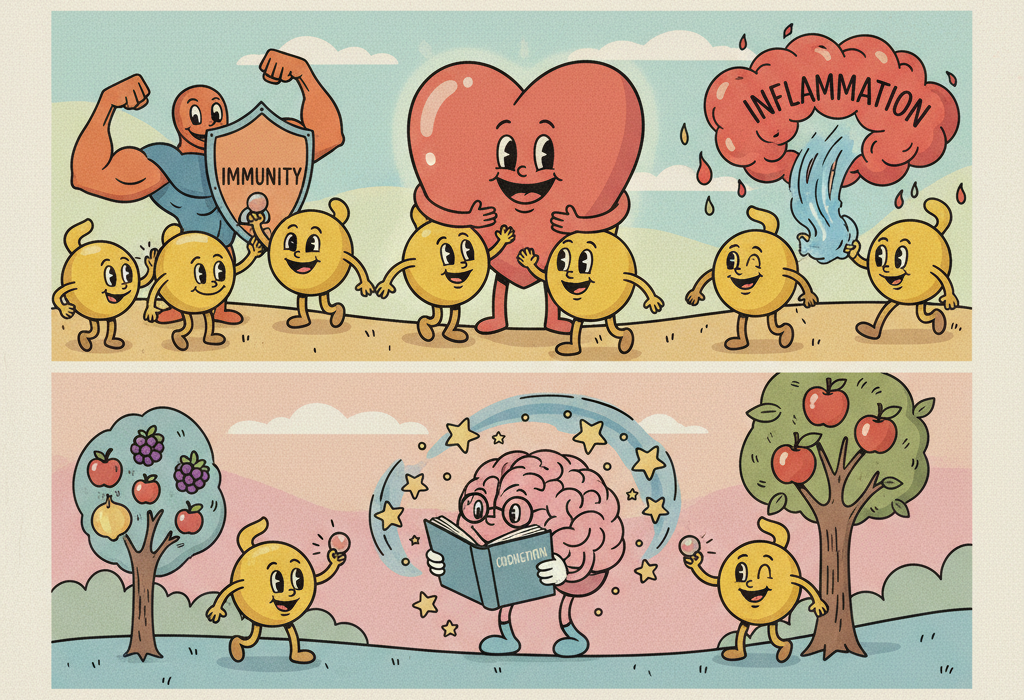
If you have ever wondered why foods like red onions, apples, and capers are universally considered healthy, part of the answer comes down to a microscopic plant pigment called quercetin.
Quercetin (KWER-suh-tin) is a type of flavonoid (FLAV-uh-noid), which is a chemical that plants produce to protect themselves from environmental stress, ultraviolet light, and infections. When humans consume these plants, these protective compounds seem to pass some of their defense mechanisms on to us.
Over the last decade, scientists have studied quercetin extensively for its potential to reduce inflammation, protect the brain, and improve metabolic health. However, the science of quercetin is not as simple as just taking a pill. Related: How an Anti-Inflammatory Diet Actually Affects Your Body
Here is a breakdown of what current research actually shows about quercetin, how it works inside the body, and why the way you consume it matters.
How Quercetin Actually Works
To understand the benefits of quercetin, it helps to know how it interacts with our cells. Researchers have identified three main ways this compound influences human health:
- As an Antioxidant: Quercetin is a potent antioxidant. It neutralizes free radicals, which are unstable molecules that cause cellular damage and drive the aging process.
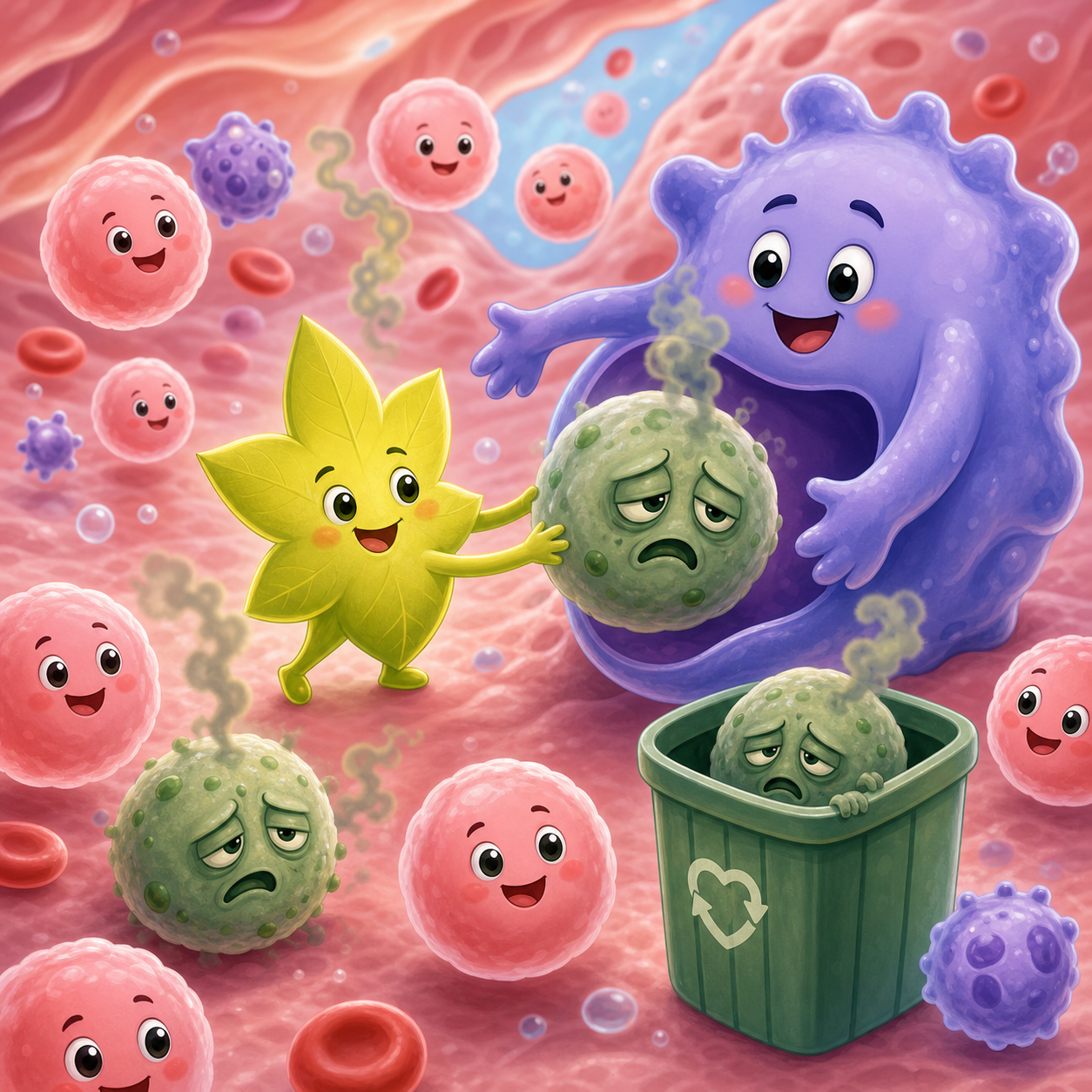
- As a Senolytic (sen-oh-LIT-ik): As we age, some of our cells stop dividing but refuse to die. These are called senescent cells, often nicknamed “zombie cells.” They linger in tissues and release inflammatory chemicals. Quercetin is a known senolytic, meaning it helps the body identify and clear out these damaged cells.
- By Activating AMPK: Quercetin activates an enzyme called AMPK. You can think of AMPK as the body’s cellular thermostat and energy sensor. When activated, it tells the body to burn fat for energy, clear out cellular waste, and reduce inflammation.
What the Research Shows
Can Quercetin Protect Brain Health?
One of the most heavily researched areas regarding quercetin is its impact on the brain and neurodegenerative conditions like Alzheimer’s disease and Parkinson’s disease.
A 2023 review in the International Journal of Molecular Sciences found that chronic neuroinflammation is a primary driver of brain diseases. Quercetin appears to protect the brain by inhibiting specific inflammatory pathways (like the NF-kB pathway) and reducing oxidative stress.
Furthermore, quercetin’s ability to clear out “zombie cells” shows unique promise for cognitive health. A 2019 study in Nature Neuroscience tested a combination of quercetin and a drug called dasatinib on mice with Alzheimer’s-like pathology. The researchers found that this “senolytic therapy” selectively removed damaged cells from the brain, reduced neuroinflammation, and actually improved the animals’ ability to learn and remember.
Another 2025 study in Current Neuropharmacology highlights that quercetin may prevent brain inflammation by modulating a specific receptor (P2X7) that normally triggers an inflammatory immune response when stimulated by cellular damage.
Does Quercetin Improve Metabolic Health and Blood Sugar?
Metabolic syndrome is a cluster of conditions that includes high blood pressure, high blood sugar, and excess abdominal fat. Research suggests quercetin may help address these issues at a cellular level.
A 2024 study in Gut Microbes discovered a fascinating mechanism: quercetin appears to change the gut microbiome. In mice, quercetin increased specific beneficial bacteria that altered bile acids. These bile acids then signaled the body to activate “brown fat” (a type of fat that burns calories to generate heat), which increased overall energy expenditure and reduced obesity.
Quercetin also shows potential for managing blood sugar. A 2024 review in Current Drug Metabolism summarized that quercetin helps cells absorb glucose from the blood more effectively, reducing insulin resistance. It also appears to protect the kidneys from diabetic damage. A 2022 meta-analysis in Phytomedicine looking at rodent data found that quercetin significantly improved kidney function markers and reduced kidney inflammation in diabetic models.
Quercetin for Women’s Health and Bone Density
Emerging research indicates that quercetin may offer specific benefits for the female reproductive system and aging bones.
A 2025 review in Phytomedicine evaluated quercetin’s role in ovarian health. The evidence suggests that its antioxidant and anti-inflammatory properties can help manage conditions like Polycystic Ovary Syndrome (PCOS) and premature ovarian aging by reducing cellular stress and supporting normal hormone production.
Additionally, quercetin may help protect the skeletal system as we age. A 2022 review in Nutrients examined the effects of several plant compounds on bone metabolism. The researchers noted that quercetin promotes the activity of osteoblasts (cells that build new bone) while suppressing osteoclasts (cells that break down bone). This dual action makes it a subject of interest for preventing age-related bone loss and osteoporosis.
The Catch: Bioavailability and Absorption
While the cellular benefits of quercetin are impressive, there is a significant hurdle when translating this science to humans: bioavailability (by-oh-uh-vay-luh-BILL-ih-tee). This term refers to how much of a substance actually enters your bloodstream and reaches your tissues.
In its isolated, supplement form (often called quercetin aglycone), quercetin is notoriously difficult for the human digestive tract to absorb. It does not dissolve well in water, and the liver breaks it down and excretes it very quickly. Related: How Your Body Actually Detoxifies: The Science of Cellular Cleanup
Interestingly, getting quercetin from whole foods might actually be more efficient than taking a standard pill. A 2019 review in Nutrients explored how different foods affect quercetin absorption.
Food Sources vs. Supplements
In plants, quercetin is usually attached to a sugar molecule (forming a “glycoside”). The type of sugar attached dramatically changes how well you absorb it.
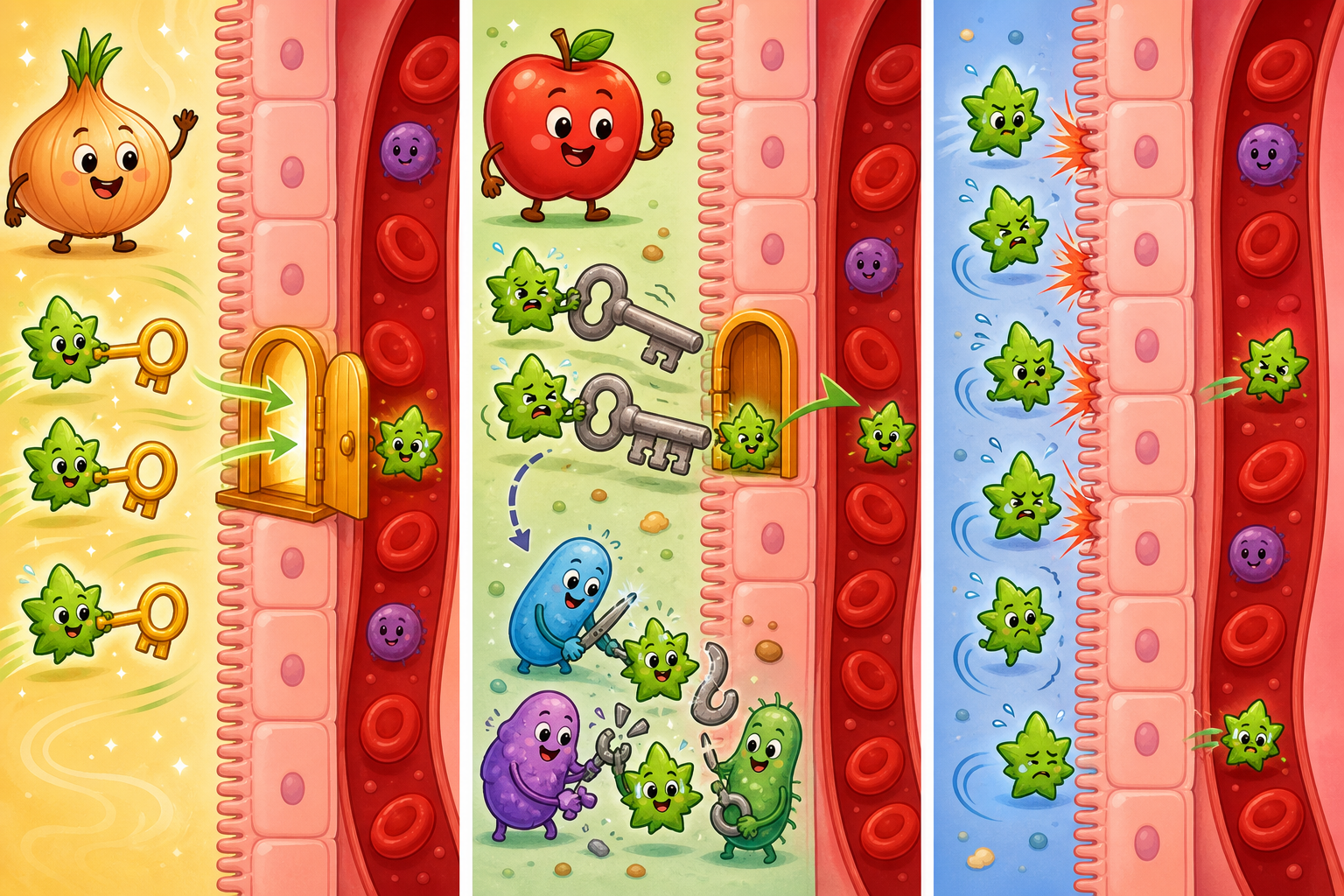
- Onions: Quercetin in onions is attached to a glucose molecule. The human gut has specific transporters that pull this exact molecule right into the bloodstream. Research shows onion-derived quercetin is highly absorbable.
- Apples and Tea: Quercetin in apples and tea is attached to a different sugar (rutinose). Humans lack the enzyme to digest this bond, so it must travel all the way to the colon where gut bacteria break it down. As a result, absorption from apples and tea is much slower and less efficient than from onions.
- Pure Supplements: Standard quercetin supplements lack these sugar attachments entirely. Without the sugar to act as a “transport ticket,” passive absorption through the gut wall is relatively poor.
Practical Guidance: How to Maximize Absorption
If you are trying to get more quercetin into your system, science offers a few practical tips:
1. Eat it with fat: Because quercetin is fat-soluble (lipophilic), eating it alongside dietary fat improves absorption. The Nutrients review noted that consuming quercetin with a high-fat meal increased its absorption by up to 45% compared to a fat-free meal.
2. Look for optimized supplements: If taking a supplement, look for formulations designed to improve absorption, such as quercetin paired with vitamin C, bromelain, or encapsulated in lipids (liposomal quercetin).
3. Eat the peels: In foods like apples, the vast majority of the quercetin is concentrated in the skin.
| Food Source | Typical Quercetin Content (per 100g) | Absorption Efficiency |
|---|---|---|
| Red Onions | 15 – 30 mg | High (due to glucose attachment) |
| Apples (with skin) | 4 – 5 mg | Low/Moderate (requires gut bacteria) |
| Black Tea | 1 – 2 mg | Low/Moderate |
| Capers | ~230 mg | High |
Where The Science Is Still Uncertain
It is important to note that while the mechanisms of quercetin are well documented, the vast majority of the most impressive results (like reversing Alzheimer’s plaques or shrinking fatty liver disease) come from cell cultures or animal models.
Human clinical trials are ongoing, but results are sometimes mixed. This is largely because humans metabolize quercetin much faster than mice do, and it is difficult to maintain high enough levels of quercetin in human blood to replicate the results seen in a petri dish.
The Bottom Line
Quercetin is a highly active plant compound with proven antioxidant, anti-inflammatory, and senolytic properties. Research strongly suggests it plays a role in protecting the brain, improving metabolic health, and supporting healthy aging at a cellular level.
However, because standard quercetin is poorly absorbed, you cannot simply out-supplement a bad diet. Consuming a variety of quercetin-rich whole foods, particularly onions and apples, while cooking with healthy fats, remains one of the most evidence-backed ways to reap the benefits of this fascinating flavonoid.
Quick Reference: Key Studies
| Study Focus | Key Finding | Source |
|---|---|---|
| Brain Health & Aging | Quercetin combined with dasatinib selectively removed senescent “zombie” cells and improved memory in Alzheimer’s mouse models. | PMID 30936558 |
| Metabolic Syndrome | Quercetin increased energy expenditure and “brown fat” activation by favorably altering gut bacteria and bile acids. | PMID 39163273 |
| Diabetic Kidney Disease | A meta-analysis of rodent data found quercetin significantly reduced kidney inflammation and improved function markers in diabetic models. | PMID 35908521 |
| Bioavailability & Absorption | Quercetin from onions is absorbed significantly better than quercetin from apples, tea, or pure aglycone supplements. Co-ingestion with fat increases absorption by 45%. | PMID 31557798 |
| Ovarian Health | Quercetin shows therapeutic potential for managing PCOS and premature ovarian aging by targeting oxidative stress and inflammation. | PMID 40499220 |
Last updated: July 2026
This article synthesizes findings from peer-reviewed research. It is for educational purposes only and does not constitute medical advice. Consult a healthcare provider before starting any new regimen.


Leave a Reply