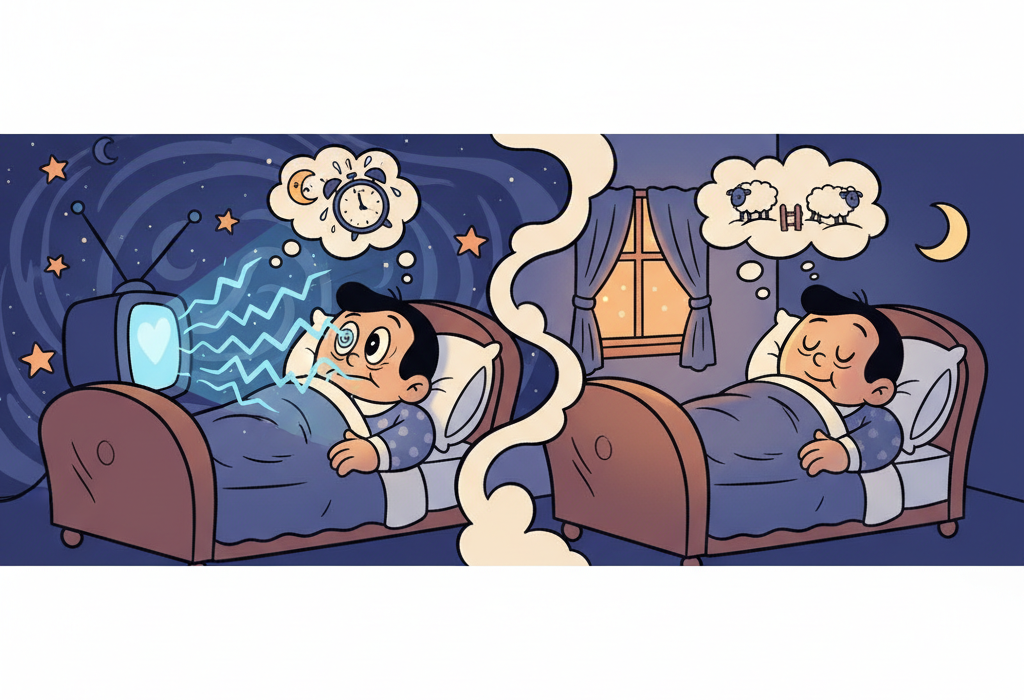
If you struggle to fall asleep at night, you have probably heard the standard advice: put away your phone and avoid blue light. We are constantly warned that the glowing screens of our devices are ruining our rest. This has launched a massive industry of blue-light blocking glasses, screen filters, and special light bulbs.
But is blue light really the primary villain stealing your sleep?
The short answer is that blue light at night definitely alters your brain chemistry and delays your sleep cycle. However, simply slapping a filter on your screen or wearing tinted glasses will not magically fix your sleep if you are still engaging in stimulating activities late at night. The science of how light affects our bodies is far more nuanced than a simple “blue light is bad” narrative.
How Blue Light Affects Your Brain
To understand why light matters, we have to look at how the human body tells time.
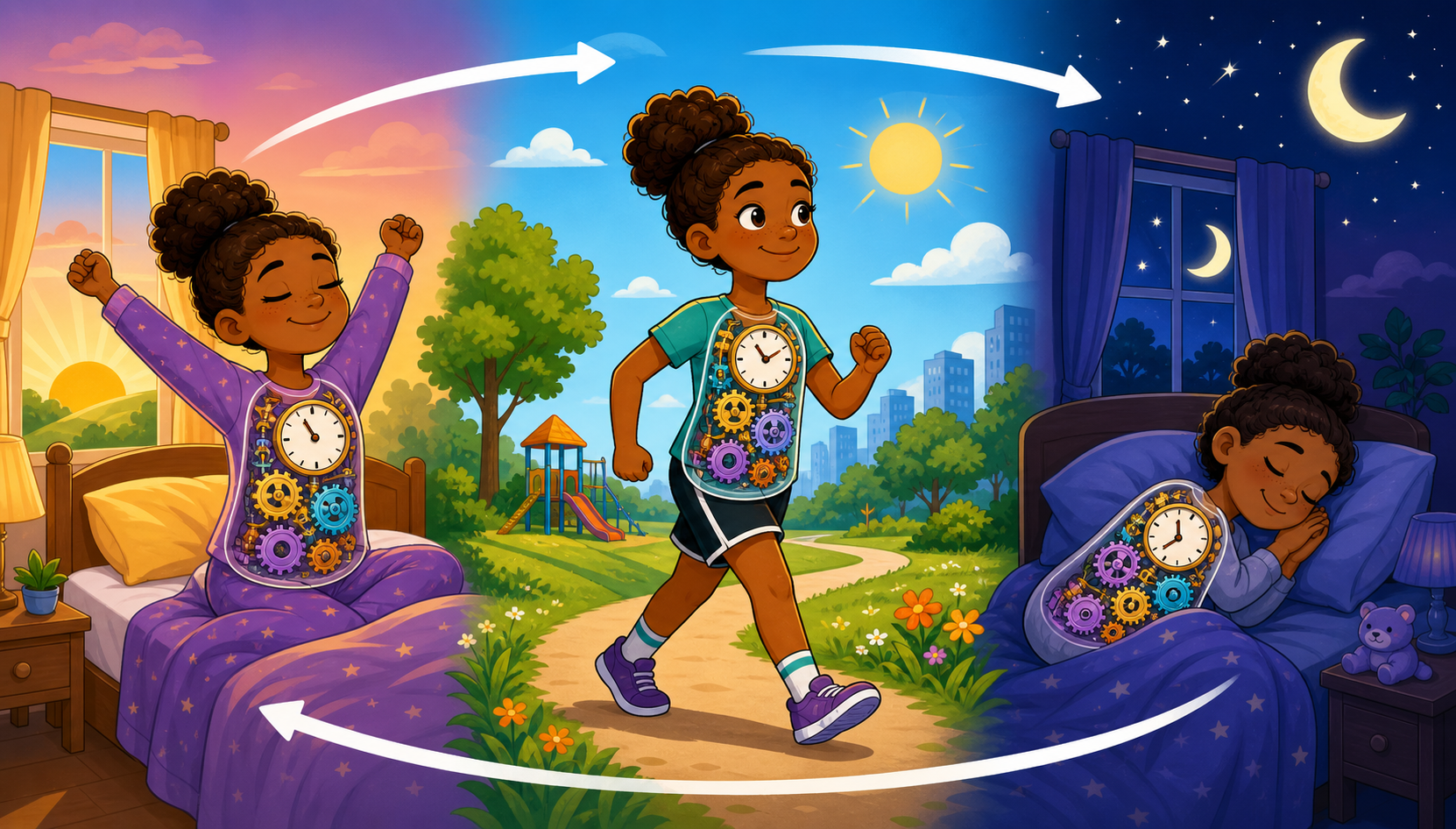
Your body runs on a Circadian rhythm (sir-KAY-dee-un RIH-thum), which is a 24-hour internal clock that regulates everything from your sleep cycle to your digestion. The master control panel for this clock sits in your brain, and it relies on light to know whether it is day or night.
Related: How Your Circadian Rhythm Controls Sleep (And What Science Says About Fixing It)
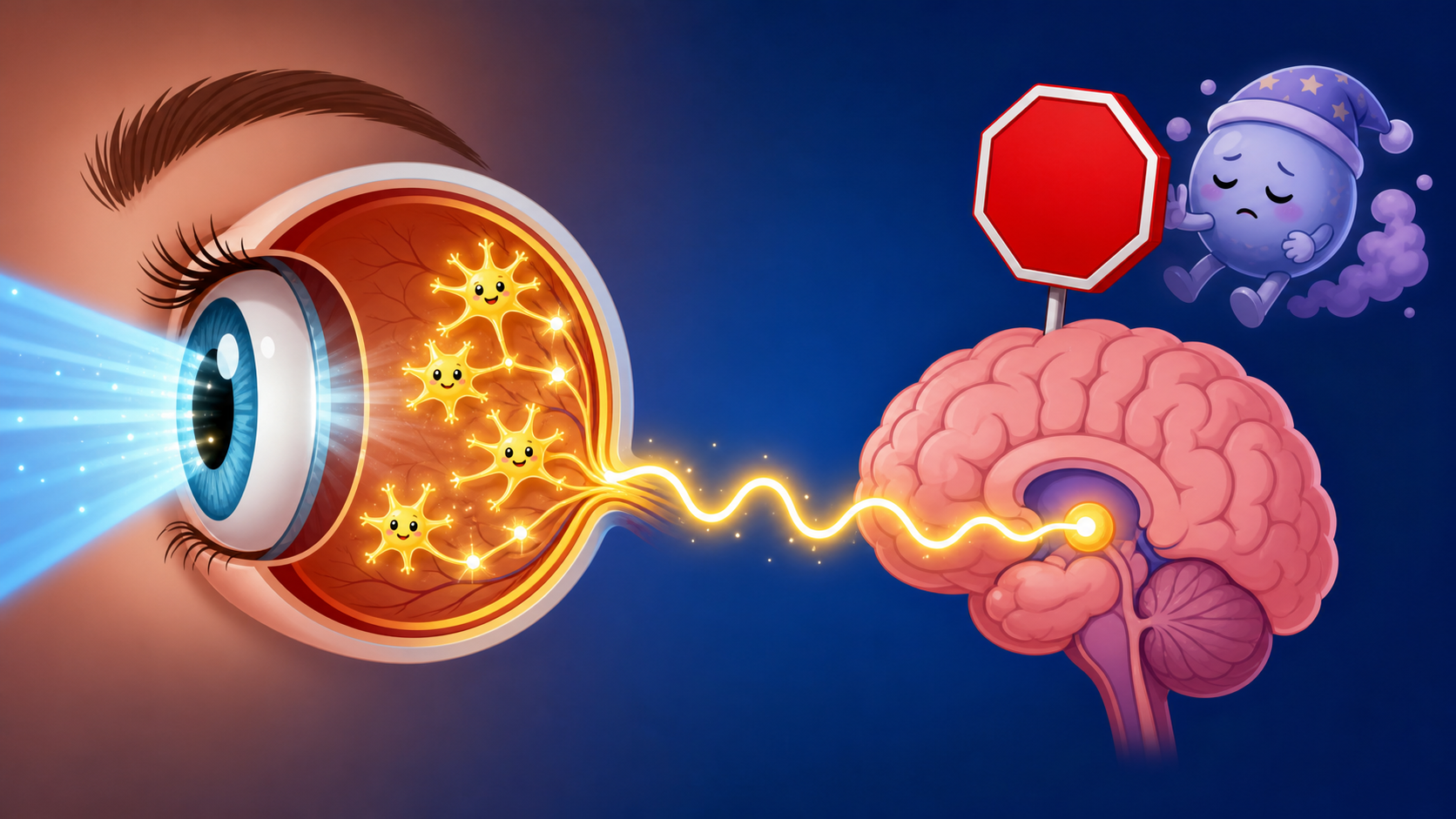
Your eyes contain special light-sensing cells called ipRGCs (eye-pee-are-gee-sees), or intrinsically photosensitive retinal ganglion cells. Unlike the rods and cones that help you see shapes and colors, ipRGCs exist primarily to measure the brightness of your environment.
These cells are highly sensitive to short-wavelength light, which we perceive as blue light. When blue light enters your eyes, these cells send a signal to your brain to halt the production of Melatonin (mel-uh-TOE-nin). Melatonin is a hormone that makes you feel drowsy and signals to your body that it is time to sleep.
According to a 2019 review in the Journal of Biophotonics, blue light is the strongest synchronizing agent for our internal clock. When we are exposed to it during the day, it keeps us alert. But when we are exposed to it after sunset, it tricks the brain into thinking the sun is still up.
Does Blue Light Actually Ruin Your Sleep?
The research shows a clear link between evening light exposure and delayed sleep. A 2019 review in Chronobiology International found that just two hours of exposure to blue light in the evening significantly suppresses melatonin.
This delay in melatonin can push back your entire sleep schedule. A 2023 study in Scientific Reports observing 301 adults found that using a mobile phone right before sleep predicted a delayed sleep phase, reduced sleep quality, and increased trouble with memory and concentration the next day.
The timing of the exposure is highly critical. A 2025 study on young athletes tested different windows of blue light exposure in the evening. They found that exposure after 9:00 PM caused significantly shorter total sleep duration and worsened both motor performance and selective attention the following day compared to exposure earlier in the evening.
However, it is not just about screens. The bulbs lighting your home also play a major role. A 2026 study in Scientific Reports tested 52 different home lamps. They found that “cool white” LED and fluorescent bulbs suppressed melatonin by about 12%, while “warm white” LEDs and traditional incandescent bulbs only suppressed it by 1.5% to 3.6%.
Do Blue-Light Blocking Glasses Actually Work?
If blue light suppresses melatonin, it seems logical that wearing blue-light blocking glasses would solve the problem. However, the scientific evidence on these glasses is surprisingly mixed.
A major 2023 review in The Cochrane Database of Systematic Reviews analyzed 17 randomized controlled trials. The researchers concluded that there is currently no high-quality evidence that blue-light filtering lenses reduce eye strain or significantly improve sleep quality for the general population.
Similarly, a 2025 meta-analysis in Frontiers in Neurology looked specifically at objective sleep data tracked by wrist monitors. They found that blue-light blocking glasses produced only a tiny, non-significant reduction in the time it took to fall asleep (about 4.8 minutes faster) and no significant improvements in overall sleep efficiency.
Why the mixed results? It likely depends on who is wearing them and what they are doing.
While the general public might not see massive objective benefits, people who already suffer from sleep disorders might. A 2018 randomized controlled trial in the Journal of Psychiatric Research tested amber-tinted blue-blocking lenses on people with insomnia. Wearing the glasses for two hours before bed for a week resulted in significantly improved subjective sleep quality and increased total sleep time compared to wearing clear placebo lenses.
The “Arousal” Factor: Why Content Matters
If you wear blue-blocking glasses but still cannot sleep, the light might not be your main problem. The content you are consuming plays a massive role in keeping you awake.
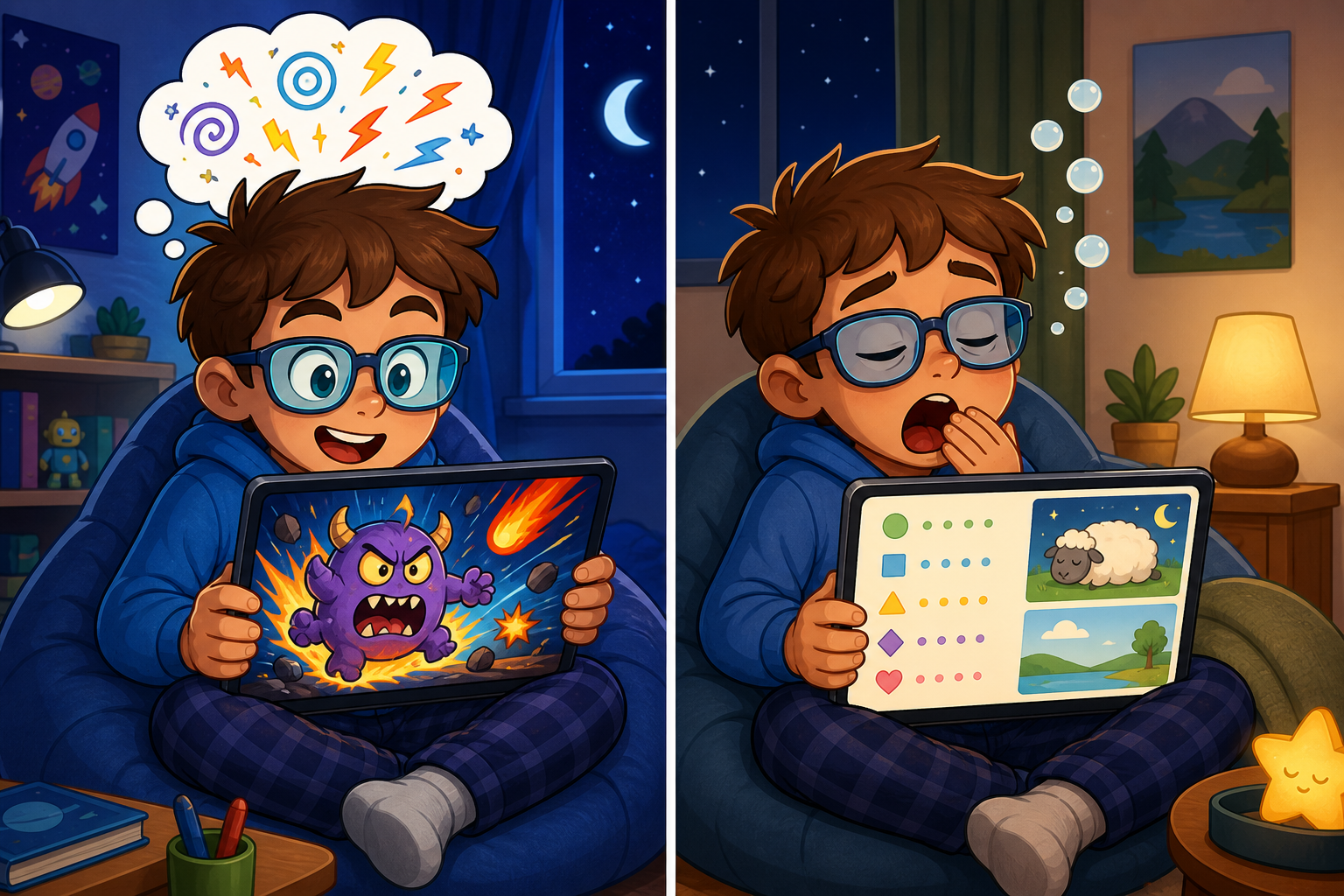
A fascinating 2019 study in the British Journal of Psychology tested this exact concept. Researchers had participants use Facebook on an iPad before sleep under different conditions. They manipulated the light (normal blue light vs. filtered blue light) and the arousal level of the content (the user’s actual Facebook feed vs. a boring, fake Facebook feed).
The results were revealing. The researchers found no evidence that simply filtering the blue light improved sleep quality on its own. Sleep quality only improved when participants viewed the boring content while using the blue light filter.
In other words, if you are reading a stressful news article, arguing in a comment section, or playing an intense video game, your brain will release stress hormones that keep you awake regardless of what color the light is.
Related: Screen Time vs. Exercise: How Digital Habits Shape Your Body
The Surprising Benefits of Blue Light
Because of its reputation for ruining sleep, blue light is often viewed as a toxic exposure. But during daylight hours, blue light is incredibly beneficial.
A 2022 systematic review in Frontiers in Physiology looked at how blue light affects young adults. While it confirmed that evening exposure decreases sleep duration, it also found that daytime blue light exposure significantly increases cognitive performance, boosts alertness, and decreases reaction time.
Your body expects a massive dose of blue light in the morning to tell it that a new day has begun. Getting bright, natural sunlight in your eyes shortly after waking up is one of the most effective ways to anchor your circadian rhythm, which ironically helps you sleep better that night.
Comparing Blue Light Effects by Time of Day
| Measurement | Daytime Exposure | Nighttime Exposure |
|---|---|---|
| Melatonin | Keeps levels appropriately low | Suppresses natural evening rise |
| Alertness | Increases focus and energy | Causes unwanted wakefulness |
| Cognition | Improves reaction time and memory | Can impair next-day memory if sleep is lost |
| Mood | Can elevate mood and treat seasonal depression | Linked to increased stress if it disrupts sleep |
Common Questions About Blue Light
Do phone “night mode” settings work?
Studies show that software filters like “Night Shift” or “Eye Comfort Shield” do reduce blue light emission, but they are not a perfect shield. A 2024 observational study found that using blue light filter apps did not result in sustained, long-term improvements across all sleep parameters, though it showed minor benefits for some age groups. Brightness and content still matter.
Does blue light damage your eyes?
Currently, there is no consistent evidence that the low-intensity blue light emitted by consumer electronics causes physical damage to the human retina. The primary concern with screens is eye strain from staring without blinking, not the specific wavelength of the light.
Can evening light affect the rest of my body?
Yes. Because light disrupts your master clock, it can impact your metabolism. A 2025 review highlighted that chronic artificial light at night can desynchronize the clock in your liver, potentially contributing to insulin resistance and metabolic issues over time.
Practical Guidance for Better Sleep
Based on the current scientific consensus, here is how you can practically manage light for better health:
1. Dim the brightness: The intensity of the light often matters just as much as the color. Turn down the brightness on your screens and home lighting 1 to 2 hours before bed.
2. Switch to warm bulbs: Use “warm white” (lower Kelvin) LED or incandescent bulbs in your bedroom and living room lamps, as they suppress melatonin significantly less than “cool white” bulbs.
3. Manage your content: Blue-blocking glasses will not help if your brain is overstimulated. Avoid highly engaging, stressful, or interactive content in the hour before sleep.
4. Get morning light: Expose your eyes to bright, natural daylight within an hour of waking up. This sets your biological clock and makes it easier to fall asleep later.
The Bottom Line
The science is clear that blue light heavily influences our internal clocks. Exposure to blue light in the evening suppresses melatonin and can delay the onset of sleep.
However, the evidence that blue-light blocking glasses or screen filters act as a cure-all is weak. While they may offer slight benefits, especially for people with existing insomnia, they do not address the full problem. The brightness of the light and the psychological stimulation of the content you are consuming are equally responsible for keeping you awake. To truly improve your rest, you need to manage your overall light environment and your digital habits together.
Quick Reference: Key Studies
| Study Focus | Key Finding | Source |
|---|---|---|
| Glasses Meta-Analysis | Found no significant objective improvements in sleep latency or total sleep time from wearing blue-blocking glasses in the general public. | PMID 41341515 |
| Home Lighting | Cool white LED and fluorescent lamps suppress melatonin roughly 4 times more than warm white LEDs or incandescent bulbs. | PMID 41565717 |
| Content vs. Light | Filtering blue light on an iPad only improved sleep quality if the user was looking at boring, low-arousal content. | PMID 30291634 |
| Insomnia Treatment | Wearing amber-tinted glasses for 2 hours before bed significantly improved subjective sleep quality for people with insomnia symptoms. | PMID 29101797 |
| Timing of Exposure | Evening blue light exposure after 9:00 PM caused significantly worse sleep and next-day motor performance than earlier evening exposure. | PMID 40656989 |
Last updated: July 2026
This article synthesizes findings from peer-reviewed research. It is for educational purposes only and does not constitute medical advice. Consult a healthcare provider before starting any new regimen or treating a sleep disorder.

Leave a Reply