
Imagine stepping out of the shower. You have just washed with soap, and you feel completely clean. In reality, your skin is still teeming with billions of living organisms. While the idea of being covered in bacteria might sound alarming, these invisible residents are actually working hard to keep you healthy.
This collection of microscopic life is known as your microbiome (my-kroh-BY-ohm), which is a community of microorganisms living in a specific environment. On your skin, this ecosystem acts as a natural, invisible shield. It serves as a physical and chemical barrier, trains your immune system, and protects your body from harmful infections.
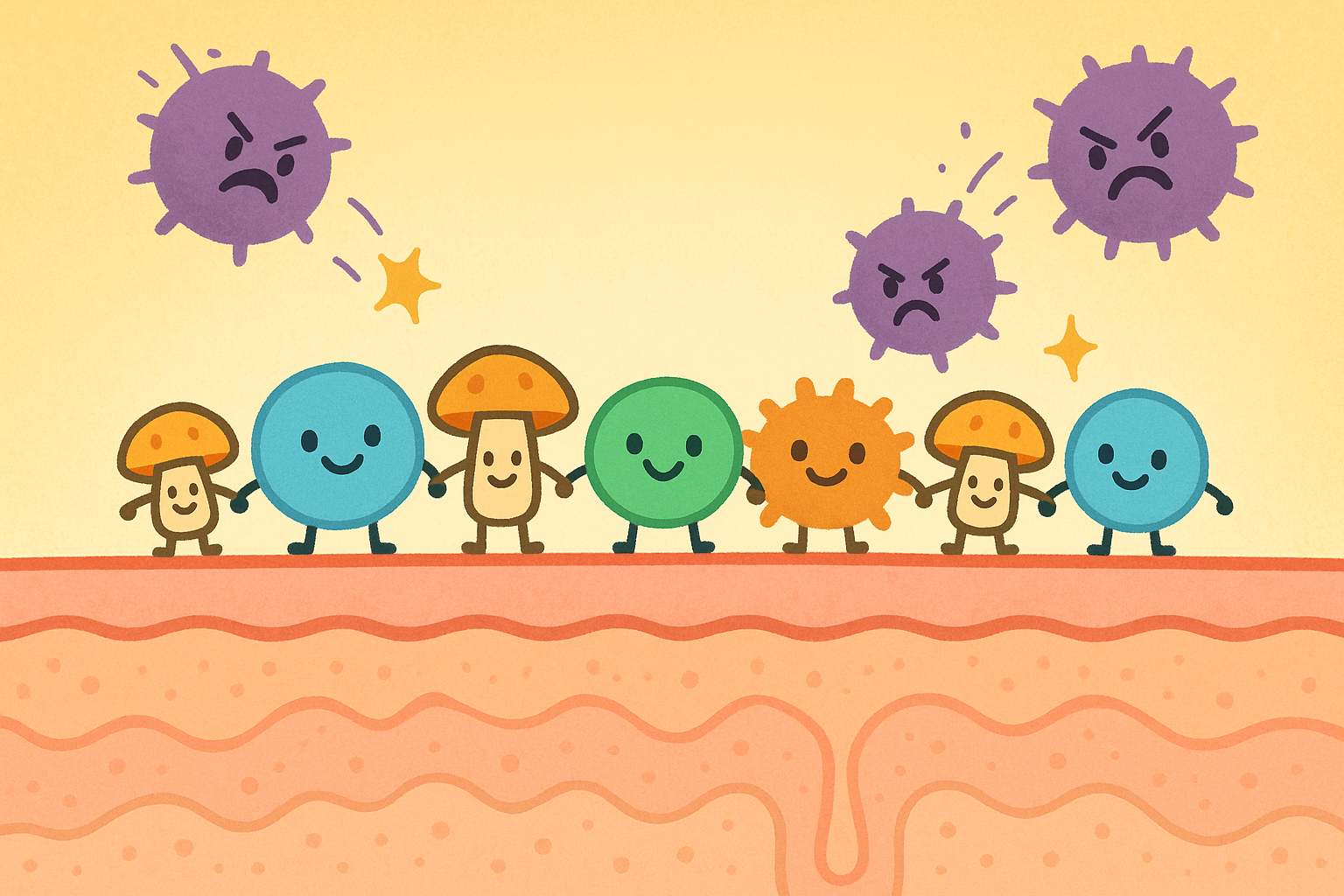
For a long time, scientists focused mostly on the bacteria in our digestive system. Today, researchers are discovering that the bacteria, fungi, and viruses living on our skin are just as important. When this delicate ecosystem is balanced, our skin stays healthy. When it falls out of balance, it can lead to conditions like acne, eczema, and dandruff.
What the Research Shows About Your Skin Ecosystem
Your skin is the largest organ in your body, and it provides about 30 square meters of diverse habitat for microbes. A 2021 review in Infection and Immunity explains that the microbes on your skin are not just hitchhikers. They are active participants in maintaining the integrity of your skin barrier.
Early Immune System Training
The relationship between your skin and its microbes begins right after birth. During a specific window of time in early life, harmless microbes settle on a newborn’s skin. This process introduces the microbes to the infant’s developing immune system.
The immune system learns to recognize these helpful bugs as friends rather than foes. This creates a state of tolerance. If this early introduction is disrupted, the immune system might overreact to normal skin bacteria later in life, which can contribute to chronic skin inflammation.
The Desert Diet of Skin Microbes
Compared to the warm, nutrient-rich environment of your gut, your skin is a harsh place to live. It is dry, acidic, and relatively poor in nutrients.
A 2026 paper in The British Journal of Dermatology describes how skin microbes have evolved to survive in this desert-like environment. They feed on the natural oils and dead cells your skin sheds. As they digest these skin lipids, the bacteria produce new chemical byproducts. These byproducts, known as microorganism-metabolized bioactive molecules, act as signals that tell your skin cells how to behave. This chemical conversation helps regulate inflammation and keeps the skin barrier strong.
Why Scientists Are Moving Away From Mice
For decades, scientists used mice to study skin diseases. However, a 2020 study in Experimental Dermatology points out that mouse skin is incredibly different from human skin. Mouse skin is much thinner, has far more hair follicles, and produces entirely different immune proteins.
Because the human skin microbiome is unique, testing human bacteria on mouse skin often leads to inaccurate results. To solve this, researchers now use advanced 3D human skin models grown in laboratories. These models allow scientists to test how human skin cells and human bacteria interact in a highly controlled, realistic environment.
How Skin Bacteria Actually Protect You
The helpful microbes on your skin are known as commensals (kuh-MEN-suls). These are microbes that live on your body without causing harm, and they often provide significant benefits. They protect you through a process called defensive symbiosis, which works in a few distinct ways.
Taking Up Space
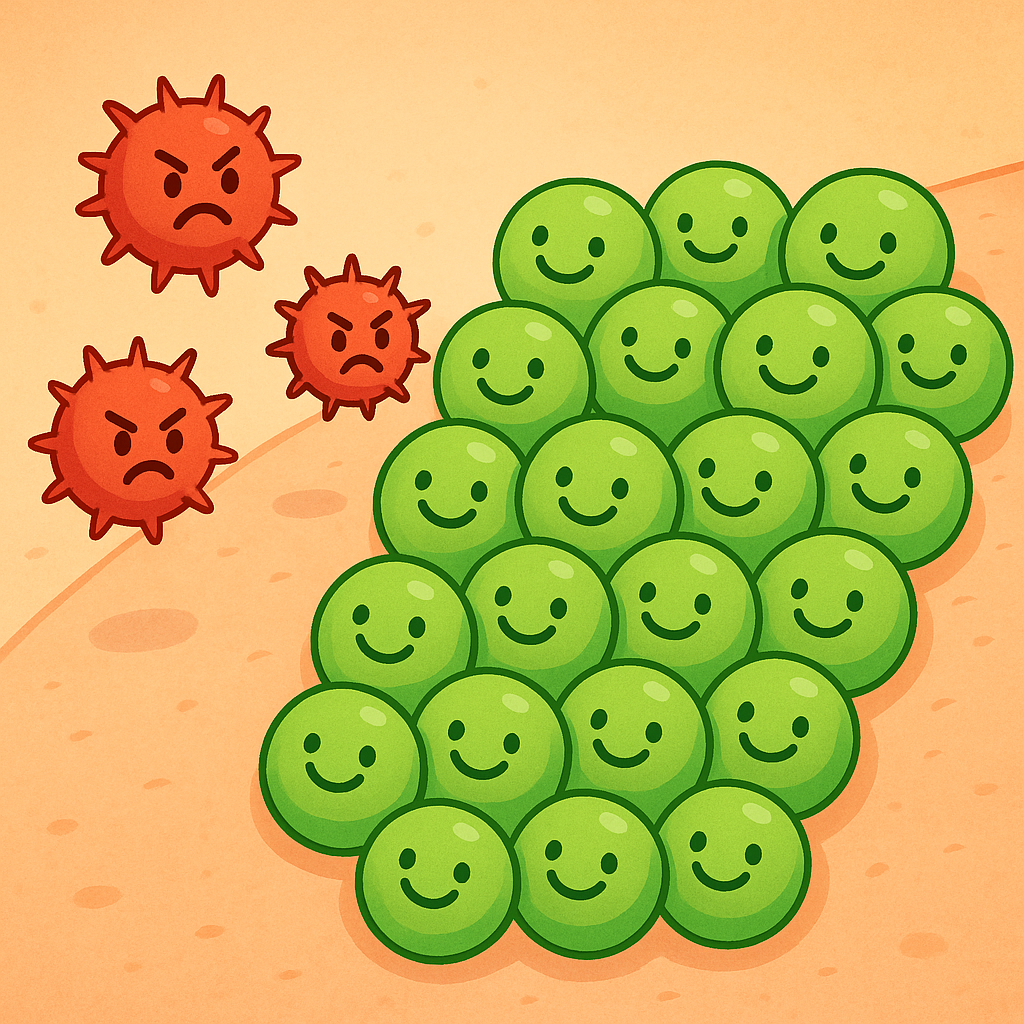
The simplest way healthy bacteria protect you is by taking up space. Because your skin has limited nutrients, a dense population of friendly bacteria leaves no room or food for harmful, disease-causing bacteria to settle and grow. This is known as competitive exclusion.
Producing Chemical Weapons
Helpful skin bacteria actively fight off invaders. They produce antimicrobial peptides (an-tie-my-KROH-bee-uhl PEP-tyds), which are small proteins that act like natural antibiotics. These proteins target and destroy harmful pathogens while leaving the friendly bacteria unharmed.
Maintaining Skin Acidity
Healthy skin is slightly acidic, which makes it hostile to many dangerous pathogens. Skin bacteria help maintain this acidity. As they feed on the natural oils produced by your skin, they break them down into free fatty acids. These acids lower the pH of your skin, creating an environment where healthy microbes thrive and dangerous ones die off.
Related: The Science of Anti-Aging Skincare: What Actually Works
When the Balance Shifts: Understanding Dysbiosis
While your skin microbiome is usually stable, it can be disrupted by harsh soaps, antibiotics, environmental changes, or shifts in your immune system. This imbalance is called dysbiosis (dis-bye-OH-sis).
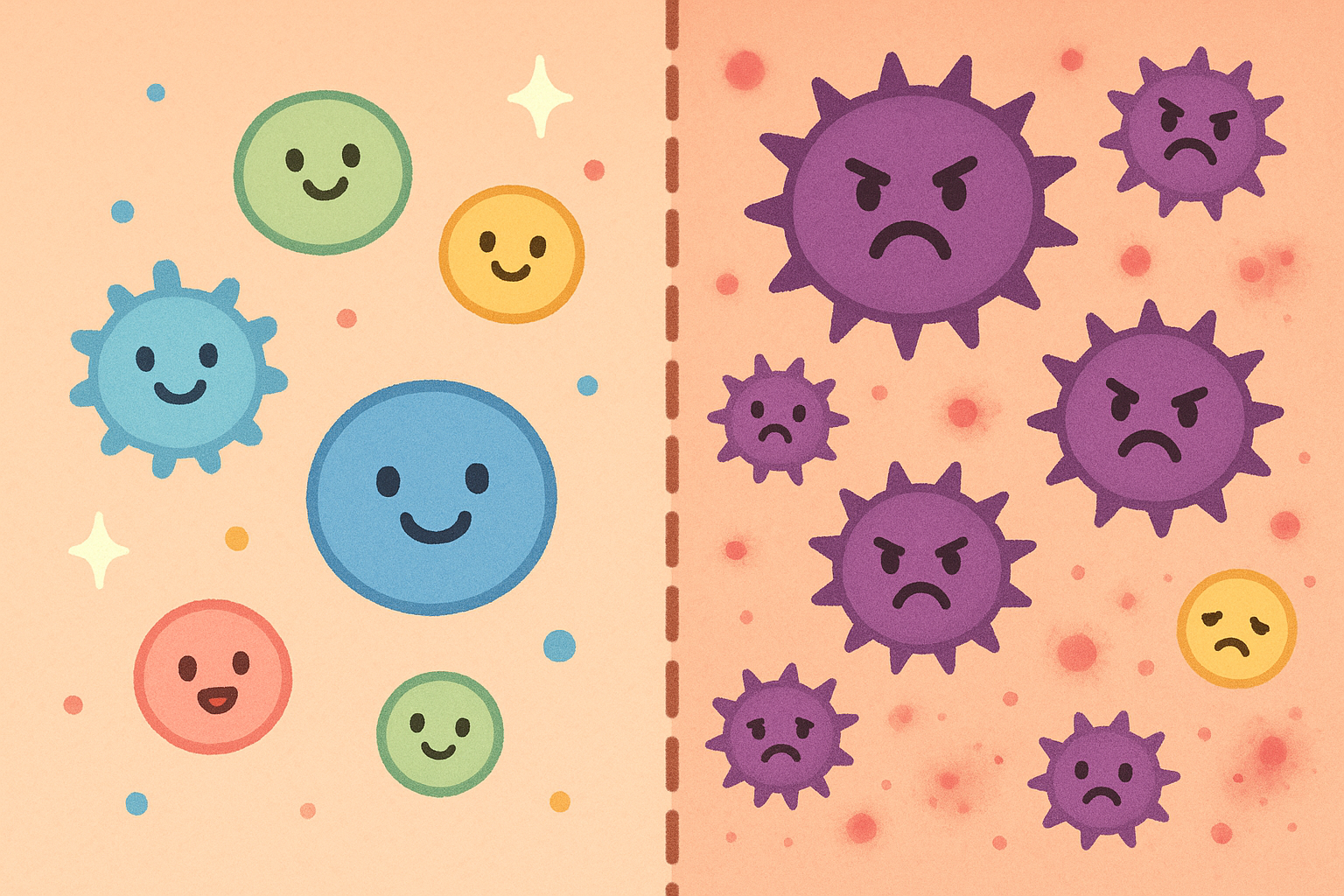
During dysbiosis, the normal harmony is lost. This can allow a pathobiont (path-oh-BY-ont) to take over. A pathobiont is a microbe that is normally harmless but can cause disease if it grows out of control.
Acne and Sebum Overload
A common example of a pathobiont is Cutibacterium acnes. As the name suggests, this bacterium is linked to acne. Under normal conditions, it lives peacefully in your hair follicles. However, if your skin produces too much oil, this bacterium can multiply rapidly. As it breaks down the excess oil, it creates byproducts that trigger severe inflammation, leading to acne breakouts.
Eczema and Staph Bacteria
Atopic dermatitis, commonly known as eczema, is heavily linked to the skin microbiome. Research shows that people with eczema often have a severe overgrowth of a bacterium called Staphylococcus aureus. As this bacterium multiplies, the overall diversity of the skin microbiome drops. This overgrowth damages the skin barrier and triggers the immune system, causing the red, itchy patches associated with the condition.
Psoriasis and Immune Reactions
Psoriasis is a condition where skin cells multiply too quickly, creating thick, scaly patches. A review in Seminars in Cutaneous Medicine and Surgery notes that psoriasis involves a complex mix of genetics and immune system errors. Recent evidence shows that the skin microbiome is also altered in people with psoriasis, suggesting that the bacteria on the skin may interact with the immune system to worsen the inflammation.
Fungal Imbalances in Humans and Pets
Bacteria are not the only residents on your skin. Fungi live there as well. A common skin fungus called Malassezia usually lives quietly on oily areas of the human body. But if it overgrows, it can cause conditions like dandruff or seborrheic dermatitis.
Interestingly, this is not just a human problem. Researchers studying canine skin in FEMS Microbiology Ecology looked at the fungal communities on dogs. They found that healthy dogs have a rich, diverse fungal microbiome. However, dogs suffering from allergic skin disease showed a significant drop in fungal diversity and an overgrowth of specific fungi. This highlights that microbial balance is crucial for healthy skin across different mammal species.
Related: Treating Fungal Skin Infections: What the Latest Science Actually Says
Common Questions About the Skin Microbiome
Are all bacteria on my skin bad?
No. The vast majority of the bacteria on your skin are harmless or actively helpful. They train your immune system, fight off dangerous infections, and help keep your skin barrier strong.
Does washing my face destroy my microbiome?
Normal washing with gentle cleansers removes dirt and excess oil, but it does not permanently destroy your microbiome. The bacteria live deep in your pores and hair follicles, allowing them to quickly repopulate the skin surface after you wash. However, over-washing with harsh, stripping soaps can temporarily disrupt the balance and irritate your skin.
Can probiotics improve my skin?
Research into topical probiotics is ongoing. While applying live bacteria to the skin shows promise in early studies for conditions like eczema, the science is still young. Currently, supporting your existing microbiome by using gentle skincare products is the most reliable approach.
The Bottom Line
Your skin is not just a simple wrapper for your body. It is a complex, living ecosystem. The bacteria, fungi, and viruses that make up your skin microbiome act as a crucial line of defense against the outside world.
We know that these microbes communicate with our immune system, maintain the acidity of our skin, and actively fight off harmful pathogens. We also know that an imbalance in this ecosystem is strongly linked to common skin conditions like acne, eczema, and fungal infections.
What remains uncertain is exactly how we can permanently alter or “fix” a damaged skin microbiome. While early experiments with specialized skin creams and targeted therapies are promising, more research using advanced human 3D skin models is needed before personalized microbiome treatments become standard medical care. For now, the best way to support your skin’s invisible shield is to treat it gently and avoid harsh, stripping chemicals when possible.
Quick Reference: Key Studies
| Study Focus | Key Finding | Source |
|---|---|---|
| Skin Immunity and Pathobionts | Skin microbes train the immune system in early life and protect against pathogens, but can cause disease if balance is lost. | PMID 33468585 |
| Lipid-Microbiome Crosstalk | Skin microbes metabolize natural skin oils into bioactive molecules that regulate skin health and inflammation. | PMID 41078307 |
| 3D Human Skin Models | Mouse skin is too different from human skin for accurate microbiome research, making human 3D models the new standard. | PMID 32748435 |
| Fungal Dysbiosis in Dogs | Dogs with allergic skin disease show a significant loss of fungal diversity compared to healthy dogs, mirroring human skin issues. | PMID 26542075 |
| Psoriasis and the Microbiome | Psoriasis involves a mix of genetics, immune system errors, and alterations in the local skin microbiome. | PMID 28745729 |
Last updated: April 2026
This article synthesizes findings from peer-reviewed research. It is for educational purposes only and does not constitute medical advice. Consult a healthcare provider before starting any new regimen.
Leave a Reply