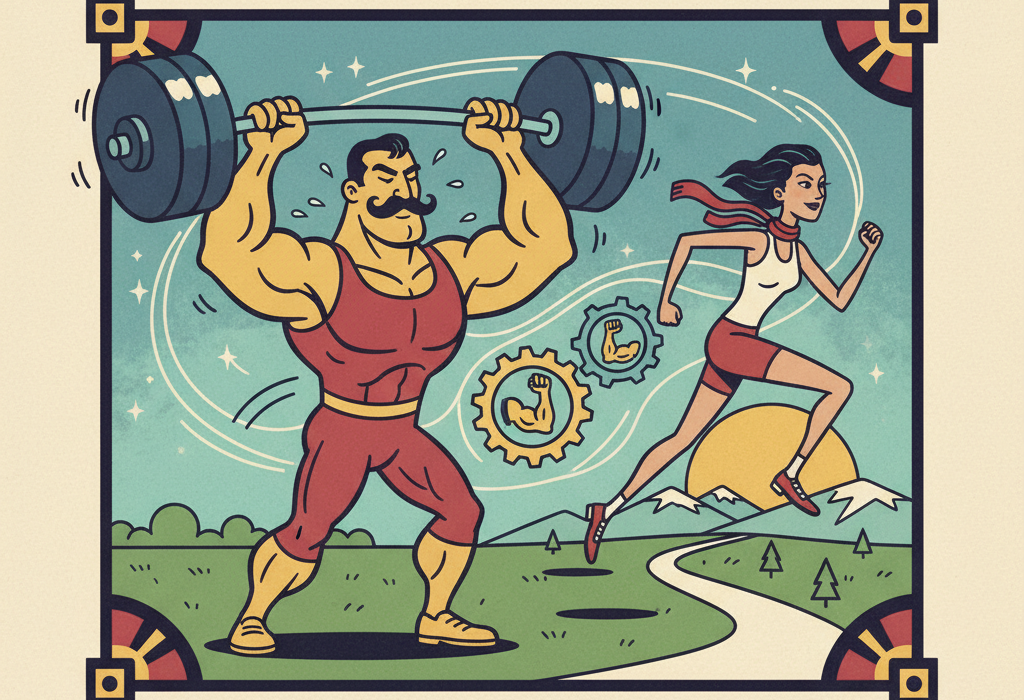
Step into almost any gym, and you will notice a clear divide. On one side, people are running on treadmills and pedaling stationary bikes. On the other side, people are lifting heavy weights. Rarely do these two groups mix.
For decades, a belief has circulated in the fitness world that mixing cardiovascular exercise with weightlifting will ruin your progress. Runners fear that lifting weights will make them bulky and slow. Weightlifters fear that running will destroy their hard-earned muscle.
In sports science, combining these two types of exercise is called concurrent training (kuhn-KUR-uhnt TRAY-ning). The fear that one type of exercise will cancel out the other is known as the “interference effect.”
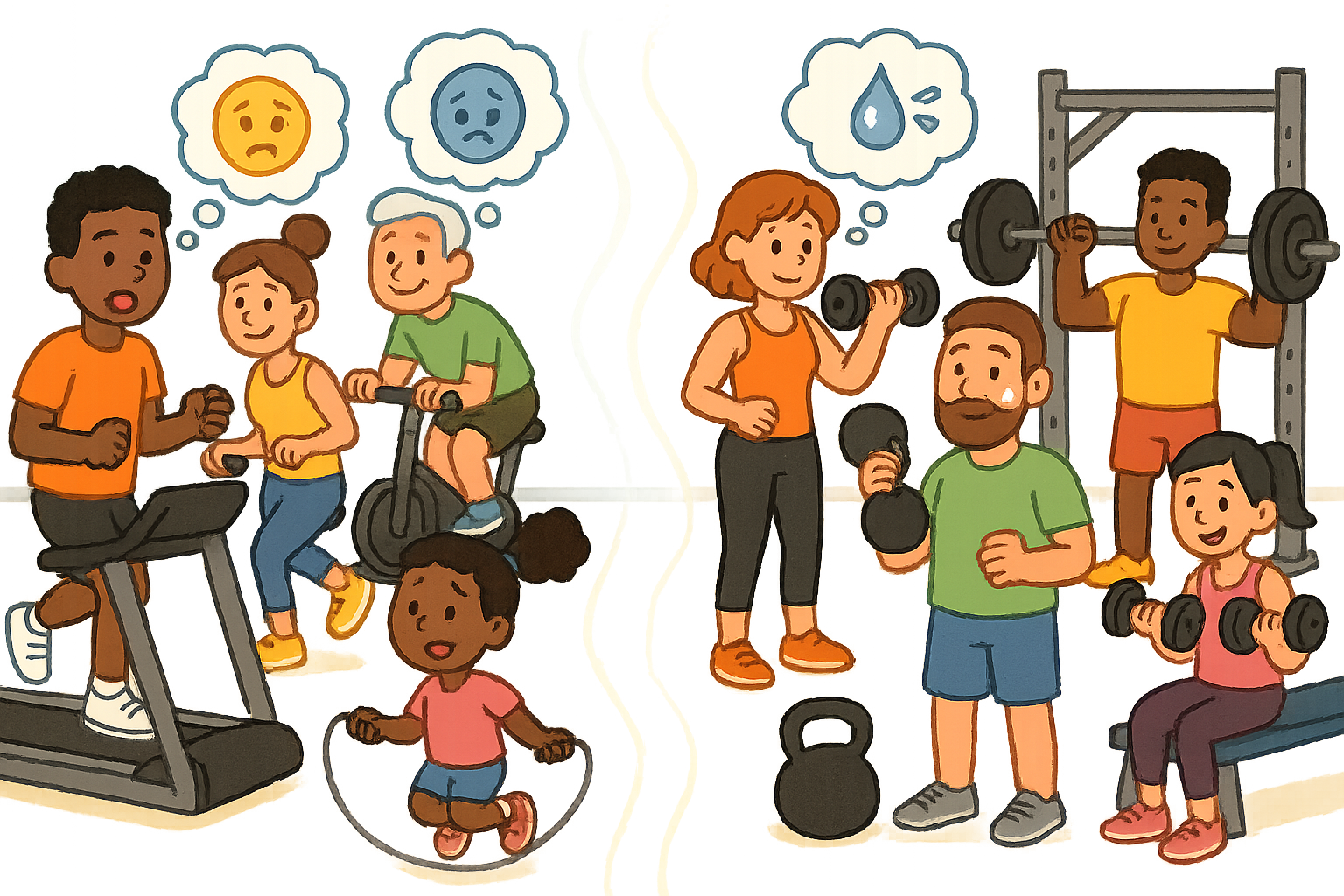
But does the human body really force you to choose between being strong and having good endurance?
The short answer is no. You can build strength and endurance at the same time. However, a deep dive into the latest scientific research reveals that how and when you combine these exercises determines whether they help each other or get in each other’s way.
What the Research Shows About Concurrent Training
To understand how the body handles concurrent training, scientists have studied everyone from untrained beginners to elite athletes. The results show a clear pattern based on your current fitness level and your primary goals.
Does Cardio Ruin Muscle Gains?
If you are a beginner or moderately active, combining cardio and weights is highly beneficial and will not stop you from getting stronger.
A large 2021 review in Sports Medicine analyzed 27 different studies to see how concurrent training affects lower-body strength. The researchers found that for untrained and moderately trained individuals, adding endurance training to a weightlifting routine had zero negative impact on their ability to build maximum strength.
However, the rules change for highly trained athletes. The same review found that trained individuals did experience a drop in strength gains when they combined cardio and lifting. But there was a catch. This negative interference only happened when the athletes performed their cardio and weight training in the exact same session, with less than 20 minutes of rest between them. When the athletes separated their cardio and lifting by at least two hours, the negative effects disappeared.
Does Lifting Weights Make Endurance Athletes Slow?
Many runners and cyclists avoid the weight room because they believe heavier muscles require more oxygen to carry around. Science tells a different story.
Researchers in 1988 studied experienced cyclists and runners who added heavy resistance training to their routines for 10 weeks. The athletes lifted weights three days a week while maintaining their normal cardio training.
The results were surprising. The athletes increased their leg strength by an average of 30%, but their thigh size and muscle fiber area did not increase at all. They got stronger without getting bigger. More importantly, their endurance improved significantly. Their short-term endurance improved by 11% to 13%, and their time to exhaustion during long-term cycling jumped from 71 minutes to 85 minutes.
More recent research confirms this. A 2017 review in Sports Medicine looked at endurance athletes who added explosive training or heavy weight training to their routines. Both types of weight training successfully improved the athletes’ running economy (RUN-ning ee-KON-uh-mee), which is a measure of how efficiently the body uses oxygen while running at a steady pace. The researchers noted that longer training programs (14 to 20 weeks) produced the best improvements.
The Power Problem: Who Needs to Be Careful
While everyday fitness enthusiasts and endurance athletes benefit greatly from combining cardio and weights, athletes who rely on explosive power need to be careful.
Power is the ability to generate a lot of force very quickly. Think of a baseball player swinging a bat or a volleyball player jumping for a spike. For these athletes, long, slow cardiovascular training can actually drain their power.
A 2008 study in the Journal of Strength and Conditioning Research tracked 16 Division-I college baseball players over an 18-week season. All the players lifted weights, but they were split into two groups for their cardio. One group did moderate-to-high intensity jogging or cycling for 20 to 60 minutes a day. The other group did short, intense sprint training.
By the end of the season, the results were drastically different. The group that did the long, steady cardio saw their lower-body power decrease by an average of 39 watts. Meanwhile, the sprint group increased their power by an average of 210 watts. This shows that for power-dependent athletes, long endurance sessions are not compatible with their goals.
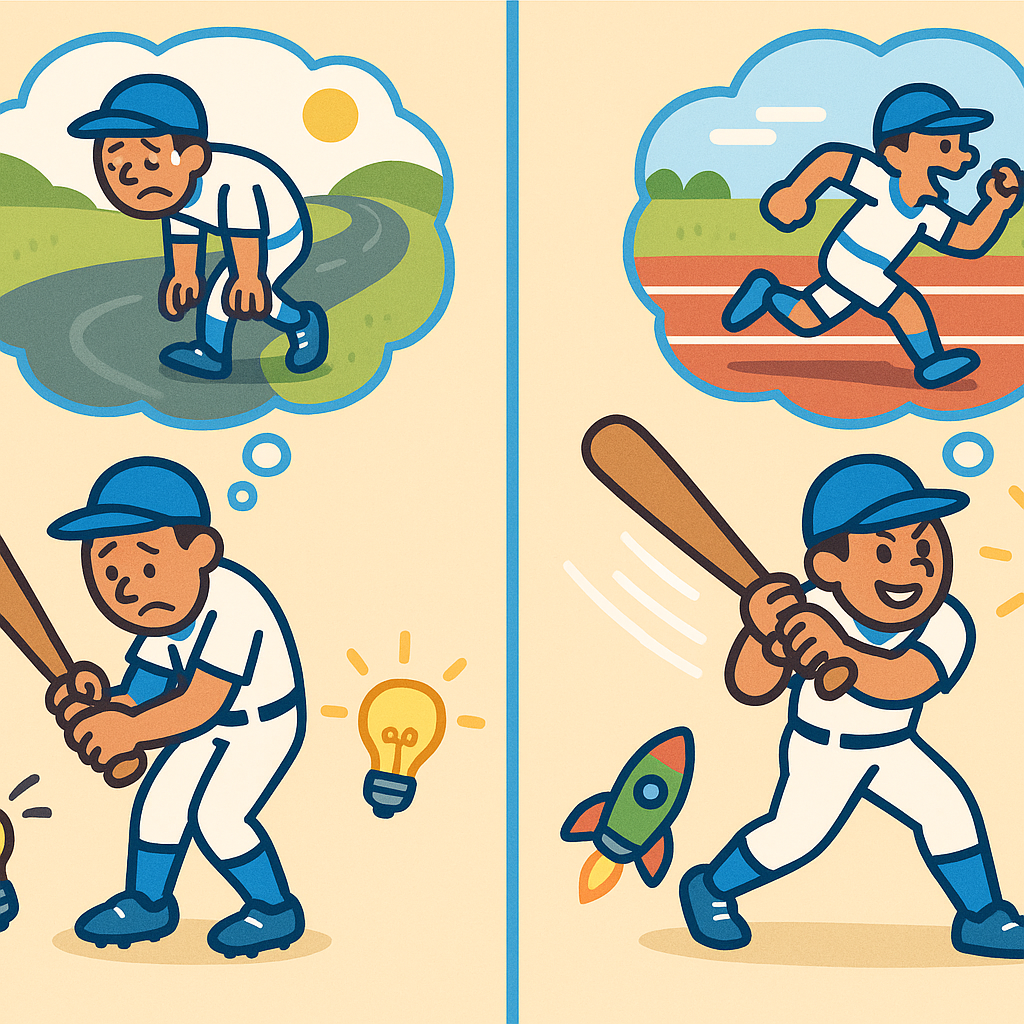
Similarly, a 2020 study in the European Journal of Applied Physiology compared untrained women to female endurance athletes. Both groups did the same 11-week strength training program. While both groups gained the same amount of maximum strength and muscle mass, the endurance athletes saw significantly less improvement in their jumping height and high-velocity power. Their ongoing endurance training blunted their ability to become explosive.
How This Might Work: Brain vs. Muscle
Why does the body react this way? The answer lies in how our muscles and nervous system adapt to stress.
When you lift weights, your body undergoes two main types of changes. As outlined in a 2007 review, early strength gains are mostly neurological. Your brain simply gets better at sending strong, synchronized signals to your muscle fibers. Later, morphological changes occur, which include hypertrophy (hy-PER-troh-fee), or the physical growth of the muscle cells.
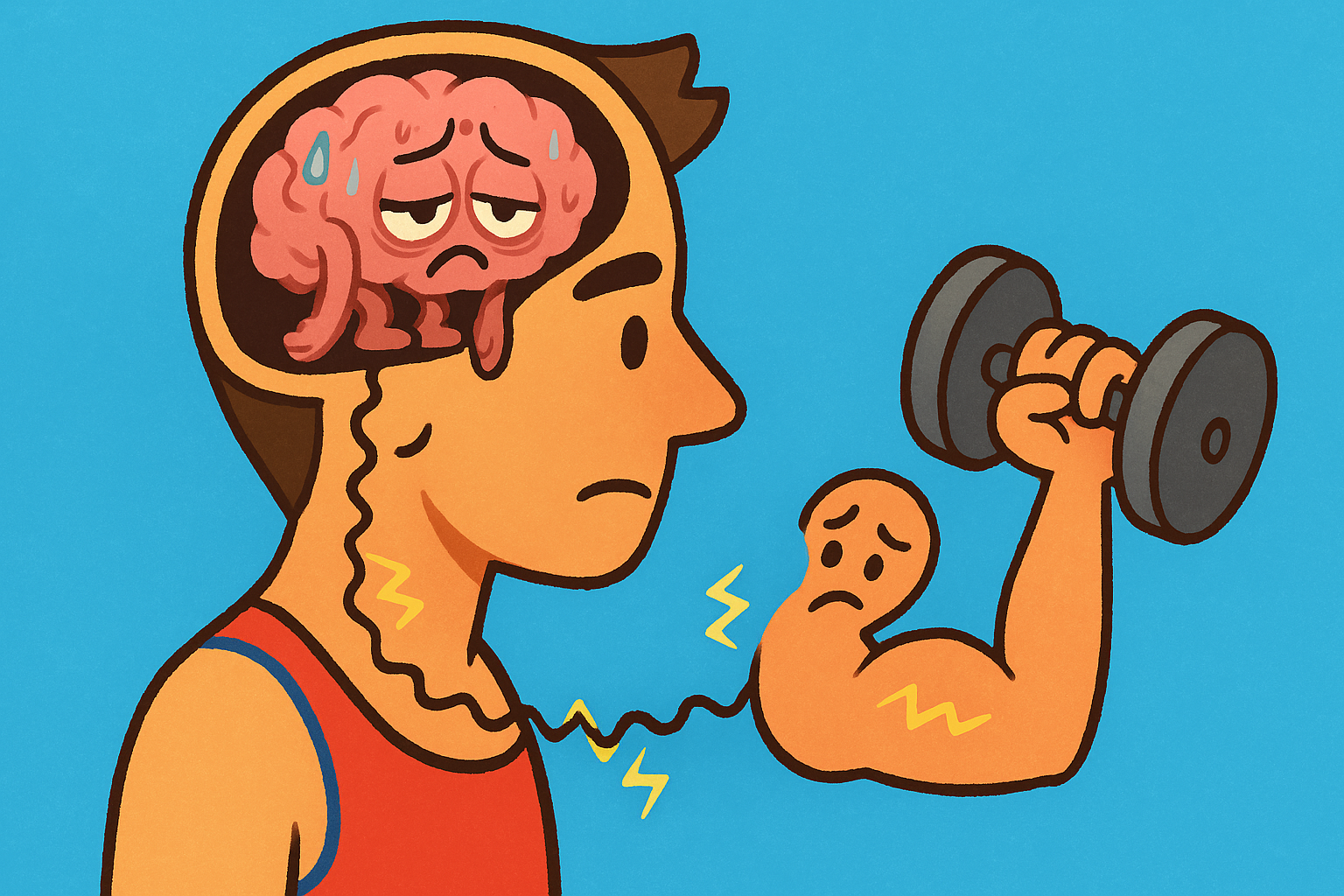
Endurance training and strength training send conflicting signals to the body at a cellular level. However, fatigue in the brain also plays a major role.
Central fatigue (SEN-truhl fuh-TEEG) occurs when the central nervous system gets tired and cannot send strong signals to the muscles, even if the muscles themselves are fully recovered. A 2008 study found that endurance athletes and resistance athletes experience central fatigue differently. After exhausting exercise, endurance athletes recovered their central nervous system function in about 20 minutes. Resistance-trained athletes took much longer, still showing brain fatigue after 30 minutes.
If your brain is fatigued from a hard cardio session, it cannot recruit your muscle fibers effectively to lift heavy weights. This is why doing both in the same hour can lead to poor results.
Health Benefits for Older Adults and Heart Patients
While athletes worry about peak performance, combining strength and endurance training is one of the best things you can do for general health, aging, and disease prevention.
As we age, we naturally lose muscle mass and strength, a condition known as sarcopenia (sar-koh-PEE-nee-uh). A 2004 review highlights that resistance training is a highly effective countermeasure for this. Lifting weights improves muscle quality, increases resting energy expenditure, and makes daily tasks easier for older adults.
Related: How to Prevent Age-Related Muscle Loss: What the Latest Science Says
The American Heart Association published a comprehensive scientific statement in 2007 endorsing resistance training for individuals with and without cardiovascular disease. They noted that while aerobic exercise is excellent for improving heart and lung capacity, resistance training provides unique benefits.
| Benefit | Aerobic Exercise | Resistance Training |
|---|---|---|
| Muscle Strength | No change | Large increase |
| Bone Density | Small increase | Small increase |
| Body Fat | Moderate decrease | Small decrease |
| Resting Heart Rate | Moderate decrease | No change |
| Basal Metabolic Rate | Small increase | Large increase |
Summary of exercise effects based on the American Heart Association 2007 statement.
The AHA statement confirms that moderate weight training is safe even for patients with controlled heart failure, helping them regain the strength needed for daily independence.
Furthermore, neuromuscular training (which combines strength, balance, and jumping exercises) has profound safety benefits. A 1999 prospective study tracked over 1,200 high school athletes. Female athletes naturally have a much higher risk of serious knee injuries, like ACL tears, compared to males. However, female athletes who completed a 6-week preseason jump and strength training program had a significantly lower rate of knee injuries than untrained females. In fact, their injury rate dropped so much that it was statistically similar to the male athletes.
Related: The Science of Weight Training: How Resistance Exercise Changes Your Body
Practical Guidance: How to Combine Cardio and Lifting
If you want the health benefits of both cardio and weight training, the science offers clear guidelines on how to structure your routine.
1. Space out your sessions.
To avoid the interference effect, do not do your cardio and weightlifting back-to-back. Give your central nervous system time to recover. Spacing your workouts by at least two hours (or better yet, doing them on different days) ensures your body can adapt to both.
2. Match your cardio to your goals.
If your main goal is to build explosive power or maximum strength, long distance running might hold you back. Instead, opt for short, high-intensity sprint intervals. If your goal is general health or marathon running, steady-state cardio is perfectly fine.
3. Pay attention to volume.
When lifting weights, how many sets you do matters. A 2015 study compared participants doing 1, 3, or 5 sets of resistance exercises. The researchers found a clear dose-response: 5 sets built more strength, muscle endurance, and size than 3 sets, which was better than 1 set. However, if you are also doing heavy endurance training, doing 5 sets of every lifting exercise might lead to overtraining. Balance your total workload. For older adults, limiting resistance training to 3 days a week prevents impairment in strength development when aerobic training is also being performed.
Common Questions About Concurrent Training
Will lifting weights make me too bulky for running?
No. Research shows that endurance athletes who add heavy resistance training get substantially stronger without significantly increasing their muscle size or body weight.
Should I do cardio before or after I lift weights?
If you must do them in the same session, do the activity that aligns with your primary goal first. If you want to build strength, lift first. If you are training for a race, run first. However, separating them by a few hours is the best approach.
The Bottom Line
The human body is highly adaptable. For the vast majority of people, combining cardiovascular endurance training with heavy resistance training is not only possible but highly recommended for optimal health, bone density, and metabolic function.
Endurance athletes can improve their efficiency and time to exhaustion by lifting heavy weights. Power athletes should be cautious with long, slow cardio and stick to sprints to maintain their explosiveness. By simply spacing out your workouts and managing your total volume, you can enjoy the benefits of both the treadmill and the weight room without sacrificing your hard-earned progress.
Quick Reference: Key Studies
| Study Focus | Key Finding | Source |
|---|---|---|
| Concurrent Training Meta-Analysis | Cardio hurts strength gains in trained individuals only if done in the same session (<20 mins apart). | PMID 33751469 |
| Endurance Training in Women | Endurance athletes gained strength from lifting but saw blunted gains in jumping power compared to untrained women. | PMID 32372216 |
| Rest-Pause vs. Traditional Sets | Rest-pause training gave similar strength gains but better muscular endurance and thigh growth. | PMID 28617715 |
| Lifting for Runners | Explosive and heavy weight training improved running economy by about 4% in endurance athletes. | PMID 27497600 |
| Volume of Resistance Training | 5 sets per exercise produced greater strength and size gains than 3 sets or 1 set. | PMID 25546444 |
| Power vs. Endurance | Baseball players lost lower-body power with steady cardio but gained power with sprint training. | PMID 18296980 |
| Central Fatigue Recovery | Endurance athletes recover from central nervous system fatigue faster than resistance athletes. | PMID 18569560 |
| Adaptations to Lifting | Early strength gains are neurological (brain-to-muscle); later gains are morphological (muscle growth). | PMID 17241104 |
| AHA Resistance Training Guidelines | Weight training is safe for cardiovascular disease patients and improves blood pressure and metabolism. | PMID 17638929 |
| Physiology of Soccer | Soccer requires high aerobic capacity, but strength training improves essential jumping and sprinting skills. | PMID 15974635 |
| Resistance Training in Older Adults | Lifting counteracts sarcopenia, improves muscle quality, and increases daily energy expenditure. | PMID 15107011 |
| Injury Prevention in Females | A 6-week neuromuscular training program drastically reduced serious knee injuries in female athletes. | PMID 10569353 |
| Lifting for Cyclists and Runners | 10 weeks of heavy leg lifting improved cycling time to exhaustion without increasing leg size. | PMID 3209573 |
Last updated: October 2026
This article synthesizes findings from peer-reviewed research. It is for educational purposes only and does not constitute medical advice. Consult a healthcare provider before starting any new regimen.


Leave a Reply