
If you have ever woken up with stiff, achy knees, you have likely wondered what you can do to grease the squeaky hinges of your body. Two names that frequently appear in joint health discussions are chondroitin and hyaluronic acid.
Do these substances actually work? According to a growing body of research, the answer is a cautious yes. Studies show that combining chondroitin and hyaluronic acid can improve joint lubrication, reduce pain, and may even provide the biological building blocks needed to regenerate damaged cartilage.
Whether you are considering oral supplements or joint injections, it helps to understand what these molecules actually do. Here is a look at what the latest science shows about chondroitin, hyaluronic acid, and the future of joint repair.
How This Might Work: The Biology of Healthy Joints
To understand how these treatments work, it helps to picture your joints as complex shock-absorbing systems. Where two bones meet, they are capped with a smooth, rubbery tissue called articular cartilage. The entire joint is enclosed in a capsule filled with synovial fluid, which acts like motor oil to keep the moving parts gliding smoothly.

Two of the most important ingredients in this system are hyaluronic acid and chondroitin sulfate.
- Hyaluronic acid (hi-ah-loo-RON-ik AS-id) is a large, sticky sugar molecule. It is the main ingredient that makes your joint fluid thick and slippery. It acts as a lubricant during slow movements and a shock absorber during fast, heavy movements.
- Chondroitin sulfate (kon-DROY-tin SUL-fate) is a structural molecule found directly inside your cartilage. It has a negative electrical charge that attracts and holds onto water. This water retention is what gives cartilage its spongy, resilient bounce.
Your cartilage is maintained by specialized builder cells called chondrocytes (KON-dro-sites). In a healthy joint, these cells constantly repair daily wear and tear.
However, in osteoarthritis (os-tee-oh-ar-THRY-tis), this system breaks down. The joint fluid loses its thick, protective hyaluronic acid, and the cartilage loses its water-retaining chondroitin. The joint becomes inflamed, and the builder cells stop repairing the damage and instead start releasing enzymes that break the cartilage down further. Related: Cartilage Repair Options: What the Latest Science Actually Says
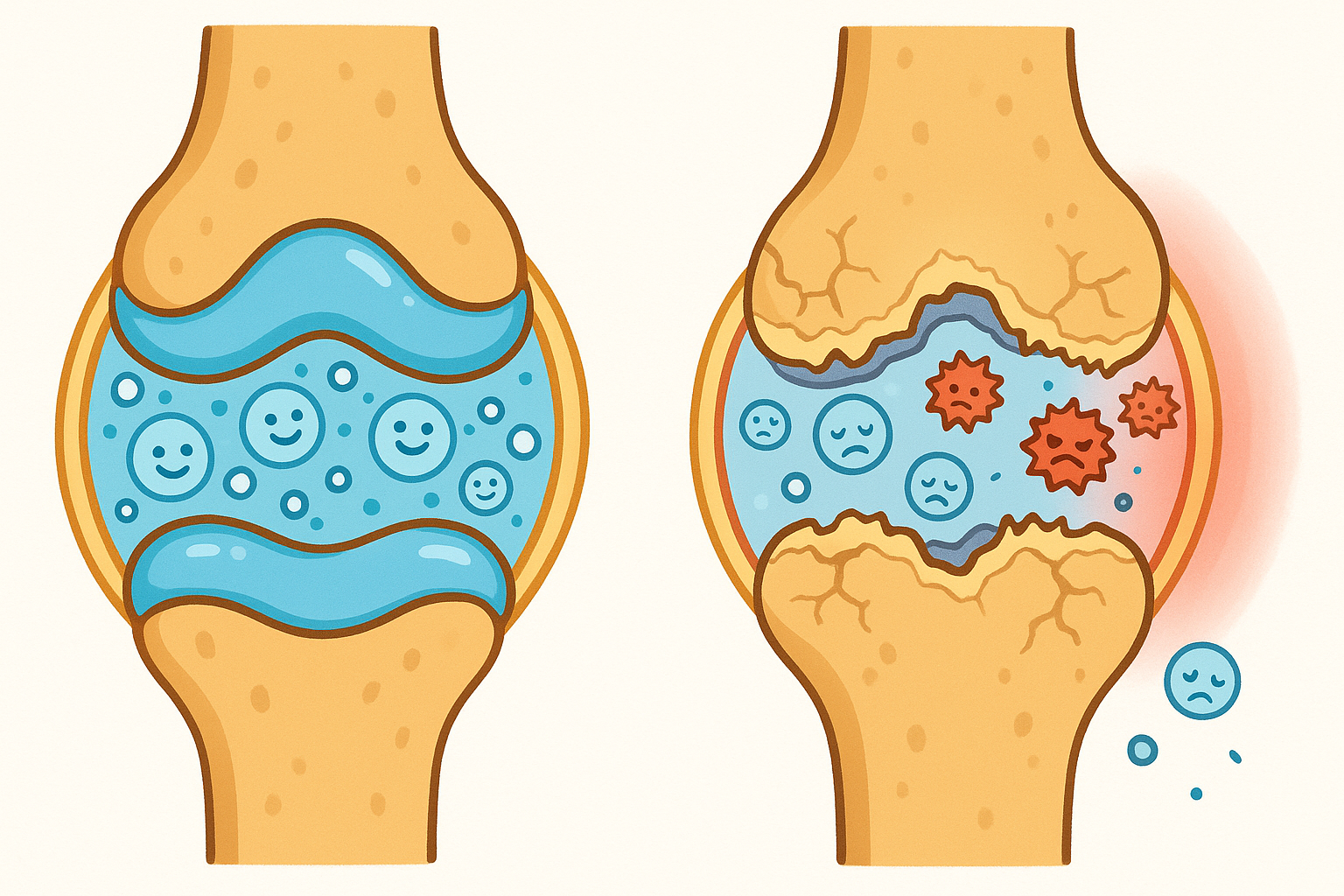
Scientists have found that delivering hyaluronic acid and chondroitin back into the joint might help stop this destructive cycle.
What the Research Shows
Researchers have studied these molecules in several forms, ranging from daily oral supplements to direct joint injections and advanced surgical patches.
Oral Supplements for Joint Maintenance
Taking pills to treat joint pain is the most common approach. When you swallow these supplements, your body breaks them down and delivers the components through your bloodstream.
A 2019 review in Drug Metabolism Reviews analyzed various systemic drugs for osteoarthritis. The researchers noted that both oral chondroitin sulfate and oral hyaluronic acid have shown positive impacts on cartilage health in clinical trials.
The review highlighted that chondroitin sulfate (usually taken at 800 to 1200 milligrams daily) can lower the levels of destructive enzymes in the joint, reduce inflammation, and encourage chondrocytes to produce new cartilage matrix. Similarly, oral hyaluronic acid was found to reduce pain and improve physical function without notable side effects. While pills will not regrow lost cartilage overnight, they appear to create a friendlier, less inflamed environment inside the body.
Joint Injections (Viscosupplementation)
For more direct relief, doctors often inject hyaluronic acid straight into the knee joint. This procedure is called viscosupplementation.
A 2026 expert consensus published in Aging Clinical and Experimental Research reviewed decades of data on these injections. The experts concluded that intra-articular (inside the joint) hyaluronic acid injections are a safe and effective option for mild to moderate knee osteoarthritis. The injections provide a mechanical cushion and reduce inflammatory signals.
Interestingly, researchers are now combining hyaluronic acid with chondroitin sulfate in the same injection to see if the two molecules work better together.
A 2024 clinical trial in Biomolecules tested a combined injection on 21 patients with knee osteoarthritis. The results were highly encouraging:
- Pain Reduction: Patients reported a signficant drop in pain intensity that lasted up to six months after a single injection.
- Mobility: Joint mobility increased by nearly 18% at six weeks and improved by over 35% at the six-month mark.
- Better Fluid: Laboratory tests on the injection fluid showed that adding chondroitin sulfate to hyaluronic acid made the fluid significantly thicker and more elastic, especially under the high physical stress of running or walking.
The Future: Hydrogels and Cartilage Regeneration
While injections can lubricate a joint, they eventually wear off. The holy grail of joint research is finding a way to permanently regrow lost cartilage. To do this, scientists are using hyaluronic acid and chondroitin to create “hydrogels.”
A hydrogel is a biological sponge made of water and natural polymers. Surgeons can inject this gel into a pothole in the cartilage, where it acts as a scaffold for new cells to grow on.

A 2024 study in ACS Biomaterials Science & Engineering tested a hydrogel made entirely of chondroitin sulfate and hyaluronic acid. The researchers exposed cartilage cells to high levels of inflammation, similar to a bad arthritis flare-up. They found that cells living inside the HA-CS hydrogel were protected. The gel suppressed inflammatory signals and helped the cells preserve their healthy cartilage-building functions.
Other researchers are making these gels even smarter:
- Acid-Responsive Gels: Arthritic joints often become acidic due to inflammation. A 2026 study in Carbohydrate Polymers developed a hydrogel that responds to this acidity. When the joint becomes acidic, the gel adjusts its chemical bonds to become more slippery, protecting the joint from friction damage.
- Collagen Combinations: A 2018 study in Biomaterials Science created a three-part hydrogel using collagen, chondroitin sulfate, and hyaluronic acid. When implanted into rabbit joints, this hybrid gel helped regrow cartilage that was structurally thicker, stronger, and much closer to natural cartilage than gels made from collagen alone.
Who Benefits Or Needs Caution
Based on current medical guidelines, treatments using hyaluronic acid and chondroitin are not for everyone.
Who benefits most:
- People with mild to moderate knee osteoarthritis.
- Individuals who cannot tolerate standard pain medications like ibuprofen due to stomach or heart issues.
- Patients looking for a bridge treatment to delay joint replacement surgery.
Who should be careful:
- People with severe, bone-on-bone osteoarthritis. Once the cartilage is completely gone, these treatments offer much less relief because there is no remaining tissue to protect or lubricate.
- Individuals experiencing an acute, hot, swollen joint flare-up. Experts advise calming the active flare-up before injecting hyaluronic acid into the joint.
Common Questions About Chondroitin and Hyaluronic Acid
Are injections better than oral pills?
Injections deliver a highly concentrated dose of lubrication directly to the site of the pain, often providing noticeable relief within a few weeks. Pills must pass through your digestive system, meaning less of the active ingredient reaches the joint. However, pills are non-invasive and can support overall joint health across the entire body over time.
How long do joint injections last?
Research shows that while the injected fluid leaves the joint within a few days, the biological benefits (like reduced pain and lower inflammation) can last anywhere from three to six months.
Can these treatments actually regrow my cartilage?
Currently, standard pills and injections available at your doctor’s office will not regrow lost cartilage. They help preserve what you have and reduce pain. However, the experimental hydrogels discussed above are actively being developed to regrow cartilage in the future.
The Bottom Line / Takeaways
Hyaluronic acid and chondroitin sulfate are fundamental building blocks of healthy joints. When arthritis strikes, replenishing these molecules can help manage the disease.
- They work together: Hyaluronic acid provides slippery lubrication, while chondroitin sulfate provides spongy shock absorption.
- Injections are effective: Clinical trials show that injecting both molecules into an arthritic knee can significantly reduce pain and improve mobility for up to six months.
- They fight inflammation: On a microscopic level, these molecules calm down angry cartilage cells and stop them from releasing destructive enzymes.
- The future is promising: Scientists are using these exact molecules to build biological sponges (hydrogels) that may one day allow doctors to patch and permanently regrow damaged cartilage.
While we cannot yet turn back the clock on joint wear and tear, utilizing the body’s natural joint-protecting molecules offers a safe and evidence-based way to keep moving comfortably.
Quick Reference: Key Studies
| Study Focus | Key Finding | Source |
|---|---|---|
| Combined Joint Injections | Injecting HA and CS together significantly reduced knee pain and improved mobility by 35% over six months. | PMID 39062546 |
| Oral Supplements | Systemic (oral) HA and CS can lower joint inflammation and slow the deterioration of cartilage. | PMID 31726891 |
| Inflammation Protection | Hydrogels made of HA and CS successfully protected cartilage cells from severe inflammatory damage in the lab. | PMID 38632852 |
| Cartilage Regeneration | A hybrid gel of collagen, HA, and CS helped regrow strong, highly functional cartilage in animal models. | PMID 29737330 |
| Expert Consensus | Experts agree that hyaluronic acid injections are safe and effective for knee osteoarthritis, especially when avoiding steroids. | PMID 41920453 |
Last updated: October 2026
This article synthesizes findings from peer-reviewed research. It is for educational purposes only and does not constitute medical advice. Consult a healthcare provider before starting any new regimen.



Leave a Reply