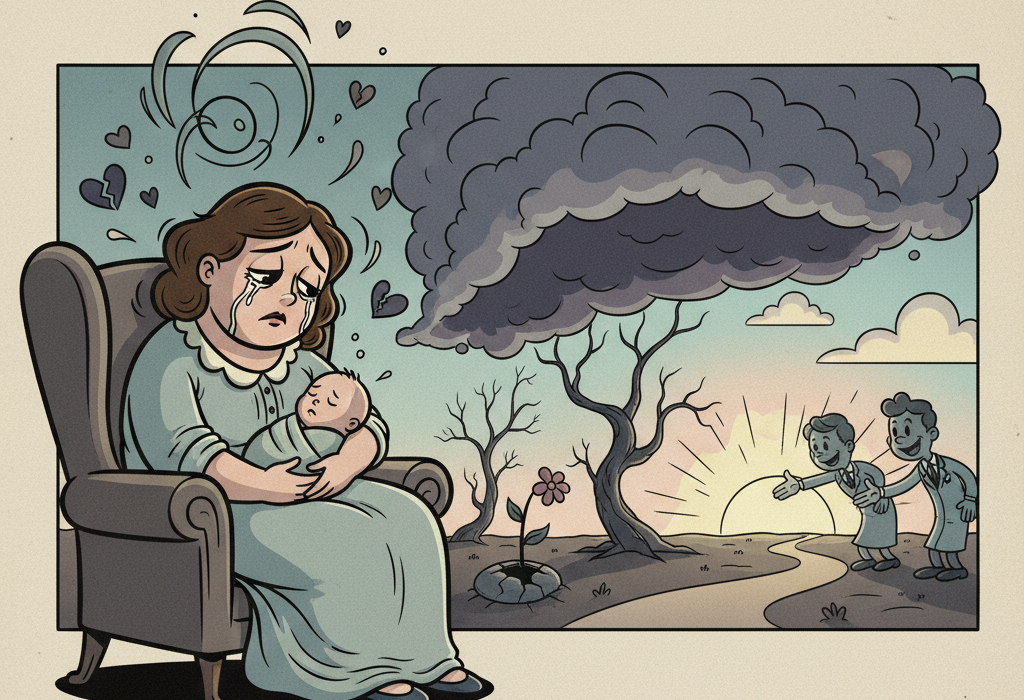
Bringing a new baby home is often described as one of the happiest moments in a person’s life. But for many parents, this period brings a heavy cloud of sadness, anxiety, and exhaustion. This condition is known as postpartum depression (pohst-PAR-tum dee-PRESH-un), which simply means depression that occurs after childbirth.
For a long time, people misunderstood this condition. Some thought it was just a normal part of adjusting to a newborn. Others believed it was a sign of weakness. Today, medical research paints a very different picture. Science shows that postpartum depression is a real medical condition driven by sudden hormone drops, physical recovery, and environmental stress.
This article explores what the latest peer-reviewed research actually says about why postpartum depression happens, who is most at risk, and what evidence-based treatments are available.
Common Questions About Postpartum Depression
Does postpartum depression only affect mothers?
No. While it is most commonly discussed in relation to mothers, research shows that about 10% of new fathers also experience postpartum depression.
What is the difference between the “baby blues” and postpartum depression?
Up to 80% of new mothers experience the “baby blues,” which involve mild mood swings and tearfulness that usually resolve within two weeks. Postpartum depression involves more severe, long-lasting symptoms that interfere with daily life.
When does postpartum depression start?
Symptoms can begin during pregnancy, immediately after birth, or even several months into the baby’s first year.
How This Might Work: The Biology of Postpartum Depression
To understand why postpartum depression happens, it helps to look at what occurs inside the body during and after pregnancy.
During pregnancy, a woman’s body produces massive amounts of two hormones. The first is estradiol (es-truh-DIE-all), a major form of estrogen. The second is progesterone (pro-JES-tuh-rone), a hormone that helps maintain the pregnancy.
Within hours after giving birth, the levels of these hormones plummet back to their pre-pregnancy levels. You can think of this like a house where the thermostat is suddenly dropped by forty degrees. The body’s internal systems must scramble to adjust. According to a 2013 review in the Annual Review of Clinical Psychology, this rapid withdrawal of hormones can destabilize the brain’s mood-regulating chemicals, such as serotonin and dopamine.
While all women experience this hormone drop, only some develop depression. Researchers believe that certain people have a biological sensitivity to these rapid hormone shifts. When you combine this biological vulnerability with severe sleep deprivation and the physical stress of healing from childbirth, the brain can struggle to maintain a balanced mood.
What the Research Shows About Risk Factors
Science has identified several key factors that increase the chances of developing postpartum depression. These factors fall into a few main categories.
Medical Complications During Pregnancy
Pregnancy is a major physical test for the body. When complications arise, the risk for mental health struggles after birth goes up.
A 2025 review in Reproduction found that conditions like gestational diabetes, high blood pressure during pregnancy, and severe anemia are strongly linked to postpartum depression. These medical issues create physical stress and inflammation in the body, which can negatively affect brain chemistry.
Related: What Science Actually Says About Managing Gestational Diabetes
The Birth Experience
How a baby enters the world plays a significant role in maternal mental health. Traumatic birth experiences can leave lasting psychological scars.
A 2022 study in the International Journal of Environmental Research and Public Health looked at the difference between planned and emergency cesarean sections (C-sections). The researchers found that mothers who underwent emergency C-sections had significantly higher rates of trauma symptoms. These trauma symptoms frequently acted as a bridge leading directly to postpartum depression.
However, vaginal deliveries carry risks as well. A 2024 study in the American Journal of Obstetrics and Gynecology followed nearly 3,000 women who had vaginal deliveries without major pregnancy complications. They found that about 10% still developed postpartum depression symptoms. Factors like induced labor, the need for medical instruments during delivery, and retaining bad memories of the childbirth experience were strong predictors of depression two months later.
Social Support and Environment
Humans are social creatures. Historically, humans raised children in large community groups. When parents are isolated, the mental toll is heavy.
A 2024 study in Scientific Reports surveyed over 900 women to understand how social support impacts mental health. The results were clear. Women who received high levels of emotional and practical support during pregnancy had a significantly lower risk of developing postpartum depression.
Workplace policies also matter. A 2024 study in Military Medicine analyzed data from over 60,000 active-duty women in the United States military. In 2016, the military increased paid maternity leave from 6 weeks to 12 weeks. Researchers found a 50% reduction in the odds of a postpartum depression diagnosis in the two years immediately following this policy change. Having time to heal and bond with the baby without work stress appears to be highly protective.
Who Benefits Or Needs Caution: Fathers and Partners
It is a common myth that postpartum depression only affects the person who gave birth. However, the arrival of a baby alters the environment, sleep schedule, and relationship dynamics for both parents.
A 2010 meta-analysis in JAMA reviewed data from over 28,000 participants and found that 10.4% of fathers experience depression between the first trimester of pregnancy and the baby’s first birthday. The rates of paternal depression peaked between three and six months after birth.
Interestingly, the study found a moderate correlation between mothers and fathers. If one parent is depressed, the other parent is at a much higher risk. This highlights that postpartum depression is often a family issue, not just an individual one.
Practical Guidance: Screening and Prevention
Because postpartum depression is so common, medical organizations emphasize the importance of early detection.
Guidelines from the American College of Obstetricians and Gynecologists recommend that all patients be screened for depression and anxiety at least once during the perinatal period (pregnancy and postpartum) using a standardized tool. A common tool is the Edinburgh Postnatal Depression Scale, which is a simple 10-question survey.
If you or a loved one are expecting a child, it is important to have a plan in place. Discuss mental health with your doctor early, build a support network of friends or family to help with chores and meals, and prioritize sleep whenever possible.
Treatment Options: What the Science Supports
If postpartum depression does occur, there are several evidence-based ways to treat it. The right approach depends on the severity of the symptoms and the patient’s medical history.
Therapy and Digital Interventions
Talk therapy, specifically Cognitive Behavioral Therapy (CBT), is a highly effective treatment. CBT helps people identify negative thought patterns and replace them with healthier ways of thinking.
Because new parents often struggle to attend in-person appointments, researchers are testing digital solutions. A 2022 study tested an app-based CBT program called CareMom. Mothers used the app for short daily challenges that taught them how to manage their mood and restructure negative thoughts. After four weeks, the mothers using the app had significantly lower depression scores compared to those who received standard care.
New Medications
For moderate to severe postpartum depression, doctors may recommend medication. Standard antidepressants, like SSRIs, are commonly used and many are considered safe for breastfeeding. However, these medications can take several weeks to start working.
Recently, science has developed medications specifically targeted at the hormonal causes of postpartum depression. A 2023 review in the Journal of Obstetric, Gynecologic, and Neonatal Nursing highlights the approval of new drugs like zuranolone. These medications work by targeting the brain’s response to the sudden drop in pregnancy hormones. They can improve symptoms in just a few days, offering rapid relief for struggling mothers.
Preventive Medical Treatments
Researchers are also looking at ways to prevent depression from starting in high-risk situations, such as during a C-section.
Some recent studies have tested giving a low dose of an anesthetic called esketamine during C-section surgeries. A 2024 trial in JAMA Network Open and a 2025 meta-analysis in the Journal of Affective Disorders found that a single dose of esketamine during surgery reduced the risk of depression in the first week after birth. It also helped reduce physical pain.
However, the science is still mixed. The protective effect seemed to fade quickly over time. Furthermore, esketamine caused temporary side effects in some patients, such as dizziness and blurred vision. Because of this, it is not yet a standard treatment for everyone, but it represents an interesting area of ongoing research.
The Bottom Line / Takeaways
Postpartum depression is a complex but highly treatable medical condition. Here is what the current science tells us:
- It is biological and environmental. Sudden hormone drops, sleep deprivation, and physical recovery combine to increase vulnerability to depression.
- Trauma and complications matter. Emergency surgeries, pregnancy complications, and difficult deliveries significantly raise the risk of developing mental health struggles.
- Fathers are affected too. About 10% of new fathers experience depression, and the risk is higher if their partner is also struggling.
- Support is protective. Strong social support and adequate maternity leave are proven to lower the risk of postpartum depression.
- Treatments are improving. From app-based therapy to new rapid-acting medications, there are more effective ways to treat postpartum depression than ever before.
If you or someone you know is struggling after the birth of a child, reaching out to a healthcare provider is the most important first step.
Quick Reference: Key Studies
| Study Focus | Key Finding | Source |
|---|---|---|
| Paternal Depression | Meta-analysis found 10.4% of fathers experience depression during pregnancy or the first year postpartum. | PMID 20483973 |
| Birth Trauma & PPD | Emergency C-sections are associated with increased PTSD symptoms, which act as a bridge to postpartum depression. | PMID 35457767 |
| Maternity Leave | Expanding military paid maternity leave from 6 weeks to 12 weeks reduced PPD odds by 50% in the following two years. | PMID 37703065 |
| App-based Therapy | A daily app-based Cognitive Behavioral Therapy program significantly reduced early postpartum depression symptoms. | PMID 36554704 |
| Social Support | High levels of emotional and instrumental support during pregnancy significantly lower the risk of developing PPD. | PMID 38519648 |
Last updated: March 2026
This article synthesizes findings from peer-reviewed research. It is for educational purposes only and does not constitute medical advice. Consult a healthcare provider before starting any new regimen.
Leave a Reply