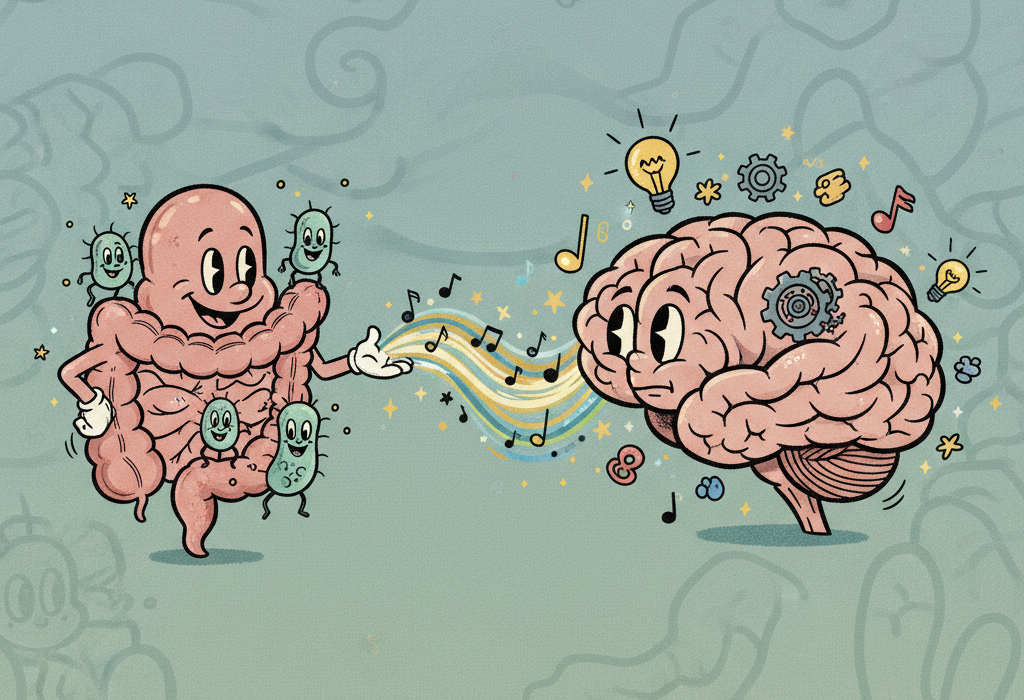
Have you ever felt “butterflies” in your stomach before a big presentation? Or noticed that your digestion gets upset when you are feeling stressed? These everyday experiences are not just in your head. They are physical evidence of a direct communication line between your brain and your digestive system.
For decades, scientists believed that the brain was the sole commander of the body, sending orders down to the organs. However, modern science has revealed that this communication is actually a two-way street. In fact, the trillions of microorganisms living in your digestive tract are constantly sending messages back up to your brain.
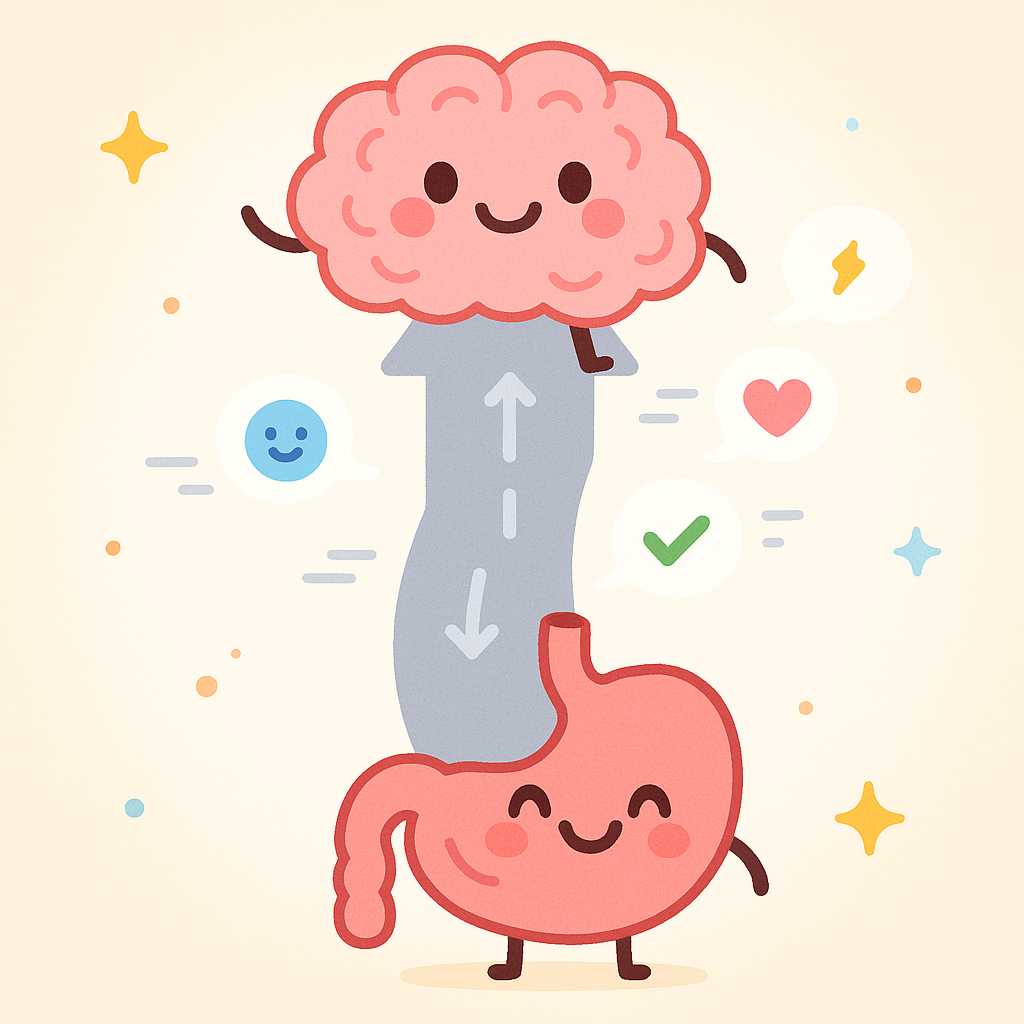
This system is broadly known as the gut-brain axis. Understanding how it works helps explain why digestive health is so closely tied to mental health, mood, and cognitive function.
Related: How the Gut-Brain Connection Actually Works: What the Latest Science Says
How Your Gut Bacteria Communicate With Your Brain
To understand this connection, we first need to define a few key terms.
- Microbiome (my-kroh-BY-ohm): The collection of bacteria, viruses, and fungi living inside your digestive tract.
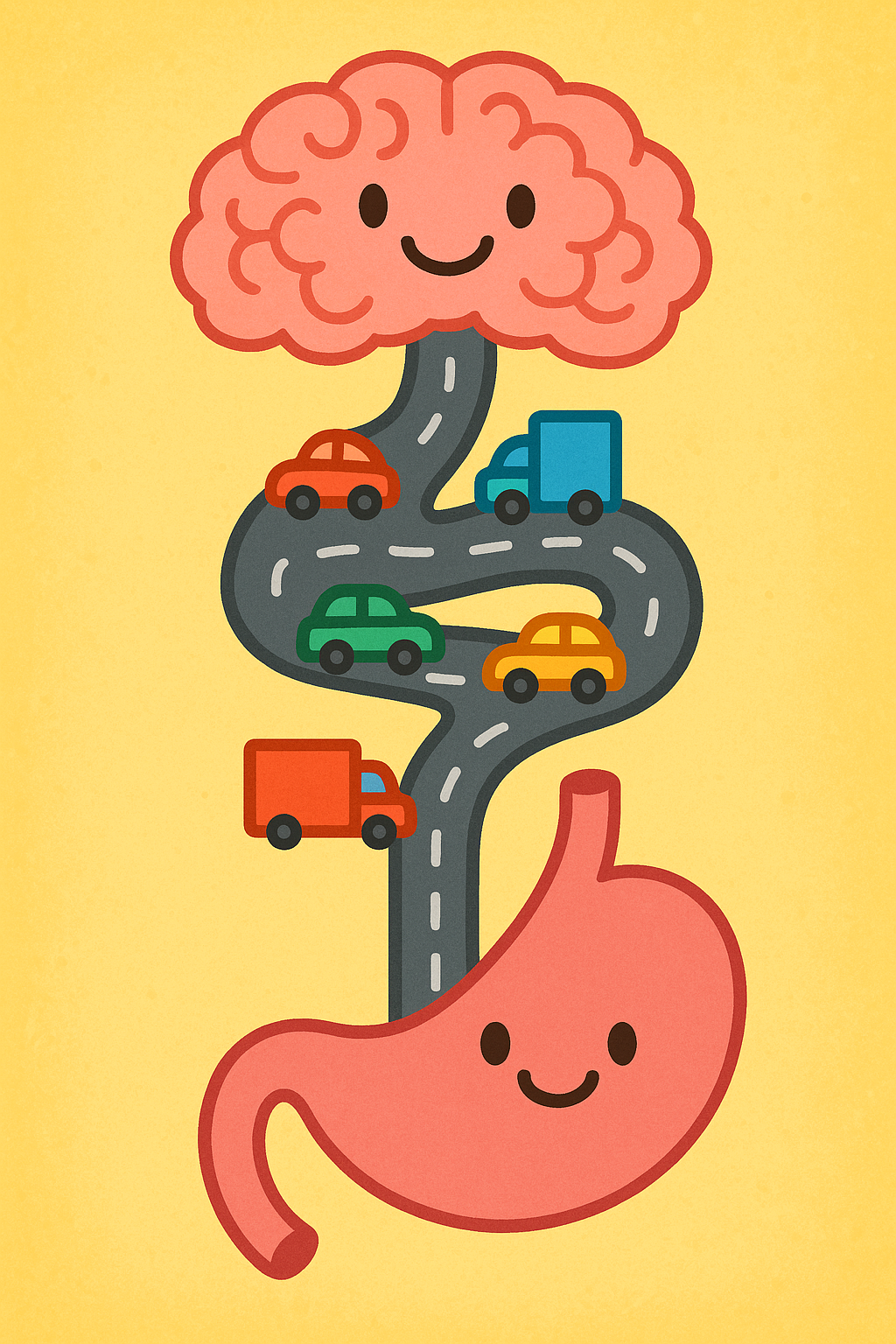
- Vagus nerve (VAY-gus): The biological “highway” that connects your gut directly to your brain.
- Neurotransmitters (nur-oh-TRANS-mit-ers): Chemical messengers that tell your brain how to feel, think, and react.
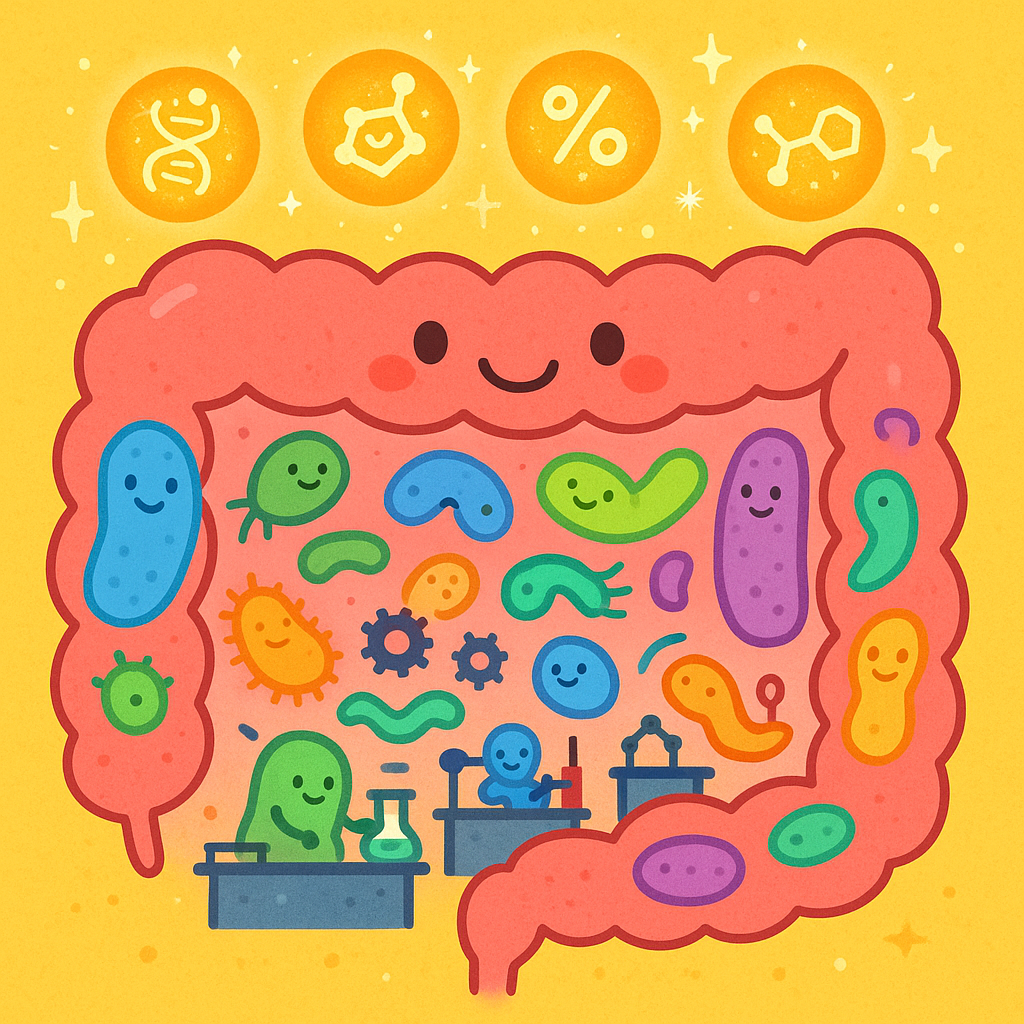
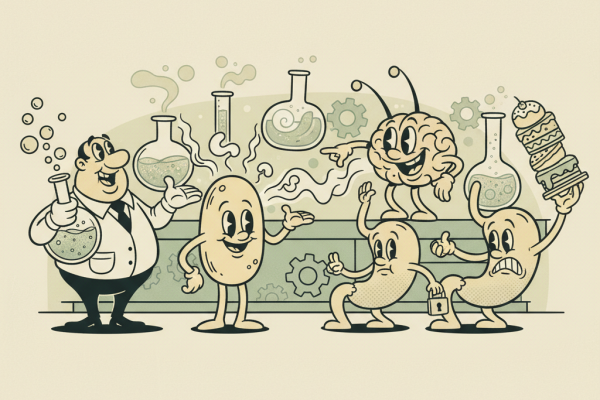
Your microbiome does not just digest food. It acts like a chemical factory. The bacteria in your gut produce and regulate many of the neurotransmitters that your brain uses to control your mood. For example, a large percentage of your body’s serotonin, the chemical heavily involved in happiness and well-being, is produced in the gut.
Additionally, as bacteria break down dietary fiber, they produce Short-chain fatty acids (short-chayn FAT-ee AS-ids). These acids travel through your bloodstream and help maintain the blood-brain barrier, a protective shield that keeps harmful toxins out of your brain.
What the Research Shows
The idea that bacteria can influence brain function sounds like science fiction, but it is supported by a growing body of peer-reviewed research. Scientists have observed this connection in both animal models and human trials.
Animal Studies on Stress and Anxiety
Some of the clearest evidence comes from laboratory mice. A 2011 landmark study in the Proceedings of the National Academy of Sciences tested what would happen if mice were fed a specific strain of probiotic bacteria (Lactobacillus rhamnosus).
The researchers found that the mice who ate the bacteria showed significantly fewer signs of stress and anxiety compared to a control group. Furthermore, their bodies produced lower levels of stress hormones. When the researchers surgically severed the vagus nerve in the mice, these calming benefits disappeared. This proved that the bacteria were using the vagus nerve to send calming signals directly to the brain.
Human Brain Scans and Probiotics
While mouse studies are helpful, human brains are far more complex. To see if similar effects happen in people, researchers turned to brain imaging.
A human study published in Gastroenterology observed healthy women who consumed a fermented milk product containing probiotics twice a day for four weeks. The researchers used functional magnetic resonance imaging (fMRI) to scan the women’s brains while they looked at images of angry or frightened faces, a standard test to measure emotional reactivity.
The women who consumed the probiotics showed altered, calmer activity in the brain regions that process emotion and sensation, compared to women who ate non-probiotic dairy or nothing at all. This suggests that changing the gut environment can physically alter how the brain responds to emotional stimuli.
The Microbiome and Depression
Beyond temporary mood changes, researchers are investigating how gut bacteria relate to clinical mental health conditions.
A 2019 study in Nature Microbiology analyzed the gut microbiomes and mental health records of over 1,000 human participants. The researchers found a clear pattern: people who reported higher quality of life had higher levels of certain bacteria, specifically Faecalibacterium and Coprococcus. Conversely, two specific types of bacteria were consistently depleted in individuals diagnosed with depression, regardless of whether they were taking antidepressant medication.
Comparing the Evidence
| Study Type | Subject | Key Observation |
|---|---|---|
| Behavioral | Mice | Specific gut bacteria reduced anxiety and stress hormones via the vagus nerve. |
| Brain Imaging | Humans | Probiotic consumption altered brain activity in regions that process emotion. |
| Population Data | Humans | Certain bacterial strains are consistently missing in people with depression. |
Related: Can Gut Bacteria Improve Your Mood? The Science of Psychobiotics
Where The Science Is Still Uncertain
While the connection between the gut and the brain is well-established, the specific details are still being mapped out.
The biggest challenge in microbiome research is the “chicken or the egg” problem. We know that people with depression have different gut bacteria than people without depression. However, it is difficult to prove causation. Does a disrupted microbiome cause depression, or does depression (and the changes in diet, sleep, and stress that come with it) cause the microbiome to change?
Furthermore, the microbiome is highly individualized. Your gut bacteria are as unique as your fingerprint. Because of this, a probiotic supplement that improves mood or digestion in one person might have zero effect on another. Science has not yet reached the point where a doctor can prescribe a specific bacterial strain to treat a specific mental health condition reliably.
Practical Guidance: Supporting Your Gut-Brain Axis
While we wait for the science of personalized “psychobiotics” to mature, current research supports several everyday habits that foster a healthy gut-brain connection.
- Eat diverse plant fibers: Gut bacteria thrive on dietary fiber found in vegetables, fruits, legumes, and whole grains. Eating a wide variety of plants encourages a diverse, resilient microbiome.
- Include fermented foods: Foods like yogurt, kefir, sauerkraut, and kimchi introduce living, beneficial bacteria into your digestive system.
- Limit ultra-processed foods: Diets high in refined sugars and heavily processed ingredients have been shown to reduce microbiome diversity and increase bodily inflammation, which can negatively impact brain health.
- Manage daily stress: Just as the gut affects the brain, the brain affects the gut. Chronic stress can alter the composition of your microbiome, making stress management techniques like walking, deep breathing, or adequate sleep essential for gut health.
Common Questions About the Gut-Brain Connection
Can taking a probiotic cure anxiety?
No. Probiotics are not a replacement for anxiety medications or therapy. While a healthy gut can support a stable mood and better stress resilience, probiotics alone cannot cure clinical anxiety disorders.
How quickly does diet change the microbiome?
Research shows that your microbiome can begin to shift within just a few days of changing your diet. However, maintaining those changes requires long-term dietary habits.
Does stomach acid kill probiotics before they reach the gut?
Stomach acid does destroy many bacteria. However, bacteria in naturally fermented foods, as well as high-quality supplements designed to survive digestion, can successfully reach the lower intestines where they do their work.
The Bottom Line
The bacteria in your gut do much more than digest your food. Through the vagus nerve, immune system, and production of chemical messengers, your microbiome actively communicates with your brain.
- What we know: A diverse, healthy microbiome is strongly associated with better emotional regulation, lower stress reactivity, and better overall mental health.
- What is uncertain: We do not fully know if poor gut health causes depression, or if depression causes poor gut health. It is likely a continuous loop.
- How confident we are: Scientists are highly confident that the gut-brain axis exists and plays a major role in human health. However, using specific bacteria as medical treatments for mental health is still in the early stages of research.
Quick Reference: Key Studies
| Study Focus | Key Finding | Source |
|---|---|---|
| Gut bacteria and anxiety in mice | Lactobacillus altered stress hormones and reduced anxiety behaviors via the vagus nerve. | PMID 21876150 |
| Probiotics and human brain activity | Four weeks of probiotic yogurt changed brain network activity related to emotional processing. | PMID 23474283 |
| Microbiome populations and depression | Specific gut bacteria are consistently depleted in humans with clinical depression. | PMID 30718848 |
Last updated: April 2026
This article synthesizes findings from peer-reviewed research. It is for educational purposes only and does not constitute medical advice. Consult a healthcare provider before starting any new regimen.
Leave a Reply