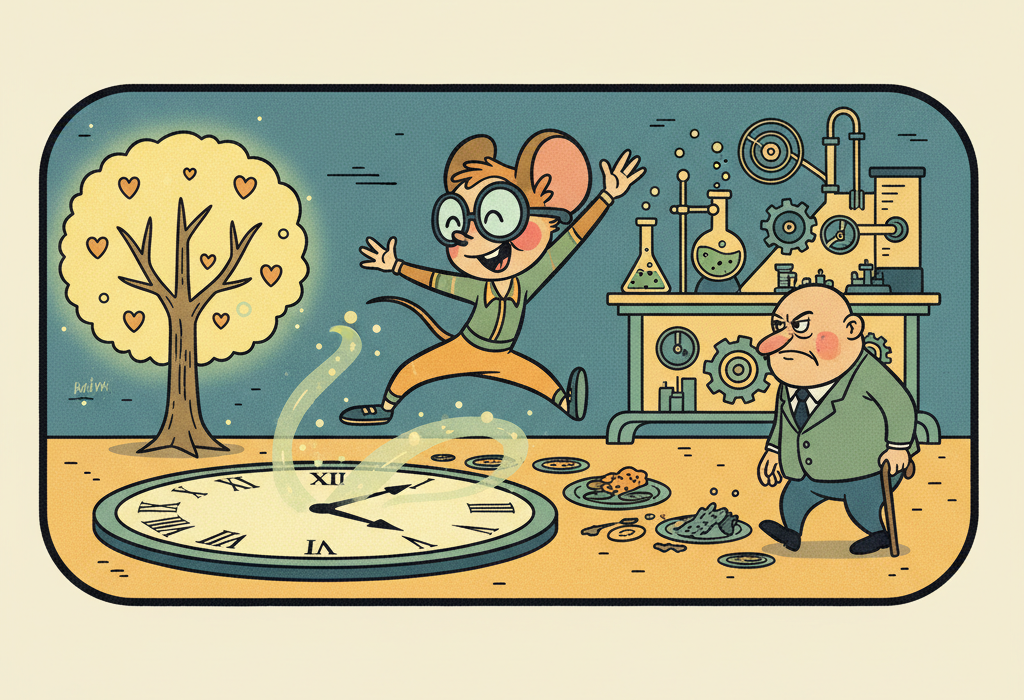
Most of us have heard the basic advice that eating less helps with weight loss. But scientists have long wondered if eating fewer calories does more than just shrink waistlines. Could it actually slow down aging, protect the brain, and prevent chronic diseases?
The core tension among researchers today is figuring out exactly why eating less works. Do the health benefits come purely from losing weight? Do they come from being in a state of energy deficit? Or do the benefits actually come from the natural fasting periods that happen when food is scarce?
Calorie restriction is a dietary pattern that reduces daily energy intake by 10 to 30 percent without causing malnutrition or missing essential nutrients.
Over the last two decades, science has provided fascinating clues about how our bodies react to a lower calorie intake. Let us look at what the latest peer-reviewed research actually shows about calorie restriction, how it compares to trendy diets like intermittent fasting, and what it means for your everyday health.

What the Research Shows About Calorie Restriction
For decades, scientists have known that restricting calories extends the lifespan of worms, flies, and mice. But translating those findings to humans and larger primates takes a very long time. Recently, several major studies have given us a much clearer picture of how calorie restriction affects complex bodies.
The Animal Evidence: Slower Aging and Disease Prevention
One of the most important studies on this topic involved rhesus monkeys, which share much of their biology with humans. A 2025 review in Nature Reviews Endocrinology reported the findings of a 20-year study on these primates. The researchers found that moderate calorie restriction significantly lowered the incidence of aging-related deaths.
At the reporting point, 80 percent of the calorie-restricted monkeys were still alive, compared to only 50 percent of the monkeys eating a standard diet. Furthermore, the restricted diet delayed the onset of age-associated problems like diabetes, cancer, cardiovascular disease, and brain shrinking. This provided strong evidence that eating less can fundamentally slow the aging process in primates.
But why does this happen? A 2024 study in GeroScience looked closely at mice to separate the effects of eating fewer calories from the effects of simply eating less protein or food volume. By manipulating the room temperature to change the mice’s energy needs, researchers found that the health and longevity benefits were driven by the energy imbalance itself, rather than just the absolute amount of food or protein consumed. When the body is forced to adapt to a mild energy deficit, it triggers protective survival mechanisms.
The Human Evidence: The CALERIE Trial
While animal studies are helpful, human bodies are far more complex. To understand how calorie restriction affects humans, the National Institutes of Health funded a landmark study called the CALERIE trial.
This trial took 218 healthy, non-obese young and middle-aged adults and asked them to cut their calories by 25 percent for two years. A 2019 study in The Lancet Diabetes & Endocrinology published the results. While the participants found it too difficult to hit the 25 percent target, they did successfully reduce their intake by about 12 percent over the two years.
Even with this moderate reduction, the results were highly significant. The participants maintained a 10 percent weight loss (mostly body fat) and saw major improvements in cardiometabolic (car-dee-oh-met-uh-BAHL-ik) health, which refers to the heart, blood vessels, and the body’s energy processing system. Specifically, the researchers noted:
- Lower LDL (bad) cholesterol
- Improved ratios of total cholesterol to HDL (good) cholesterol
- Lower systolic and diastolic blood pressure
- Decreased markers of chronic inflammation
- Improved insulin resistance (IN-suh-lin ree-ZIS-tuhns), which is when your body stops responding well to the hormone that controls blood sugar

The researchers concluded that practicing moderate calorie restriction offers significant cardiovascular advantages, even for people who are already at a healthy weight.
How This Might Work: The Biology of Eating Less
When you consistently eat fewer calories than your body burns, your cells experience a mild form of stress. This is not the bad kind of stress that causes exhaustion. Instead, it is a biological challenge that forces your cells to become more efficient and resilient.
Cellular Cleanup and Autophagy
One of the main ways calorie restriction improves health is by triggering autophagy (aw-TOFF-uh-gee). This is a natural process where your cells break down and recycle their own damaged parts.

A 2024 study in Free Radical Biology & Medicine investigated this process in the white blood cells of patients with obesity. The researchers found that calorie restriction activated autophagy and improved the function of mitochondria (the energy factories of the cells). It also reduced oxidative stress, essentially helping the cells clean up cellular garbage that can lead to disease over time.
Related: How Your Body Actually Detoxifies: The Science of Cellular Cleanup
The Role of Sirtuins and AMPK
Calorie restriction also activates specific genes and enzymes that act as metabolic supervisors. A 2005 review in Cell highlighted the role of a gene called SIR2 (and its mammalian equivalent, SIRT1). These genes produce enzymes that sense when calories are low and trigger physiological changes linked to health and longevity.
Additionally, a lack of calories activates an enzyme called AMPK. You can think of AMPK as a fuel gauge for your cells. When it senses that energy is running low, it tells the body to stop storing fat and start burning it, while also turning on repair processes.
How Calorie Restriction Compares To Alternatives
Many people find traditional calorie counting tedious and difficult to sustain. This has led to the rise of alternative diets like intermittent fasting and the ketogenic diet. Researchers have spent the last few years comparing these approaches to see if they offer unique benefits.
Is It the Calories or the Fasting Window?
Intermittent fasting, particularly time-restricted eating (TRE), restricts when you eat rather than what you eat. But does fasting offer magic benefits, or is it just a clever way to cut calories?
The answer depends on whether you look at human or animal studies. A 2025 network meta-analysis in the BMJ analyzed 99 clinical trials involving over 6,500 human adults. The researchers found that intermittent fasting diets and continuous calorie restriction offer very similar benefits for weight loss and cardiometabolic risk factors. Alternate-day fasting showed a slight edge for weight loss in shorter trials, but overall, the human body seems to respond similarly to both methods.
Furthermore, a 2024 systematic review in Obesity looked specifically at whether adding time-restricted eating to a calorie-restricted diet provided extra benefits. The majority of studies found no statistically significant differences in outcomes when TRE was added to calorie restriction, meaning the calorie deficit was the primary driver of the health improvements.
However, animal studies suggest the fasting window might still play a unique role in brain health. A 2025 study in Nature Communications examined mice bred to develop Alzheimer’s disease. The researchers found that while reducing calories improved the mice’s body weight and blood sugar, a prolonged fast between meals was absolutely necessary to reduce Alzheimer’s pathology and improve cognition. This suggests that while humans see similar physical weight loss from both methods, the fasting period itself might trigger specific neurological protections.
Related: Intermittent Fasting: What the Latest Science Actually Says
Calorie Restriction vs. Low-Carb Diets
What happens if you combine calorie restriction with a low-carbohydrate diet? A 2023 trial in BMC Medicine tested this in nearly 300 overweight adults.
They compared a standard diet, a calorie-restricted diet, a low-carb diet, and a combined low-carb plus calorie-restricted diet. After 12 weeks, the combined diet was the most effective. It led to greater reductions in body weight, waist circumference, and body fat than either approach alone. It also uniquely improved serum triglycerides (fats in the blood). This suggests that reducing carbohydrates can amplify the physical benefits of a calorie deficit.
Who Needs Caution With Calorie Restriction
While calorie restriction has clear benefits for metabolic health, it is not appropriate for everyone.
Older adults, in particular, need to be careful. As we age, our bodies naturally lose muscle mass and bone density. A 2016 review in Experimental Gerontology examined trials of calorie restriction in overweight older adults. The researchers found that while calorie restriction effectively promoted weight loss, it consistently caused participants to lose lean muscle mass and bone mineral density alongside the body fat.
Because older adults are already at a higher risk for frailty and falls, the risk-benefit ratio of purely cutting calories is uncertain for this population. If older adults do restrict calories, the research heavily emphasizes that it must be paired with adequate protein intake and resistance training to preserve physical function.
Additionally, calorie restriction is generally not recommended for:
- Children and teenagers who are still growing
- Pregnant or breastfeeding women
- Individuals with a history of eating disorders
- People who are already underweight
Practical Guidance: Combining Diet and Exercise
If you are looking to improve your health through calorie restriction, the science strongly suggests that you should not rely on diet alone.
A 2024 review in Nutrients analyzed 78 trials to see which combination of diet and exercise worked best for body composition. They found that combining calorie restriction with exercise was the absolute most effective strategy for reducing total weight and body fat percentage.
Interestingly, the same study found that for preserving lean muscle mass in women, combining exercise with time-restricted eating was slightly more effective than traditional calorie restriction. Meanwhile, combining exercise with a ketogenic diet was effective for weight loss but performed poorly when it came to preserving muscle mass.
To apply this research safely:
1. Aim for moderation: The CALERIE trial showed that you do not need extreme starvation to see benefits. A 10 to 15 percent reduction in daily calories is enough to trigger metabolic improvements.
2. Prioritize protein: When cutting calories, your body will look for energy wherever it can find it, including your muscles. Eating enough protein helps signal your body to burn fat instead of muscle tissue.
3. Lift weights: Resistance training is the most effective way to offset the muscle loss that naturally accompanies a calorie deficit.
Common Questions About Calorie Restriction
Does cutting calories slow down your metabolism?
Yes, to a degree. When you lose weight and eat less, your body requires less energy to function, which lowers your resting metabolic rate. This is a natural adaptation, not necessarily a “damaged” metabolism. Resistance training can help maintain muscle mass, which keeps your metabolic rate higher.
Is calorie restriction the same as starvation?
No. Starvation involves a severe lack of nutrients that leads to tissue breakdown and organ damage. Proper calorie restriction carefully reduces energy intake while ensuring you still get all the essential vitamins, minerals, and proteins your body needs to function optimally.
Can I just fast instead of counting calories?
For weight loss and basic heart health, human trials show that time-restricted eating works just as well as continuous calorie counting. If you find it easier to skip breakfast and eat within an 8-hour window than to track every meal, research supports using that method to achieve your calorie deficit.
The Bottom Line
Calorie restriction remains one of the most scientifically proven methods for improving metabolic health and extending the healthy years of life in animal models. In humans, moderate calorie reduction reliably improves blood pressure, cholesterol, and insulin resistance, even in people who are not overweight.
However, the benefits of eating less must be balanced against the risks of losing valuable muscle and bone mass, particularly as we age. While alternative diets like intermittent fasting and low-carb eating offer different psychological approaches to eating less, the underlying biological benefits for weight loss and heart health largely stem from the energy deficit itself.
Ultimately, the most effective diet is the one that provides complete nutrition, supports your muscle mass through exercise, and fits sustainably into your daily life.
Quick Reference: Key Studies
| Study Focus | Key Finding | Source |
|---|---|---|
| Long-term primate health | 20-year study showed CR delayed disease and increased survival in rhesus monkeys. | PMID 40247012 |
| Human metabolic health | 2 years of 12% CR improved cholesterol, blood pressure, and insulin resistance in healthy adults. | PMID 31303390 |
| Intermittent Fasting vs CR | IF and CR provide similar benefits for weight loss and cardiometabolic risk in humans. | PMID 40533200 |
| Low Carb + CR | Combining a low-carb diet with CR resulted in greater fat loss than CR alone. | PMID 37226271 |
| Brain health and fasting | In mice, the fasting window between meals was required to reduce Alzheimer’s pathology. | PMID 40759886 |
| Older adult risks | CR in older adults promotes weight loss but risks decreasing muscle and bone mass. | PMID 26994938 |
| Diet and Exercise Combos | CR combined with exercise is the most effective strategy for reducing fat while preserving muscle. | PMID 39275322 |
Last updated: June 2026
This article synthesizes findings from peer-reviewed research. It is for educational purposes only and does not constitute medical advice. Consult a healthcare provider before starting any new regimen.


Leave a Reply