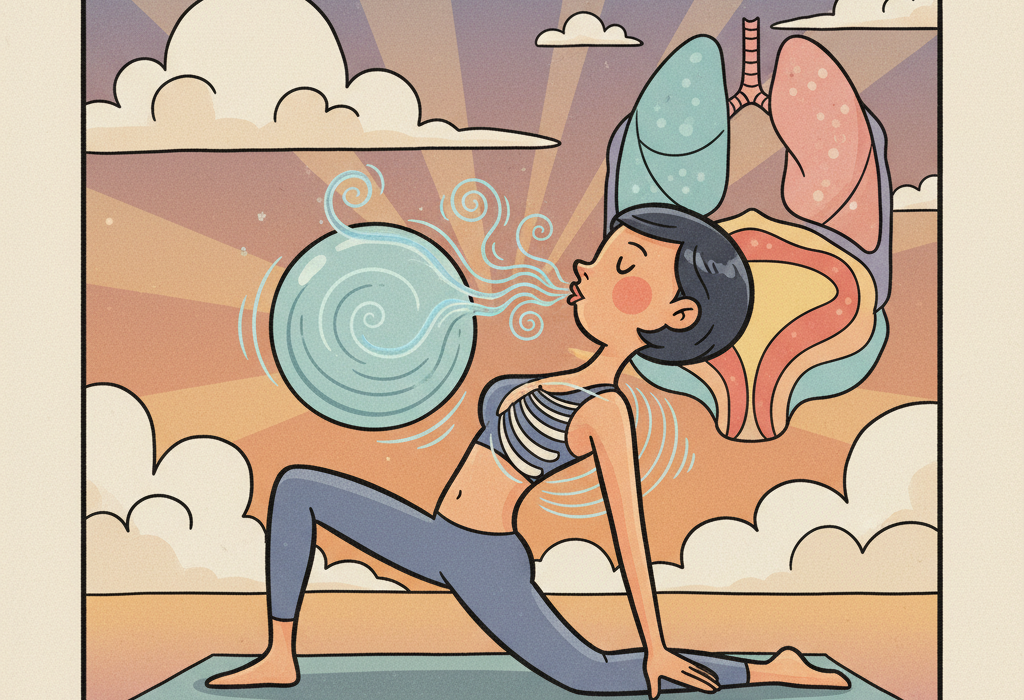
If you have ever taken a Pilates class, you have likely heard an instructor tell you to inhale deeply, pull your navel toward your spine, and exhale forcefully as you move. To a beginner, this intense focus on breathing can feel overwhelming. You might wonder if it is truly necessary to coordinate your breath so perfectly, or if simply doing the exercises is enough to get stronger.
Pilates is a mind-body exercise method that focuses on core stability, flexibility, and muscle control. Research shows that combining Pilates movements with specific breathing techniques can improve lung capacity, increase muscle activation, and enhance balance more than the movements alone.
However, science also shows that Pilates is not a cure-all for every physical condition. By looking closely at the latest research, we can understand exactly what Pilates breathing does to the body, who benefits the most, and where other types of exercise might actually be better.
How This Might Work: The Mechanics of Pilates Breathing
A 2012 systematic review in Complementary Therapies in Medicine analyzed how scientists define Pilates. They found that while Pilates focuses heavily on posture and core strength, breathing is one of its most essential traditional principles.
Pilates breathing is different from normal, relaxed breathing. It typically involves a technique called lateral thoracic breathing (LAT-er-ul thuh-RAS-ik BREE-thing). This means expanding your ribcage sideways when you inhale, rather than letting your belly push outward.

When you exhale, you perform a “drawing-in” maneuver. You actively pull your abdominal muscles inward, tightening the transversus abdominis (trans-VER-sus ab-DOM-ih-nis). This is the deep, corset-like muscle that wraps around your spine and organs.
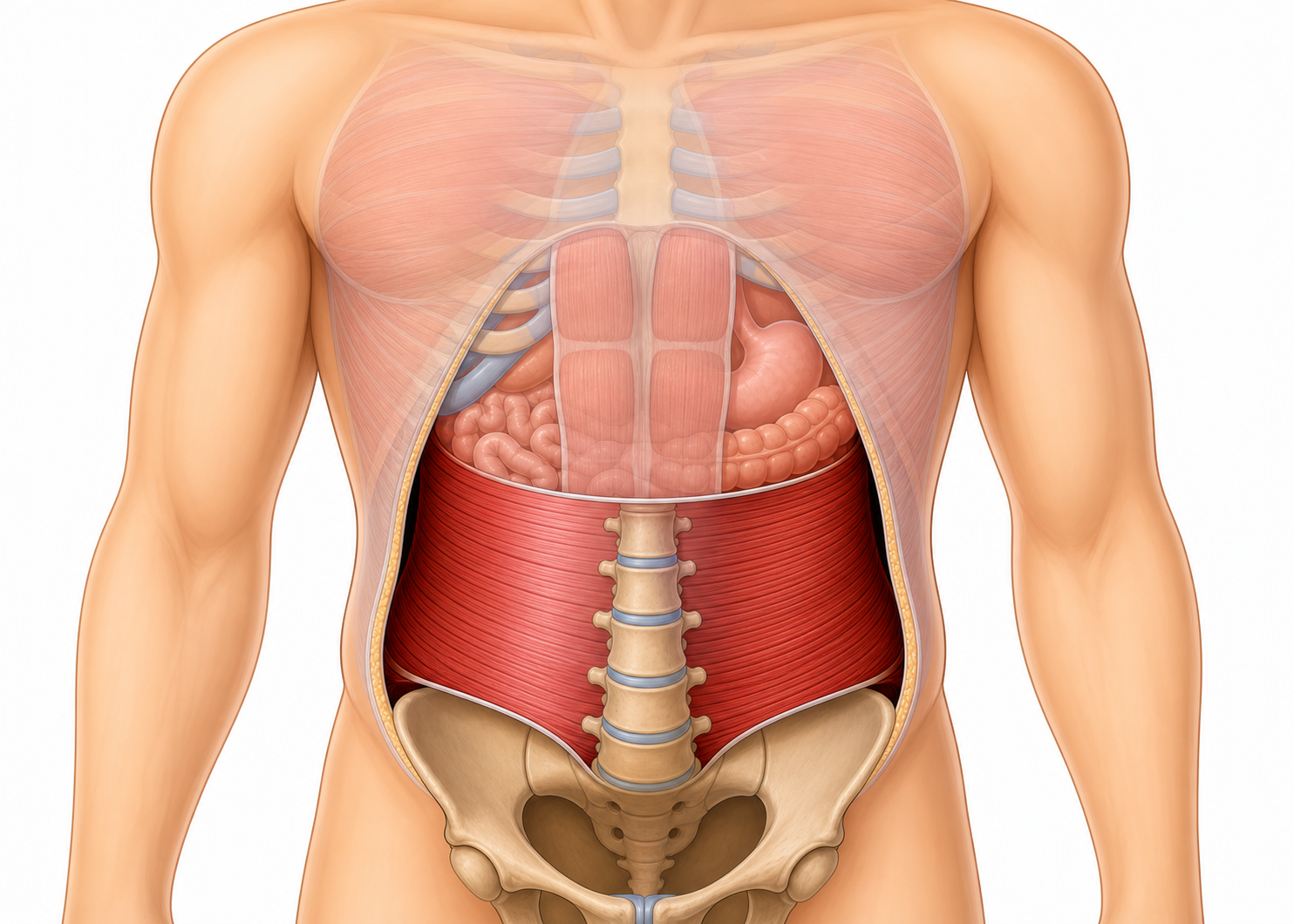
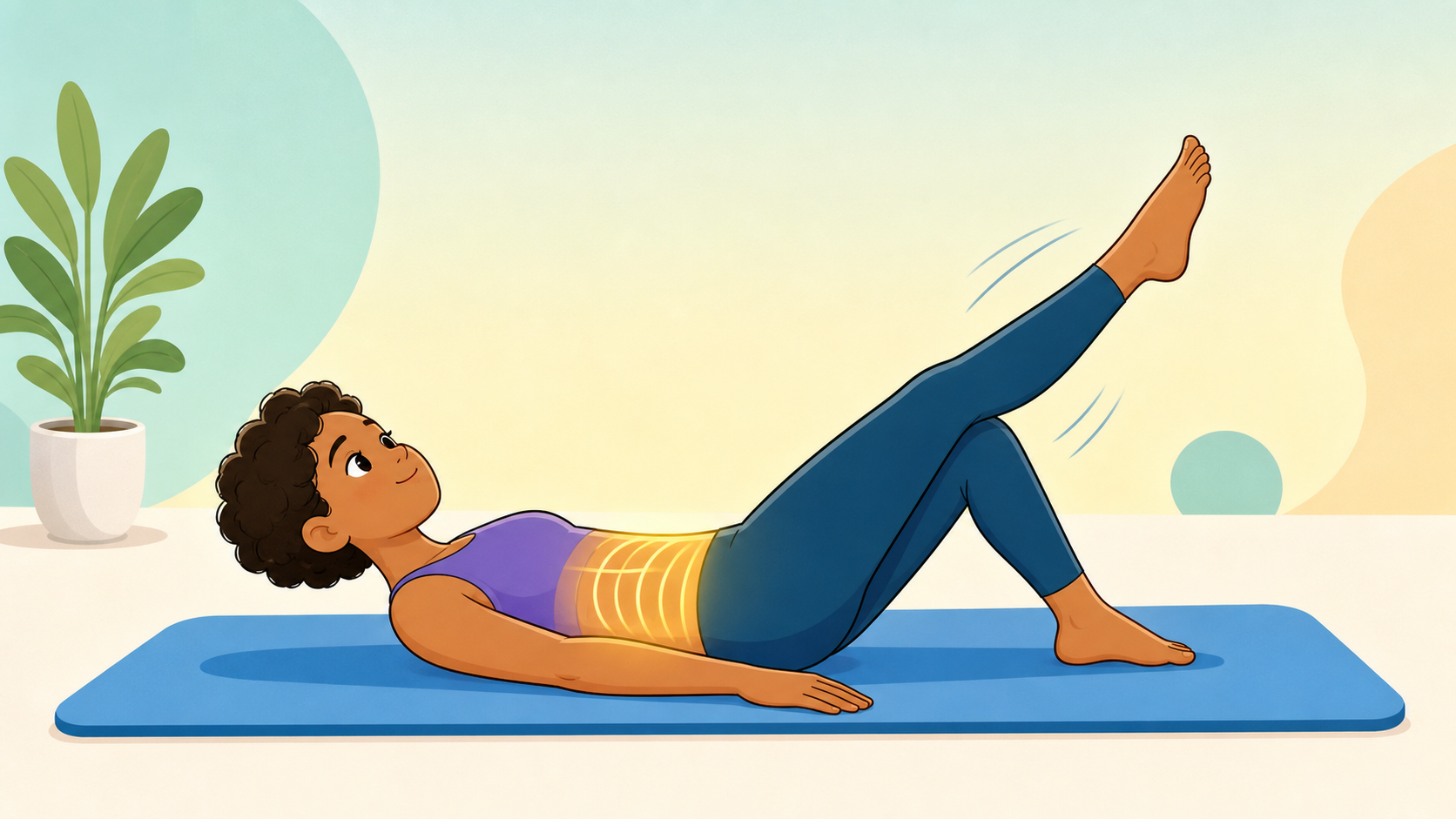
By keeping the core tight and breathing into the sides of the ribs, the body maintains continuous tension in the stabilizing muscles. This creates a firm base of support for the spine while the arms and legs move.
What the Research Shows: Muscle Activation and Strength
One of the most common questions about Pilates breathing is whether it actually changes how your muscles work. Research suggests that it does.
A 2017 study in the Journal of Strength and Conditioning Research tested what happens when people do squats under three different conditions: normal breathing, pulling the stomach in with normal breathing, and pulling the stomach in with specific Pilates breathing.
The researchers measured the electrical activity in the leg muscles. They found that doing squats with the abdominal drawing-in maneuver and Pilates breathing significantly increased the activation of the thigh muscles and shin muscles during the downward phase of the squat. The specific breathing pattern helped stabilize the body, forcing the leg muscles to work harder and more efficiently.
Related: The Science of Weight Training: How Resistance Exercise Changes Your Body
However, if your primary goal is building pure, raw strength, slowing down your movements to match your breath might have limits.
A 2022 study in the International Journal of Environmental Research and Public Health looked at older adults performing resistance training. One group did standard resistance training, while the other group performed the same exercises at a much slower pace, timed precisely to Pilates breathing.
After eight weeks, the group doing standard resistance training saw greater improvements in ankle strength. However, the group using Pilates breathing saw significant improvements in their static balance compared to where they started. This suggests that pacing exercises with Pilates breathing is excellent for balance and stability, but traditional lifting might be better for maximum strength gains.
Does Pilates Breathing Improve Lung and Heart Health?
Because Pilates places such a heavy emphasis on breath control, scientists have investigated whether it physically changes the lungs and the cardiovascular system.
A 2025 study in PloS One looked at female college students with poor posture, such as rounded shoulders and a forward head. The students were divided into a group that did Pilates combined with a specific breathing exercise, a group that only did Pilates, and a control group.
After 16 weeks, the group combining Pilates with breathing exercises saw the greatest improvements in Forced Vital Capacity (FORSD VY-tul kuh-PASS-ih-tee). This is a measurement of the maximum amount of air you can forcefully exhale after taking a deep breath. They also saw the best improvements in correcting their rounded shoulders. The researchers noted that poor posture physically restricts the ribcage, and combining core work with deep breathing helps open the chest and improve lung efficiency.
Similarly, a 2019 study in The Journal of Sports Medicine and Physical Fitness found that 12 weeks of mat Pilates training improved how well the chest and abdomen expand during quiet breathing in healthy women.
Beyond the lungs, controlled breathing can also impact the nervous system. A 2023 study in BMC Sports Science, Medicine & Rehabilitation tested young, healthy women doing equipment-based Pilates (like the Reformer machine) combined with slow, controlled diaphragmatic breathing.
The combination of Pilates and breathing exercises significantly improved their Heart rate variability (HART rate vair-ee-uh-BIL-ih-tee). This is a measure of the slight variations in time between heartbeats. A higher heart rate variability is generally a sign of a healthy, adaptable nervous system that can handle stress well. The combination group also saw the greatest reductions in body fat percentage.
Who Benefits Most From Pilates
Because Pilates is low-impact and highly adaptable, researchers have studied its effects on various medical conditions.
People with Neurological Conditions
Multiple sclerosis (MS) and stroke can severely impact a person’s balance, walking ability, and core strength.
A 2020 randomized controlled trial in Explore compared an 8-week Clinical Pilates program to a standard home exercise program in people with multiple sclerosis. The Pilates group showed superior improvements in walking endurance, postural stability, and core strength. Interestingly, the Pilates group also showed significant improvements in cognitive function and respiratory muscle strength. The researchers credited the constant verbal feedback, the focus on deep abdominal muscles, and the specific breathing techniques for these extra benefits.
Similarly, a 2025 study in NeuroRehabilitation found that a 3-week Pilates program significantly improved balance control, walking speed, and muscle strength in patients recovering from a stroke.
Cancer Patients
Fatigue and physical decline are common challenges during and after cancer treatment. A 2025 systematic review in the European Journal of Oncology Nursing analyzed multiple studies on Pilates for cancer patients. They found that Pilates improved shoulder range of motion, muscle strength, and overall quality of life, while reducing pain and disability.
Pregnant Women
Pregnancy shifts a woman’s center of gravity and places immense strain on the lower back and pelvic floor. A 2024 review in the Taiwanese Journal of Obstetrics & Gynecology noted that prenatal Pilates helps prepare mothers for labor by improving musculoskeletal health and teaching controlled breathing techniques for pain management.
However, a 2018 survey in the Journal of Bodywork and Movement Therapies found wide variations in how instructors teach pregnant women. While many practitioners adapt exercises safely, there is little agreement on the best frequency or dosage. Pregnant women should always seek instructors specifically trained in prenatal Pilates to ensure exercises are modified correctly.
How This Compares To Alternatives
While Pilates is highly effective for core stability and balance, it is not always the best tool for every job. When scientists compare Pilates to other targeted physical therapies, standard medical treatments sometimes win out.
Pelvic Organ Prolapse
Pelvic organ prolapse occurs when the muscles of the pelvic floor weaken, causing pelvic organs to drop out of their normal positions. Because Pilates focuses on the core, many people assume it will fix pelvic floor issues.
A 2023 review in the International Urogynecology Journal looked at whether Pilates, yoga, or specific breathing techniques (like hypopressive breathing) were better than standard Pelvic Floor Muscle Training (PFMT). The researchers found no evidence that Pilates or specialized breathing exercises were more effective than traditional PFMT. In fact, standard pelvic floor exercises were superior for treating the symptoms of prolapse.
Similarly, a 2025 review in Current Opinion in Obstetrics & Gynecology concluded that while yoga and Pilates are safe and offer a holistic approach to care, there is not enough strong data to prove they are superior to general muscle strengthening for overactive bladder issues.
Related: Pilates vs. Yoga: What Science Actually Says About Which Is Better for You
Spinal Curvature (Scoliosis)
Adolescent idiopathic scoliosis is an abnormal curving of the spine. A 2024 clinical trial in the European Journal of Pediatrics compared Pilates to the Schroth method. The Schroth method is a highly specific physical therapy designed exclusively for scoliosis.
After 12 weeks, both groups saw improvements in their spinal curves and weight distribution. However, the Schroth method was significantly more effective than Pilates. This highlights that while Pilates is great for general posture, specialized medical therapies are often better for specific structural conditions.
Common Questions About Pilates
Does Pilates have to be done in a studio to work?
No. A 2023 trial in BMC Sports Science, Medicine & Rehabilitation compared online Pilates classes to face-to-face classes during the COVID-19 pandemic. After eight weeks, both groups saw similar improvements in core muscle endurance, depression scores, and quality of life. While face-to-face classes offered a slight edge in certain specific back endurance tests, online Pilates proved to be a highly effective and convenient alternative.
Can Pilates help with chronic lower back pain?
Yes. A 2024 pilot trial tested movement control exercises with and without synchronized breathing for people with chronic non-specific low back pain. The group that combined the exercises with specific breathing techniques saw meaningful improvements in pain intensity, disability, and self-efficacy.
The Bottom Line
The research clearly shows that Pilates is more than just a series of stretches and core exercises. The specific breathing techniques used in Pilates play a measurable role in how the body responds to the workout.
- What we know: Combining Pilates movements with lateral thoracic breathing increases core and leg muscle activation. It also reliably improves balance, posture, lung capacity, and heart rate variability.
- What remains uncertain: It is still unclear exactly how much of the benefit comes from the breathing versus the movement itself in every single exercise, as the two are almost always taught together.
- How confident the evidence is: There is strong evidence that Pilates helps with balance, core endurance, and quality of life in both healthy individuals and those with neurological conditions like MS and stroke. However, there is also strong evidence that it should not replace targeted medical therapies for conditions like pelvic organ prolapse or severe scoliosis.
If you are taking a Pilates class, paying attention to the instructor’s breathing cues is worth the effort. It may feel unnatural at first, but science suggests it is the key to getting the most out of the method.
Quick Reference: Key Studies
| Study Focus | Key Finding | Source |
|---|---|---|
| Lung Function & Posture | Pilates combined with breathing exercises improved lung capacity (FVC) and corrected rounded shoulders better than Pilates alone. | PMID 40834024 |
| Muscle Activation | Performing squats with Pilates breathing and abdominal drawing-in significantly increased thigh and shin muscle activation. | PMID 29068863 |
| Heart Health | Combining equipment-based Pilates with diaphragmatic breathing improved heart rate variability and reduced body fat in healthy women. | PMID 37434197 |
| Multiple Sclerosis | Clinical Pilates improved walking endurance, balance, respiratory strength, and cognitive function better than a standard home exercise program. | PMID 31377306 |
| Pelvic Organ Prolapse | Standard Pelvic Floor Muscle Training (PFMT) was superior to Pilates and specialized breathing techniques for treating prolapse symptoms. | PMID 36418569 |
| Online vs. In-Person | Both online and face-to-face Pilates classes significantly improved core endurance, depression levels, and quality of life. | PMID 36732823 |
Last updated: June 2026
This article synthesizes findings from peer-reviewed research. It is for educational purposes only and does not constitute medical advice. Consult a healthcare provider before starting any new regimen.



Leave a Reply