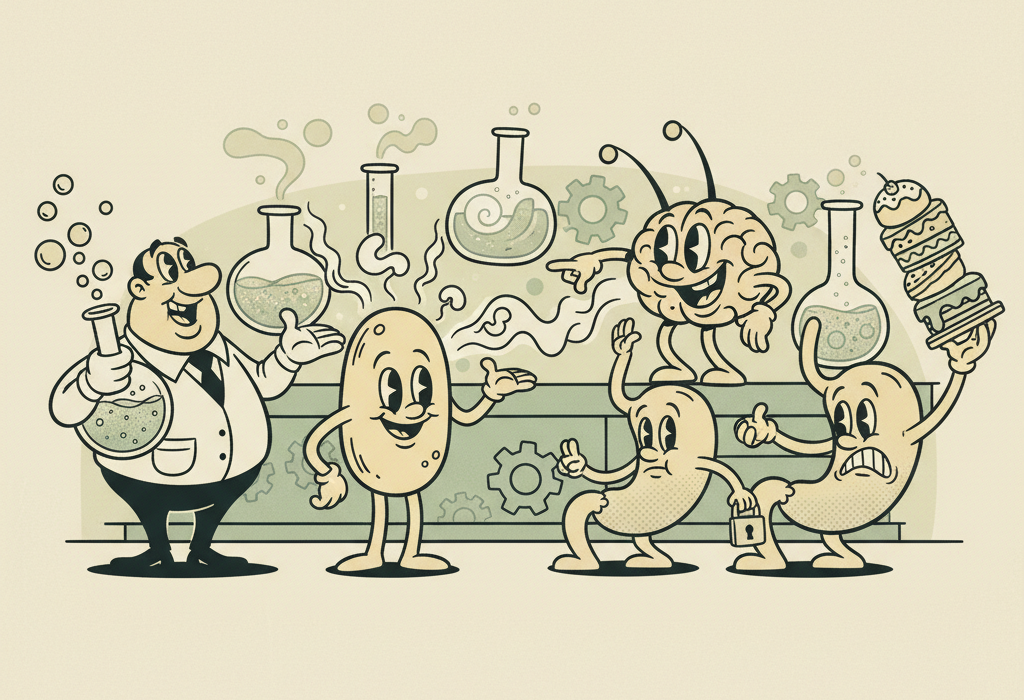
Have you ever wondered why it is so difficult to stop eating when you are full, or why lost weight tends to creep back over time? For decades, society has treated weight management as a simple matter of willpower. However, modern science paints a very different picture.
Your body regulates fat storage much like a thermostat regulates the temperature in your house. When the temperature drops, the heater kicks on. When your body senses a drop in stored energy, it cranks up your hunger. The primary messenger in this biological thermostat is a hormone called leptin.
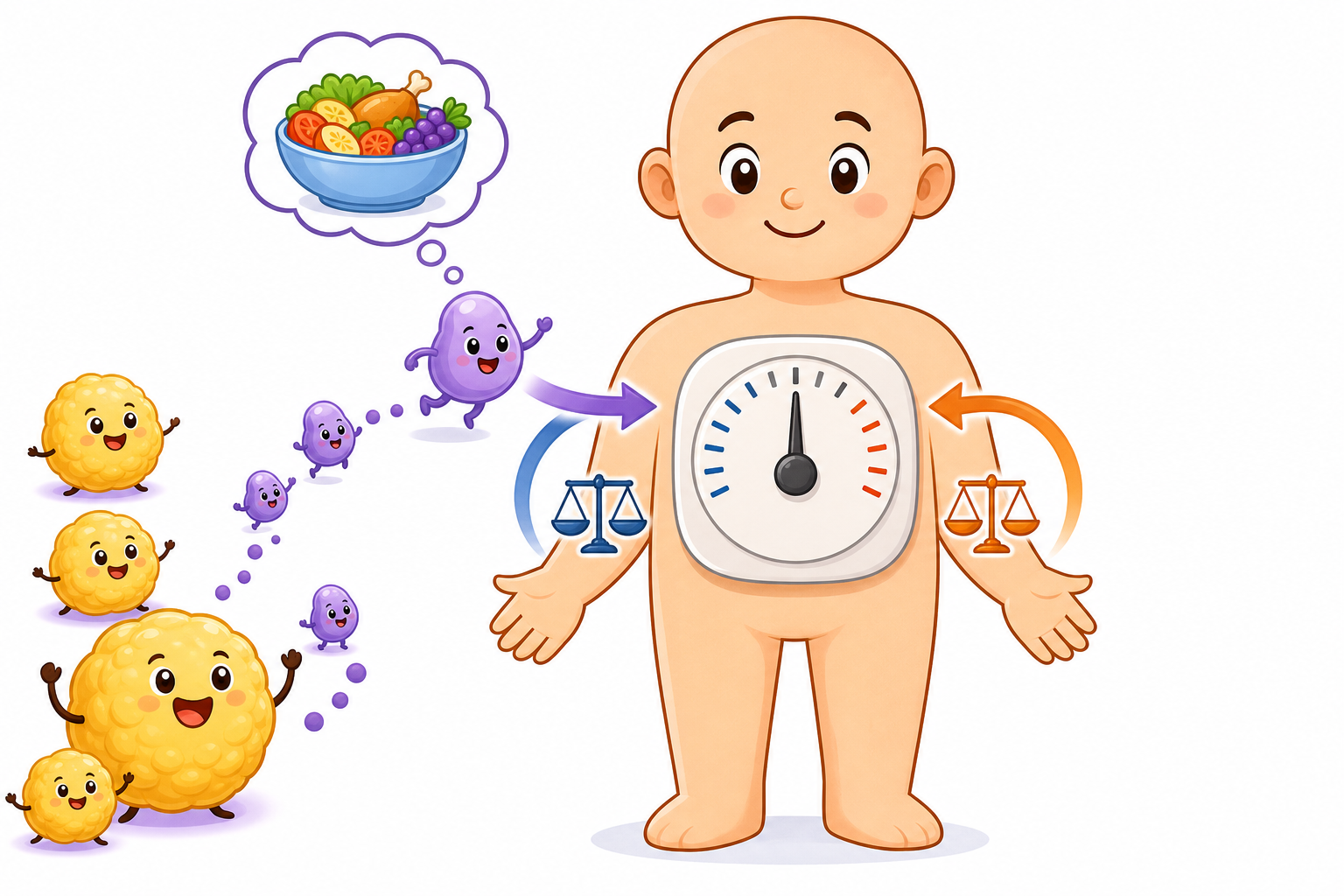
Understanding how leptin interacts with your brain helps explain why diets often fail, why we crave certain foods, and how our bodies are biologically wired to protect us against starvation.
How Does Leptin Control Appetite?
To understand appetite, we have to look at the communication between your gut, your fat cells, and your brain.
Two of the most important chemical messengers in this system are:
- Leptin (LEP-tin) – a hormone produced by your fat cells. It travels to your brain to signal that you have enough energy stored and can stop eating.
- Ghrelin (GREL-in) – often called the hunger hormone. It is produced in your stomach when it is empty, telling your brain it is time to eat.
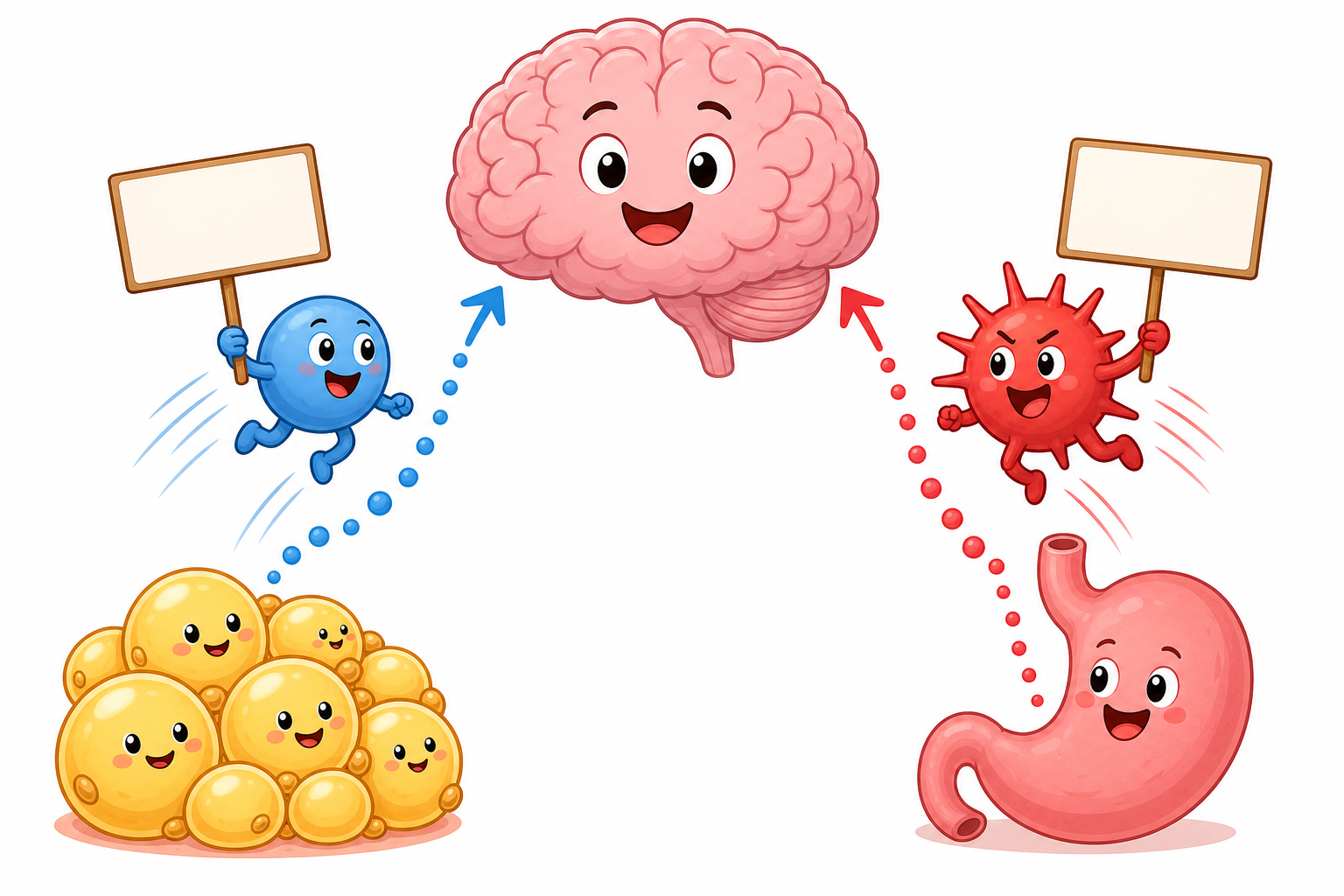
The control center that receives these signals is a small region deep inside the brain called the hypothalamus (hi-po-THAL-uh-mus). According to a 2012 review in Experimental diabetes research, the hypothalamus acts as a switchboard, integrating signals from your digestive tract and fat stores to either increase or decrease your desire to eat.
Inside the hypothalamus, leptin interacts with specific networks of brain cells. When leptin levels are high, it activates cells that suppress appetite and increases energy expenditure. At the same time, leptin turns off a different set of cells that drive hunger and promote fat storage.
The Brain’s Appetite Network
Scientists have mapped out the specific brain cells that control our urge to eat. These neurons operate like the gas pedal and brake pedal of a car.
| Neuron Type | Function | Response to Leptin | Effect on Appetite |
|---|---|---|---|
| AgRP / NPY | The “Gas Pedal” | Inhibited (turned down) | Increases hunger and slows metabolism |
| POMC | The “Brake Pedal” | Activated (turned up) | Suppresses hunger and increases calorie burn |
| BNC2 | The “Emergency Brake” | Activated (turned up) | Rapidly induces a feeling of fullness |
For years, scientists believed the balance between AgRP (hunger) and POMC (fullness) neurons was the whole story. However, researchers recently discovered a missing piece of the puzzle. A 2024 study in Nature identified a new group of brain cells called BNC2 neurons.
While POMC neurons take time to reduce appetite, BNC2 neurons act incredibly fast. When researchers activated these neurons in mice, the animals rapidly stopped eating. Furthermore, these BNC2 neurons are highly sensitive to leptin. This discovery helps explain how our brains can instantly recognize when we have had enough to eat.
What Causes Leptin Resistance?
If leptin is the hormone that tells us we are full, you might assume that people with excess body fat would have low leptin levels. In reality, the exact opposite is true.
Because leptin is produced by fat cells, people with obesity generally have very high levels of leptin circulating in their blood. The problem is not a lack of leptin. The problem is that the brain stops listening to the signal. This condition is known as leptin resistance.

A review in Advances in experimental medicine and biology explains that chronic overeating and excess fat storage can trigger low-grade inflammation in the hypothalamus. This inflammation creates a physical roadblock in the brain. Specific proteins, such as one called SOCS3, build up and block the leptin receptors.
When this happens, the brain looks at the high levels of circulating leptin but cannot register them. Believing the body is starving, the brain responds by increasing ghrelin (hunger) and slowing down the metabolism to conserve energy. This makes weight loss and obesity incredibly difficult to manage through diet alone, as the brain is actively fighting against fat loss.
Why Is It So Hard to Keep Weight Off?
One of the most frustrating aspects of dieting is weight regain. Science shows that this is heavily driven by lingering hormonal changes.
When you lose weight, your fat cells shrink. As a result, they produce less leptin. At the same time, your stomach produces more ghrelin to encourage you to eat and restore the lost fat. But how long does this biological pushback last?
A landmark clinical trial published in The New England Journal of Medicine followed 50 people who completed a 10-week weight loss program. The researchers measured their appetite hormones before the diet, immediately after, and one full year later.
Even a year after the initial weight loss, the participants’ hormones had not returned to normal. Their leptin levels remained significantly lower than before the diet, and their ghrelin levels remained significantly higher. They also reported feeling subjectively hungrier than they did before they lost the weight. This highlights that weight regain is rarely a moral failure. Instead, it is the result of a persistent hormonal drive to restore energy reserves.
How Sleep and Timing Affect Your Appetite
It is not just what you eat that affects your hunger hormones. When you sleep and when you eat play a massive role in how your body processes leptin.
A study in Nutrients looked at healthy adults subjected to chronic sleep restriction and circadian disruption (similar to the schedule of a shift worker). The researchers found that disrupting the body’s internal clock significantly altered the participants’ subjective hunger and their preference for certain foods.
These changes were directly tied to an altered ratio of ghrelin to leptin in their blood. When you do not get enough sleep, your body produces less leptin and more ghrelin. This explains why you might crave high-calorie, starchy foods after a poor night of sleep. Properly managing your circadian rhythm and sleep habits is a critical component of maintaining healthy appetite signals.
The Role of Vitamin D in Calorie Allocation
Emerging research suggests that other vitamins and hormones might influence how leptin works in the body.
A 2024 study in Research square explored how high doses of dietary vitamin D affect muscle and fat storage in mice. The researchers found that high-dose vitamin D increased the animals’ sensitivity to leptin.
Instead of storing excess calories as fat, the increased leptin sensitivity prompted the body to allocate those calories toward building muscle and supporting linear growth. While this research is still in its early stages and primarily based on animal models, it suggests that maintaining adequate vitamin D levels may help support a healthy leptin response.
Common Questions About Leptin and Appetite
Can I take a leptin supplement to lose weight?
No. Because most people with obesity already have high levels of leptin, taking more will not help. The issue is leptin resistance, meaning the brain cannot process the leptin that is already there. Furthermore, leptin is a protein hormone that would be destroyed by stomach acid if taken as a pill.
Does fasting fix leptin resistance?
Some animal research suggests that reducing inflammation can improve leptin sensitivity. While intermittent fasting can lower insulin levels and reduce general inflammation, there is no definitive proof in humans that fasting permanently “resets” leptin resistance.
Why do we have a system that makes weight loss so hard?
From an evolutionary standpoint, starvation was a much greater threat to our ancestors than obesity. Our biology evolved to fiercely protect our fat stores to ensure we could survive long periods without food. Our bodies simply have not adapted to the modern environment of constant, calorie-dense food availability.
The Bottom Line / Takeaways
Our understanding of appetite has moved far beyond the concept of simple willpower. Hunger and fullness are strictly regulated by a complex network of hormones and brain cells.
- Leptin is the primary hormone that tells your brain you have enough stored energy.
- Leptin resistance occurs when the brain stops responding to leptin signals, leading to constant hunger even when fat stores are high.
- Weight loss triggers a survival response. Hormonal changes, including a drop in leptin and a rise in ghrelin, can persist for over a year after weight loss, driving the body to regain the lost fat.
- Lifestyle matters. Adequate sleep and a healthy circadian rhythm are crucial for maintaining a proper balance of hunger hormones.
While we cannot easily rewrite our evolutionary biology, understanding these mechanisms removes the stigma of weight management. It proves that managing appetite is a biological challenge, requiring comprehensive approaches rather than just eating less.
Quick Reference: Key Studies
| Study Focus | Key Finding | Source |
|---|---|---|
| Hormones and Weight Regain | One year after weight loss, leptin remains low and ghrelin remains high, driving persistent hunger. | PMID 22029981 |
| Brain Cells and Appetite | Discovery of BNC2 neurons in the brain that rapidly suppress appetite in response to leptin. | PMID 39478220 |
| Sleep and Hunger | Chronic sleep restriction and circadian disruption alter the ghrelin/leptin ratio, increasing appetite. | PMID 35565768 |
| Leptin Resistance | Obesity causes inflammation in the brain that blocks leptin signals, leading to a false starvation response. | PMID 30390289 |
| Vitamin D and Metabolism | High-dose vitamin D may improve leptin sensitivity, helping allocate calories to muscle instead of fat in mice. | PMID 38766160 |
Last updated: June 2026
This article synthesizes findings from peer-reviewed research. It is for educational purposes only and does not constitute medical advice. Consult a healthcare provider before starting any new regimen.
Leave a Reply