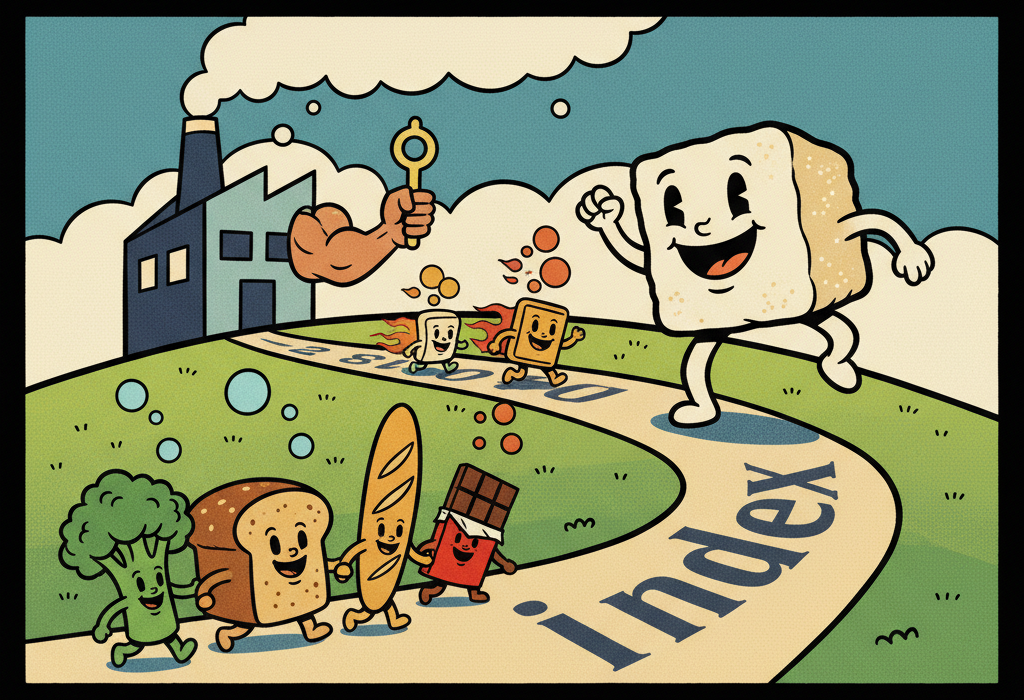
Have you ever eaten a large bowl of plain pasta or a sugary breakfast cereal, only to feel tired and hungry just two hours later? This common experience comes down to how your body digests different types of carbohydrates.
To understand this process, scientists use a measurement called the Glycemic Index (gly-SEE-mik IN-deks). The Glycemic Index is a scale from 0 to 100 that ranks foods based on how quickly they raise your blood sugar after you eat them.
Think of your body’s energy system like a campfire. High-glycemic foods are like dry paper. They burn fast and bright, causing a sudden spike in energy, but they burn out quickly and leave you needing more fuel. Low-glycemic foods are like thick oak logs. They take longer to catch fire but provide a slow, steady, and long-lasting release of energy.

For years, researchers have studied how these blood sugar spikes and crashes affect our health. Related: What Science Actually Says About Blood Sugar After Meals. Let us look at what the latest science actually shows about the Glycemic Index, how it impacts your entire body, and practical ways to manage your blood sugar.
How Your Body Processes Carbohydrates
When you eat carbohydrates, your digestive system breaks them down into glucose, which enters your bloodstream. In response, your pancreas releases a hormone called insulin. Insulin acts like a key, unlocking your cells so glucose can enter and be used for energy.

When you eat high-glycemic foods like white bread, potatoes, or sugary drinks, glucose floods your bloodstream very rapidly. Your body has to release a large surge of insulin to handle the sudden load. Over time, frequent surges of insulin can lead to insulin resistance (IN-suh-lin ree-ZIS-tuhns), a condition where your cells stop responding well to the insulin signal.
When you eat low-glycemic foods like beans, whole oats, or non-starchy vegetables, the glucose enters your bloodstream slowly. Your body only needs to release a small, steady amount of insulin, which keeps your energy levels stable.
What the Research Shows About Glycemic Health
Scientists have linked high-glycemic diets to several health outcomes beyond just daily energy levels. Research shows that chronic blood sugar spikes can influence your liver, skin, hormones, and even your brain.
Metabolic and Liver Health
Frequent blood sugar spikes are strongly tied to metabolic issues. A 2024 study in Nutrients explored how diet affects metabolic dysfunction-associated steatotic liver disease (MASLD), formerly known as fatty liver disease. The researchers found that diets high in rapidly digesting carbohydrates can alter gut bacteria, promoting inflammation and increasing fat storage in the liver. Conversely, low-glycemic eating patterns, like the Mediterranean diet, help improve gut bacteria and reduce liver fat.
Skin Health and Acne
Diet plays a notable role in skin health. A review in the American Journal of Clinical Dermatology highlights that high-glycemic diets increase insulin levels, which in turn increases a hormone called IGF-1 (Insulin-like Growth Factor 1). High levels of IGF-1 trigger the skin to produce more oil and cause skin cells to multiply rapidly, which can worsen acne. Studies consistently show that individuals who switch to a low-glycemic diet often see a reduction in acne lesions.
Fertility and Hormones
Blood sugar stability also impacts reproductive health. A 2024 review in Biology found that diets high in simple carbohydrates are correlated with both male and female infertility. In women, high insulin levels can stimulate the ovaries to produce excess androgens (male hormones), which can disrupt ovulation. Related: How an Anti-Inflammatory Diet Actually Affects Your Body.
Brain and Cravings
Why is it so hard to stop eating sugary foods? A 2025 review in Food Research International explains that the central nervous system strongly prefers rapidly digestible carbohydrates. High-glycemic foods trigger the brain’s reward system much faster than complex carbohydrates. Over time, a diet high in fast-digesting sugars can actually alter dopamine function, leading to addiction-like eating behaviors and cravings.
The Difference Between Glycemic Index and Glycemic Load
One of the biggest misunderstandings in nutrition is assuming that all foods with a high Glycemic Index are bad for you. This is where a second measurement comes in: the Glycemic Load (GL).
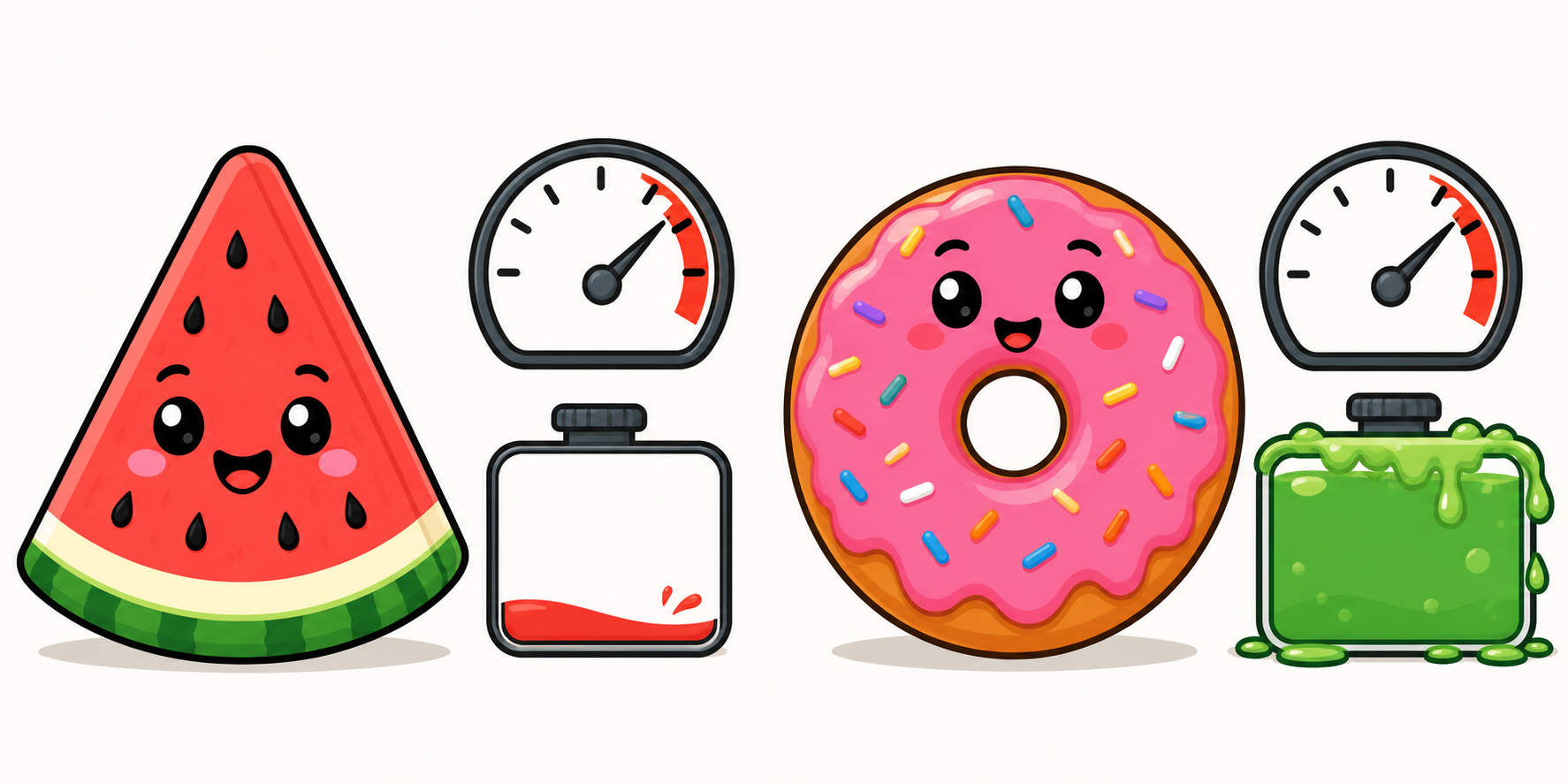
While the Glycemic Index tells you how fast a carbohydrate turns into sugar, the Glycemic Load accounts for how many carbohydrates are actually in a normal serving of that food.
A 2022 perspective published in Frontiers in Nutrition points out that the Glycemic Index falls short if used as the only indicator of food quality. For example, watermelon has a high Glycemic Index of 76. However, a slice of watermelon is mostly water and contains very few actual carbohydrates. Therefore, its Glycemic Load is very low (around 8). A doughnut also has a high Glycemic Index, but because it is packed with dense carbohydrates, its Glycemic Load is very high (around 17).
| Food Item | Glycemic Index (Speed) | Carbohydrates per Serving | Glycemic Load (Impact) |
|---|---|---|---|
| Watermelon | High (76) | Low (11g) | Low (8) |
| Doughnut | High (76) | High (23g) | High (17) |
Note: Values are approximate and vary by recipe or ripeness. This table illustrates how foods with the same GI can have vastly different real-world impacts on blood sugar.
Practical Ways to Lower Your Glycemic Response
You do not have to avoid carbohydrates entirely to maintain steady blood sugar. Research shows that how you cook, combine, and time your foods can significantly change how they affect your body.
1. Change the Order of Your Food
The sequence in which you eat your food matters. A 2020 review in Nutrition & Diabetes explored “chrononutrition” (kro-no-noo-TRISH-un), which is the study of how meal timing affects metabolism. Researchers found that eating vegetables and protein first, and saving carbohydrate-rich foods like rice or bread for the end of the meal, significantly lowers the resulting blood sugar spike. The protein and fiber create a buffer in your digestive tract, slowing down the absorption of the carbohydrates.
2. Cool Your Starches Before Eating
Cooking methods change the molecular structure of carbohydrates. A 2022 study in Foods looked closely at potatoes. When a potato is boiled or baked, its starches gelatinize, making it a high-glycemic food. However, if you let that cooked potato cool in the refrigerator overnight, the starches restructure themselves into resistant starch. Resistant starch resists digestion in the small intestine, meaning it does not spike your blood sugar. Instead, it travels to your large intestine where it feeds healthy gut bacteria.
The same process applies to oats. A 2021 review in Foods confirmed that processing methods drastically change the glycemic impact of oats. Instant, highly processed oats cause a rapid blood sugar spike. However, whole oats contain beta-glucan (BAY-tuh GLOO-kan), a soluble fiber that forms a thick gel in the stomach, slowing down digestion and keeping blood sugar steady.
3. Combine Carbohydrates with Fat and Protein
Eating carbohydrates on their own guarantees a faster blood sugar spike. Combining them with healthy fats or proteins slows down gastric emptying (how fast food leaves your stomach). For example, adding nuts to oatmeal or eating an apple with peanut butter will result in a much lower and steadier blood sugar curve than eating the oatmeal or apple alone.
4. Time Your Meals With Your Circadian Rhythm
Your body’s ability to process sugar changes throughout the day. The same Nutrition & Diabetes study noted that human insulin sensitivity is generally higher in the morning and decreases as the day goes on. This means a bowl of rice eaten at 8:00 AM will typically cause a smaller blood sugar spike than the exact same bowl of rice eaten at 8:00 PM.
Where The Science Is Still Uncertain
While the benefits of managing blood sugar are well documented, the Glycemic Index is not a perfect science. Some studies show mixed results when applying it to specific conditions.
For example, a 2026 study in Nutrition tracked pregnant women to see if their early-pregnancy Glycemic Index predicted gestational diabetes. The researchers found no consistent association, though they noted that almost all the women in the study already consumed a generally low-glycemic diet. Related: What Science Actually Says About Managing Gestational Diabetes.
Additionally, a 2021 study analyzing the PLCO cohort surprisingly found that women with a higher Glycemic Index diet had a lower risk of ovarian cancer. The researchers cautioned that this result was unexpected, contradicts other cancer research, and may be due to limitations in how the dietary data was collected. It serves as a reminder that nutrition science is complex, and single metrics rarely tell the whole story.
Common Questions About the Glycemic Index
Are all high-glycemic foods unhealthy?
No. Many nutritious foods, like carrots, watermelon, and pineapple, have a high Glycemic Index but a low Glycemic Load because they contain very few actual carbohydrates per serving. They are full of vitamins, water, and fiber, making them healthy choices.
Does blending or juicing change the Glycemic Index?
Yes. Blending or juicing breaks down the physical structure of the food and removes or pulverizes the fiber. This means your body absorbs the sugars much faster. A whole apple has a lower Glycemic Index than a glass of apple juice.
Do supplements help lower blood sugar spikes?
Some research suggests certain plant extracts can help. For example, a 2024 trial in Nutrients found that taking a specific mulberry leaf extract (Reducose) before a meal significantly lowered both the glucose and insulin response by partially blocking carbohydrate digestion. However, supplements should not replace a balanced diet.
The Bottom Line
The Glycemic Index is a helpful tool for understanding how different foods affect your blood sugar, energy levels, and long-term health. Chronic consumption of fast-digesting carbohydrates is linked to skin issues, metabolic strain, and increased cravings.
However, the Glycemic Index should not be used in isolation. The quantity of the food (Glycemic Load), the nutritional quality, and how you combine foods all matter just as much. By prioritizing whole foods, pairing carbohydrates with protein and fiber, and eating your heaviest meals earlier in the day, you can naturally steady your blood sugar without needing to memorize a chart of numbers.
Quick Reference: Key Studies
| Study Focus | Key Finding | Source |
|---|---|---|
| Diet and Fertility | High-glycemic diets are correlated with both male and female infertility due to insulin resistance. | PMID 38392349 |
| Chrononutrition | Eating carbohydrates at night causes higher blood sugar spikes than eating them in the morning. | PMID 32075959 |
| Acne and Diet | Low-glycemic diets decrease IGF-1 levels, which helps reduce acne severity. | PMID 32748305 |
| Potato Processing | Boiling then cooling potatoes increases resistant starch, lowering their glycemic impact. | PMID 35954067 |
| Brain and Cravings | The central nervous system prefers high-glycemic foods, which can drive addiction-like eating behaviors. | PMID 40467262 |
| Mulberry Extract | Mulberry leaf extract taken before a meal significantly lowered blood sugar and insulin spikes. | PMID 38892603 |
Last updated: May 2026
This article synthesizes findings from peer-reviewed research. It is for educational purposes only and does not constitute medical advice. Consult a healthcare provider before starting any new regimen.
Leave a Reply