Most of us have woken up with a red, irritated eye at some point. Usually, the culprit is simple: a poor night of sleep, seasonal allergies, or a mild surface infection like pink eye. But sometimes, a red eye is a warning sign of a much deeper, more complex problem brewing inside the body.
This condition is called uveitis (yoo-vee-EYE-tis). It is a form of inflammation that occurs inside the eye, rather than just on the surface. Because it happens internally, it can cause severe pain, vision changes, and if left untreated, long-term damage.
Scientists and eye doctors have spent decades studying why this happens. The core tension in uveitis research is that the eye is rarely acting alone. While some cases are caused by direct eye injuries or localized infections, uveitis is very often a localized alarm bell for a systemic body issue, such as an autoimmune disease or a hidden infection.
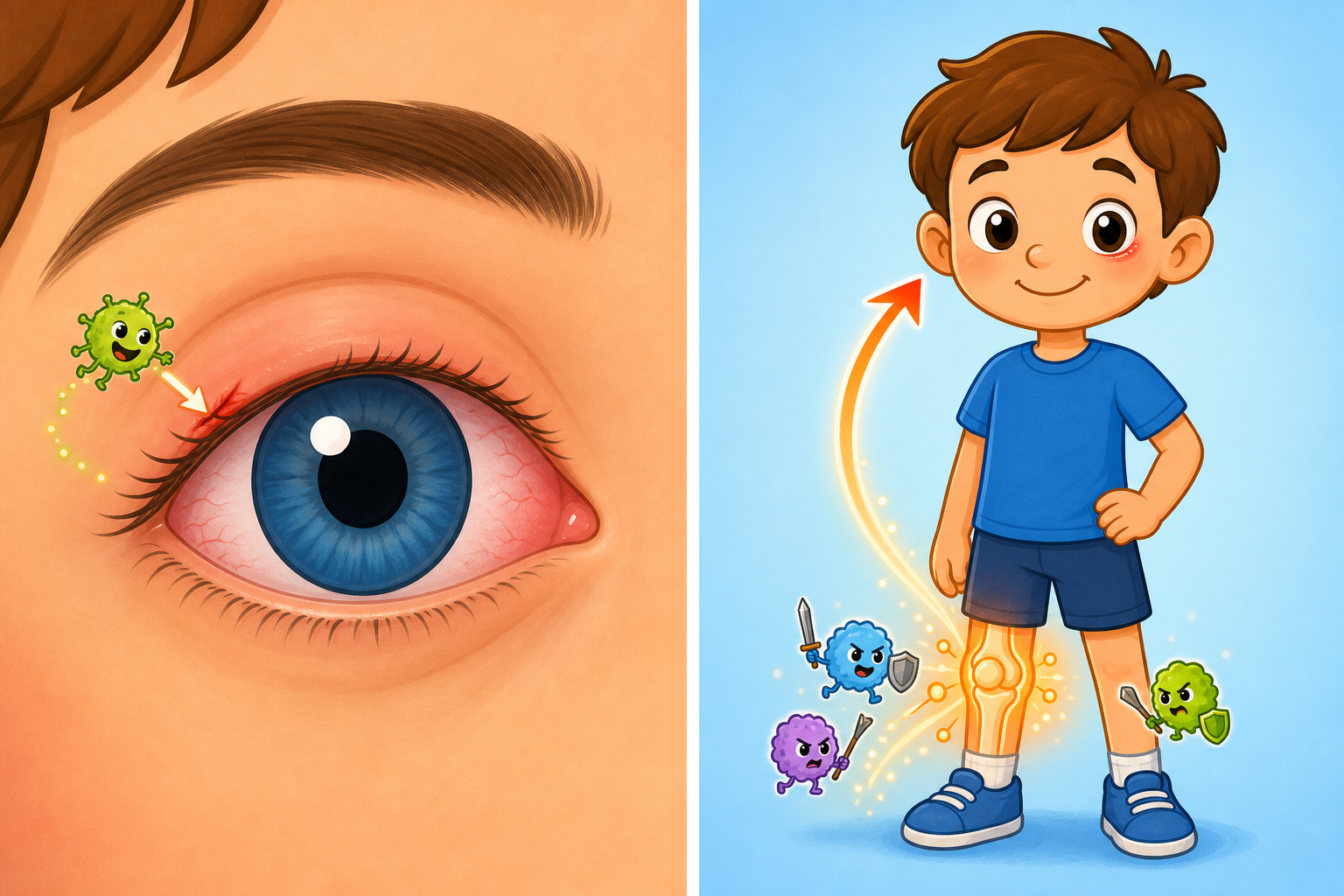
Here is what the latest peer-reviewed science actually says about what causes uveitis, how it affects your vision, and how doctors treat it.
How This Might Work: Inside the Inflamed Eye
To understand uveitis, it helps to think of the eye as a house with different layers of walls.
The outer wall is the white part of your eye. The inner wall is the retina, which acts like film in a camera to capture light. Sandwiched between them is the middle layer, called the uvea. The uvea is packed with blood vessels that deliver oxygen and nutrients to keep the eye healthy.
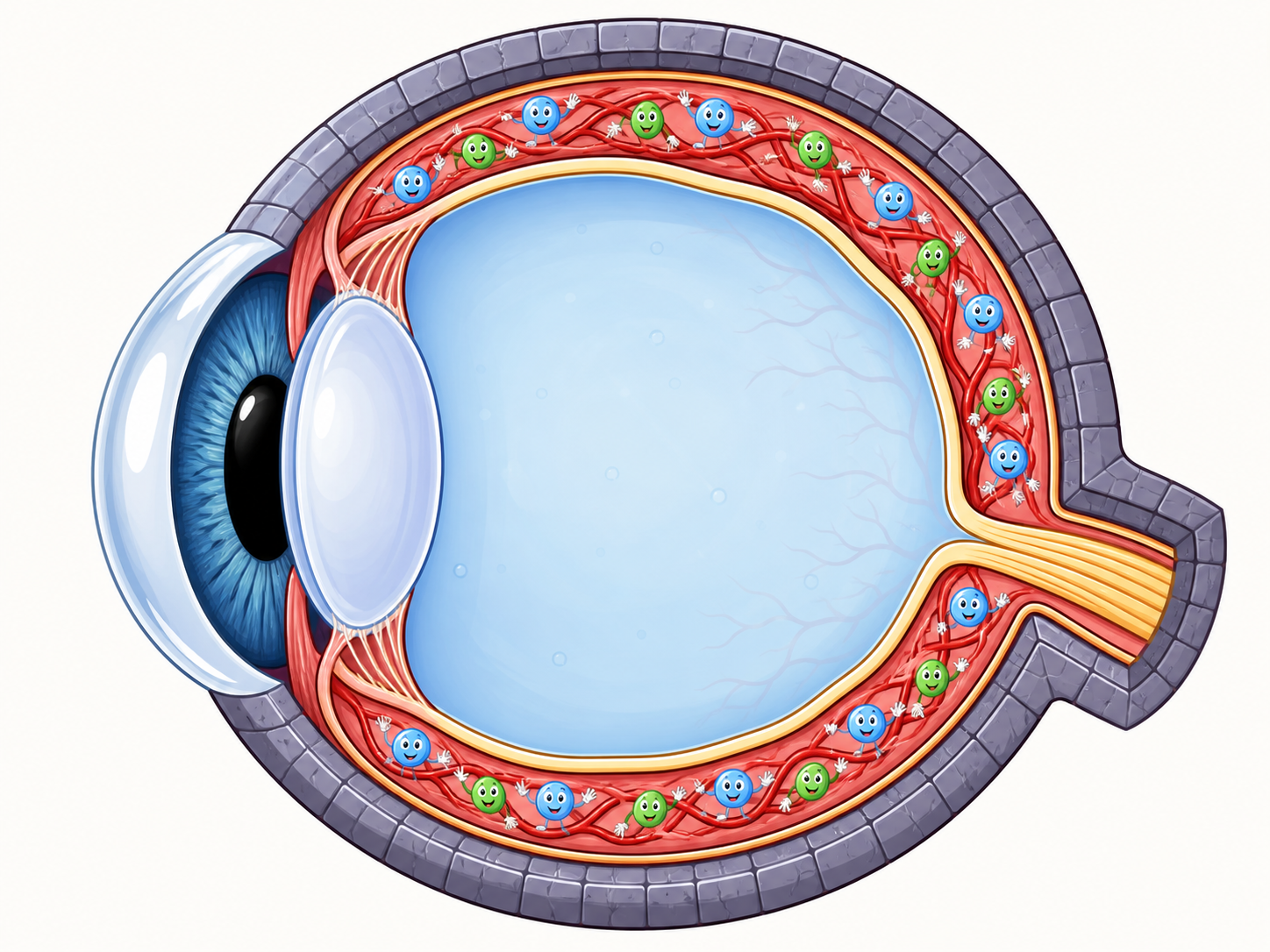
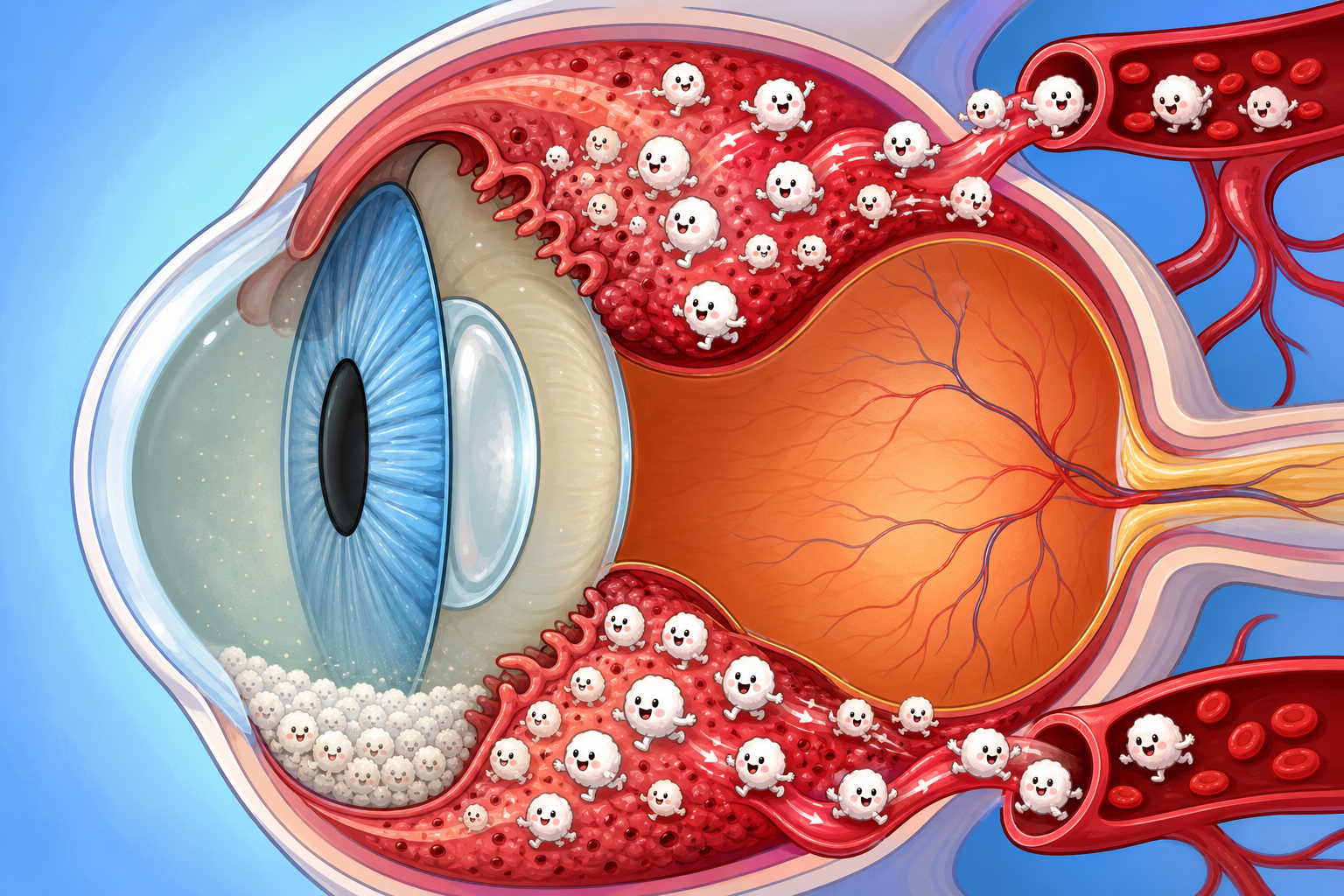
When the body detects a threat, such as an infection or an autoimmune misfire, it sends white blood cells to the area to fight the problem. Because the uvea has so many blood vessels, it becomes a superhighway for these immune cells.
When too many white blood cells flood into the eye, they cause swelling and cloudy vision. According to a 2021 review in Ocular immunology and inflammation, severe inflammation can even cause these white blood cells to settle at the bottom of the eye in a visible layer. This specific symptom is called a hypopyon (hy-POH-pee-on). A review in the Survey of ophthalmology notes that spotting a hypopyon is a critical clue for doctors, as it signals severe inflammation that requires immediate investigation to prevent permanent vision loss.
What the Research Shows About Uveitis Causes
Because the uvea is connected to the rest of your bloodstream, inflammation here can be triggered by many different things. Researchers generally divide these triggers into a few main categories.
The Autoimmune Connection
An autoimmune disease (aw-toh-ih-MYOON) occurs when your immune system gets confused and attacks healthy tissue instead of foreign invaders. Related: What Blood Tests for Inflammation Actually Tell Us About Your Health
Research heavily links uveitis to autoimmune conditions. For example, a report in the Journal francais d’ophtalmologie highlights that sarcoidosis, an inflammatory disease that forms tiny clumps of cells in organs, is a major driver of eye inflammation. In fact, research in Immunological medicine points out that 30 to 50 percent of patients with systemic sarcoidosis will develop uveitis. In places like Japan, it is the leading cause of the condition.
Sometimes, the immune system forms specific physical markers inside the eye. A report in the European journal of ophthalmology describes the formation of “Berlin nodules.” These are tiny, pearly white bumps of inflammatory cells that form inside the eye chamber, often serving as a visible red flag for underlying conditions like sarcoidosis or tuberculosis.
The Infectious Connection
While autoimmune issues are common, direct infections can also breach the eye. A 2023 review in Ocular immunology and inflammation details exogenous endophthalmitis, a severe form of inner eye inflammation caused when bacteria or fungi enter the eye from the outside, usually following an eye injury or surgery.
Interestingly, older systemic infections are also making a comeback. Multiple studies, including a review in the Survey of ophthalmology and a study in Clinical & experimental optometry, warn that syphilis is re-emerging globally. Ocular syphilis is becoming an increasingly common cause of uveitis, reminding doctors to test for sexually transmitted infections when a patient presents with unexplained eye inflammation.
Medical Treatments and Sterile Inflammation
In some cases, the very treatments meant to save vision can trigger inflammation.
Millions of older adults receive routine eye injections to treat conditions like macular degeneration. Related: Eye Injections for Macular Degeneration: What Science Says. Recently, doctors began using a new, higher-dose medication called aflibercept (8 mg) to reduce how often patients need these injections.
However, researchers writing in BMC ophthalmology documented a cluster of patients who developed acute intraocular inflammation shortly after receiving this specific high-dose injection. A separate 2025 study in JAMA ophthalmology also investigated noninfectious inflammation following aflibercept treatments.
The good news from these studies is that this inflammation was “sterile” meaning it was not caused by a bacterial infection. The patients generally recovered their vision quickly after using steroid eye drops. Still, it highlights a known trade-off in medicine: newer, longer-lasting treatments sometimes come with a slightly higher risk of an inflammatory response.
Who Needs Caution: Children and Uveitis
While uveitis often affects adults, children are not immune, and their cases require special caution because they may not complain about vision changes until the damage is severe.
A 2023 report in Ocular immunology and inflammation explains that Juvenile Idiopathic Arthritis (JIA) is the most common cause of uveitis in children. The symptoms in these children are often very mild at first, but persistent, low-grade inflammation can silently lead to cataracts, glaucoma, and permanent vision loss. Because of this, children with JIA need frequent, routine eye screenings even if their eyes look perfectly white and healthy.
Another specific pediatric condition is pars planitis. A review in Ocular immunology and inflammation describes this as an idiopathic (id-ee-oh-PATH-ik) condition, meaning the exact cause is unknown. It involves inflammation in the middle of the eye and often presents with children noticing “floaters” or blurred vision. While sometimes benign, it requires careful monitoring and often a stepladder approach of treatments, starting with steroids, to protect the child’s vision.
Common Misunderstandings About Red Eyes
The most common myth about eye inflammation is that any red eye can be fixed with over-the-counter allergy drops or a quick prescription for pink eye (conjunctivitis).
A review in The Medical clinics of North America emphasizes that while most red eyes are harmless surface issues, there are clear warning signs of a true ocular emergency. You should never ignore a red eye if it is accompanied by:
- Severe, deep eye pain
- Photophobia (foh-toh-FOH-bee-uh), which is an extreme sensitivity to light
- A noticeable decrease in your vision
- A recent history of eye trauma
If you have these symptoms, standard eye drops will not help. You need an evaluation by an ophthalmologist who can look inside the eye with specialized microscopes.
The Bottom Line
Uveitis is not a single disease, but rather an umbrella term for inflammation inside the eye.
Science shows us that this inflammation is often a puzzle piece connected to a larger picture of your overall health. It can be triggered by autoimmune diseases like sarcoidosis or arthritis, infections like syphilis, or even as a rare reaction to certain eye medications.
What remains certain is that inner eye inflammation is a medical emergency. While treatments are highly effective, ranging from simple steroid eye drops to systemic immunosuppressants, early detection is the absolute key to preventing permanent vision loss. If your eye is red, painful, and sensitive to light, skip the pharmacy aisle and see an eye doctor immediately.
Quick Reference: Key Studies
| Study Focus | Key Finding | Source |
|---|---|---|
| Medication Reactions | High-dose (8mg) aflibercept injections for macular issues can occasionally cause sterile intraocular inflammation, which usually resolves with steroid drops. | PMID 39623439 |
| Autoimmune Links | Sarcoidosis is a leading cause of uveitis, affecting 30-50% of people with the systemic disease. | PMID 34214013 |
| Infectious Causes | Ocular syphilis is re-emerging globally and is an increasingly common cause of uveitis. | PMID 34147542 |
| Pediatric Risks | Juvenile Idiopathic Arthritis (JIA) is the most common cause of uveitis in children, requiring strict screening to prevent glaucoma and vision loss. | PMID 37966463 |
| Symptom Clues | A hypopyon (a visible layer of white blood cells in the eye) indicates severe inflammation requiring urgent medical care. | PMID 11525785 |
Last updated: July 2026
This article synthesizes findings from peer-reviewed research. It is for educational purposes only and does not constitute medical advice. Consult a healthcare provider before starting any new regimen or if you experience sudden eye pain or vision changes.



Leave a Reply