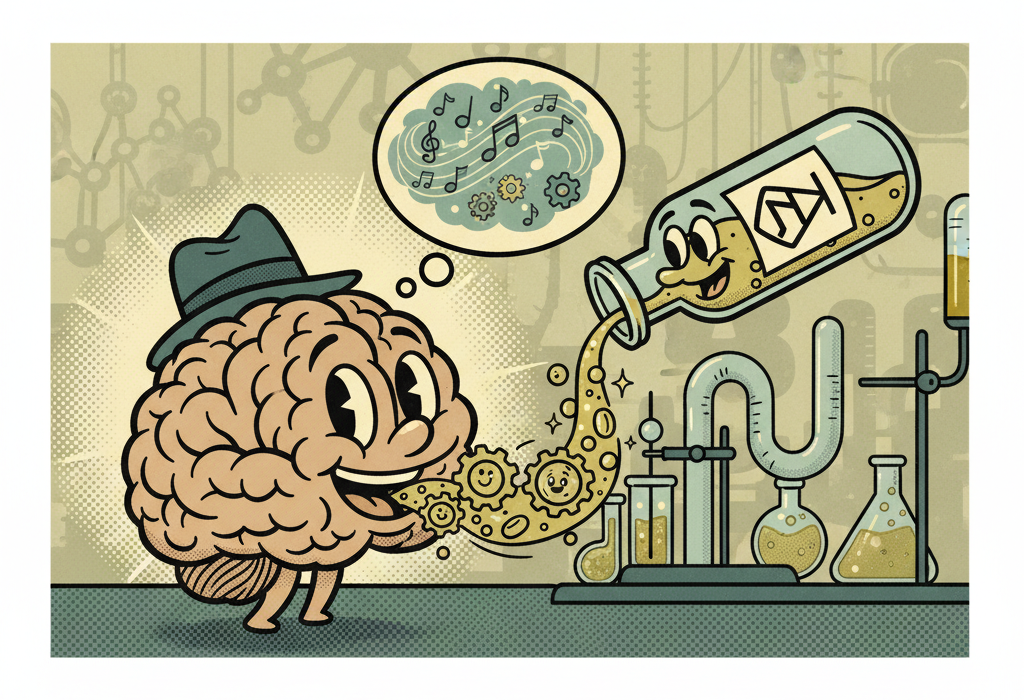
Millions of people take glucosamine supplements every day hoping to soothe creaky joints and protect their cartilage. But while much of the focus has been on knees and hips, scientists have been looking much higher up: at the brain.
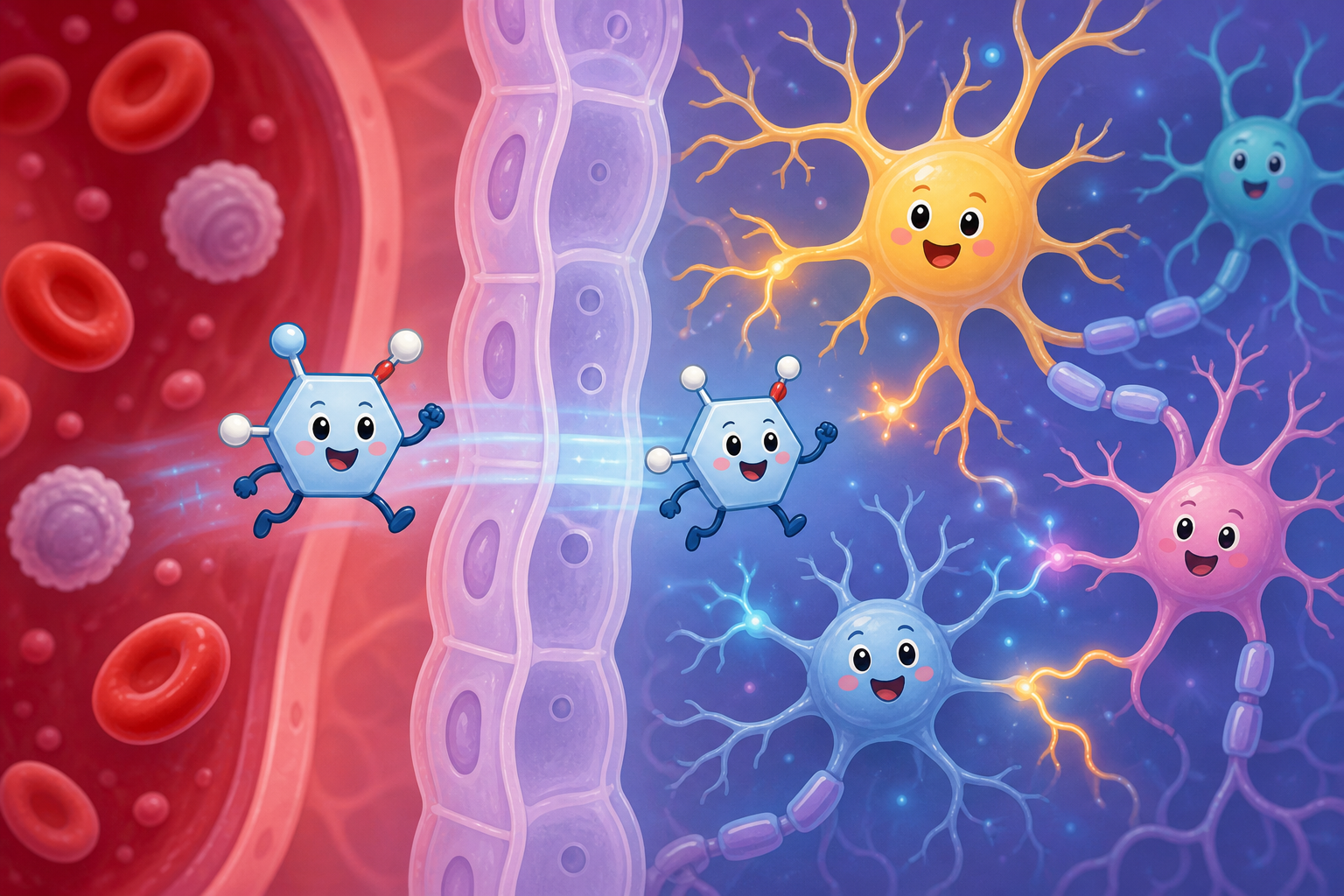
Does glucosamine affect how we think and remember? The short answer is yes. Glucosamine easily crosses the blood-brain barrier. In healthy individuals, it acts as a vital raw material that helps brain cells communicate, generate energy, and even recover from injuries like strokes.
However, the science is not entirely positive. A major 2026 study in Nature Metabolism revealed a surprising paradox: while glucosamine is safe for healthy brains, taking it as a supplement may actually accelerate cognitive decline in people who already have Alzheimer’s disease.
Here is a breakdown of how the brain uses glucosamine, why it acts as a double-edged sword, and what the latest research means for your health.
How Your Brain Actually Uses Glucosamine
To understand why a joint supplement affects memory, we have to look at how the brain stores and uses sugar.
The brain is an energy-hungry organ. It stores backup energy in the form of a complex sugar molecule called glycogen (GLY-co-jen). For decades, scientists thought brain glycogen was made entirely of standard glucose. However, a 2021 study in Cell Metabolism discovered that up to 25% of the sugars stored in brain glycogen are actually glucosamine.
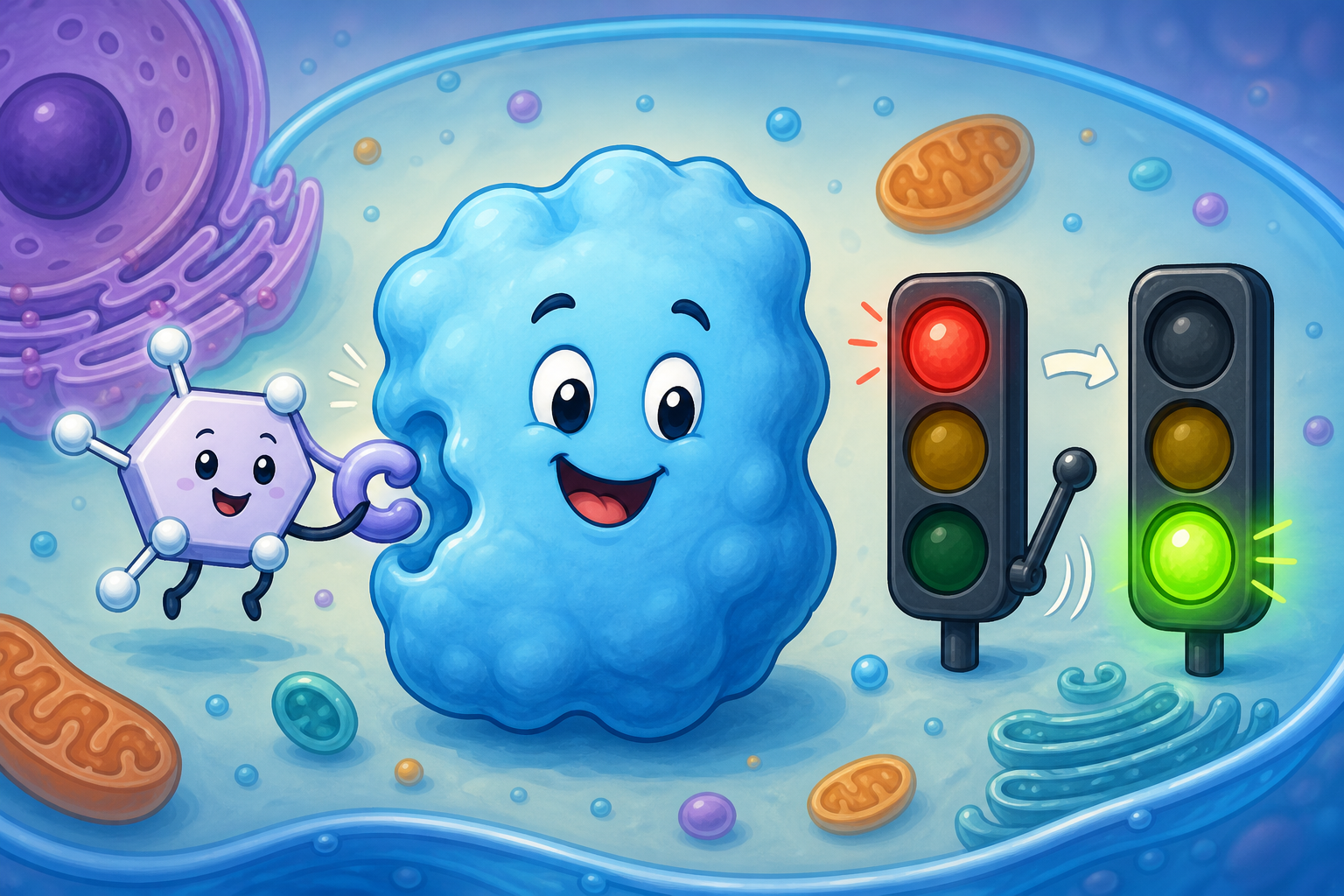
The brain hoards glucosamine because it needs it for a critical biological process called O-GlcNAcylation (oh-glik-NACK-uh-lay-shun).
Think of O-GlcNAcylation like a series of microscopic traffic lights inside your cells. By attaching a tiny glucosamine-based sugar molecule to a protein, the cell can turn that protein’s activity on or off. This process is essential for:
- Synaptic plasticity: Helping neurons form new connections to store memories.
- Energy production: Telling the mitochondria (the cell’s power plants) to produce more energy during intense thinking.
- Stress response: Protecting cells from damage during emergencies.
Related: Understanding Brain Fog and Age-Related Cognitive Decline
What the Research Shows: The Brain Benefits
In a healthy brain, having an adequate supply of glucosamine to fuel O-GlcNAcylation is highly beneficial.
Boosting Brain Energy
When your brain works hard, it needs instant energy. A 2024 study in Developmental Cell found that when neurons fire rapidly, they immediately increase O-GlcNAcylation. This sugar-attachment process signals the mitochondria to ramp up energy (ATP) production. Without this mechanism, brain cells fail to meet the high energy demands required for deep thinking and memory formation.
Stroke Recovery and Neuroprotection
Because O-GlcNAcylation helps cells survive stress, researchers have explored whether extra glucosamine can protect the brain during a crisis. A 2022 study in Neuromolecular Medicine tested glucosamine in mice experiencing an ischemic stroke (a stroke caused by a blocked artery). The mice given glucosamine showed less brain inflammation, less tissue damage, and an increase in the birth of new neurons (neurogenesis) compared to untreated mice.
Potential Benefits for Down Syndrome
Disrupted brain metabolism is a hallmark of Down syndrome, which often leads to early-onset Alzheimer’s-like symptoms. A 2025 study in Redox Biology found that boosting the O-GlcNAcylation process in Down syndrome mouse models rescued mitochondrial function, reduced oxidative stress, and improved recognition memory.
The Alzheimer’s Paradox
If glucosamine helps healthy brains make energy and recover from stress, shouldn’t it prevent Alzheimer’s disease? For years, scientists thought the answer was yes.
Older research, including a 2017 review in Brain Research Bulletin and a 2021 review in Experimental & Molecular Medicine, noted that increasing O-GlcNAcylation in lab models seemed to prevent “tau tangles”, the toxic protein clumps that destroy neurons in Alzheimer’s disease.
However, biology is rarely that simple. A groundbreaking 2026 study in Nature Metabolism flipped this theory on its head, revealing that direct glucosamine supplementation might actually be harmful to those with active Alzheimer’s disease.
The Danger of “Hyperglycosylation”
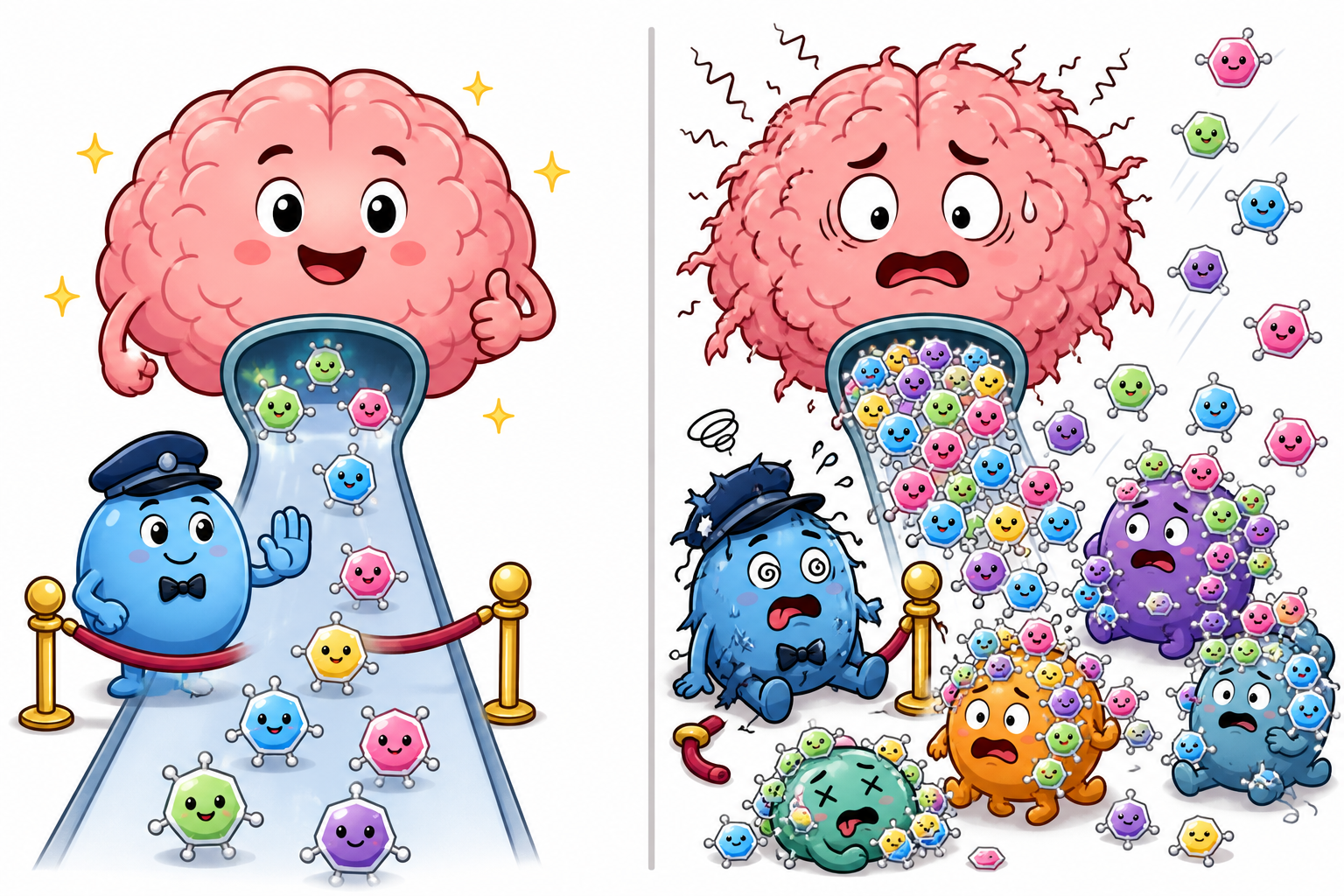
The 2026 researchers used advanced spatial mapping on human Alzheimer’s brain tissue. They discovered a phenomenon called hyperglycosylation (hi-per-gly-CO-sil-ay-shun). In Alzheimer’s brains, proteins were coated in far too many sugar molecules, driven by an overactive biological assembly line.
To see how diet played a role, researchers fed oral glucosamine supplements to mice with Alzheimer’s-like pathology. The results were concerning:
- The glucosamine further fueled the hyperglycosylation.
- The mice suffered worsened memory and cognitive deficits.
- They lost the ability to recognize familiar social cues.
To see if this applied to humans, the researchers analyzed electronic health records of over 66,000 patients. They found that in patients who already had Alzheimer’s or related dementias, regular glucosamine use was associated with a 25% increased risk of mortality. Furthermore, in patients with Mild Cognitive Impairment (MCI), glucosamine users progressed to full Alzheimer’s disease at a 25% higher rate than non-users.
Why Doesn’t It Hurt Healthy Brains?
The researchers ran the exact same glucosamine supplement test on young, healthy mice. Strikingly, the healthy mice did not develop hyperglycosylation and showed zero memory impairment.
This suggests the healthy brain has a “buffer” system. It uses the glucosamine it needs and safely processes the rest. But in a brain already compromised by Alzheimer’s disease, that regulatory system is broken. The excess glucosamine acts like throwing gasoline on a fire, accelerating the disease process.
Related: Can We Prevent Age-Related Cognitive Decline? What Science Actually Shows
Who Benefits Or Needs Caution
Based on the latest scientific literature, the effects of glucosamine on the brain depend heavily on your current neurological health.
| Population | What the Science Says | Recommendation |
|---|---|---|
| Healthy Adults | The brain safely regulates glucosamine. It is used for normal memory function and energy production. | Generally safe to take for joint health; no negative cognitive effects observed. |
| Stroke Patients | Animal models show glucosamine may reduce inflammation and promote new brain cell growth after a stroke. | Promising, but requires more human clinical trials before being used as a treatment. |
| Mild Cognitive Impairment (MCI) | Human health records link glucosamine use to a 25% faster progression from MCI to Alzheimer’s. | Caution advised. Discuss joint supplement alternatives with a doctor. |
| Alzheimer’s / Dementia | Glucosamine fuels “hyperglycosylation,” worsening memory and increasing mortality risk in human and animal data. | Avoid. Discontinue use unless specifically directed by a neurologist. |
Common Questions About Glucosamine and the Brain
Does glucosamine actually cross the blood-brain barrier?
Yes. MRI imaging studies and chemical analyses confirm that glucosamine readily passes from the bloodstream into brain tissue, where it accumulates in areas like the cortex and hippocampus.
Will taking glucosamine for my knees give me Alzheimer’s?
There is currently no evidence that glucosamine causes Alzheimer’s in a healthy brain. The risk identified in the 2026 research applies to people who already have the underlying disease or mild cognitive impairment, as their brains lose the ability to regulate the sugar properly.
What if I eat foods with glucosamine?
Glucosamine is naturally found in the shells of shellfish, animal bones, and bone broth. The amounts consumed in a normal diet are vastly smaller than the concentrated doses found in daily joint supplements, and are not considered a risk factor.
The Bottom Line
Glucosamine is deeply intertwined with how our brains function. The brain stores it in glycogen and uses it to modify proteins, a process that is absolutely essential for learning, memory, and energy production.
For healthy individuals, the brain is perfectly capable of managing glucosamine levels, meaning joint supplements are unlikely to harm your cognition. However, the science clearly shows a “Goldilocks effect.” While too little glucosamine activity is bad for the brain, forcing too much into a brain that is already struggling with Alzheimer’s disease can accelerate cognitive decline.
If you have a family history of severe cognitive decline, or if you or a loved one have been diagnosed with Mild Cognitive Impairment or Alzheimer’s, it is worth having a conversation with your doctor about whether glucosamine is the right joint supplement for you.
Quick Reference: Key Studies
| Study Focus | Key Finding | Source |
|---|---|---|
| Alzheimer’s Risk | Glucosamine supplementation exacerbated memory loss in AD mice and was linked to faster disease progression in human patients. | PMID 42265388 |
| Down Syndrome | Enhancing the O-GlcNAc pathway improved memory and rescued mitochondrial function in Down syndrome models. | PMID 40684658 |
| Brain Energy | Neuronal activity directly drives glucosamine-based protein modification to boost mitochondrial ATP (energy) production. | PMID 38843836 |
| Stroke Recovery | Glucosamine showed neuroprotective and anti-inflammatory effects in a mouse model of ischemic stroke. | PMID 34837638 |
| Brain Storage | Up to 25% of the sugars stored in brain glycogen are glucosamine, proving it is a critical brain resource. | PMID 34043942 |
| Brain Imaging | MRI scans confirmed that dietary glucosamine successfully crosses the blood-brain barrier and accumulates in the cortex. | PMID 38086821 |
Last updated: October 2026
This article synthesizes findings from peer-reviewed research. It is for educational purposes only and does not constitute medical advice. Consult a healthcare provider before starting any new regimen.

Leave a Reply