
Understanding Your Body’s First Responders
Imagine your body is a large building. Your innate immunity (ih-NATE ih-MYOO-nih-tee) is the building’s basic security system. It includes locked doors (your skin), motion sensors, and security guards that patrol the halls looking for anything suspicious. When a virus or bacteria breaks in, this system reacts immediately to contain the threat.
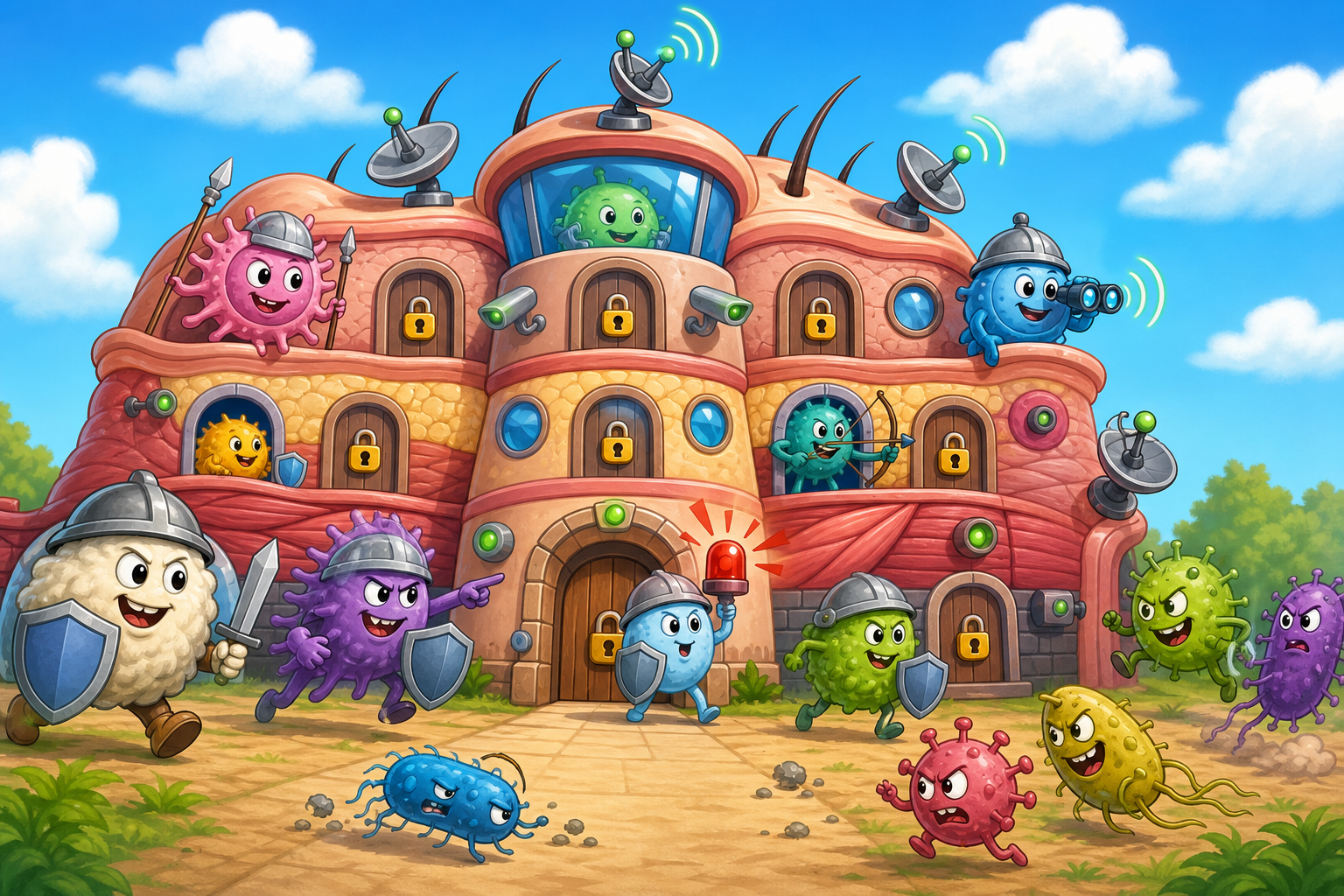
This is different from your adaptive immune system, which acts more like a team of specialized detectives. The adaptive system takes days or weeks to study a specific intruder and create custom weapons (antibodies) to defeat it.
For a long time, medical treatments focused mostly on the adaptive immune system, such as using traditional vaccines to create specific antibodies. However, scientists are now looking closely at how to upgrade the basic security system. By boosting innate immunity, researchers hope to fight off antibiotic-resistant bacteria, make vaccines work better for older adults, and even train the body to attack stubborn cancers.
This article explains what current research shows about how our innate immune system works and how science is attempting to make it stronger.
How This Might Work: The Tools of Innate Immunity
To understand how scientists are boosting innate immunity, it helps to know the tools this system uses to protect you. When a pathogen (a germ that causes disease) enters the body, the innate immune system relies on a few key mechanisms to fight back.
Pattern Recognition Receptors (Sensors)
Your innate immune cells have sensors on their surfaces called pattern recognition receptors. These sensors do not look for a specific virus, like COVID-19 or the flu. Instead, they look for general signs of trouble, such as molecules that are common to many bacteria but do not belong in human cells. A 2026 review in Nature Cancer explains that when these sensors detect foreign material, they send chemical alarms to the rest of the immune system to start a defense response.
Interferons (The Alarm Signals)
When a cell is infected by a virus, it releases proteins called interferons. These proteins literally “interfere” with the virus’s ability to copy itself. They also warn neighboring cells to raise their defenses. Research shows that specific cellular proteins, such as MAVS, are essential for triggering these interferon alarms. A 2005 study in Cell demonstrated that when the MAVS protein is activated, it boosts the production of interferons and strengthens antiviral immunity.
Antimicrobial Peptides (Natural Antibiotics)
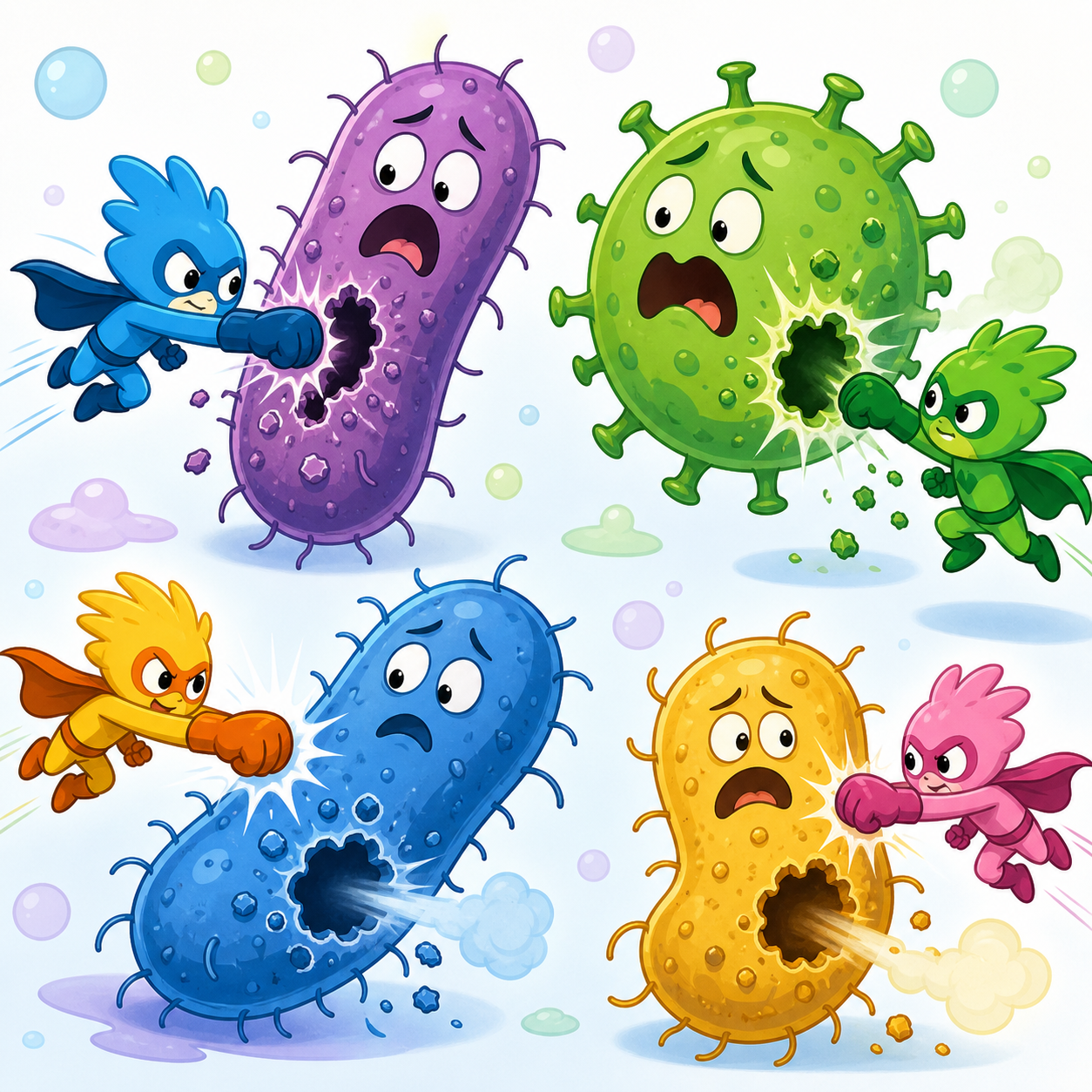
Antimicrobial peptides (an-tie-my-KRO-bee-ul PEP-tydes) are small proteins made by your body that act like natural antibiotics. They can punch holes in the outer walls of bacteria and viruses. Your skin, lungs, and gut naturally produce these peptides to keep harmful microbes from taking hold.
What the Research Shows: Fighting Infections
One of the biggest challenges in modern medicine is that many bacteria are becoming resistant to standard antibiotic drugs. To solve this, scientists are testing a concept called Host-Directed Therapy. Instead of creating a new drug to kill the bacteria directly, this therapy aims to stimulate the host (you) to kill the bacteria using your innate immune tools.
Boosting Natural Defenses
A 2020 review in Frontiers in Immunology highlights how compounds like Vitamin D and butyrate can enhance innate immunity. Butyrate is a substance produced by healthy gut bacteria when they digest dietary fiber. Studies show that butyrate and synthetic versions of it can prompt the body to produce more antimicrobial peptides.
These compounds also increase autophagy (aw-TOFF-uh-gee), a process where cells break down and recycle damaged parts, including hiding bacteria. By triggering the body to produce more of its own natural antibiotics and increasing cellular cleanup, researchers have seen success in controlling difficult infections like tuberculosis in early clinical trials.
Related: How Your Body Actually Detoxifies: The Science of Cellular Cleanup
Trained Immunity
Historically, scientists believed that only the adaptive immune system had a “memory.” We now know that the innate immune system can also learn from past experiences. This is called trained immunity.
When the innate immune system is exposed to certain harmless stimuli, it undergoes chemical changes that leave it on high alert. A 2024 study in Immunity looked at the BCG vaccine, which is traditionally used to prevent tuberculosis. Researchers tracked 323 healthy individuals and found that the vaccine actually reprogrammed their innate immune cells. The vaccine provided a general boost to the innate immune system, particularly in people whose immune systems were relatively dormant before the shot.
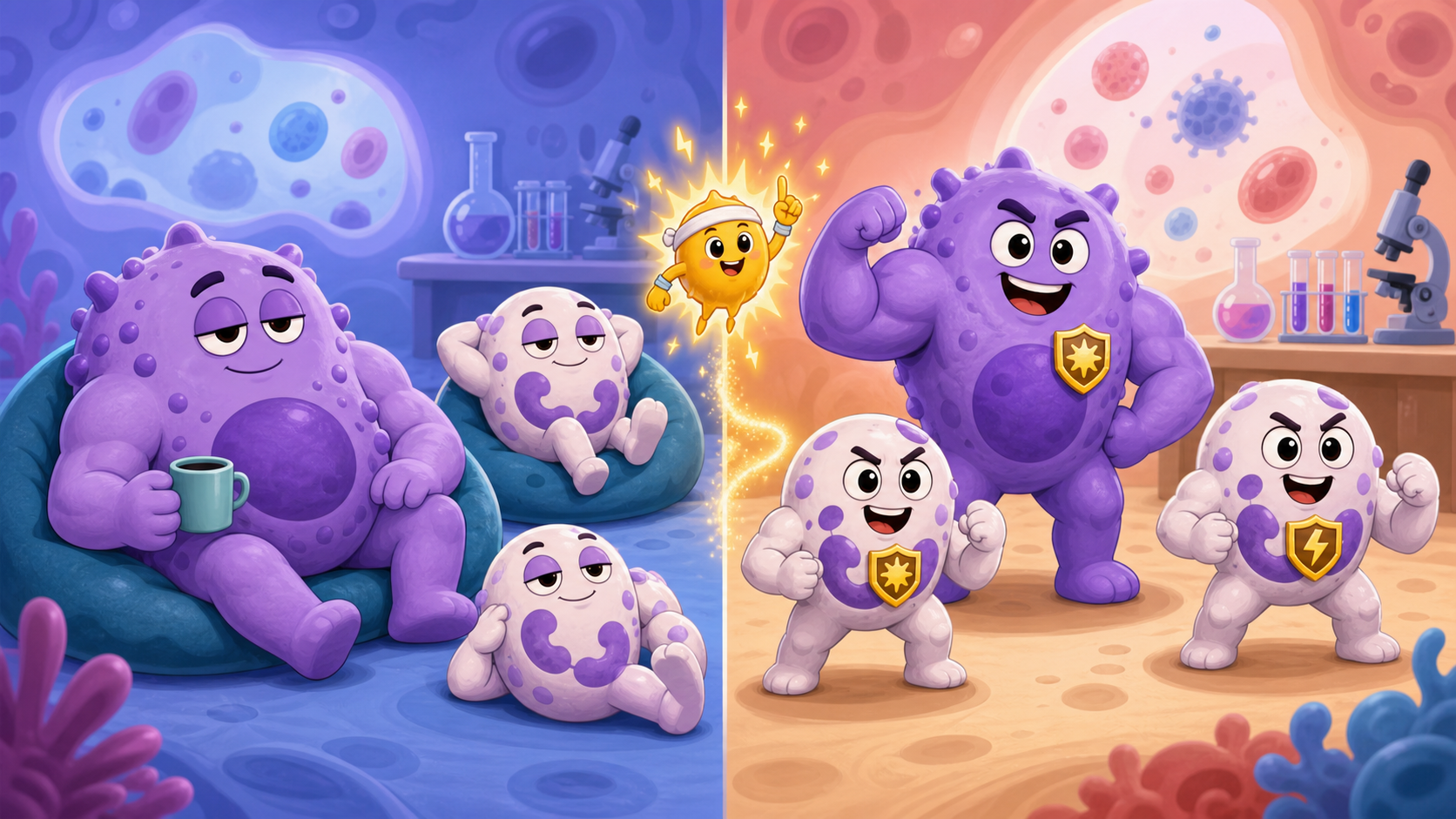
Similarly, a 2022 review in Trends in Immunology suggests that our history of prior infections and vaccinations shapes how well our innate immune system responds to future, entirely different threats.
What the Research Shows: Cancer and Innate Immunity
Cancer cells are human cells that have mutated and grow out of control. Because they are technically your own cells, they are very good at hiding from the immune system. Certain tumors, like glioblastoma (a type of brain cancer), create a local environment that shuts down immune activity. Scientists call these “cold” tumors.
Researchers are finding ways to use innate immunity to turn these “cold” tumors “hot,” meaning the immune system can see them and attack.
Removing the Brakes
Sometimes, cancer cells hijack cellular processes to suppress the immune system. A 2021 study in Cancer Immunology Research identified a specific protein complex (SETDB1-TRIM28) that suppresses innate immunity inside tumors. When researchers blocked this complex in models of ovarian cancer, it caused the cancer cells to form damaged genetic material.
This internal damage triggered a specific innate alarm system called the cGAS-STING pathway. Once this alarm sounded, innate immune cells rushed into the tumor, which also helped adaptive immune cells (T-cells) recognize and destroy the cancer.
Using Viruses and Bacteria to Fight Cancer
Another strategy involves intentionally introducing safe versions of viruses or bacteria into a tumor to wake up the innate immune system.
A 2024 study in the International Journal of Molecular Sciences details how scientists use oncolytic viruses (viruses engineered to only infect cancer cells) to treat brain tumors. When the virus infects the tumor, it triggers the innate immune system’s pattern recognition receptors. The immune system rushes in to fight the virus, but in the process, it also discovers and attacks the cancer cells.
Similarly, a 2024 study in Nature Communications tested a specialized hydrogel containing modified, safe Salmonella bacteria. When applied to the surgical cavity after a brain tumor was removed in mice, the bacteria caused the remaining cancer cells to burst. This alerted the innate immune system, which then cleaned up the residual cancer cells and prevented the tumor from returning.
What the Research Shows: Aging and Vaccines
As we get older, our immune system naturally slows down, a process known as immunosenescence (ih-myoo-no-seh-NESS-ens). Because the innate immune system does not react as strongly, older adults are more vulnerable to infections and often do not respond as well to standard vaccines.
To fix this, scientists have developed ways to specifically stimulate the innate immune system in older adults when giving a vaccine.
High-Dose Vaccines and Adjuvants
A 2025 study in JCI Insight compared standard-dose flu vaccines to high-dose flu vaccines in people over 65. The researchers found that the high-dose vaccine triggered a much stronger innate immune response in the first 24 hours. It activated specific genes related to interferons and antiviral defense, which looked very similar to the robust immune response usually seen in young adults. This early innate boost led to a much better production of protective antibodies weeks later.
Another approach is using adjuvants. An adjuvant is an ingredient added to a vaccine specifically to irritate the innate immune system and ensure it pays attention to the vaccine. A 2025 review in the Annals of Medicine noted that vaccines containing the adjuvant AS01 (used in modern shingles and RSV vaccines) are highly effective in older adults. The adjuvant directly stimulates innate immune cells, forcing them to release chemical alarms that overcome age-related immune sluggishness.
What the Research Shows: Metabolism and Immunity
Your innate immune system requires a lot of energy to function, and emerging research shows it is deeply connected to your metabolism, including your blood sugar and dietary fats.
- Blood Sugar and Viral Defense: A 2022 study in Molecular Cell found that during a viral infection, blood sugar levels drop rapidly. This drop activates an energy-sensing protein called AMPK. The researchers discovered that AMPK directly boosts the innate immune system’s antiviral pathways. When blood sugar was kept high, this antiviral defense was weakened.
- Dietary Fats: A 2024 study in Molecular Cell screened various cellular metabolites and found that palmitic acid (a common fatty acid) actually helps activate the MAVS protein, which we know is crucial for launching interferon alarms against viruses.
While these studies show a fascinating link between what we consume and how our cells defend themselves, more research is needed to translate this into specific dietary guidelines for immune health.
Related: How an Anti-Inflammatory Diet Actually Affects Your Body
Common Questions About Boosting Innate Immunity
Can I take a supplement to boost my innate immunity?
While vitamins like Vitamin D play a proven role in supporting the production of antimicrobial peptides, there is no single “magic pill” that broadly boosts immunity. Much of the research on Host-Directed Therapy uses specific, high-dose compounds in clinical settings. Maintaining adequate Vitamin D levels and a diet rich in fiber (which promotes butyrate production in the gut) are evidence-based ways to support your baseline defenses.
Do standard antibiotics harm innate immunity?
Antibiotics are essential for treating severe bacterial infections. However, some research indicates that certain antibiotics can temporarily alter the gut microbiome, which may reduce the natural production of innate immune boosters like butyrate. This is why scientists are working on therapies that boost the immune system to work alongside antibiotics, potentially reducing the length of time the drugs are needed.
Where The Science Is Still Uncertain
While the concept of boosting innate immunity is well-established in vaccine science (through adjuvants and high-dose formulations), many of the therapies aimed at cancer and severe infections are still in the early stages of development.
Treatments involving oncolytic viruses, modified bacteria, and experimental drugs that target specific immune proteins have shown great promise in laboratory cells and animal models (like mice). However, the human immune system is incredibly complex. A treatment that safely wakes up the immune system in a mouse must be carefully tested in human clinical trials to ensure it does not cause excessive inflammation or autoimmune reactions.
The Bottom Line
The innate immune system is our body’s first responder, using sensors, chemical alarms, and natural antibiotics to keep us safe. Research shows that this system can be trained and boosted.
- We know that aging slows down innate immunity, but specialized vaccines (using high doses or adjuvants) can successfully wake it up to provide strong protection for older adults.
- We know that the innate immune system can be suppressed by certain cancers and bacteria, allowing disease to spread.
- We are still learning how to safely use experimental therapies, like modified viruses or metabolic drugs, to consistently reactivate innate immunity in humans without causing unwanted side effects.
By learning how to turn our natural security system back on, science is opening the door to treatments that rely less on traditional drugs and more on the body’s own ability to heal.
Quick Reference: Key Studies
| Study Focus | Key Finding | Source |
|---|---|---|
| Vaccines in Older Adults | High-dose flu vaccines trigger a youthful innate immune response in older adults, improving overall protection. | PMID 40036077 |
| Trained Immunity | The BCG vaccine reprogrammed innate immune cells, providing a general boost to baseline immunity in healthy individuals. | PMID 38198850 |
| Host-Directed Therapy | Compounds like butyrate and Vitamin D induce antimicrobial peptides and autophagy to fight infections without antibiotics. | PMID 32595649 |
| Cancer Immunity | Blocking the SETDB1-TRIM28 complex in tumors activated the cGAS-STING innate immune pathway, improving immunotherapy response. | PMID 34848497 |
| Metabolism & Immunity | Drops in blood sugar during viral infection activate AMPK, which directly boosts the body’s antiviral innate immune pathways. | PMID 36384137 |
| Brain Cancer Therapy | A hydrogel delivering modified bacteria triggered innate immune cells to attack glioblastoma and prevented tumor return in mice. | PMID 38762500 |
Last updated: July 2026
This article synthesizes findings from peer-reviewed research. It is for educational purposes only and does not constitute medical advice. Consult a healthcare provider before starting any new regimen.

Leave a Reply