
The concept of a “leaky gut” has become incredibly popular on the internet. You have likely seen articles blaming it for fatigue, skin issues, and weight gain. But behind the trendy buzzwords lies a very real, heavily researched biological function known to scientists as intestinal permeability.
Your digestive tract is essentially a hollow tube that runs from your mouth to your end. Because of this, the food, bacteria, and environmental chemicals inside your gut are technically outside your body. To protect you, the lining of your intestines acts as a highly intelligent security checkpoint. It must let essential nutrients and water pass into your bloodstream while keeping harmful bacteria and toxins out.
When this security system breaks down, unwanted molecules slip through. This is what researchers mean by a leaky gut. A 2024 review in Clinical and Experimental Medicine explains that this breakdown is linked to a wide variety of conditions, ranging from digestive disorders to autoimmune diseases and metabolic issues.
This article will explore what peer-reviewed science actually says about leaky gut syndrome, how it happens, and what evidence-based steps you can take to support your intestinal barrier.
How This Might Work: The Anatomy of Your Gut Barrier
To understand how a gut becomes leaky, it helps to understand how the barrier works when it is healthy. The intestinal barrier is not just a simple wall. It is a complex, multi-layered defense system.
According to research in Expert Review of Gastroenterology & Hepatology, the barrier consists of three main layers:
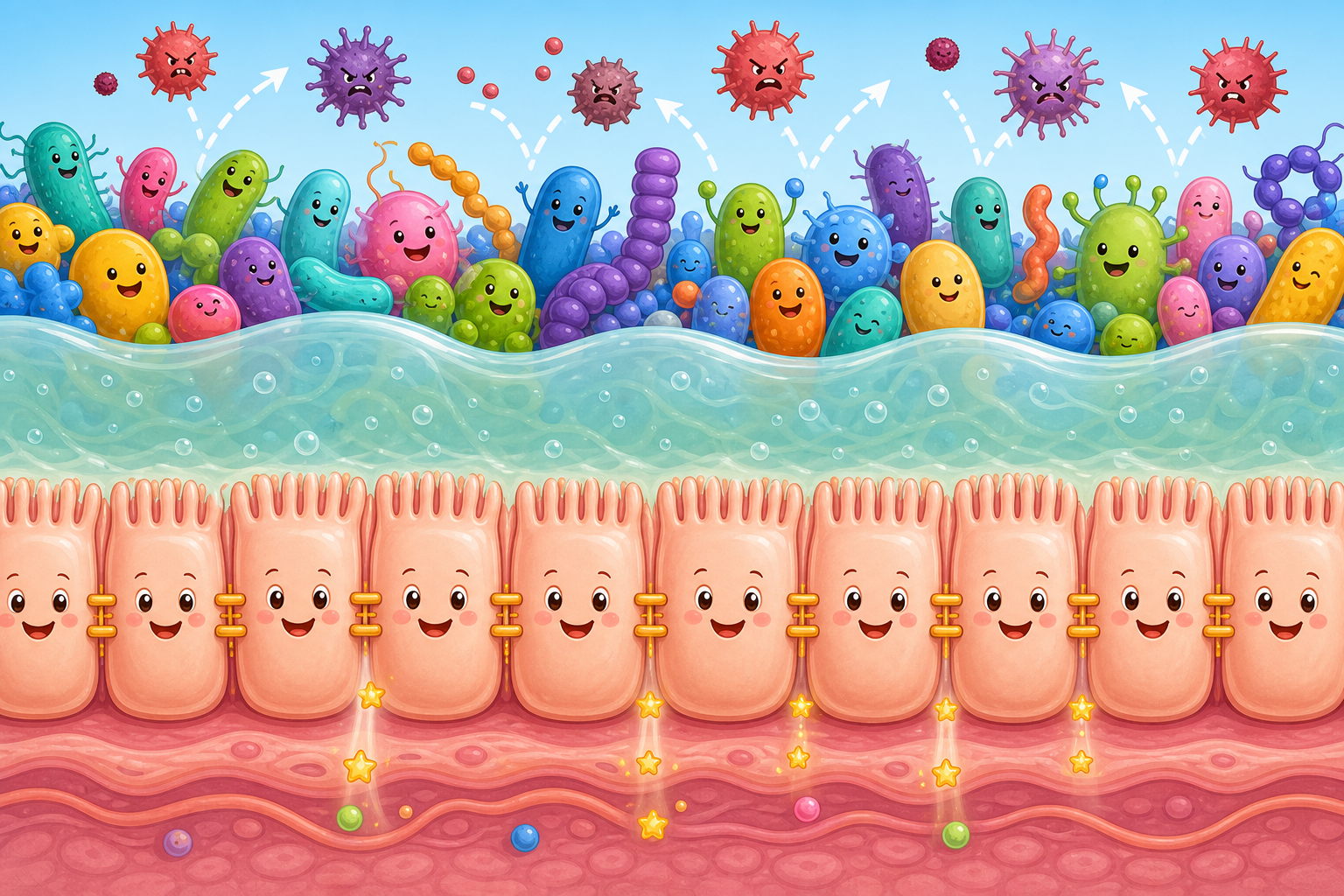
- The Microbiome: Trillions of friendly bacteria live in your gut. They crowd out harmful invaders and produce chemicals that nourish your gut lining.
- The Mucus Layer: A thick, gel-like layer of mucus sits on top of your intestinal cells. It acts as a physical shield, trapping harmful bacteria before they can touch your cells.
- The Epithelial Cells: This is a single layer of specialized cells lining your intestines. They are packed tightly together, shoulder-to-shoulder.
Between these epithelial cells are microscopic protein structures called tight junctions (TITE JUNK-shuns). Tight junctions act like the gates between the cells. They open slightly to let nutrients pass through, and then they close to block larger, harmful molecules.
When these tight junctions become damaged or stay open for too long, the barrier is compromised. This allows microscopic toxins, undigested food particles, and bacteria to enter the tissue below and eventually reach your bloodstream.
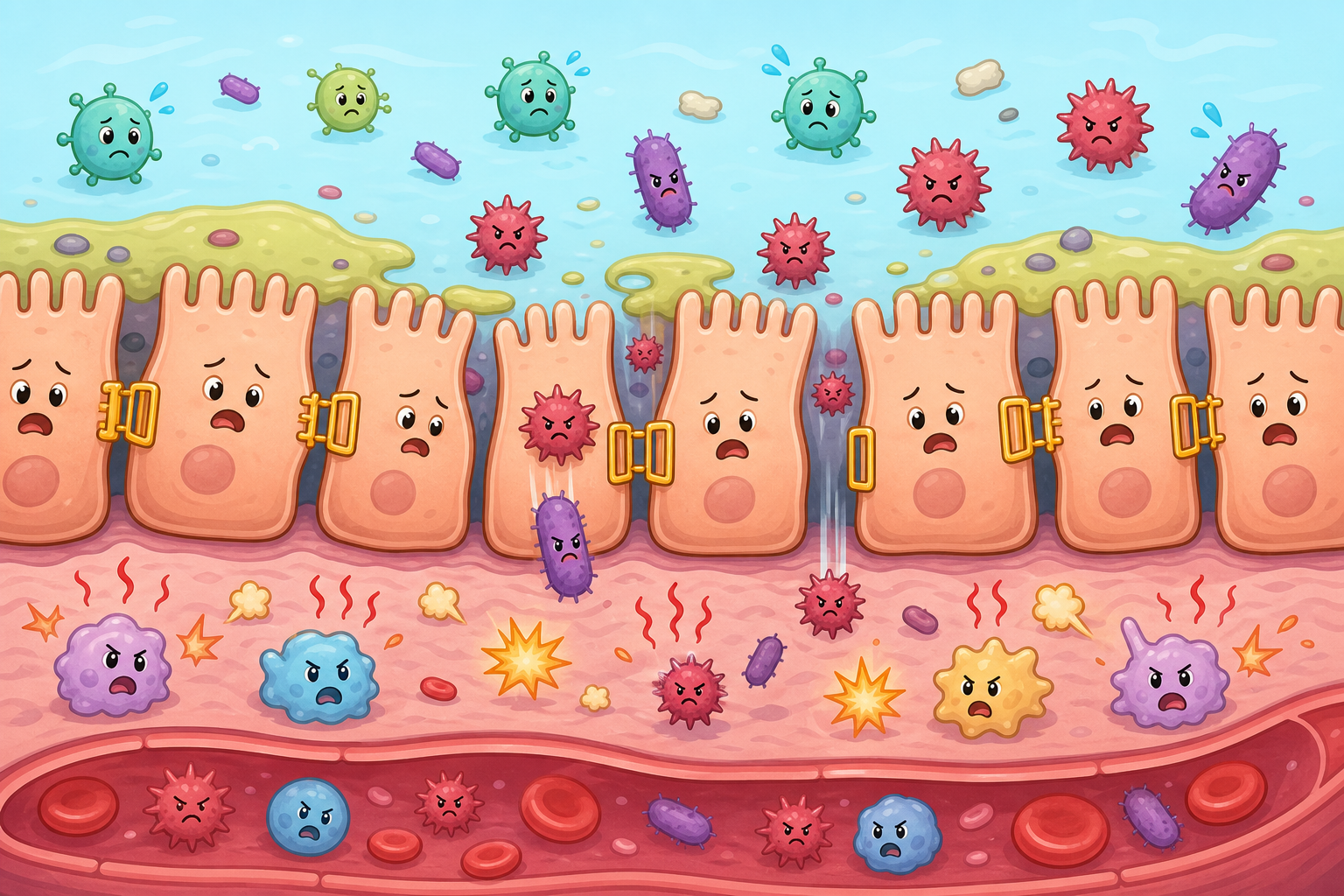
One of the most problematic invaders is a substance called lipopolysaccharide (LIP-oh-pol-ee-SAK-uh-ride), or LPS. LPS is a toxin found on the outer walls of certain bacteria. When LPS leaks into your bloodstream, it triggers an immediate alarm in your immune system, causing widespread inflammation.
What Causes a Leaky Gut?
The strength of your intestinal barrier fluctuates throughout your life. It is influenced by what you eat, your stress levels, and the medications you take.
Scientists have identified several major factors that can weaken tight junctions and damage the gut barrier.
Diet and Processed Foods
What you eat directly interacts with your intestinal lining. A 2019 study in Nutrients highlights that modern Western diets are strongly associated with barrier dysfunction. Diets high in refined sugars and saturated fats can alter the balance of bacteria in your gut. This imbalance is called dysbiosis (dis-bye-OH-sis).
Furthermore, research in the American Journal of Physiology notes that certain food additives, particularly commercial emulsifiers used to keep processed foods mixed together, can degrade the protective mucus layer in the gut, bringing bacteria into direct contact with the epithelial cells.
Alcohol and Medications
Alcohol is a well-known gut irritant. A review in Molecules points out that heavy alcohol consumption can dissolve the protective lipids in the intestinal mucosa and trigger the opening of tight junctions.
Certain medications also pose a risk. Non-steroidal anti-inflammatory drugs (NSAIDs) like ibuprofen can damage the intestinal lining if used frequently. Antibiotics, while necessary for treating infections, can wipe out beneficial bacteria, leading to dysbiosis and a weakened barrier.
Stress
Psychological and physical stress can negatively impact your gut. When you are stressed, your body releases hormones like cortisol. The Molecules review also notes that severe stress can restrict blood flow to the digestive tract and trigger the release of inflammatory chemicals that loosen tight junctions.
How Intestinal Permeability Affects Your Body
When the gut barrier fails, the resulting inflammation does not stay confined to your stomach. Because blood from the intestines travels to other organs, a leaky gut can have systemic effects.
The Gut-Liver Connection
Blood leaving your digestive tract goes directly to your liver through the portal vein. If your gut is leaky, your liver is the first organ bombarded by escaping toxins like LPS.
A 2016 review in Nature Reviews Gastroenterology & Hepatology explains that this constant exposure to bacterial toxins drives liver inflammation. This process is a major contributor to non-alcoholic fatty liver disease (NAFLD), which is currently the most common cause of liver disease in Western countries. Further research in Gastroenterology confirms that gut leakiness and dysbiosis are heavily involved in the progression of liver diseases, including cirrhosis.
Obesity and Metabolic Health
There is a strong link between your gut barrier and your weight. Studies on mice demonstrate that high-fat diets induce leaky gut, which leads to metabolic endotoxemia (toxins in the blood). This low-grade, chronic inflammation interferes with how your body processes insulin, contributing to weight gain and type 2 diabetes.
Autoimmune Conditions
For an autoimmune disease to develop, a person usually needs a genetic predisposition, an environmental trigger, and a leaky gut. A 2021 study in Frontiers in Immunology looked at patients with Hashimoto’s thyroiditis, a common autoimmune thyroid condition. The researchers found that these patients had higher blood levels of zonulin (a protein that opens tight junctions) compared to healthy people, suggesting a clear link between a leaky gut and autoimmune thyroid disease.
Brain Health
Your gut and your brain are in constant communication. Interestingly, the brain has its own protective wall called the blood-brain barrier. A fascinating study in Science Translational Medicine found that mice raised in a sterile environment without any gut bacteria had highly permeable, leaky blood-brain barriers. When these mice were given normal gut bacteria, their blood-brain barriers tightened up.
This suggests that the health of your gut microbiome directly influences the physical protection of your brain. Other research in Life Sciences explores how toxins escaping a leaky gut might travel to the brain, potentially contributing to neuroinflammation seen in Alzheimer’s disease.
Practical Guidance: How to Support Your Gut Barrier
While leaky gut is associated with many problems, the good news is that the cells lining your intestines replace themselves every three to five days. This means your gut barrier is highly responsive to positive lifestyle changes.
Increase Dietary Fiber
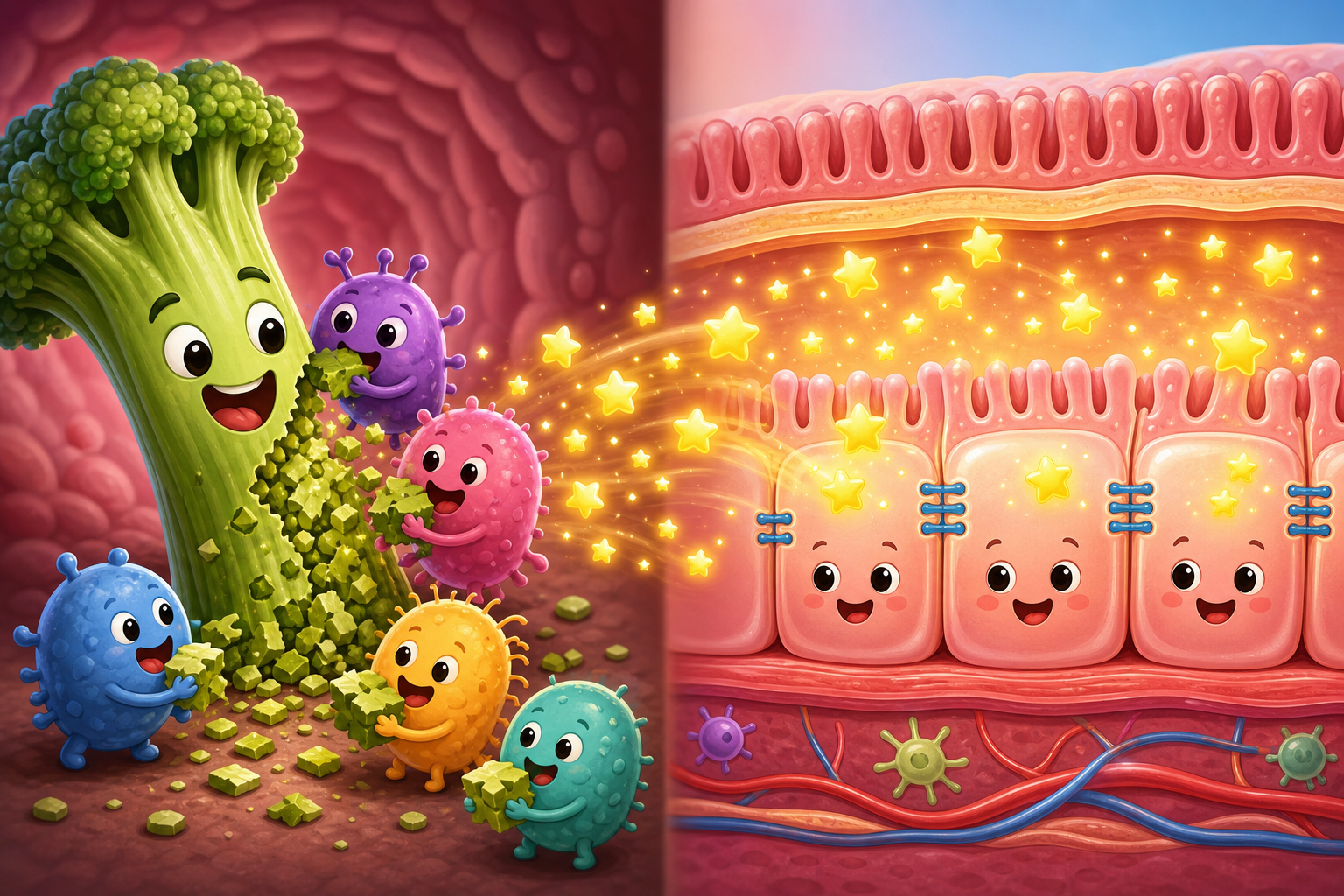
Fiber is arguably the most important nutrient for your gut barrier. When you eat soluble fiber, your gut bacteria ferment it into short-chain fatty acids (SCFAs).
The most important SCFA is butyrate (BYOO-tuh-rate). A 2021 review in the International Journal of Molecular Sciences explains that butyrate serves as the primary fuel source for your intestinal cells. It gives them the energy they need to multiply, repair damage, and build strong tight junctions. Without enough fiber, bacteria starve and stop producing butyrate, causing the barrier to weaken.
Probiotics and Prebiotics
Probiotics (live beneficial bacteria) and prebiotics (food for those bacteria) show promise in repairing the gut. A 2025 meta-analysis in Pharmacological Research reviewed 68 clinical trials. The researchers found that supplementing with probiotics, prebiotics, or a combination of both significantly reduced levels of LPS in the bloodstream, indicating a tighter, healthier gut barrier.
Specific bacterial strains are particularly helpful. For example, a 2023 study in Gut found that the bacterium Roseburia intestinalis produces high amounts of butyrate, which restores gut barrier function and even helps protect against colorectal cancer in mouse models.
Weight Management
Because excess body fat promotes inflammation, losing weight can naturally improve your gut barrier. A 2022 meta-analysis in Gut Microbes analyzed 47 trials involving over 1,900 people. The researchers discovered a clear dose-response relationship: every kilogram of weight lost was associated with a measurable reduction in intestinal permeability and an increase in healthy microbiome diversity.
Where The Science Is Still Uncertain
Despite the clear evidence that intestinal permeability exists, diagnosing it in a normal doctor’s office remains difficult.
As explained in a 2020 review in Cells, the gold standard for measuring leaky gut is the lactulose/mannitol test. This involves drinking a solution of two different sugars and measuring how much of each appears in your urine. However, this test is time-consuming and rarely used outside of research settings.
Many alternative clinics offer blood tests for zonulin or LPS antibodies to diagnose leaky gut. However, researchers caution that these commercial blood tests are often unreliable. Zonulin levels fluctuate wildly throughout the day, making a single blood draw a poor reflection of your overall gut health.
Furthermore, scientists are still untangling the “chicken or egg” dilemma. Does a leaky gut cause diseases like obesity and autoimmunity, or do those diseases cause the gut to become leaky? The current scientific consensus is that it is likely a vicious cycle. An initial trigger (like a poor diet or infection) causes mild permeability, which creates inflammation, which in turn damages the barrier further.
The Bottom Line
The intestinal barrier is a critical defense system that separates your internal organs from the outside world. Peer-reviewed science clearly shows that when this barrier becomes too permeable, it allows toxins to enter the bloodstream, driving systemic inflammation.
We know that diets high in saturated fats, low in fiber, and heavy in alcohol degrade this barrier. Conversely, we have strong evidence that weight loss, dietary fiber, and probiotic foods help repair it by feeding the bacteria that produce healing compounds like butyrate.
While commercial tests for “leaky gut syndrome” remain unreliable, the lifestyle habits that protect your gut barrier are well-established, safe, and beneficial for your overall health.
Quick Reference: Key Studies
| Study Focus | Key Finding | Source |
|---|---|---|
| Weight loss and permeability | Meta-analysis showed that intentional weight loss significantly reduces intestinal permeability and increases microbiome diversity. | PMID 35040746 |
| Probiotics and gut integrity | Review of 68 trials found pro- and prebiotics significantly reduce LPS toxins in the blood, indicating a stronger gut barrier. | PMID 40378939 |
| Diet and barrier function | Fiber and short-chain fatty acids (like butyrate) strengthen the barrier, while high-fat diets and emulsifiers weaken it. | PMID 34299233 |
| Gut-brain axis | Germ-free mice without a microbiome displayed increased blood-brain barrier permeability, which was reversed by introducing bacteria. | PMID 25411471 |
| Hashimoto’s and leaky gut | Patients with autoimmune Hashimoto’s thyroiditis showed altered microbiomes and higher markers of intestinal permeability. | PMID 33746942 |
| Liver health | Dysbiosis and increased gut permeability drive liver inflammation, contributing to non-alcoholic fatty liver disease (NAFLD). | PMID 27273168 |
Last updated: July 2026
This article synthesizes findings from peer-reviewed research. It is for educational purposes only and does not constitute medical advice. Consult a healthcare provider before starting any new regimen.


Leave a Reply