
Most of us know the feeling of waking up with a stiff neck or rubbing our shoulders after a long day at a computer. Neck pain is one of the most common physical complaints worldwide. When it lasts for more than three months, it is classified as chronic neck pain.
When your neck hurts, your first instinct might be to rest it. However, decades of research point in the opposite direction. Moving, stretching, and strengthening the muscles in your neck and upper back are consistently shown to be effective ways to find relief.
But what kind of exercise is best? Should you stretch, lift weights, or seek out a massage? By looking at the latest clinical trials and systematic reviews, we can understand exactly how exercise impacts the neck and the most effective ways to build a recovery routine.
What the Research Shows
When scientists study neck pain, they usually measure two things: pain intensity and disability. Disability refers to how much the pain interferes with your daily life, like driving, reading, or sleeping. Research consistently shows that exercise improves both of these measurements.
Movement Is Better Than Rest
A 2023 review in BMC Musculoskeletal Disorders analyzed 25 systematic reviews covering over 17,000 patients. The researchers compared various types of exercise, including motor control exercises, Pilates, resistance training, and yoga. They found that all of these exercise types had positive short-term effects on pain and disability compared to doing nothing at all. Interestingly, the researchers concluded that no single type of exercise was vastly superior to the others. The most important factor was simply that the patients were actively moving.
The Role of Strength Training
Many people think of stretching when they have neck pain, but building strength is equally important.
A 2011 review in the Journal of Manipulative and Physiological Therapeutics looked specifically at office workers. The researchers found strong evidence that muscle strengthening and endurance exercises effectively treat neck pain.
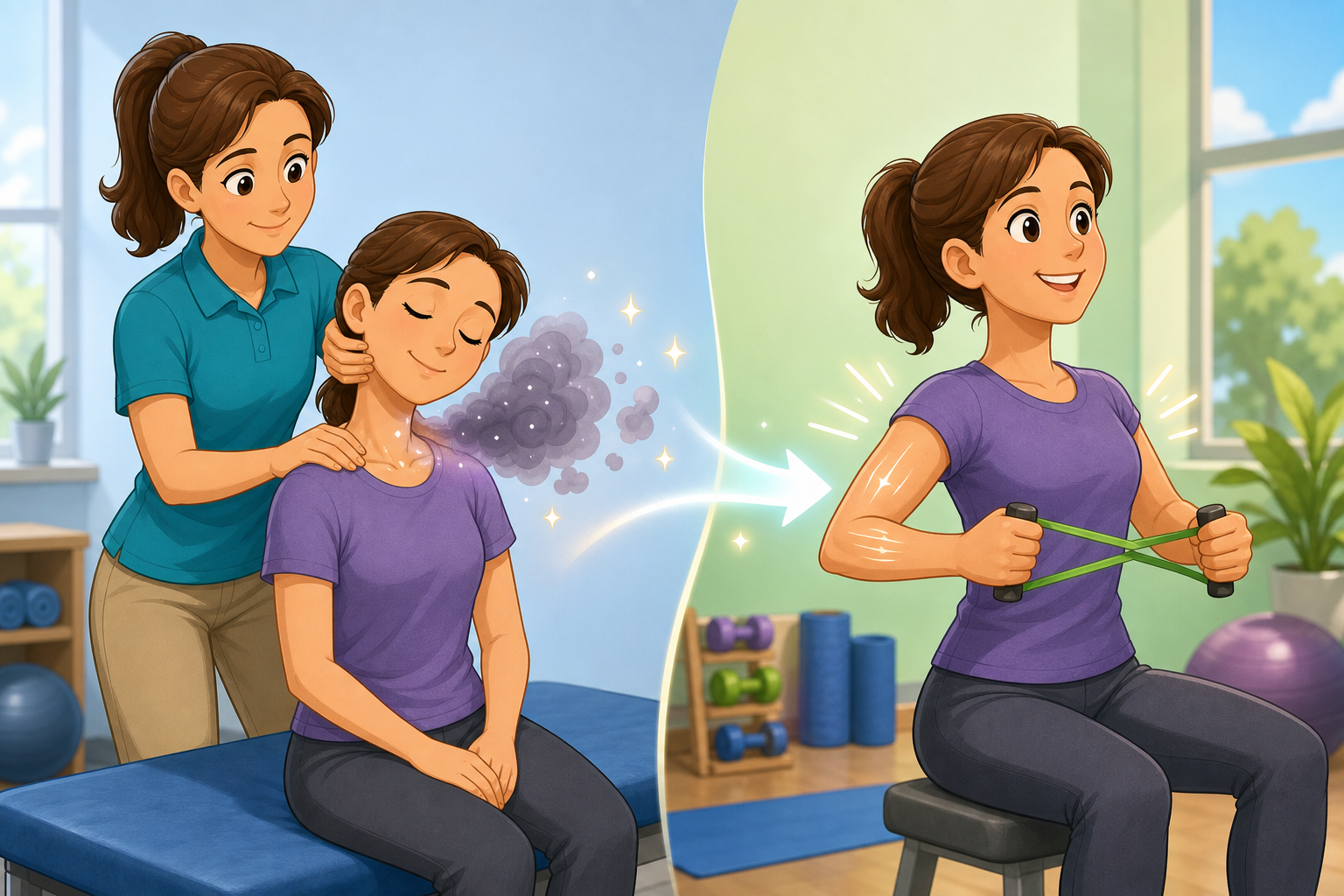
To see how strengthening compares to passive treatments, a 2022 trial in Medicine divided patients into two groups. One group received a trapezius massage five times a week, while the other performed cervical and scapula (shoulder blade) resistance exercises using elastic bands. While both groups saw improvements, the resistance exercise group had significantly better results when it came to reducing pain, improving neck rotation, and decreasing stiffness in the upper back muscles.
Targeting the Deep Neck Muscles
Not all neck exercises require heavy weights or large movements. Many physical therapists focus on small, precise movements to target the deep muscles that stabilize the head.
One common technique is cranio-cervical flexion (KRAY-nee-oh-SER-vih-kuhl FLEK-shun). This is a subtle nodding motion, like making a double chin, that targets the deep flexor muscles in the front of the neck.

A 2024 trial in PLOS One compared this subtle nodding exercise to McKenzie neck exercises, which involve extending the neck backward. Over six weeks, both groups experienced significant improvements in muscle strength, muscle endurance, and pain reduction. The study found no significant difference between the two approaches, suggesting that both forward and backward targeted movements are beneficial.
The Magic Combination: Exercise Plus Manual Therapy
While exercise is highly effective on its own, the strongest evidence supports combining it with hands-on treatment.
Manual therapy (MAN-yoo-uhl THAIR-uh-pee) involves hands-on treatments performed by a physical therapist or chiropractor, such as joint mobilization, massage, or spinal manipulation.
A 2023 meta-analysis in The Journal of Manual & Manipulative Therapy reviewed 22 studies and found that combining manual therapy with exercise is significantly better at reducing pain and disability than doing exercise alone.
This combination works because the two treatments excel at different things. A 2020 randomized controlled trial in Trials compared manual therapy to therapeutic exercise. The researchers discovered a fascinating timeline: manual therapy reduced the patients’ perception of pain much faster than exercise did. However, therapeutic exercise reduced the patients’ physical disability much faster than manual therapy did.
By combining the two, patients get the rapid pain relief of manual therapy alongside the long-term functional improvements of exercise. This approach is also supported by official guidelines. A 2018 clinical practice guideline in Physical Therapy advises that for patients with delayed recovery, therapists should use a combination of mobilization and exercise therapy rather than relying on passive treatments like ultrasound or laser therapy.
How This Might Work
Scientists have a few explanations for why active movement is so effective for treating neck pain.
Changing Neuromuscular Habits
When your neck hurts, your body often compensates by overusing the large, superficial muscles on the outside of your neck, particularly the sternocleidomastoid muscle. A 2024 systematic review analyzed how exercise changes neuromuscular function. They found that specific neck exercises actually train the nervous system to stop over-activating these large outer muscles, allowing the deeper stabilizing muscles to do their job properly.
Creating Space for Nerves
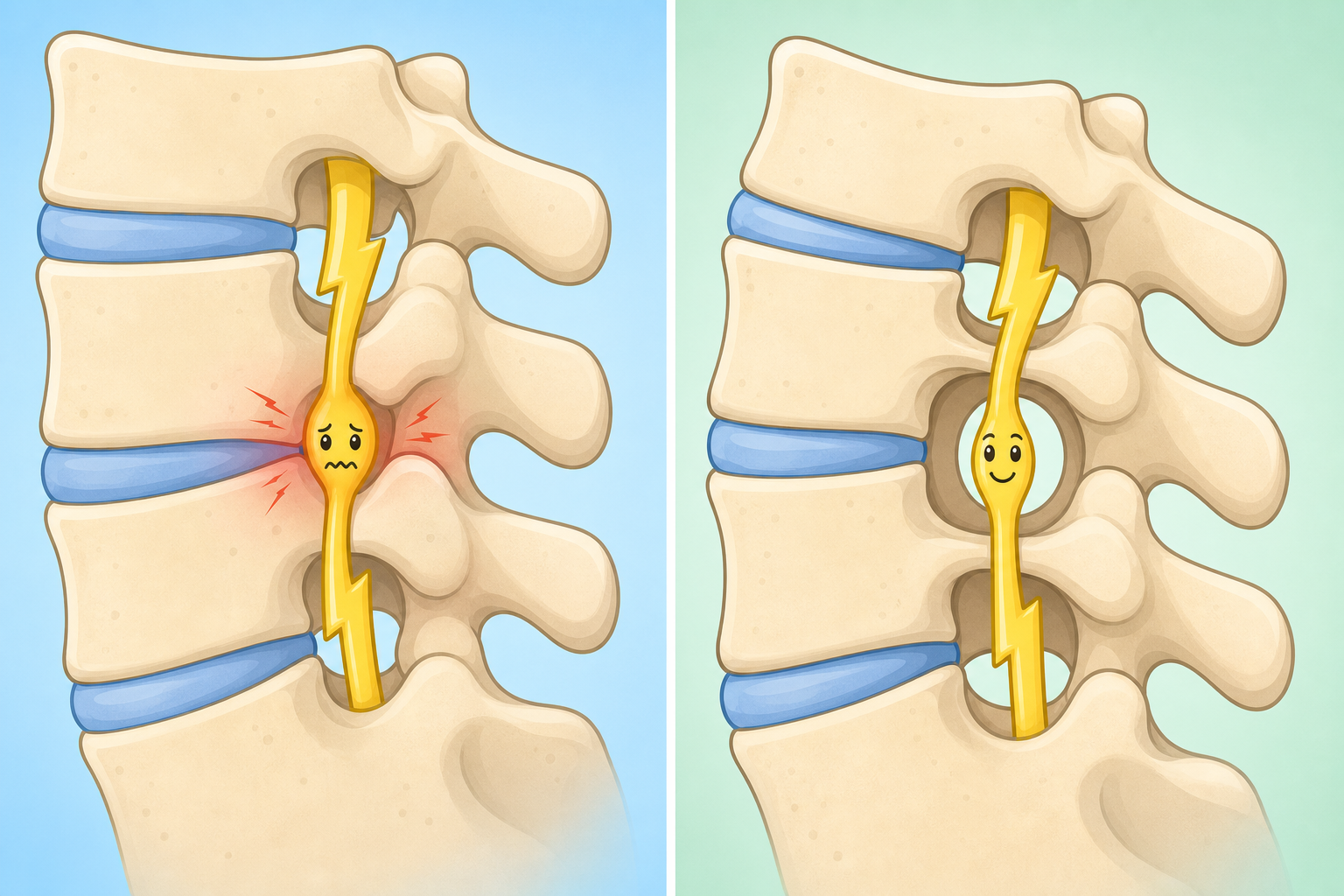
Sometimes neck pain is caused by a herniated disc or compressed nerve. The nerves in your neck travel through small bony openings called the intervertebral foramen (in-ter-VER-tuh-bruhl fuh-RAY-men).
A 2022 study in BMC Musculoskeletal Disorders used video x-rays to watch what happens to these small openings when patients perform therapeutic exercises. They found that active neck flexion (looking down) and retraction (pulling the head straight back) physically increased the area of these openings by up to 13 percent. This physically creates more room for the nerves, which may help explain why these exercises relieve radiating pain.
The Eye-Neck Connection
Your neck muscles are deeply connected to your visual system. If you spend hours staring at a screen, your suboccipital muscles (the small muscles at the base of your skull) remain constantly tense. Related: Screen Time vs. Exercise: How Digital Habits Shape Your Body
A highly unique 2024 trial in Medical Science Monitor tested whether eye movements could help neck pain. They had one group of patients perform standard neck stabilization exercises, while another group performed the same exercises plus 20 minutes of specific “eyeball exercises” (looking in various directions without moving the head). The group that included eye exercises experienced significantly greater reductions in tension headaches, neck disability, and physical muscle tone at the base of the skull.
Practical Guidance
If you are dealing with chronic neck pain, the research supports a few actionable steps.
- Combine approaches: Seek out a routine that includes both stretching and strengthening. If possible, work with a physical therapist who can provide manual therapy alongside an exercise program.
- Be consistent: A 2016 trial on office workers found that a four-week stretching program significantly decreased neck and shoulder pain. However, the study noted that patients who exercised at least three times a week saw significantly greater improvements than those who exercised less frequently.
- Include your shoulders: Many effective protocols in the research do not just isolate the neck. They include exercises like rows and shoulder blade retractions to build a strong foundation for the cervical spine.
Where The Science Is Still Uncertain
While we know that exercise works, scientists still struggle to define the absolute “perfect” routine. A 2022 systematic review in Musculoskeletal Care analyzed 63 clinical trials on neck pain and found that the vast majority of studies do a poor job of reporting their exact exercise protocols. Because many studies fail to list the exact sets, repetitions, and weights used, it is difficult for doctors to prescribe a universal, standardized routine. Instead, exercise must be highly individualized to the patient.
Common Questions About Neck Pain and Exercise
Does exercise help whiplash?
Yes, though the evidence is still emerging. A 2022 meta-analysis looked at patients with whiplash-associated disorders and found that exercise therapy provided significant short-term relief for pain and medium-term relief for disability compared to doing nothing.
Do I need to do a specific program like Pilates?
Not necessarily. While a 2022 literature review confirmed that postural rehabilitation programs like Pilates are effective for reducing neck pain, researchers note that it is difficult to prove they are vastly superior to standard strength and endurance training. The best program is the one you will do consistently. Related: Pilates vs. Yoga: What Science Actually Says About Which Is Better for You
Do I need to manipulate the exact painful joint?
Surprisingly, no. A 2017 systematic review found strong evidence that manual therapy applied to asymptomatic areas of the neck, or even the upper back (thoracic spine), is just as effective at reducing pain as manipulating the specific joints that hurt.
The Bottom Line
Chronic neck pain is a complex condition, but the scientific consensus is clear: active movement is a highly effective treatment. Whether you choose resistance training, specific deep-neck movements, or postural exercises, moving your neck and shoulders regularly reduces pain and improves daily function.
For the fastest and most comprehensive recovery, research strongly supports combining active exercise with manual therapy from a professional. While manual therapy helps calm the nervous system and reduce pain quickly, exercise builds the strength and endurance needed to keep the pain from coming back.
Quick Reference: Key Studies
| Study Focus | Key Finding | Source |
|---|---|---|
| Manual Therapy + Exercise | Combining manual therapy with exercise is significantly better for reducing pain and disability than exercise alone. | PMID 37092822 |
| Timing of Relief | Manual therapy reduces pain perception faster, while therapeutic exercise reduces physical disability faster. | PMID 32723399 |
| Exercise Types | Motor control, Pilates, resistance training, and yoga all show positive short-term effects compared to non-exercise controls. | PMID 37828488 |
| Nerve Spacing | Active cervical flexion and retraction physically increase the space in the intervertebral foramen, potentially relieving nerve pressure. | PMID 35906546 |
| Eye-Neck Connection | Adding eyeball exercises to a neck stabilization program significantly improves tension headaches and relaxes muscles at the base of the skull. | PMID 38889104 |
| Resistance vs. Massage | Resistance training for the neck and shoulders provides better improvements in pain and range of motion than trapezius massage alone. | PMID 36181044 |
Last updated: June 2026
This article synthesizes findings from peer-reviewed research. It is for educational purposes only and does not constitute medical advice. Consult a healthcare provider before starting any new regimen.


Great content! Keep up the good work!