
The Core Question: How Do We Recover Faster?
Anyone who exercises regularly knows the feeling of heavy legs, stiff joints, and lingering fatigue the day after a hard workout. Whether you are a casual jogger or a competitive athlete, the goal of post-exercise recovery is the same: to help your body repair itself so you can perform well again without injury.
But the health and fitness world is flooded with recovery trends. You might see athletes sitting in ice baths, wearing tight compression boots, or drinking specialized shakes. This raises a practical question. Which of these methods actually work, and which are just expensive fads?
The short answer: Scientific research shows that the most effective recovery methods are surprisingly simple. Prioritizing adequate sleep, consuming carbohydrates and protein shortly after exercise, and utilizing massage or cold water immersion provide the most measurable benefits. Conversely, some popular habits, like post-workout static stretching, show almost no scientific evidence of reducing muscle soreness or speeding up recovery.
This article breaks down what peer-reviewed research actually says about post-exercise recovery, how these methods work inside your body, and how you can apply them to your own routine.
How This Might Work: The Biology of Fatigue
To understand how recovery strategies work, it helps to understand what happens to your body during a tough workout. Exercise is a form of physical stress. When you push your body, several things occur:
1. Energy Depletion: Your body burns through its primary fuel source, known as glycogen (GLY-co-jen), which is the stored form of carbohydrates in your muscles and liver.
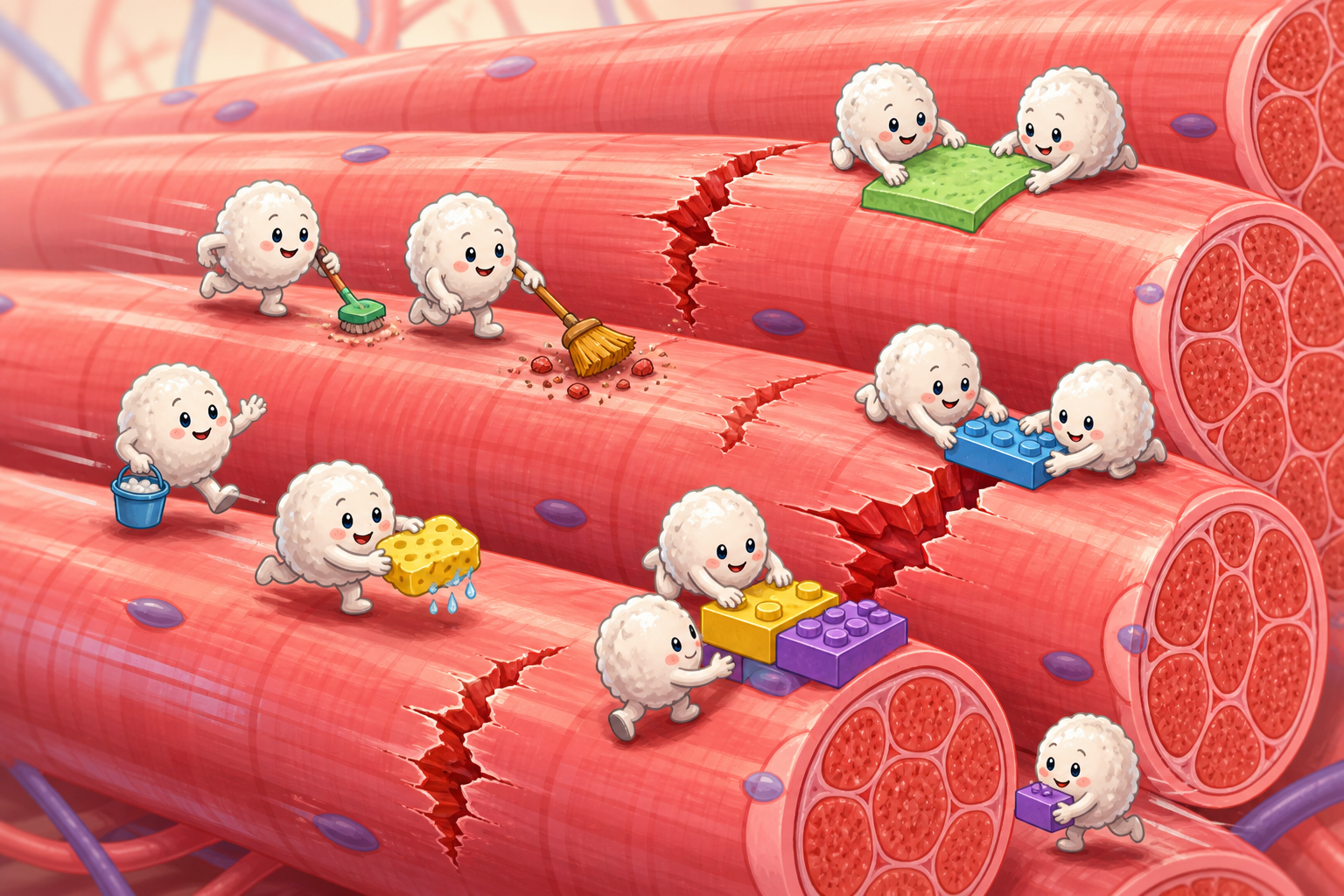
2. Muscle Damage: High-intensity exercise, especially movements where the muscle lengthens under tension (like running downhill or lowering a heavy weight), causes microscopic tears in your muscle fibers.
3. Inflammation: In response to these micro-tears, your immune system triggers an inflammatory response. White blood cells rush to the area to clean up damaged cells and start the repair process. This inflammation is a normal and necessary part of building stronger muscles, but it is also what causes swelling and pain.
4. Nervous System Stress: Intense exercise activates your “fight or flight” stress response. For a full recovery, your body needs to shift back into “rest and digest” mode, controlled by the parasympathetic nervous system (par-uh-sim-puh-THET-ik).
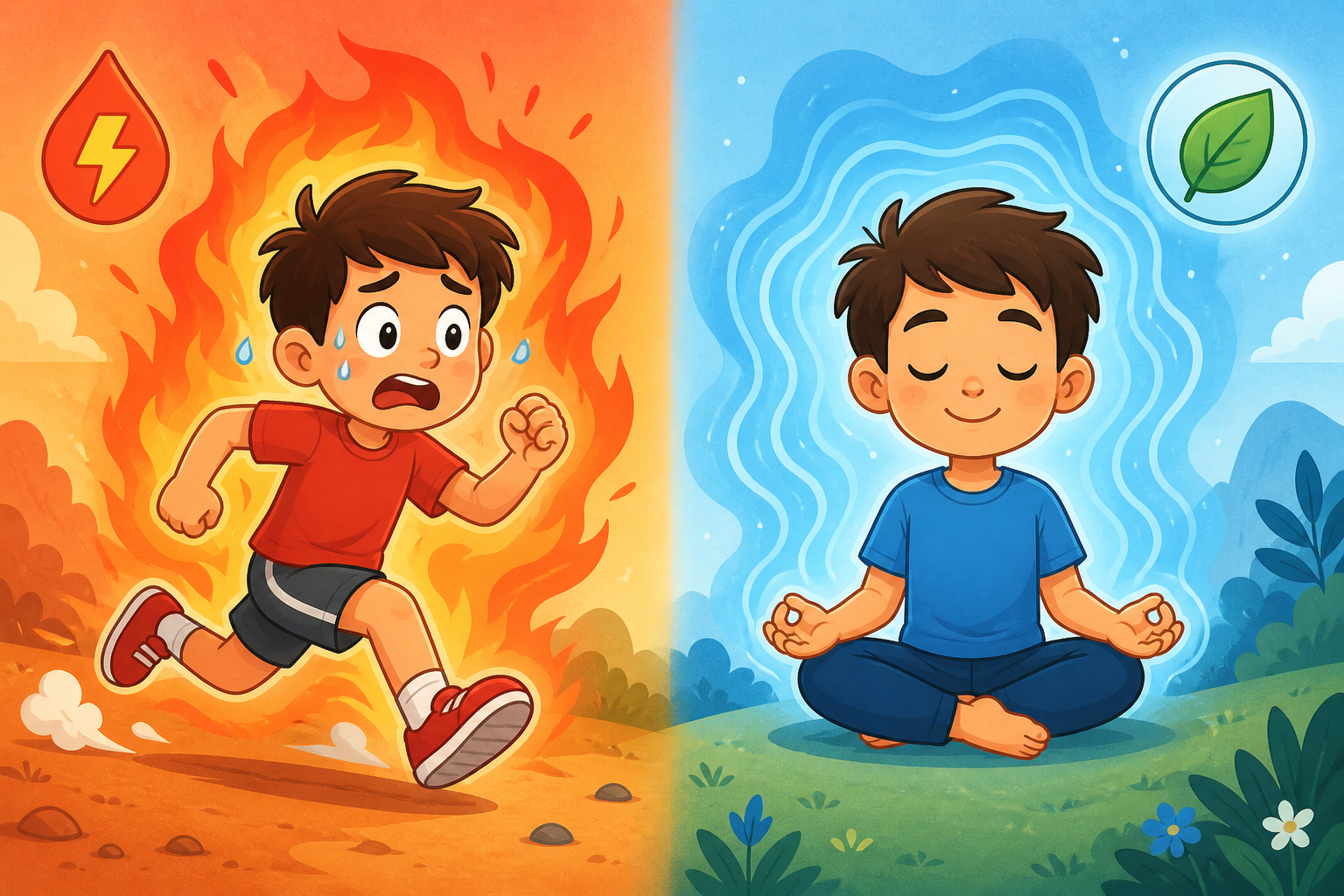
The goal of any recovery strategy is to replenish lost energy, manage the inflammatory response, and help the nervous system calm down.
What the Research Shows: Nutrition for Recovery
Food is the foundation of recovery. What you consume after a workout dictates how quickly your body can rebuild damaged tissues and restock its energy reserves.
Carbohydrates and Protein
The traditional advice for recovery nutrition focuses on replacing carbohydrates and providing protein for muscle repair. A 2025 review in Sports Medicine confirms that consuming 1 to 1.2 grams of carbohydrates per kilogram of body weight within the first few hours after exercise is ideal for restocking muscle glycogen.
Interestingly, researchers are learning more about exactly how our bodies process protein after a workout. For years, a common belief was that the human body could only absorb and use about 20 to 25 grams of protein in a single sitting. However, a 2023 study in Cell Reports Medicine challenged this idea. The researchers used advanced tracing methods to track protein digestion and found that the anabolic (muscle-building) response to protein ingestion actually has no upper limit in magnitude or duration. When participants consumed a large 100-gram bolus of protein, it resulted in a greater and more prolonged muscle-building response compared to a 25-gram dose.
Related: The Science of Weight Training: How Resistance Exercise Changes Your Body
The Chocolate Milk Phenomenon
You do not necessarily need expensive commercial recovery shakes to get the right mix of nutrients. Multiple studies have highlighted low-fat chocolate milk as a highly effective recovery beverage.
A review in Medicine and Sport Science notes that low-fat chocolate milk contains a roughly 4:1 ratio of carbohydrates to protein, which matches many commercial sports drinks. It also provides fluids and sodium to help with rehydration. In a study published in the International Journal of Sport Nutrition and Exercise Metabolism, endurance cyclists who drank chocolate milk between two exhausting exercise bouts were able to cycle 49% to 54% longer during their second workout compared to those who drank a carbohydrate-only replacement drink.
Functional Foods: Tart Cherry and Curcumin
Beyond basic macronutrients, scientists are investigating “functional foods” that contain natural anti-inflammatory compounds. A 2024 review in Nutrients highlights the shift toward foods rich in bioactive compounds.
Two of the most well-researched options are tart cherry juice and curcumin (the active compound in turmeric). According to a 2022 review in Nutrients, tart cherry juice is rich in anthocyanins (an-tho-SY-uh-nins), which are plant pigments with strong antioxidant properties. Consuming tart cherry juice for a few days before and after intense exercise has been consistently shown to reduce muscle soreness and accelerate the recovery of muscle strength. Curcumin has shown similar benefits in reducing markers of muscle damage, though it is poorly absorbed by the body unless paired with specific delivery systems (like black pepper extract).
What the Research Shows: Physical Recovery Techniques
Beyond what you eat, what you do with your body after a workout matters. Researchers have extensively studied various physical therapies.
Massage Therapy
If you want to feel less sore and less fatigued, massage is highly effective. A comprehensive meta-analysis in Frontiers in Physiology evaluated 99 studies on various recovery techniques. The researchers concluded that massage was the most powerful technique for reducing DOMS (Delayed Onset Muscle Soreness) and perceived fatigue. Massage helps by increasing local blood flow and potentially reducing the swelling associated with muscle micro-tears.
Cold Water Immersion (Ice Baths)
Taking an ice bath after a hard workout is a staple in professional sports, and the science generally supports its use for acute recovery.
A 2025 systematic review in Physiotherapy Research International found that cold water immersion (CWI) significantly helps reactivate the parasympathetic nervous system after exercise. By measuring heart rate variability (a key indicator of nervous system recovery), researchers found that CWI helps the body shift out of its stressed state faster than passive resting.
Additionally, a review in Sports Medicine suggests that immersing the body in water between 10 and 15 degrees Celsius (50 to 59 degrees Fahrenheit) for 5 to 15 minutes is the most effective protocol for accelerating performance recovery.
Related: Cryotherapy Benefits: What Science Actually Says About Cold Therapy
Compression Garments
Compression garments, such as tight socks or leggings, apply gentle mechanical pressure to the limbs. Research indicates they are moderately effective. The same meta-analysis in Frontiers in Physiology found that compression garments induced a significant decrease in DOMS and perceived fatigue, likely by reducing the space available for swelling and improving venous return (blood flowing back to the heart).
Common Misunderstandings: The Truth About Stretching
One of the most deeply ingrained beliefs in fitness is that you must stretch after a workout to prevent soreness and speed up recovery. However, the scientific evidence does not support this habit.
A rigorous 2021 meta-analysis published in Frontiers in Physiology looked exclusively at randomized controlled trials comparing post-exercise stretching to passive recovery (simply resting). The researchers looked at short-term recovery (under one hour) and delayed recovery (up to 72 hours).
The results were clear: post-exercise stretching had zero significant effect on strength recovery. Furthermore, it did not reduce delayed onset muscle soreness at 24, 48, or 72 hours post-exercise when compared to doing nothing at all. While stretching may improve flexibility over time, it should not be relied upon as a tool for reducing muscle soreness or speeding up tissue repair.
Who Benefits Or Needs Caution
While recovery techniques like ice baths are excellent for reducing acute soreness, they are not ideal for every scenario.
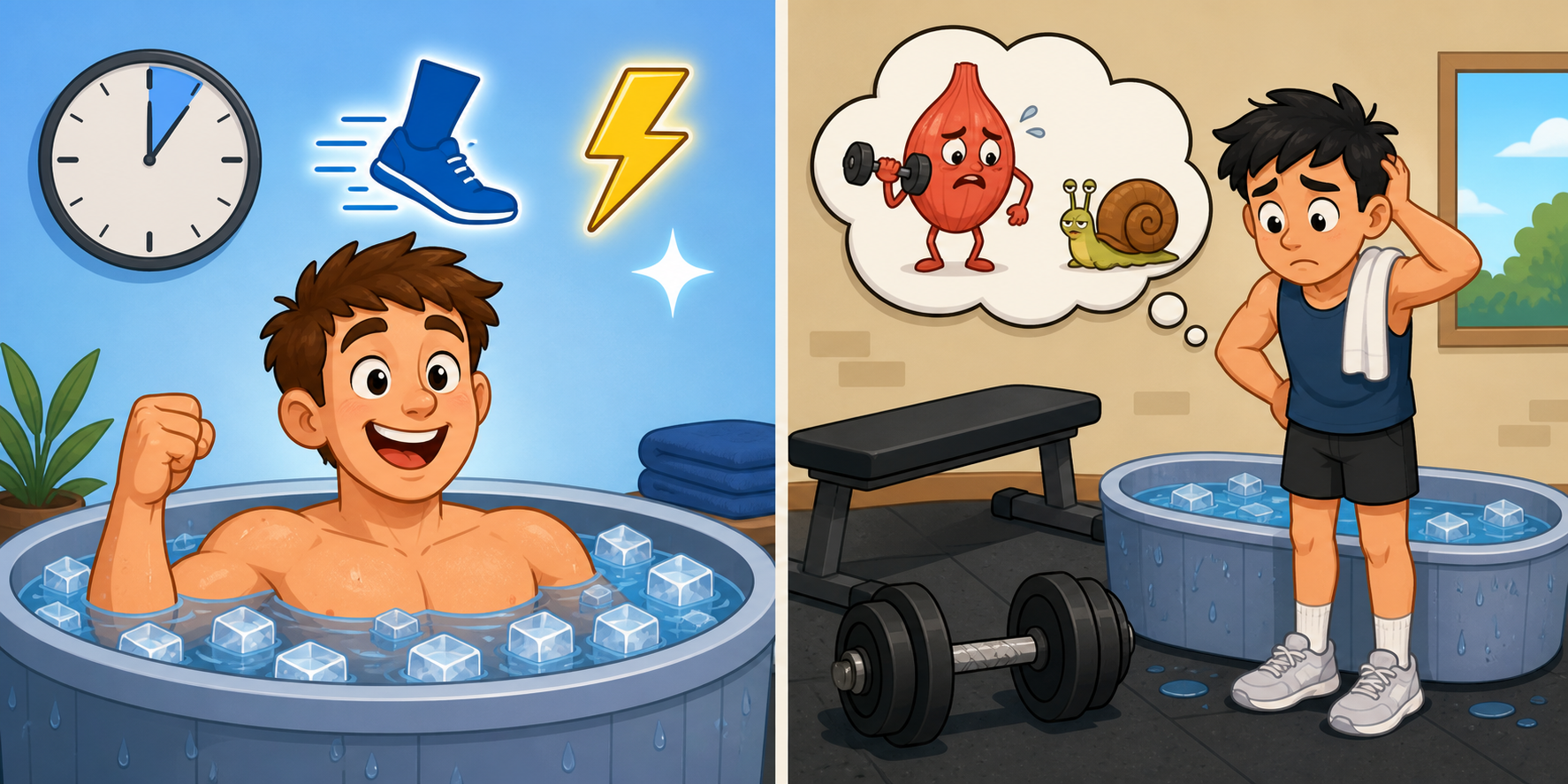
- Endurance Athletes and Tournament Competitors: Athletes who need to perform multiple times in a single day or weekend (like soccer players, rugby players, or track athletes) benefit greatly from cold water immersion and active recovery. Their primary goal is to reduce fatigue immediately so they can compete again.
- Bodybuilders and Strength Athletes: If your primary goal is muscle hypertrophy (hy-PER-troh-fee), meaning muscle growth, you should be cautious with ice baths. Some research indicates that frequent cold water immersion immediately after resistance training can blunt the inflammatory signals that tell your muscles to grow larger and stronger. For these individuals, adequate protein intake and sleep are much better recovery tools than cold therapy.
Practical Guidance: How to Optimize Your Recovery
Based on the synthesis of current research, here is an evidence-based approach to post-exercise recovery:
1. Prioritize Sleep: Sleep is the ultimate performance enhancer. During deep sleep, your body releases growth hormones that repair tissues. Studies on rugby players and combat sports athletes repeatedly highlight sleep deprivation as a primary cause of poor recovery.
2. Eat Promptly: Consume a mix of carbohydrates and protein soon after a demanding workout. A simple, cost-effective option like low-fat chocolate milk provides an excellent ratio of nutrients.
3. Use Temperature Therapy Wisely: If you are incredibly sore or need to compete again soon, a 5 to 15-minute soak in 10-15°C water can significantly reduce perceived fatigue and nervous system stress.
4. Consider Massage: If you have access to it, a 20 to 30-minute massage within a few hours of exercise is highly effective at reducing the severity of DOMS over the following days.
5. Skip the Stretching for Soreness: If you enjoy stretching because it feels relaxing, continue doing it. Just know that it will not prevent you from feeling sore the next day.
Related: What Science Actually Says About Omega-3 Fatty Acid Benefits
Common Questions About Post-Exercise Recovery
Does lactic acid cause muscle soreness the next day?
No. Lactic acid (or lactate) is cleared from your muscles and blood within an hour or two after exercise. The soreness you feel the next day (DOMS) is caused by microscopic muscle damage and the resulting inflammation, not lactic acid buildup.
Is active recovery better than complete rest?
Active recovery (like light jogging or cycling) can temporarily increase blood flow and make you feel less stiff in the short term. However, research shows it is not significantly better than passive rest for reducing muscle damage or long-term soreness.
Do I need an expensive protein powder to recover?
No. While protein powders are convenient, studies show that whole foods and simple beverages like chocolate milk are highly effective for delivering the amino acids your body needs to repair muscle tissue.
The Bottom Line
The science of recovery points away from complex, expensive gadgets and toward fundamental biology. We know with high confidence that refueling with carbohydrates and protein, getting adequate sleep, and managing nervous system stress are the most critical pillars of recovery. We also know that massage and cold water immersion provide measurable relief from soreness and fatigue.
However, it remains uncertain exactly how long the “anabolic window” stays open for everyone, though recent evidence suggests our bodies are much better at utilizing large amounts of protein over longer periods than previously thought. Ultimately, the best recovery routine is one that consistently manages your energy balance and allows you to return to your training feeling rested and capable.
Quick Reference: Key Studies
| Study Focus | Key Finding | Source |
|---|---|---|
| Protein Absorption | The anabolic response to protein has no upper limit; a 100g bolus provides prolonged muscle synthesis compared to 25g. | PMID 38118410 |
| Stretching vs. Rest | Post-exercise stretching does not improve strength recovery or reduce delayed onset muscle soreness compared to passive rest. | PMID 34025459 |
| Chocolate Milk | Low-fat chocolate milk (4:1 carb-to-protein ratio) is an effective recovery aid that improves subsequent endurance performance. | PMID 16676705 |
| Recovery Therapies | Massage is the most effective physical technique for reducing DOMS and perceived fatigue, followed by cold water immersion and compression. | PMID 29755363 |
| Cold Water Immersion | Immersing in 10-15°C water for 5-15 minutes effectively reactivates the parasympathetic nervous system and aids recovery. | PMID 23743793 |
| Functional Foods | Tart cherry juice and curcumin show strong evidence for reducing exercise-induced inflammation and oxidative stress. | PMID 36501099 |
Last updated: August 2026
This article synthesizes findings from peer-reviewed research. It is for educational purposes only and does not constitute medical advice. Consult a healthcare provider before starting any new regimen.
Leave a Reply