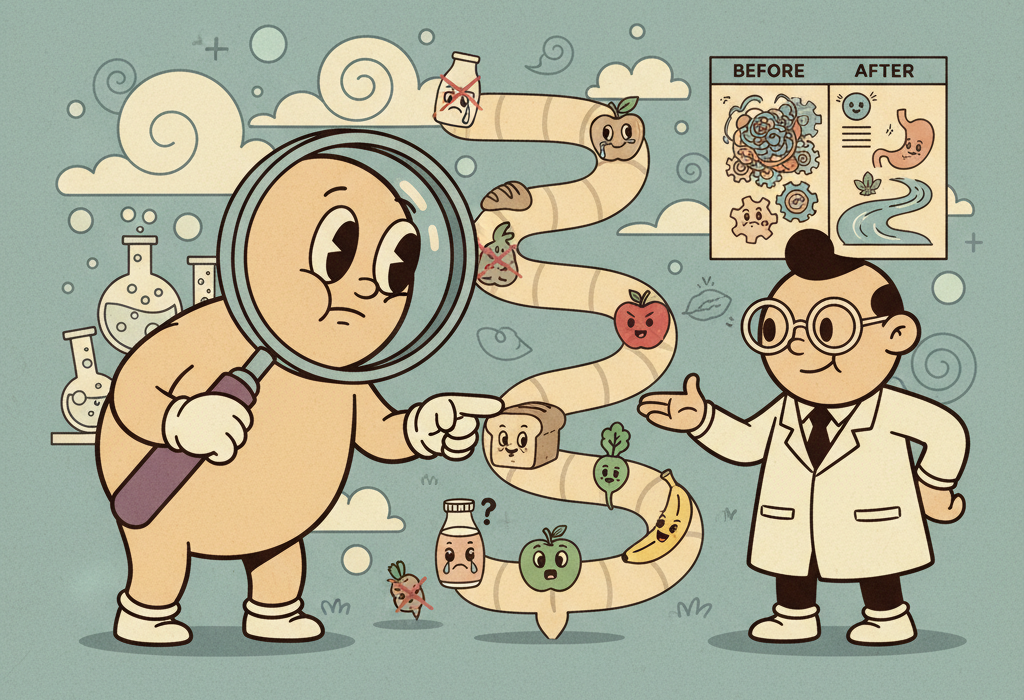
If your computer starts crashing, a technician will usually turn off software plugins one by one to find the exact program causing the glitch. An elimination diet works the same way for your body. It is a structured eating plan where you remove specific foods suspected of causing allergic reactions, digestive issues, or inflammation. After a period of avoidance, you carefully monitor your symptoms and, in some cases, slowly reintroduce the foods to identify the exact culprit.
While elimination diets are heavily promoted in wellness culture as a quick fix for everything from fatigue to clear skin, the scientific reality is much more precise. Researchers view elimination diets as highly effective medical tools for specific conditions. However, removing entire food groups comes with significant nutritional risks.
This article explores what peer-reviewed research actually says about elimination diets, how they affect your body, and why scientists warn against trying them without a confirmed diagnosis.
What the Research Shows About Elimination Diets
Elimination diets are not a single, universal eating plan. They are tailored to specific medical conditions. Research strongly supports their use for several distinct health issues, though the strictness and duration of the diet vary widely.
Irritable Bowel Syndrome (IBS)
For people with IBS, the most researched elimination plan is the Low FODMAP diet. FODMAPs are specific types of carbohydrates that are poorly absorbed in the gut and can cause bloating, gas, and pain.
A 2026 review in Clinical Nutrition analyzed multiple dietary interventions for IBS. The researchers found that the Low FODMAP diet provided relatively consistent short-term relief, with 34% to 78% of patients reporting improved symptoms. However, the study noted that traditional dietary advice also offered practical benefits, and the Low FODMAP diet is generally meant to be a short-term diagnostic tool rather than a lifelong restriction.
Celiac Disease
For individuals with celiac disease, an elimination diet is not optional. It is the only available medical treatment. Celiac disease is an autoimmune condition where eating gluten triggers the immune system to attack the small intestine.
A 2025 review in Foods highlights that consuming even trace amounts of gluten causes Atrophy (AT-roh-fee), which is the wasting away or flattening of the tiny, finger-like projections in the intestine called villi. The research confirms that strict, lifelong elimination of wheat, barley, and rye is required to heal the gut and prevent severe nutritional deficiencies.
Related: The Gluten-Free Diet for Celiac Disease: What Science Says
Eosinophilic Esophagitis (EoE)
Eosinophilic esophagitis (ee-oh-sin-oh-FILL-ik uh-sof-uh-JIE-tis) is a chronic allergic condition that causes severe inflammation in the swallowing tube.
Research published in The Journal of Allergy and Clinical Immunology: In Practice explains that EoE is largely driven by allergic sensitization to specific foods. The study notes that the disease can often be reversed by eliminating triggering food allergens. Doctors frequently use a “six-food elimination diet” for EoE, which removes milk, egg, wheat, soy, peanut or tree nuts, and fish or shellfish, before slowly reintroducing them to find the specific trigger. Further research in Gastroenterology Clinics of North America confirms that dietary therapy is now considered a primary treatment for this condition.
Disaccharide Intolerance
Some people lack the specific enzymes needed to break down complex sugars, leading to severe digestive distress. A study in Srpski arhiv za celokupno lekarstvo outlines that disaccharide intolerance causes rapid digestive issues and that the primary treatment is an elimination diet targeted at the offending sugars.
How Elimination Diets Change Your Body
To understand why elimination diets work, it helps to look at the different biological mechanisms they target. Food can cause illness through two primary pathways: the immune system and the digestive system.
Calming the Immune Response
In conditions like classical food allergies, celiac disease, and EoE, the body mistakenly identifies a harmless food protein as a dangerous invader. The immune system launches an attack, releasing inflammatory chemicals.
By removing the specific protein, you remove the target. Without the target, the immune system stops firing. Over time, the localized inflammation subsides. In the case of celiac disease, the intestinal lining regrows. In EoE, the swelling in the esophagus goes down, allowing the person to swallow normally again.
Stopping Gut Fermentation
In conditions like IBS or sugar intolerances, the issue is not the immune system. Instead, the digestive system simply cannot break down certain carbohydrates.
When these undigested carbohydrates reach the colon, the bacteria living there consume them. This process creates rapid fermentation, producing large amounts of gas and drawing water into the intestines. Eliminating these specific carbohydrates starves those bacteria of their preferred fuel, which stops the excessive gas production and physical discomfort.
Related: What Science Actually Says About Leaky Gut and Your Health
The Hidden Risks: Nutritional Deficiencies
While elimination diets are effective treatments, researchers continuously warn about their side effects. Food provides essential building blocks for the body. When you remove a major food group, you also remove the vitamins and minerals it provides.
Risks for Growing Children
Nutritional risks are highest in young children. A 2023 study in the Turkish Journal of Medical Sciences evaluated children with food allergies who were placed on elimination diets. The researchers found that eliminating staple foods like milk, eggs, or wheat significantly increased the risk of stunted growth.
Children on these diets frequently showed deficiencies in calcium, vitamin D, zinc, and iron. The researchers emphasized that if an alternative supplement is not introduced, conditions like rickets (a disease that softens and weakens bones) become a real possibility.
Similarly, a 2010 study in the European Journal of Clinical Nutrition tracked children diagnosed with cow’s milk allergy. While the families were highly successful at keeping milk out of the diet, the children had worryingly low intakes of calcium and riboflavin.
Risks of Gluten-Free Diets
Adults face nutritional risks as well. A 2024 review in Critical Reviews in Food Science and Nutrition examined the nutritional profile of gluten-free grains. The researchers noted that when people eliminate wheat, their nutrition intake often drops. Many commercially processed gluten-free products lack the protein, fiber, and fortified vitamins found in standard wheat products. Therefore, people on strict gluten-free diets must actively plan to consume enough fiber and B vitamins through other whole foods.
Who Needs Caution With Elimination Diets
Because of the nutritional risks, scientists strongly advise against using elimination diets without medical supervision.
A 2016 review in Bundesgesundheitsblatt (a German health research journal) stressed that a therapeutic diet is only indicated if the diagnosis of a food allergy is absolutely certain. The researchers noted that unnecessary self-denial of certain foods lowers a person’s quality of life and jeopardizes their nutritional balance.
This is especially true for skin conditions. Many people assume that skin rashes are caused by food. However, a 2020 position paper in the Journal of the European Academy of Dermatology and Venereology specifically addressed atopic dermatitis (eczema). The expert task force stated that general elimination diets are not recommended for eczema and can actually be detrimental. They advise that elimination diets should only be used for eczema if a specific food allergy has been proven through medical testing.
Practical Guidance for Elimination Diets
If a doctor has recommended an elimination diet for you or your child, research supports a few key strategies to make it safe and effective.
1. Substitute, do not just subtract: If you remove cow’s milk, you must actively replace the calcium, vitamin D, and fat it provided. You cannot simply remove the food and leave a nutritional gap.
2. Keep the elimination period short if diagnosing: For conditions like IBS, the elimination phase of the Low FODMAP diet should only last a few weeks. The goal is to calm the symptoms and then systematically reintroduce foods to find your personal tolerance threshold.
3. Read labels carefully: In conditions like celiac disease or severe IgE allergies, even trace amounts of a trigger food can cause severe internal damage or anaphylaxis.
Common Questions About Elimination Diets
Can an elimination diet help me lose weight?
Elimination diets are not designed for weight loss. While some people lose weight because they are eating fewer processed foods, restricting major food groups without medical need can lead to malnutrition and a slowed metabolism.
How long does it take for an elimination diet to work?
It depends on the condition. For digestive issues like IBS, people often feel relief within a few days to a week. For immune conditions like EoE or celiac disease, it can take weeks or months for the internal tissue inflammation to fully heal.
Should I try an elimination diet for my child’s eczema?
Scientific guidelines advise against this unless a doctor has confirmed a specific food allergy. Restricting a growing child’s diet without proof can cause stunted growth and nutrient deficiencies.
The Bottom Line
Elimination diets are highly effective, science-backed treatments for specific medical conditions like celiac disease, eosinophilic esophagitis, and irritable bowel syndrome. By removing specific triggers, these diets allow the immune system to calm down and the digestive tract to heal.
However, research clearly shows that eliminating major food groups carries substantial risks, particularly for growing children. Deficiencies in calcium, vitamin D, iron, and fiber are common when diets are not carefully managed. Evidence suggests that elimination diets should be treated as precise medical interventions, used only when a diagnosis is certain, and managed with a focus on replacing lost nutrients.
Quick Reference: Key Studies
| Study Focus | Key Finding | Source |
|---|---|---|
| IBS Dietary Interventions | The Low FODMAP diet shows consistent short-term efficacy for IBS symptoms, but traditional dietary advice also offers practical benefits. | PMID 42160924 |
| Celiac Disease | Strict elimination of gluten is required to stop immune reactions and heal intestinal villous atrophy. | PMID 40231983 |
| Nutritional Risks in Children | Eliminating staple foods for allergies increases the risk of stunted growth and deficiencies in calcium, vitamin D, zinc, and iron. | PMID 38031941 |
| Eosinophilic Esophagitis (EoE) | EoE is largely driven by food allergens and can be reversed by a targeted elimination diet. | PMID 24565538 |
| Eczema and Elimination Diets | General elimination diets for atopic dermatitis are not recommended and can be detrimental unless a food allergy is medically proven. | PMID 33205485 |
| Cow’s Milk Allergy Adherence | Families adhere well to milk elimination, but children often suffer from low calcium and riboflavin intake as a result. | PMID 20683464 |
Last updated: September 2026
This article synthesizes findings from peer-reviewed research. It is for educational purposes only and does not constitute medical advice. Consult a healthcare provider before starting any new regimen.

Leave a Reply