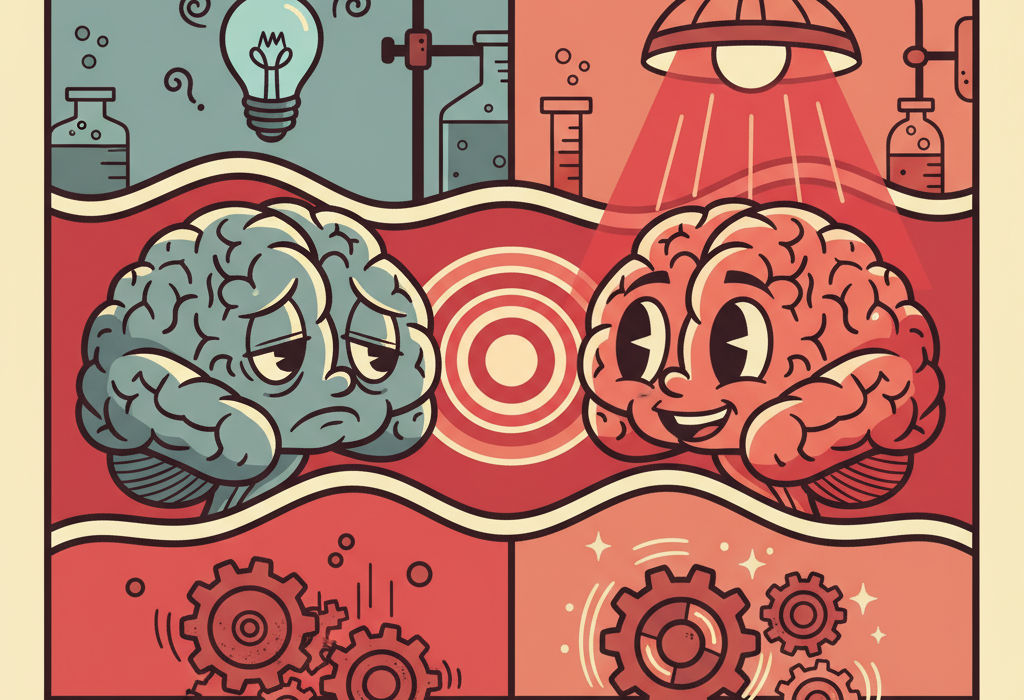
We already know that light has a profound impact on human biology. Sunlight triggers our skin to produce vitamin D, and the blue light from our screens helps regulate our sleep and wake cycles.
Related: Does Blue Light Actually Ruin Sleep? What Science Shows
Recently, scientists have turned their attention to the other end of the light spectrum. Researchers are investigating whether red and near-infrared light can safely penetrate tissues to heal cells and improve brain health. This process is known as Photobiomodulation (fo-to-by-o-mod-you-LAY-shun), or PBM.
While shining a red light on your head to improve memory might sound like science fiction, a growing body of peer-reviewed research suggests that specific wavelengths of light can physically alter how our brain cells produce energy.
This article breaks down the current science behind red light therapy, how it affects brain function, and what researchers are still trying to figure out.
How This Might Work: The Cellular Battery
To understand how light can affect the brain, we have to look inside our cells. Almost every cell in the human body contains Mitochondria (my-toe-KON-dree-uh). These are often called the powerhouses of the cell because they produce the energy our bodies need to survive.
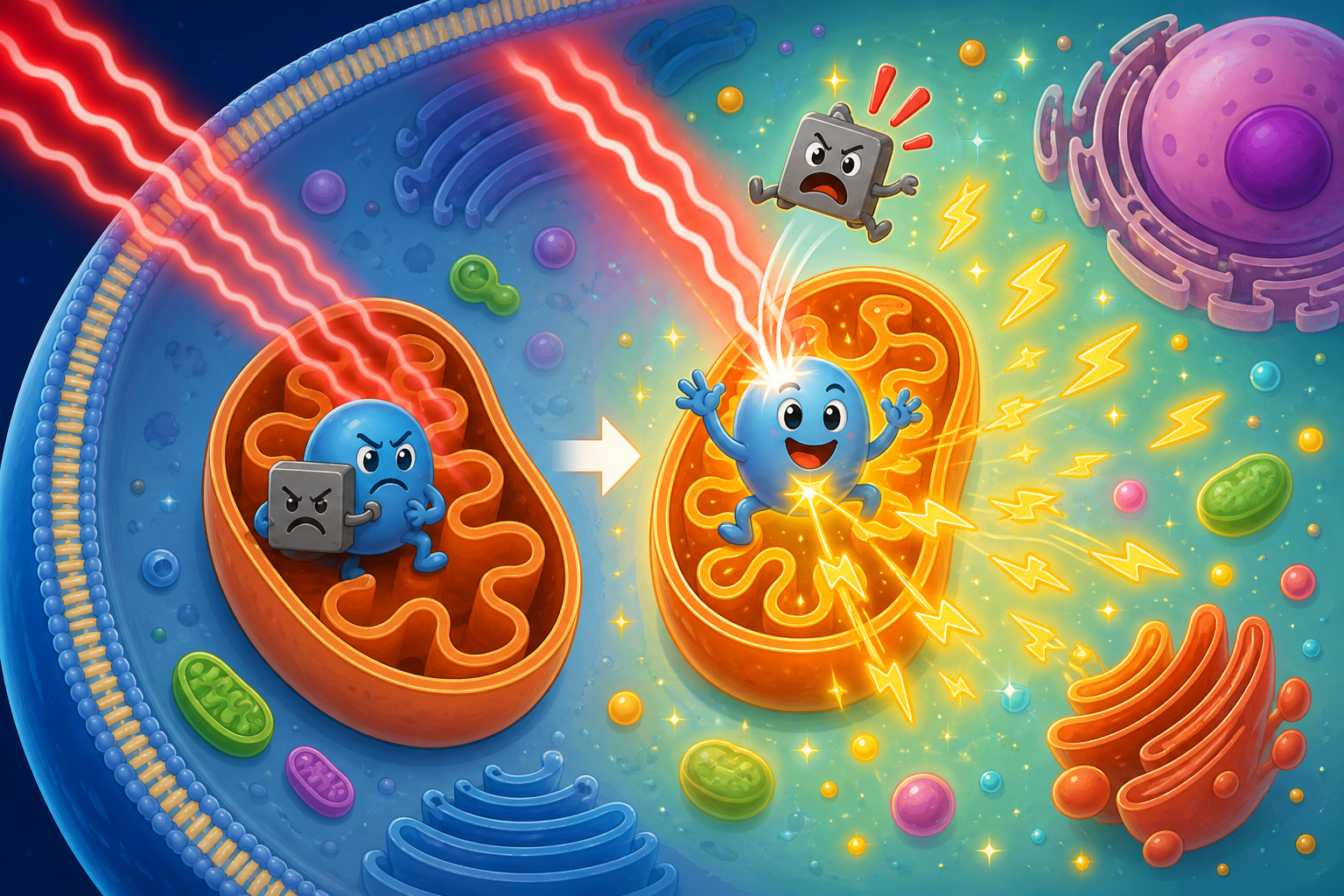
Inside these mitochondria is a specific enzyme called Cytochrome c oxidase (SY-toe-krome see OX-ih-dase), or CCO. CCO acts as a photoacceptor, meaning it is naturally designed to absorb light particles.
A 2018 review in Molecular Neurobiology explains that CCO primarily absorbs light in the red and near-infrared spectrum (between 600 and 1100 nanometers). When red light hits this enzyme, it triggers a chain reaction:
- It clears blockages: Under stress, a molecule called nitric oxide can bind to CCO and halt energy production. Red light breaks this bond, clearing the blockage.
- It increases oxygen use: With the blockage gone, the cell can process oxygen more efficiently.
- It boosts ATP: The cell produces more adenosine triphosphate (ATP), which is the primary energy currency of the body.
In addition to boosting energy, researchers have found that red light can activate heat-sensitive and light-sensitive ion channels on the surface of cells. When these channels open, they allow calcium to flow inside. This calcium acts as a messenger, telling the cell to turn on specific genes that promote Neurogenesis (nur-oh-JEN-uh-sis), which is the growth of new brain cells, and prevent Apoptosis (ay-pop-TOE-sis), which is programmed cell death.
What the Research Shows: Memory and Cognitive Decline
One of the most studied areas of brain photobiomodulation is its potential to slow down cognitive decline and improve memory.
Related: Can We Prevent Age-Related Cognitive Decline? What Science Actually Shows
In Alzheimer’s disease and other forms of dementia, toxic proteins called amyloid-beta accumulate in the brain. A 2025 review in Translational Neurodegeneration highlights that the brain relies on a waste-clearance network called the glymphatic system to flush out these proteins. As we age, this system becomes less efficient. Researchers are exploring how light therapy might stimulate blood flow and improve this natural drainage system.
Animal studies have provided some clues about how this works on a genetic level. A 2023 study in the International Journal of Radiation Biology tested red light therapy on rats that had chemically induced brain inflammation and memory loss.
The researchers found that rats exposed to red light (630 nanometers) showed significant improvements in memory tests. When analyzing the rat brains, they found that the light therapy increased the expression of two important genes:
- LRP-1: A gene that helps clear amyloid-beta proteins out of the brain.
- TRPA-1: A gene related to calcium channels that helps form new synaptic connections.
Interestingly, the researchers noted that the red light therapy was most effective when administered during the rats’ dark cycle (nighttime). The nighttime light therapy also increased the rats’ serum melatonin levels, suggesting a strong link between light timing, sleep hormones, and brain repair.
What the Research Shows: Brain Injury and Oxygen Deprivation
When the brain experiences trauma, such as a stroke or a severe impact, it often suffers from a lack of oxygen and a massive spike in inflammation. Researchers are investigating whether red light can help cells survive these traumatic events.
A 2023 study in the Journal of Photochemistry and Photobiology tested this by exposing mice to acute hypobaric hypoxia (a severe lack of oxygen, similar to being at an extremely high altitude). Oxygen deprivation normally causes severe dysfunction in brain mitochondria.
However, when researchers irradiated the brains of these mice with low-intensity red light (650 nanometers), the light rescued the mitochondrial respiration process. The therapy helped normalize the cells’ ability to produce ATP despite the lack of oxygen.
Similarly, a 2024 review in Cells summarized multiple animal studies showing that near-infrared light applied after a traumatic brain injury can reduce pro-inflammatory cytokines (markers of inflammation) and increase brain-derived neurotrophic factor (BDNF), a protein that acts like fertilizer for new brain cells.
What the Research Shows: The Gut-Brain Connection
Brain health is not entirely isolated to the head. The gut-brain axis is a constant two-way communication system between our digestive tract and our nervous system.
Related: How Your Gut Microbiome Actually Affects Brain Health
Scientists are now combining red light therapy with biotechnology to target this connection. A 2023 study in Biomaterials engineered a specific strain of probiotic bacteria to respond to red light. They introduced these probiotics into the guts of mice with Parkinson’s disease-like symptoms.
Because red light can penetrate through the abdominal wall of a mouse, researchers were able to shine a light on the mouse’s stomach to activate the probiotics. Once activated by the light, the probiotics released a specific neuroprotective drug. The mice that received this light-activated gut therapy showed improved behavior and neuroprotection in their brains.
While this is highly experimental and currently limited to animal models, it demonstrates how light might eventually be used to control treatments throughout the body.
Where The Science Is Still Uncertain: The Penetration Problem
While cellular studies are promising, treating a human brain is much more difficult than treating cells in a petri dish or a small mouse brain. The human skull is thick, and light naturally scatters and absorbs as it passes through bone, skin, and fluid.
Red light (which is visible to the human eye and ranges from 600 to 700 nanometers) struggles to penetrate deep into human tissue. Near-infrared light (which is invisible and ranges from 700 to 1100 nanometers) penetrates much further.
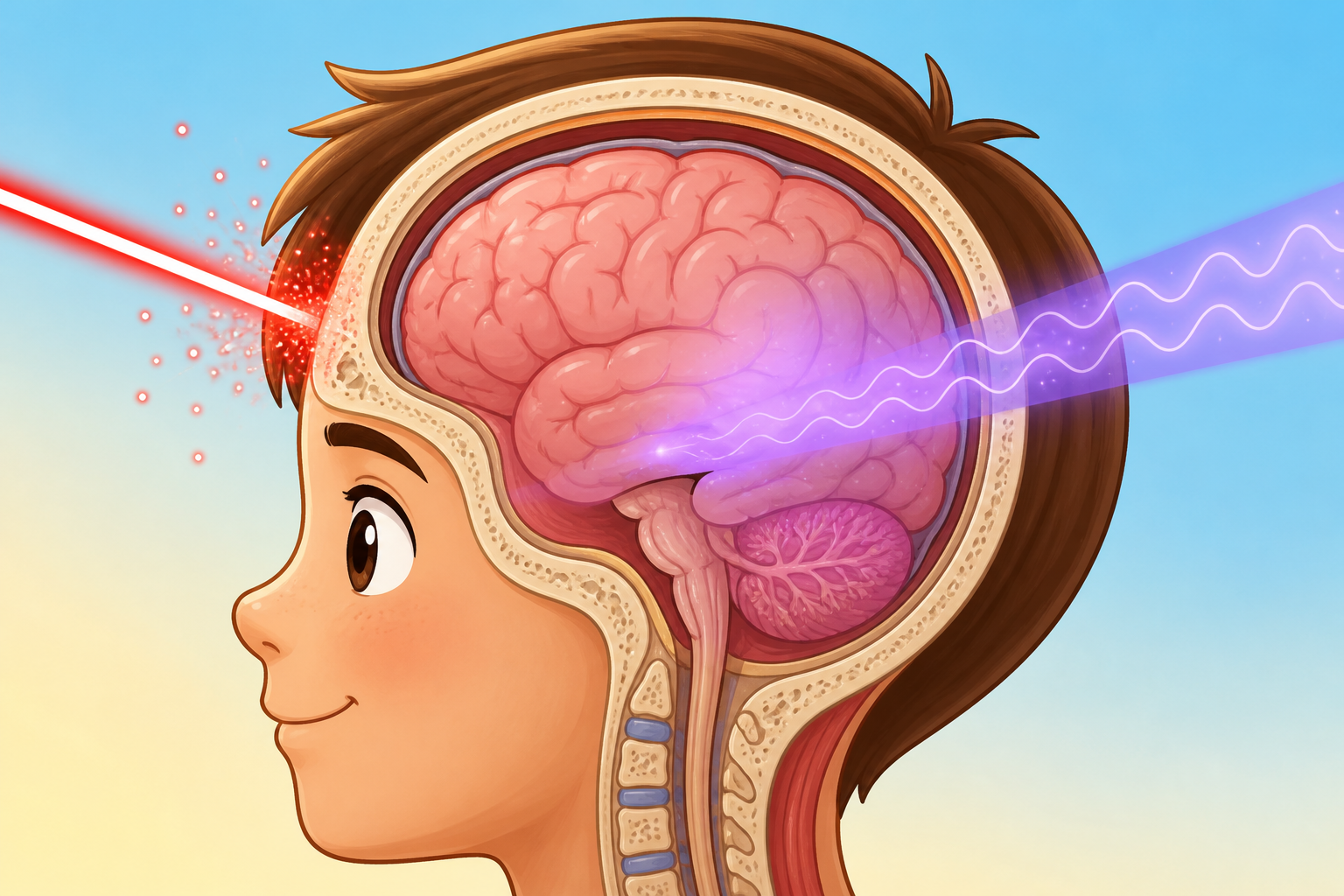
A 2012 study in PLoS One tested this using human cadavers. They measured how much light could pass through intact human soft tissue, skull bones, and brain matter. They found that near-infrared light (830 nanometers) measurably penetrated the skull and brain tissue, while standard red light (633 nanometers) had negligible transmission.
Because of this penetration problem, researchers are exploring alternative ways to deliver light to the brain:
- Intranasal delivery: Shining light up the nose, where the bone is very thin, allowing light to reach the frontal cortex and limbic system.
- Ear canal delivery: Shining light through the ears to target the temporal lobes.
- Intracranial delivery: Surgically implanting a tiny optical fiber directly into the brain (currently only used in severe, experimental cases).
Where The Science Is Still Uncertain: The “Goldilocks” Dose
Another major challenge in photobiomodulation is finding the correct dose. Light therapy follows a biphasic dose-response curve, which scientists sometimes call the Arndt-Schulz law.
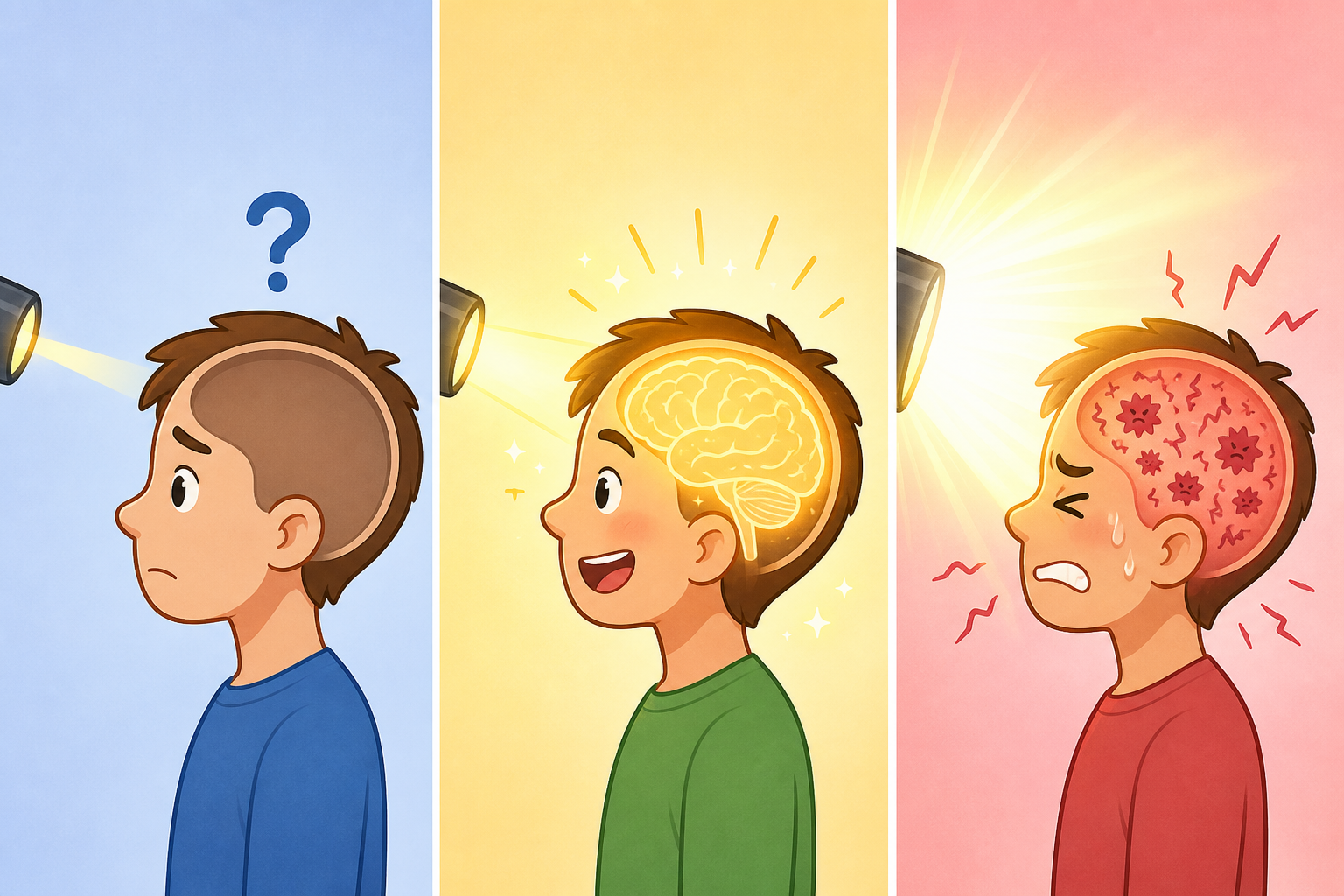
This means that the treatment acts like a bell curve. If the light is too weak or applied for too short a time, it does nothing. If the light is at the optimal dose, it provides significant healing benefits. However, if the light is too intense or applied for too long, it can actually inhibit cellular function and cause harm by creating excessive oxidative stress.
Because every person’s skull thickness, skin color, and brain anatomy are different, calculating the exact “Goldilocks” dose for a human patient remains a significant hurdle for clinical researchers.
Common Questions About Red Light and the Brain
Can I use a standard red LED light bulb for brain therapy?
No. Standard red light bulbs or cosmetic red light panels are generally not strong enough, nor are they calibrated to the specific wavelengths (like 810 or 830 nanometers) required to penetrate the human skull.
Does red light therapy cure Alzheimer’s disease?
There is currently no cure for Alzheimer’s disease. While animal models show that light therapy can reduce amyloid-beta plaques and improve memory, large-scale human clinical trials are still ongoing. It is currently viewed as a potential future therapy, not a cure.
Is red light therapy safe for the brain?
When used within established clinical parameters, photobiomodulation is generally considered safe and non-invasive. It does not generate heat that burns tissue (unlike surgical lasers). However, using unregulated, high-powered lasers at home carries risks of eye damage and tissue heating.
The Bottom Line
Photobiomodulation is a rapidly growing field of neuroscience. By using specific wavelengths of red and near-infrared light, researchers can stimulate mitochondria to produce more energy, reduce inflammation, and encourage the growth of new neural connections.
While the results in animal models for memory loss, stroke, and brain trauma are highly encouraging, translating these results to humans is complicated. The human skull is thick, making it difficult to deliver the exact right dose of light to the exact right part of the brain.
As technology improves, we will likely see more refined devices designed to deliver light safely and effectively, potentially offering a new, non-drug approach to protecting our cognitive health.
Quick Reference: Key Studies
| Study Focus | Key Finding | Source |
|---|---|---|
| Memory and Gene Expression | Red light improved memory in rats and increased LRP-1 and TRPA-1 gene expression, especially during dark cycles. | PMID 35446172 |
| Cellular Mechanisms | PBM uses red/NIR light to stimulate cytochrome c oxidase, increasing ATP synthesis and reducing inflammation. | PMID 29327206 |
| Hypoxia and Brain Energy | Low-intensity red light rescued mitochondrial respiration in mouse brains after severe oxygen deprivation. | PMID 36610350 |
| Skull Penetration | Near-infrared light successfully penetrated human cadaver skulls and brain tissue, while standard red light did not. | PMID 23077622 |
| Gut-Brain Axis | Red light was used to activate engineered probiotics in the gut, successfully delivering neuroprotective drugs to mice. | PMID 36701997 |
Last updated: September 2026
This article synthesizes findings from peer-reviewed research. It is for educational purposes only and does not constitute medical advice. Consult a healthcare provider before starting any new regimen.
Leave a Reply