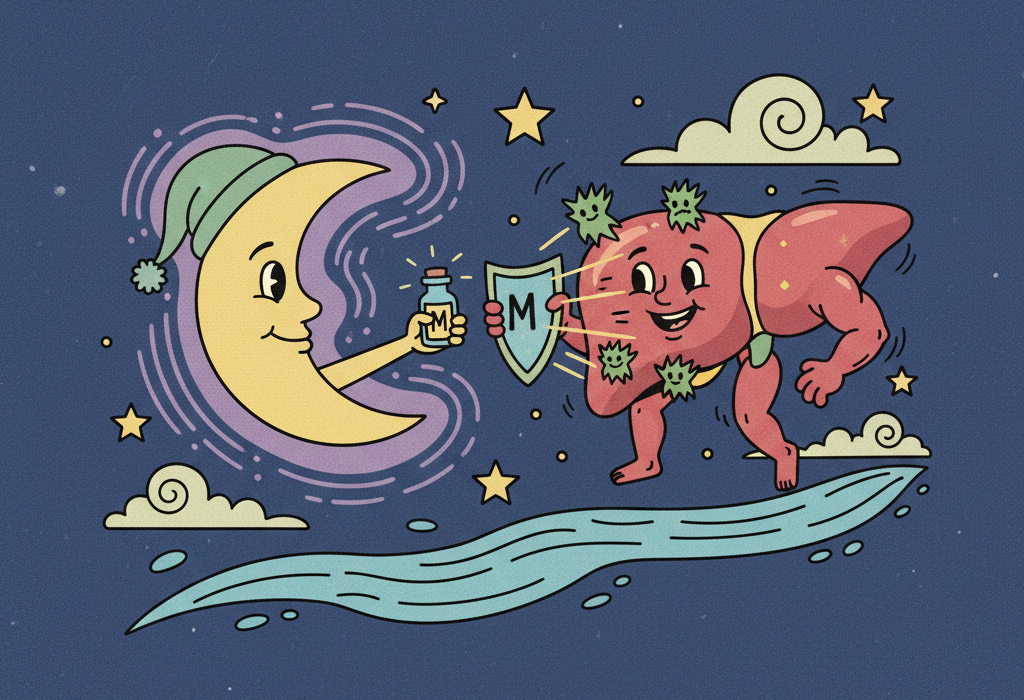
When most people hear the word melatonin, they immediately think of sleep. For decades, it has been widely known as the hormone that tells your brain it is time for bed. However, scientists are discovering that melatonin does much more than regulate your sleep-wake cycle. It is actually present throughout your entire body, and it appears to play a critical role in the health of one of your most important organs: your liver.
So, does melatonin help liver health? A growing body of evidence suggests that it does. Research shows that melatonin acts as a powerful antioxidant and metabolic regulator in the liver. It helps protect liver cells from damage, reduces fat accumulation, and supports the liver’s natural detoxification processes.
To understand how this works, you can think of melatonin as a night-shift janitor for a massive chemical factory (your liver). During the day, the factory is busy processing food, storing energy, and filtering out toxins. This hard work creates a lot of chemical waste. At night, melatonin signals that it is time to clean up the waste, repair broken machinery, and prepare the factory for the next day.

If you do not produce enough melatonin, or if your internal clock is disrupted, that daily cleanup does not happen properly. Over time, this can lead to cellular damage and disease.
Let us explore what the latest peer-reviewed research actually says about melatonin, circadian rhythms, and liver health.
How This Might Work: The Liver’s Internal Clock
Your body operates on a 24-hour internal schedule known as a circadian rhythm (sir-KAY-dee-un RIH-thum). While the master clock is located in your brain, almost every organ in your body has its own peripheral clock. The liver is highly dependent on this clock to know when to store energy (after meals) and when to burn energy (while fasting overnight).
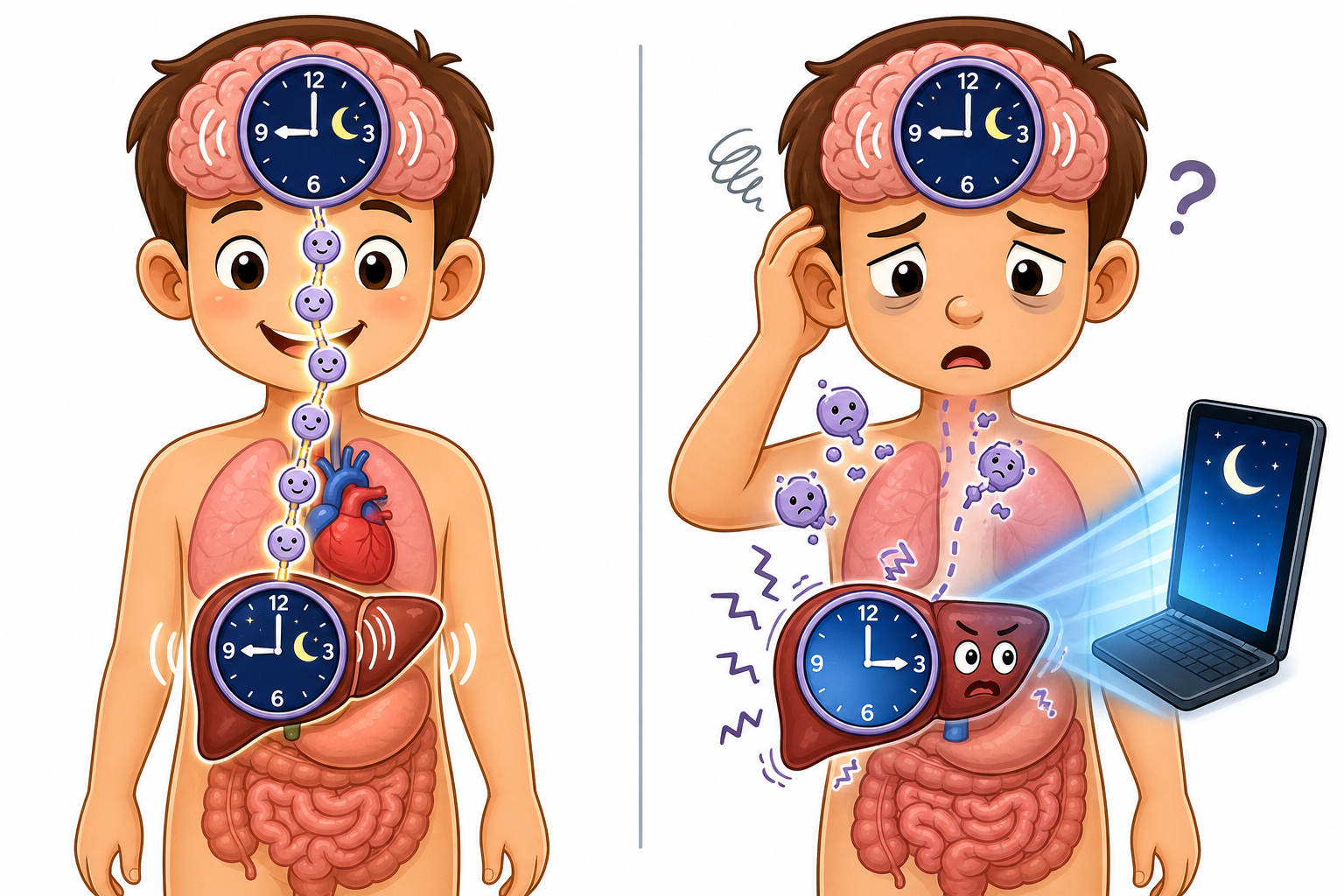
According to a 2025 review in Seminars in Neurology, when our sleep-wake cycle is disrupted by shift work, jet lag, or late-night screen time, the liver’s clock falls out of sync with the brain. This misalignment can increase the risk of metabolic syndromes, including fatty liver disease.
Related: How Your Circadian Rhythm Controls Sleep (And What Science Says About Fixing It)
Melatonin is the primary signal that keeps these clocks synchronized. But melatonin is not just a messenger. It is also an active protector. A 2014 review in Current Pharmaceutical Design highlighted that melatonin is found in exceptionally high concentrations in the liver and bile fluid. In these areas, melatonin acts as a direct shield against oxidative stress (OX-ih-day-tiv stress), which occurs when there is an imbalance between harmful free radicals and protective antioxidants in the body.
What the Research Shows
Scientists have studied melatonin’s effects on the liver across a variety of conditions, ranging from metabolic diseases to chemical toxicity. Here is a breakdown of the key findings.
Protecting Against Fatty Liver Disease
Metabolic dysfunction-associated steatotic liver disease (MASLD), formerly known as non-alcoholic fatty liver disease, occurs when too much fat builds up in the liver. This condition is closely tied to obesity, insulin resistance, and poor sleep.
A 2025 study in the International Journal of Environmental Research and Public Health explored how artificial light at night suppresses melatonin production and contributes to MASLD. The researchers noted that chronic exposure to nighttime light disrupts glucose and lipid (fat) metabolism in the liver. This leads to insulin resistance and hepatic steatosis (fatty liver).
Conversely, restoring melatonin appears to reverse some of this damage. In a 2025 study on prediabetic rats published in the International Journal of Molecular Sciences, researchers fed animals a high-sugar diet to induce metabolic dysfunction. When the rats were treated with melatonin, their liver health improved significantly. The melatonin reduced liver fat deposits, lowered blood triglycerides, and improved the function of mitochondria (my-toe-KON-dree-uh), which are the energy-producing factories inside cells.
Furthermore, a 2023 study in the International Journal of Biological Sciences found that melatonin prevents a specific type of cell death in the liver called ferroptosis (fair-oh-TOP-sis). Ferroptosis is triggered by a toxic buildup of iron and damaged fats. By acting on specific cellular receptors, melatonin stopped this destructive process and slowed the progression of fatty liver disease in mice fed a high-fat diet.
Defending Against Toxins, Alcohol, and Drugs
Because the liver is responsible for filtering toxins, it takes a heavy beating from alcohol, environmental pollutants, and medications.
A comprehensive 2017 review in the International Journal of Molecular Sciences summarized how melatonin protects the liver from various chemical injuries. The researchers noted that melatonin:
- Reduces oxidative damage caused by industrial chemicals and heavy metals.
- Protects liver cells from the toxic byproducts of alcohol metabolism.
- Helps shield the liver from the side effects of certain medications, including high doses of acetaminophen and various chemotherapy drugs.
Melatonin also appears to protect the liver from radiation damage. A 2023 study in the Turkish Journal of Medical Sciences examined rats exposed to total body irradiation. The researchers found that administering melatonin before radiation exposure significantly reduced lipid peroxidation (fat damage) in the liver and preserved the activity of natural antioxidant enzymes.
The Gut-Liver Connection
Science is increasingly revealing that liver health is deeply connected to gut health. If the intestinal barrier becomes weak or “leaky,” harmful bacteria and toxins can escape the gut and travel directly to the liver, causing severe inflammation.
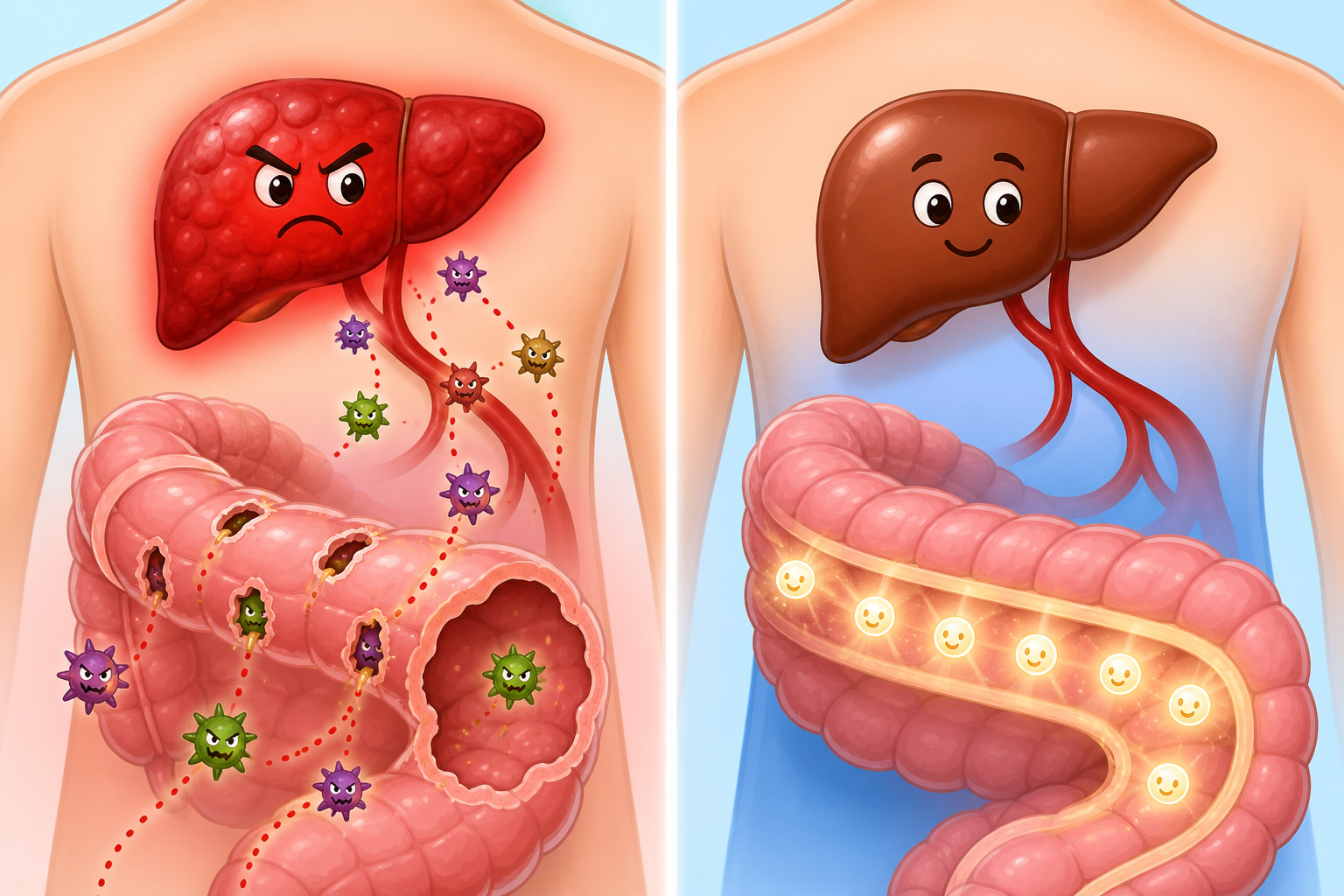
Melatonin seems to strengthen this barrier. A 2024 study in the Journal of Pineal Research looked at liver damage caused by cadmium, a toxic heavy metal. The researchers discovered that melatonin protected the liver by first remodeling the gut microbiome. Melatonin improved the gut barrier, prevented bacterial toxins from leaking into the bloodstream, and altered bile acid metabolism to reduce liver inflammation.
A similar 2022 study in the Journal of Pineal Research found that melatonin used the exact same gut-liver pathway to protect mice from Aflatoxin B1, a dangerous foodborne toxin known to cause severe liver damage.
Related: How Your Gut Microbiome and Oxidative Stress Control Your Health
Dietary Melatonin and Liver Cancer Risk
While much of the mechanistic research has been done in animal models, population studies in humans also show a link between melatonin and liver health.
The Takayama study, published in Cancer Science in 2024, tracked over 30,000 Japanese adults for more than 13 years. The researchers looked at how much melatonin the participants consumed through their normal diets (melatonin is naturally found in small amounts in vegetables, seeds, and eggs).
The study found that individuals with the highest dietary intake of melatonin had a significantly decreased risk of developing liver cancer compared to those with the lowest intake. While this is an observational study and cannot prove that eating melatonin prevents cancer, it provides compelling evidence that natural melatonin intake is associated with long-term liver protection.
Common Questions About Melatonin and Liver Health
Does poor sleep cause liver damage?
Poor sleep itself does not directly destroy liver tissue, but it creates a metabolic environment that makes liver disease much more likely. A 2021 review in The Lancet Gastroenterology & Hepatology highlights a bidirectional relationship: sleep disturbances accelerate the progression of fatty liver disease, and advanced liver disease further disrupts sleep by altering how the body processes natural melatonin.
Can I get enough melatonin from food?
Yes, small amounts of melatonin are found in foods like tart cherries, walnuts, eggs, and certain vegetables. The Takayama study mentioned above showed that people who naturally consumed more of these foods had better liver outcomes. However, dietary amounts are much smaller than what is found in over-the-counter supplements.
Is it safe to take melatonin supplements if I already have liver disease?
If you have an existing liver condition, you should always speak to a gastroenterologist or primary care doctor before starting any supplement. Because the liver is responsible for breaking down oral melatonin, a damaged liver might process the hormone too slowly, leading to excessive daytime drowsiness.
Where The Science Is Still Uncertain
While the research on melatonin and liver health is highly promising, there are important limitations to keep in mind:
Animal vs. Human Studies: The vast majority of studies explaining exactly how* melatonin protects the liver have been conducted on mice and rats. While human biology is similar, we cannot guarantee that a supplement will heal human liver disease exactly as it does in a rodent model.
- Dosing Unclear: In animal studies, researchers often use doses of melatonin that are proportionally much higher than the standard 1 to 5 milligrams humans take for sleep. The optimal dose for human liver protection remains unknown.
- Supplement Quality: Over-the-counter melatonin supplements are not strictly regulated by the FDA, meaning the actual dose in a pill can vary wildly from what is stated on the label.
The Bottom Line / Takeaways
Melatonin is far more than a sleep aid. It is a fundamental metabolic regulator and a potent antioxidant that helps protect the liver from the stress of daily life.
Here is what we currently know based on the scientific evidence:
- It fights fat buildup: Melatonin helps regulate how the liver stores and burns energy, which may protect against fatty liver disease.
- It cleans up damage: By neutralizing free radicals, melatonin shields liver cells from toxins, alcohol, and certain medications.
- It works with the gut: Melatonin strengthens the intestinal barrier, preventing gut toxins from traveling to the liver.
- Light matters: Artificial light at night suppresses your natural melatonin production, which can disrupt your liver’s internal clock and promote metabolic disease.
While we wait for more human clinical trials to determine exact supplement dosages for liver disease, the current science provides a great reason to prioritize your natural circadian rhythm. Getting morning sunlight, limiting screens before bed, and sleeping in a dark room are all evidence-based ways to support your body’s natural melatonin production and, by extension, your liver.
Quick Reference: Key Studies
| Study Focus | Key Finding | Source |
|---|---|---|
| Dietary Melatonin & Cancer | Higher dietary melatonin intake was associated with a decreased risk of liver cancer in a large Japanese population. | PMID 38356184 |
| Fatty Liver & Prediabetes | Melatonin reduced liver fat, lowered triglycerides, and improved mitochondrial function in prediabetic rats. | PMID 40429795 |
| Cell Death (Ferroptosis) | Melatonin prevented iron-dependent cell death in the liver, slowing the progression of fatty liver disease. | PMID 37564204 |
| Gut-Liver Axis | Melatonin protected the liver from heavy metal toxicity by remodeling gut bacteria and strengthening the intestinal barrier. | PMID 39555739 |
| Toxin & Drug Protection | A comprehensive review found melatonin protects liver tissue against damage from alcohol, medications, and chemicals. | PMID 28333073 |
| Radiation Protection | Melatonin reduced oxidative liver damage in rats exposed to total body ionizing radiation. | PMID 38031946 |
Last updated: September 2026
This article synthesizes findings from peer-reviewed research. It is for educational purposes only and does not constitute medical advice. Consult a healthcare provider before starting any new regimen.
Leave a Reply