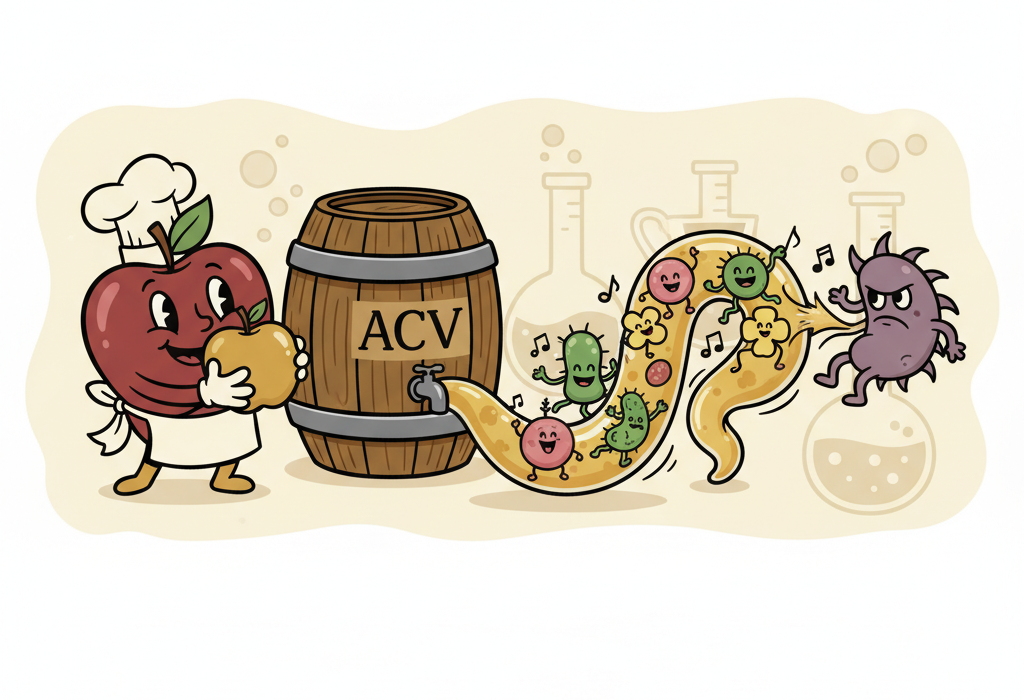
Apple cider vinegar has been a popular household staple for decades. Many people drink a small amount daily, hoping to improve their digestion, manage their weight, or boost their overall health. But beyond the traditional advice, scientists are now looking closely at how apple cider vinegar actually interacts with the human body at a microscopic level.
At the center of this research is the microbiome (my-kroh-BY-ohm) – the vast collection of bacteria, fungi, and other microorganisms living in your digestive tract. Your gut microbiome plays a major role in how you digest food, store fat, and fight off infections.
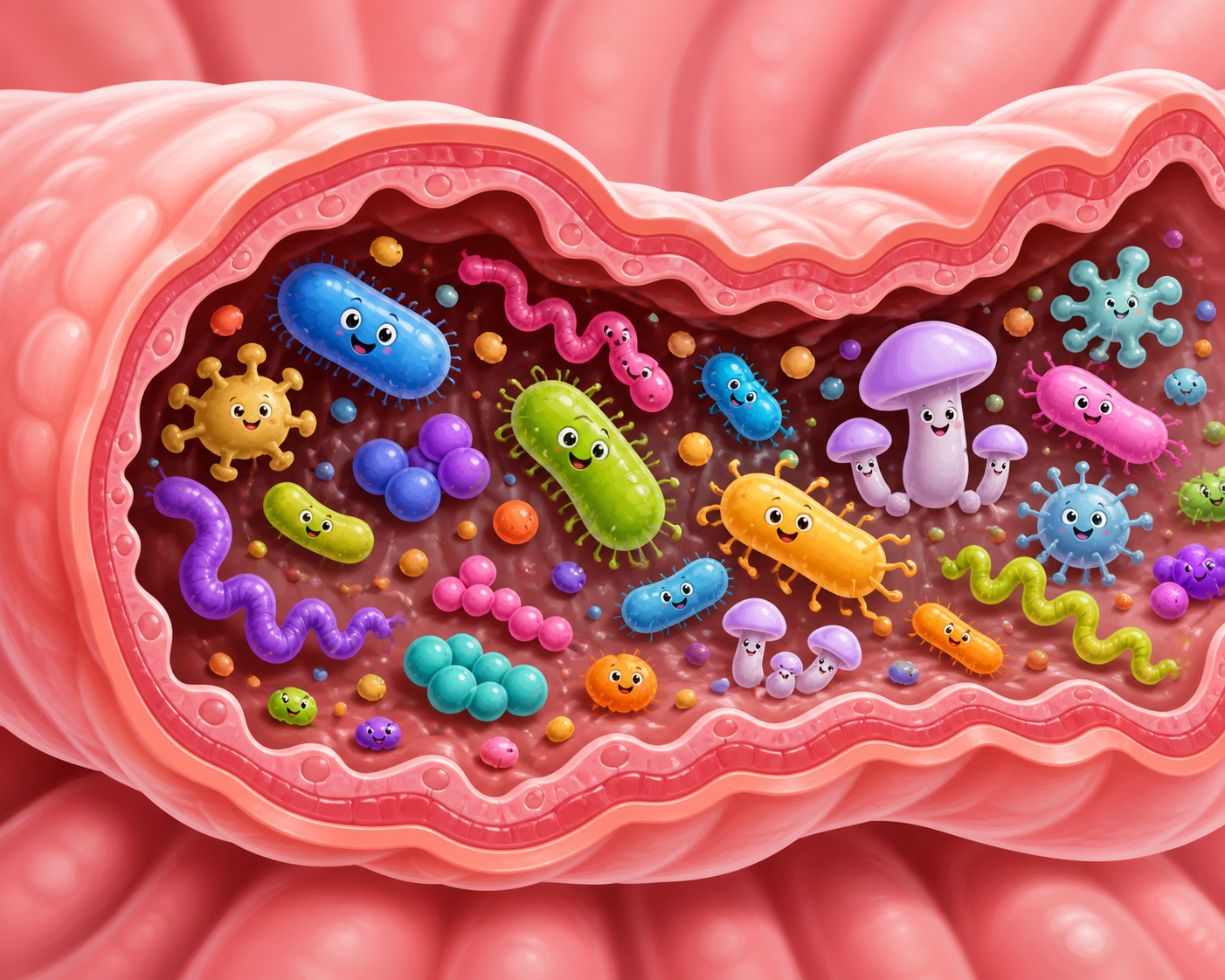
Recent scientific studies suggest that apple cider vinegar does indeed interact with these gut microbes. It appears to act as both a delivery system for certain live bacteria and a tool that can alter the environment of your digestive tract.
This article breaks down what peer-reviewed research actually shows about apple cider vinegar, how it affects gut bacteria, and what that means for your metabolic health.
What the Research Shows
To understand how apple cider vinegar impacts the gut, researchers have looked at the liquid itself, as well as how it affects animals when added to their diets.
The Bacteria Inside the Bottle
When people talk about the health benefits of apple cider vinegar, they often mention the “mother.” The mother is a cloudy substance that floats in raw, unpasteurized vinegar. Biologically, this is a SCOBY (SKOH-bee), which stands for Symbiotic Culture of Bacteria and Yeast.
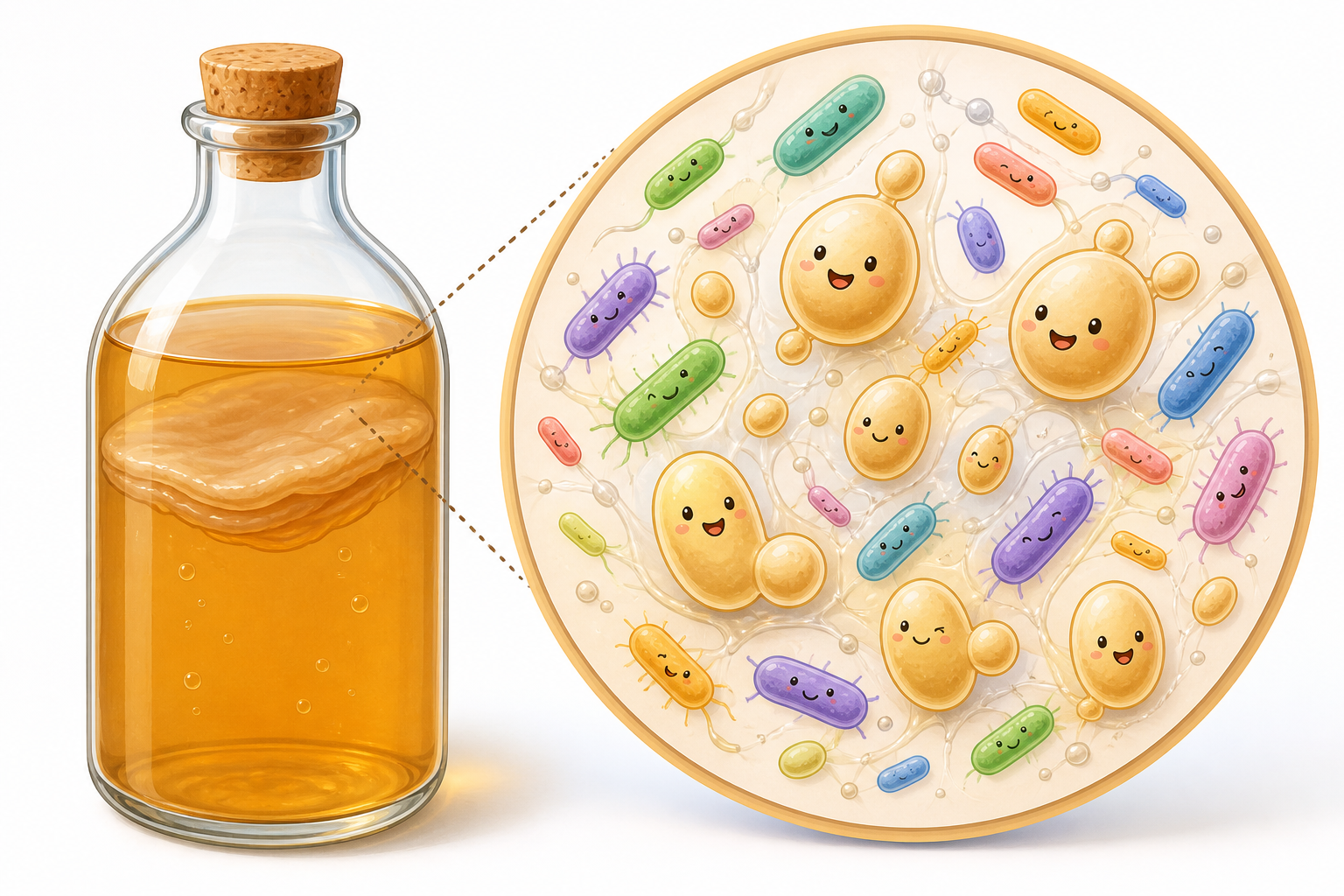
But what exactly is living inside that cloudy web?
A 2025 study in Food science & nutrition analyzed the exact microbial makeup of several live vinegars, including a popular commercial brand of organic apple cider vinegar (Bragg) and a newly developed honey vinegar from Zambia.
The researchers used genetic sequencing to identify the microbes. They found that the commercial apple cider vinegar was heavily dominated by a specific type of bacteria called Komagataeibacter (koh-mah-gah-tye-BAC-ter). This bacteria is responsible for turning alcohol into acetic acid, which is what gives vinegar its sour taste.
Interestingly, the study also highlighted how different processing methods change the product. While the raw organic apple cider vinegar contained two bacterial groups and six fungal groups, another commercial brand that had been more heavily processed contained zero detectable bacteria. This suggests that if you are consuming vinegar for its live microbes, buying raw, unfiltered vinegar is necessary.
Protecting the Liver Through the Gut
Your gut and your liver are in constant communication. Blood travels directly from your intestines to your liver, bringing nutrients but also potentially carrying toxins if your gut bacteria are out of balance. This connection is known as the gut-liver axis.
A 2025 study in Nutrients explored how apple cider vinegar powder affects this gut-liver connection in mice fed a high-fat diet. Normally, a high-fat diet causes unhealthy weight gain, liver fat accumulation, and a disruption of gut bacteria.
The researchers found that giving the mice apple cider vinegar powder resulted in several measurable changes:
- Weight management: The mice receiving the vinegar powder gained 26.3% less weight than the mice on the high-fat diet alone.
- Liver health: The vinegar reduced liver fat accumulation and significantly lowered liver enzymes (ALT and AST), which are markers of liver damage.
- Microbiome repair: The high-fat diet wiped out beneficial bacteria, but the vinegar intervention restored them. Specifically, the vinegar boosted levels of Akkermansia (ack-er-MAN-see-uh), a type of bacteria known to protect the gut lining and reduce inflammation.
The researchers concluded that the vinegar did not just treat the liver directly. Instead, it remodeled the gut microbiome, which then sent healthier signals and metabolites to the liver.
Related: How Bile Acids and Gut Bacteria Team Up to Control Your Health
Acting as a Natural Antimicrobial
Apple cider vinegar also appears to have antimicrobial properties, meaning it can help suppress harmful bacteria.
Scientists often use aquatic animals like shrimp to test immune and gut health responses because their digestive systems are highly sensitive to their environments. A 2019 study in Fish & shellfish immunology tested the effects of apple cider vinegar on the intestinal health of white shrimp.
The researchers added different concentrations of apple cider vinegar to the shrimp’s diet for 60 days. They found that the vinegar significantly reduced the number of harmful Vibrio bacteria in the shrimp’s digestive tract.
Additionally, the vinegar-fed shrimp showed a reduction in specific cells in their digestive glands that store fat, and they had lower overall cholesterol and triglyceride levels. This supports the idea that vinegar can simultaneously suppress bad bacteria and alter how the body handles dietary fats.
How This Might Work
Based on the current research, apple cider vinegar seems to influence the gut microbiome through three main mechanisms.
1. The Acetic Acid Effect
The primary active component in any vinegar is acetic acid. Acetic acid lowers the pH of the digestive tract, making it slightly more acidic. Many harmful, disease-causing bacteria struggle to survive in acidic environments. By lowering the pH, apple cider vinegar may act like a gentle weed puller in a garden, making it harder for bad bacteria to take root while allowing beneficial, acid-tolerant bacteria to thrive.

2. Feeding the Good Bacteria
Apple cider vinegar is made from fermented apples, meaning it contains small amounts of plant compounds called polyphenols. Polyphenols act as antioxidants, but they also serve as food for beneficial gut bacteria.
When good bacteria consume these compounds, they produce short-chain fatty acids (SCFAs). SCFAs are crucial for health. They provide energy to the cells lining your colon, help keep the gut barrier tight, and send anti-inflammatory signals throughout the body. The 2025 mouse study noted that the vinegar helped restore the balance of these vital metabolic pathways.
3. Modulating Fat Storage
The research in both mice and shrimp indicates that apple cider vinegar changes how the body processes lipids (fats). By altering the gut bacteria, the vinegar seems to influence genes related to fat storage and breakdown.
In the mouse study, the vinegar decreased the activity of enzymes that build triglycerides (stored fat) and increased the activity of enzymes that break fat down. While this mechanism is complex and still being studied, it highlights how deeply our gut bacteria control our metabolism.
Related: Understanding Fat Metabolism: How Your Body Actually Stores and Burns Fat
Summary of Animal Model Findings
To better understand how apple cider vinegar impacts different biological systems, here is a comparison of the findings from the recent animal studies.
| Measurement | Mouse Model (High-Fat Diet) | Shrimp Model (Standard Diet) |
|---|---|---|
| Harmful Bacteria | Suppressed pathobionts | Reduced Vibrio species |
| Beneficial Bacteria | Increased Akkermansia | Not specifically measured |
| Fat Storage | Reduced liver fat | Reduced fat storage cells |
| Blood Lipids | Lowered triglycerides | Lowered cholesterol and triglycerides |
Common Questions About Apple Cider Vinegar
Does the “mother” actually matter?
Yes, if you are looking for live bacteria. Research shows that raw, unfiltered apple cider vinegar contains live bacterial genera like Komagataeibacter. Filtered and pasteurized vinegars generally lack these live microbes.
Will it cure digestive diseases?
No. While apple cider vinegar can support a healthy microbiome environment, it is not a medical treatment or a cure for conditions like irritable bowel syndrome (IBS) or inflammatory bowel disease (IBD).
Can it help with weight loss?
Animal studies show that apple cider vinegar can reduce fat accumulation and weight gain when paired with a high-fat diet. However, human clinical trials show only modest, mild weight loss effects. It is a supportive tool, not a magic solution.
Where The Science Is Still Uncertain
While the science surrounding apple cider vinegar is promising, it is important to keep the evidence in perspective.
First, the most detailed data on how apple cider vinegar reshapes the microbiome comes from animal models, specifically mice and shrimp. While these animals are excellent for studying biological mechanisms, human digestive tracts are more complex. Our diets, stress levels, and genetics all play massive roles in our microbiome health.
Second, human clinical trials looking specifically at microbiome changes after drinking apple cider vinegar are still lacking. We know it contains live bacteria, and we know it lowers blood sugar spikes in humans, but large-scale mapping of the human gut after vinegar consumption is an area that requires more research.
Finally, the exact dosage needed for optimal gut health in humans remains unclear. Most studies use the human equivalent of one to two tablespoons per day, diluted in water. Consuming large amounts of undiluted vinegar can damage tooth enamel and irritate the throat.
The Bottom Line
Apple cider vinegar is more than just a salad dressing. Research indicates that it is a biologically active liquid that can interact directly with your gut microbiome.
Studies show that raw apple cider vinegar contains live bacteria that survive the bottling process. When consumed, the acetic acid and plant compounds in the vinegar appear to suppress harmful bacteria while encouraging the growth of beneficial strains that protect the gut lining.
Animal research strongly suggests that this balancing act in the gut has a ripple effect, reducing fat accumulation in the liver and lowering cholesterol levels in the blood.
While we still need more long-term human trials to map exactly how our bacteria shift in response to daily vinegar intake, the current evidence suggests that a small, diluted amount of raw apple cider vinegar is a safe and potentially beneficial addition to a healthy diet.
Quick Reference: Key Studies
| Study Focus | Key Finding | Source |
|---|---|---|
| Mice on high-fat diets | Apple cider vinegar powder reduced weight gain, prevented liver damage, and boosted beneficial gut bacteria like Akkermansia. | PMID 40647261 |
| Vinegar composition | Metagenomic testing revealed that raw apple cider vinegar contains live Komagataeibacter, while heavily processed vinegars lack live microbes. | PMID 39830903 |
| Shrimp digestion | Adding apple cider vinegar to shrimp diets reduced harmful Vibrio bacteria and lowered cholesterol and fat storage. | PMID 30553888 |
Last updated: September 2026
This article synthesizes findings from peer-reviewed research. It is for educational purposes only and does not constitute medical advice. Consult a healthcare provider before starting any new regimen.


Leave a Reply