
We have all experienced the frustration of lying in bed, staring at the ceiling, and watching the clock tick closer to morning. When sleep refuses to come, common advice is to “just relax.” But can deep breathing, meditation, or muscle relaxation actually cure a bad night of sleep?
The short answer is that relaxation techniques do help improve sleep quality and can help you fall asleep faster. They work by lowering your heart rate, reducing muscle tension, and shifting your nervous system into a resting state. However, research shows that for people with chronic insomnia, relaxation alone is rarely enough. It is most effective when combined with structured changes to your sleep habits.
This article explores what peer-reviewed research actually says about how different relaxation techniques affect sleep, how they work inside the body, and how they compare to other established sleep treatments.
How Your Body Transitions to Sleep
To understand how relaxation techniques work, it helps to understand how the brain controls sleep.
Sleep researchers describe the brain’s sleep-wake control system as a “flip-flop” switch. Your brain has networks of neurons that keep you awake and other networks that put you to sleep. When one system is active, it actively turns off the other. However, if you are stressed, anxious, or in pain, your brain receives continuous waking signals. This keeps the switch stuck in the middle, making it difficult to transition into sleep.
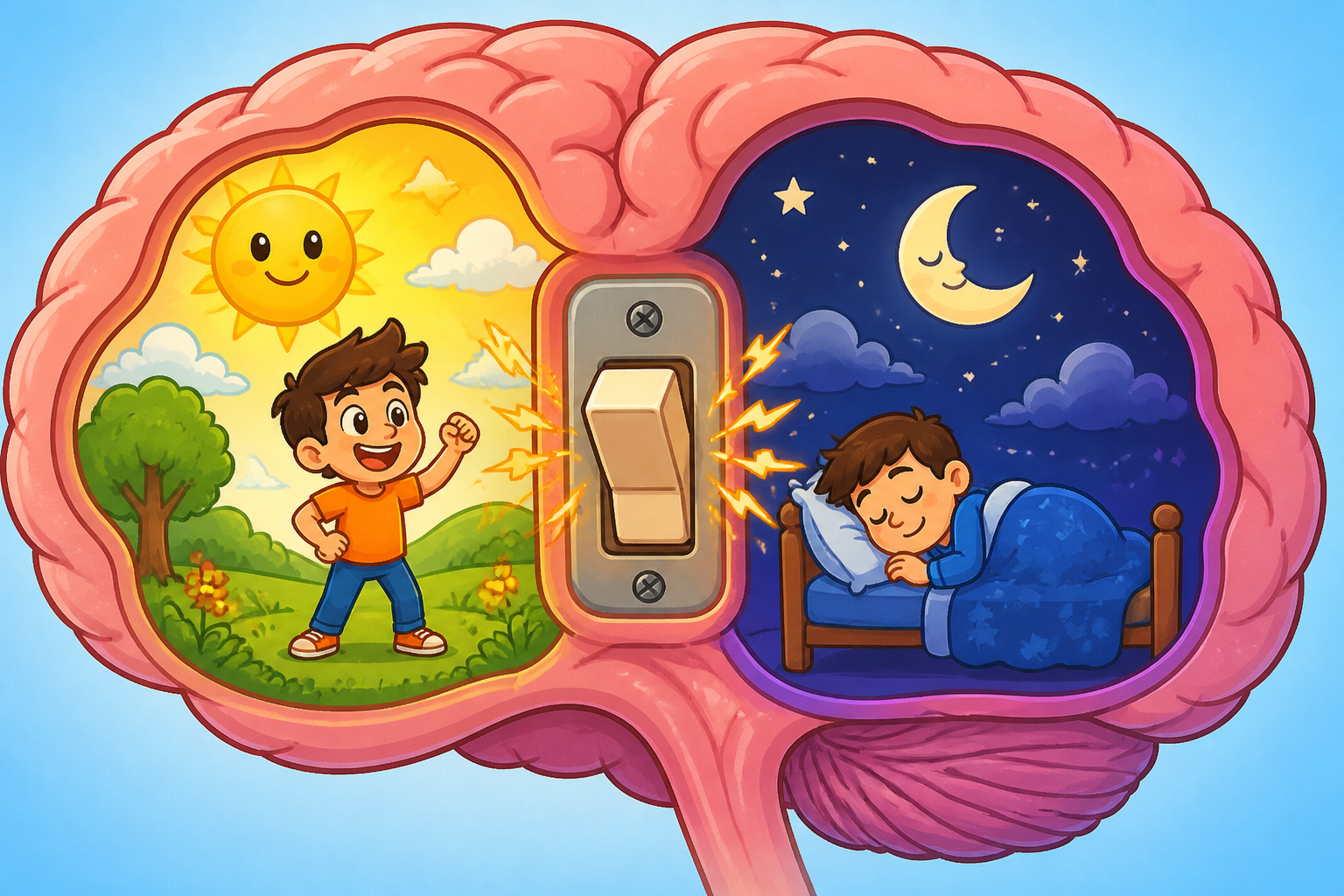
For the switch to flip toward sleep, your body must shift control to the parasympathetic nervous system (pear-uh-sim-puh-THET-ik NERV-us SIS-tum). This is the network of nerves responsible for your body’s “rest and digest” functions. When this system takes over, your heart rate slows down, your breathing becomes steady, and your blood vessels open up.

Relaxation techniques are essentially behavioral tools designed to manually activate this parasympathetic system. By deliberately slowing your breathing or releasing muscle tension, you send signals to your brain that it is safe to turn off the waking centers and turn on the sleep centers.
What the Research Shows About Specific Techniques
Scientists have studied various relaxation methods to see which ones actually translate into better sleep. The results depend heavily on the technique used and the population being studied.
Progressive Muscle Relaxation (PMR)
Progressive Muscle Relaxation is a technique where you systematically tense and then release different muscle groups in your body, usually starting from your toes and working up to your head. The goal is to help you recognize the difference between tension and relaxation.
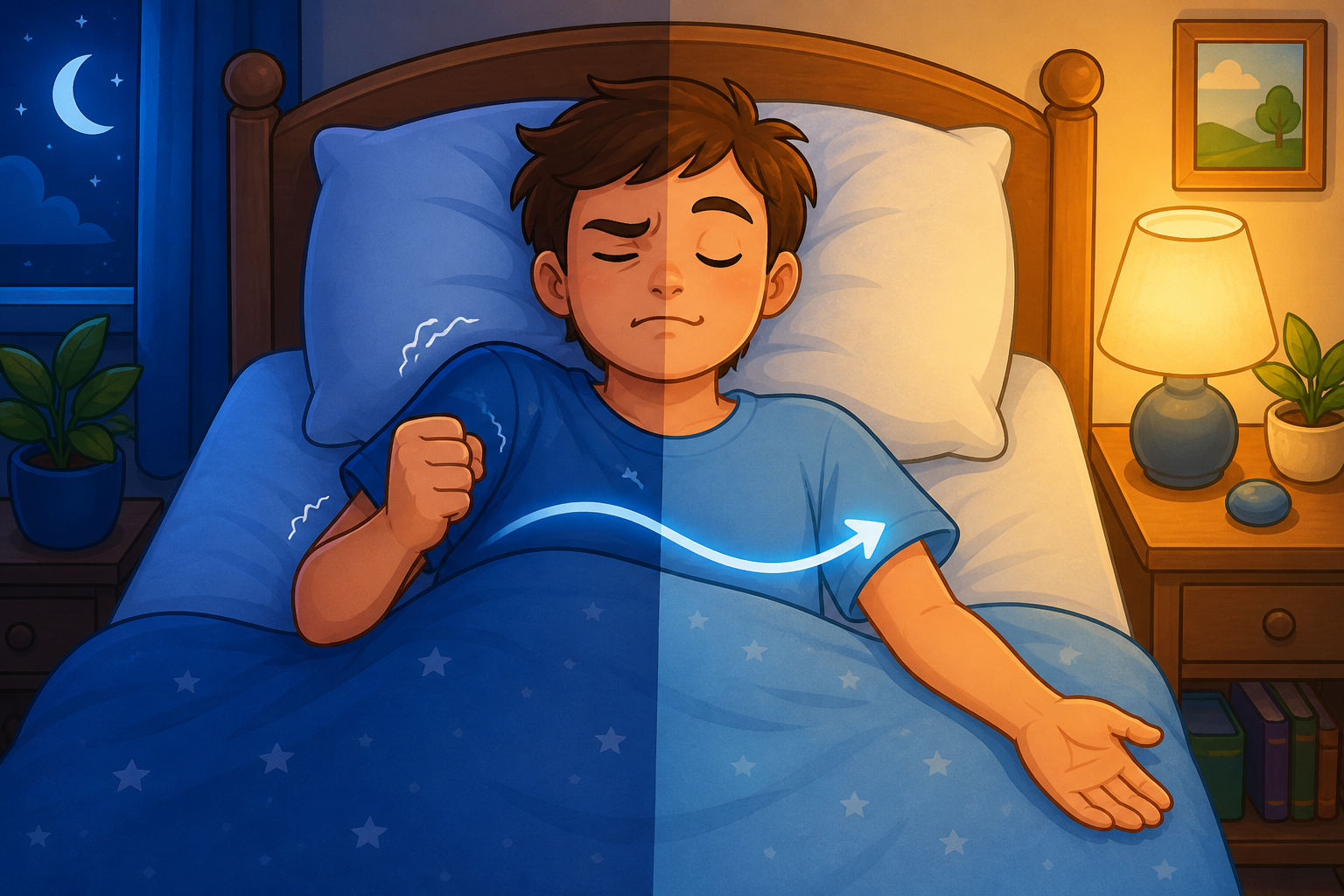
Research consistently shows that PMR is one of the most reliable relaxation methods for improving sleep. A 2026 systematic review and meta-analysis of 31 randomized controlled trials found that PMR significantly improved sleep quality and mental health in adults compared to control groups.
PMR appears particularly helpful for people dealing with physical illness or pain. A 2024 study on lung cancer patients receiving chemotherapy found that an eight-week PMR program significantly reduced pain, eased shortness of breath, and improved overall sleep quality. Similarly, a 2024 trial involving patients with chronic tension headaches showed that combining PMR with deep breathing exercises led to less pain severity and better sleep after 12 weeks.
Mindfulness and Meditation
Mindfulness involves paying attention to the present moment without judging your thoughts or feelings. Instead of trying to force your mind to go blank, you simply observe your thoughts as they pass.
A 2014 randomized controlled trial looked at 54 adults with chronic insomnia. The researchers compared mindfulness-based therapy to a self-monitoring control group. They used both sleep diaries and actigraphy (ak-TIG-ruh-fee), which involves wearing a watch-like device to track movement and sleep patterns. The groups practicing mindfulness saw significant reductions in the time they spent awake in the middle of the night and reported lower insomnia severity.
However, it is important to keep expectations realistic. A 2019 meta-analysis in the Annals of the New York Academy of Sciences reviewed 18 trials on mindfulness meditation for sleep. The researchers found that while mindfulness was much better at improving sleep than doing nothing, it was not necessarily superior to existing evidence-based sleep treatments.
Related: What Science Actually Says About Meditation and Mindfulness
Passive Relaxation and Massage
Sometimes, active relaxation techniques like meditation require too much mental effort, especially for people who are fatigued or ill. In these cases, passive relaxation might help.
A 2021 systematic review of cancer survivors looked at whether massage therapy or guided relaxation therapy could improve sleep. The review found that massage therapy provided by professionals led to statistically significant improvements in sleep quality. However, passive relaxation therapies (like listening to an audio recording) showed mixed results, with some trends toward better sleep but no strong, significant improvements across the board.
Related: Does Massage Actually Improve Sleep? What the Latest Science Shows
Temperature Manipulation
While not a mental exercise, changing your body temperature is a highly effective, non-drug relaxation technique.
According to a 2005 review in Clinics in Sports Medicine, your body naturally drops its core temperature and warms your skin (especially your hands and feet) right before you fall asleep. Taking a warm bath one to two hours before bed artificially mimics this process. The warm water brings blood to the surface of your skin. When you step out of the bath, that heat escapes, rapidly cooling your inner core and signaling to your brain that it is time to sleep.
How Relaxation Compares To Cognitive Behavioral Therapy for Insomnia (CBT-I)
While relaxation techniques are helpful, sleep specialists generally do not recommend them as a standalone cure for chronic insomnia. Instead, the gold standard treatment is Cognitive Behavioral Therapy for Insomnia (KOG-nih-tiv bee-HAY-vyer-ul), often abbreviated as CBT-I.
A 2011 review in the Annual Review of Clinical Psychology explains that CBT-I is a multicomponent treatment. It usually includes:
- Stimulus Control: Training your brain to associate the bed only with sleep (e.g., leaving the room if you cannot sleep after 20 minutes).
- Sleep Restriction: Temporarily limiting the time you spend in bed to match the actual amount of time you spend sleeping, which builds a strong biological drive for sleep.
- Cognitive Restructuring: Identifying and changing anxious thoughts about sleep.
- Sleep Hygiene: Keeping a cool, dark room and avoiding caffeine late in the day.
- Relaxation Training: Using PMR, deep breathing, or meditation to lower physical arousal.
Research consistently shows that CBT-I is highly effective and often produces better long-term results than sleep medications. A 2017 review in FP Essentials confirmed that CBT-I remains the mainstay of treatment for chronic sleep issues. Relaxation techniques are an excellent tool within the CBT-I toolbox, but they cannot override bad sleep habits, such as drinking caffeine at night or spending hours awake in bed looking at a phone.
Who Benefits Most and Who Needs Caution
Who Benefits Most:
- People with physical tension: Individuals suffering from chronic pain, tension headaches, or general muscle stiffness often see the most immediate benefits from Progressive Muscle Relaxation.
- Trauma survivors: A 2016 review in the Journal of Evidence-Informed Social Work noted that mindfulness, deep breathing, and yoga can help manage the physiological hyperarousal (being constantly on high alert) associated with PTSD.
- People who nap: A 2018 study in Industrial Health found that adding relaxation techniques to a 30-minute afternoon nap in a workplace setting significantly increased total sleep time and deepened the sleep achieved during the nap.
Who Needs Caution:
- People with relaxation-induced anxiety: For a small percentage of people, trying to relax actually triggers anxiety. Focusing too much on breathing or heart rate can cause hyperventilation or panic. If this happens, experts recommend stopping the exercise and trying a distraction technique instead, such as reading a book.
- People with severe chronic insomnia: If you have struggled with insomnia for months or years, relying solely on a meditation app will likely lead to frustration. You will likely need a structured CBT-I program to reset your body’s sleep drive.
Practical Guidance: How to Use Relaxation for Sleep
If you want to incorporate relaxation techniques into your nightly routine, the science suggests a few best practices:
1. Practice during the day first. Do not try a new relaxation technique for the very first time when you are desperately trying to fall asleep at 2:00 AM. Practice PMR or deep breathing during the afternoon when you are already relatively calm. This trains your nervous system to respond to the exercise.
2. Focus on the physical. If your mind is racing, mental meditation might be difficult. Instead, try a physical technique like Progressive Muscle Relaxation or taking a warm bath, which forces the body to physically wind down.
3. Use the “Paradoxical Intention” trick. If you are anxious about not sleeping, trying hard to sleep will only make you more awake. Instead, lie in the dark and gently tell yourself you are just going to rest your eyes and stay awake for a few minutes. Removing the pressure to fall asleep often allows the brain’s sleep switch to finally flip.
Related: The Science of Breathing Exercises: What Research Shows
The Bottom Line
The scientific evidence shows that relaxation techniques are a valid, evidence-based way to improve sleep quality. Methods like Progressive Muscle Relaxation, mindfulness meditation, and temperature manipulation effectively signal the nervous system to shift from active mode to rest mode.
However, relaxation techniques are not a magic cure for severe insomnia. They cannot make up for an irregular sleep schedule or a bedroom filled with distractions. For the best results, relaxation exercises should be used as one part of a broader approach to healthy sleep habits, ideally alongside Cognitive Behavioral Therapy for Insomnia (CBT-I) if sleep problems persist.
Quick Reference: Key Studies
| Study Focus | Key Finding | Source |
|---|---|---|
| Progressive Muscle Relaxation (PMR) | A meta-analysis of 31 trials found PMR significantly improves sleep quality and mental health in adults. | PMID 41633054 |
| Mindfulness for Insomnia | Mindfulness-based therapy significantly reduced the time spent awake during the night compared to a self-monitoring control group. | PMID 25142566 |
| Mind-Body Therapies for Cancer | Yoga, mindfulness, and relaxation effectively reduced the severity of sleep disturbances in cancer patients. | PMID 37244384 |
| Relaxation during Naps | Using relaxation techniques before a 30-minute workplace nap increased total sleep time and the amount of deep sleep achieved. | PMID 29332862 |
| CBT-I vs. Relaxation | CBT-I remains the most effective multicomponent treatment for insomnia; relaxation is a helpful part of this broader toolkit. | PMID 17716026 |
Last updated: November 2026
This article synthesizes findings from peer-reviewed research. It is for educational purposes only and does not constitute medical advice. Consult a healthcare provider before starting any new regimen, especially if you experience chronic sleep disturbances.



Leave a Reply