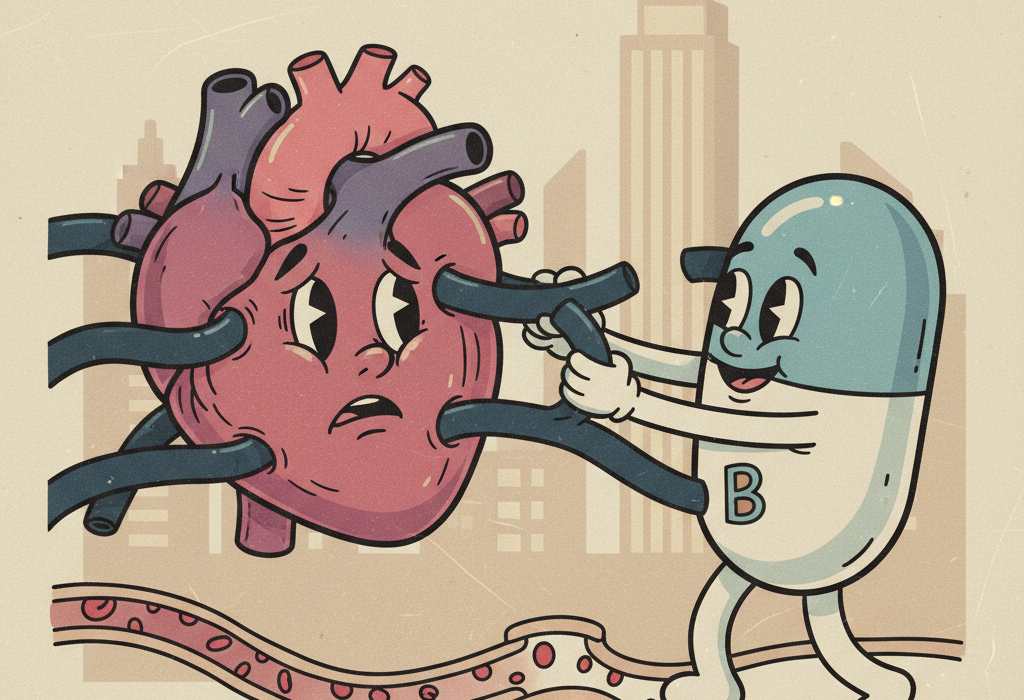
For decades, beta-blockers were the undisputed heavyweights of blood pressure medication. If you visited a doctor in the 1980s or 1990s with high blood pressure, there was a very good chance you would leave with a prescription for one of these drugs.
However, science is always evolving. In recent years, major medical guidelines shifted, moving beta-blockers off the “first choice” list for routine high blood pressure. This left many patients confused. Are beta-blockers still safe? Do they still work?
Recently, researchers have begun taking a second look at these medications. The latest science reveals a much more nuanced picture. Beta-blockers are not obsolete, but they are also not a one-size-fits-all solution. Their effectiveness depends heavily on your age, your specific type of high blood pressure, and the exact type of beta-blocker your doctor prescribes.
Here is a breakdown of what peer-reviewed research actually shows about beta-blockers and your heart health.
How Beta-Blockers Actually Work
To understand how these medications work, we first have to look at the body’s built-in stress response system.
Your body is equipped with the sympathetic nervous system (sim-puh-THET-ik NER-vus SIS-tum), which controls your “fight or flight” response. When you are stressed, anxious, or exercising, this system releases hormones like adrenaline. These hormones bind to specific docking stations on your cells called beta-receptors.
When adrenaline binds to beta-receptors in your heart, it acts like a gas pedal. Your heart beats faster and pumps harder. When it binds to receptors in your blood vessels, they constrict, which raises your blood pressure.
Beta-blockers do exactly what their name suggests. They sit in those docking stations and block adrenaline from attaching.
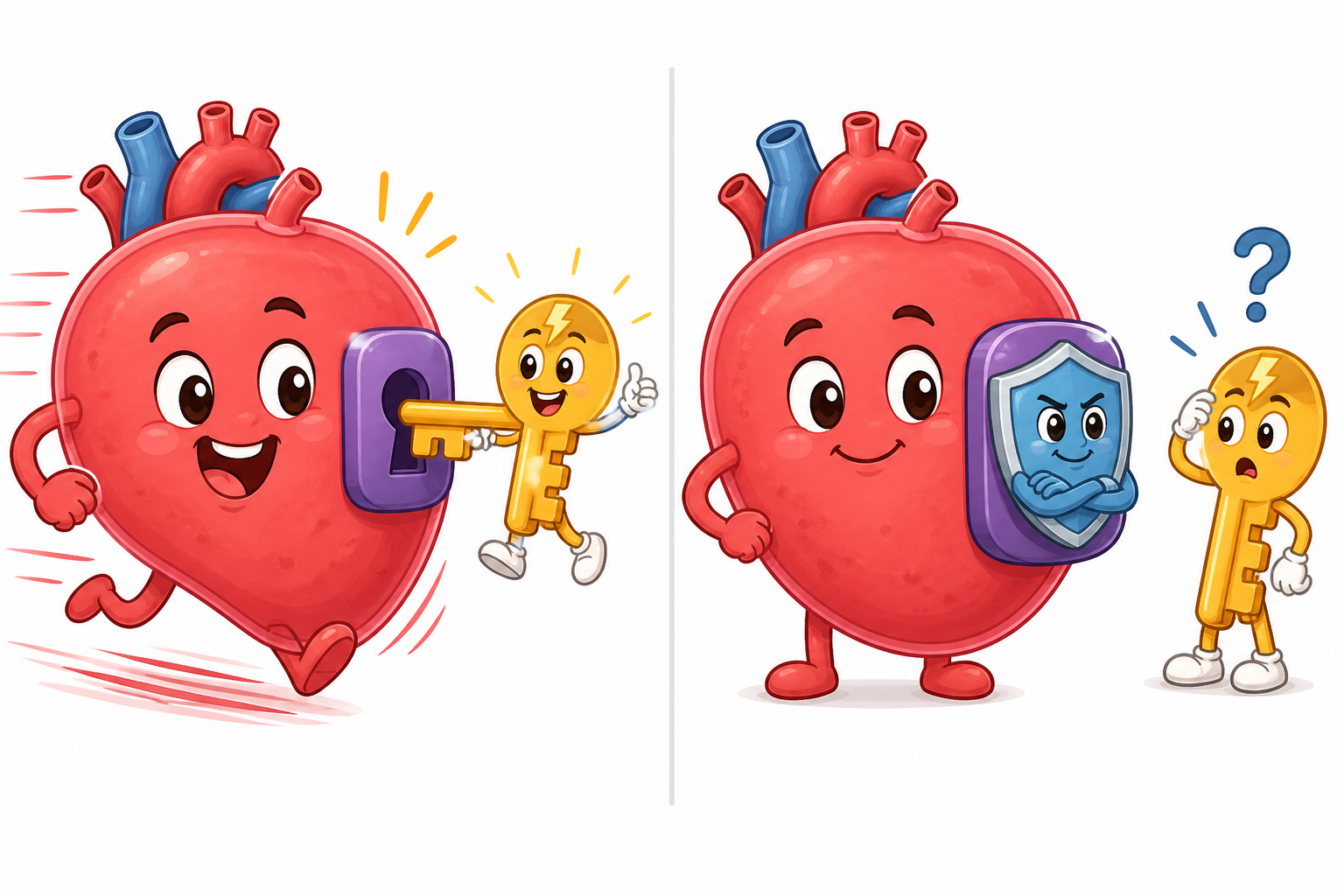
A 2004 review in Nursing Older People explains that by blocking these signals, beta-blockers cause the heart to beat more slowly and with less force. This reduces the overall workload on the heart and helps lower blood pressure. Because they block stress hormones, these drugs are also highly effective at preventing the heart rate from spiking during physical exertion or emotional stress.
What the Research Shows: The Rise, Fall, and Return
For a long time, beta-blockers were considered a standard first-line treatment for hypertension (hi-per-TEN-shun), the medical term for high blood pressure. But in 2014, a major shift occurred.
The Eighth Joint National Committee (JNC 8) released updated guidelines for managing high blood pressure. A 2015 summary of these guidelines in The Medical Clinics of North America noted that beta-blockers were no longer recommended as the initial therapy for uncomplicated high blood pressure.
Why did this happen? Researchers looked at large pools of data and found that, compared to other blood pressure medications, traditional beta-blockers (like atenolol) were slightly less effective at preventing strokes. They also seemed to offer less overall cardiovascular protection for the average patient with simple high blood pressure compared to alternatives like calcium channel blockers or ACE inhibitors.
However, the story did not end there.
Recent research suggests that tossing out beta-blockers entirely for high blood pressure might have been an overreaction. A 2023 review in The Journal of the Association of Physicians of India highlights that European guidelines have recently re-elevated beta-blockers, stating they can still be used as a first-line medicine. Researchers argue that the trials that made beta-blockers look bad mostly used older drugs (like atenolol) and failed to account for the diverse ways high blood pressure develops in different people.
Why Age Matters in Blood Pressure Treatment
One of the biggest criticisms of the decision to downgrade beta-blockers is that it ignored the role of age. High blood pressure in a 40-year-old is often biologically different from high blood pressure in an 80-year-old.
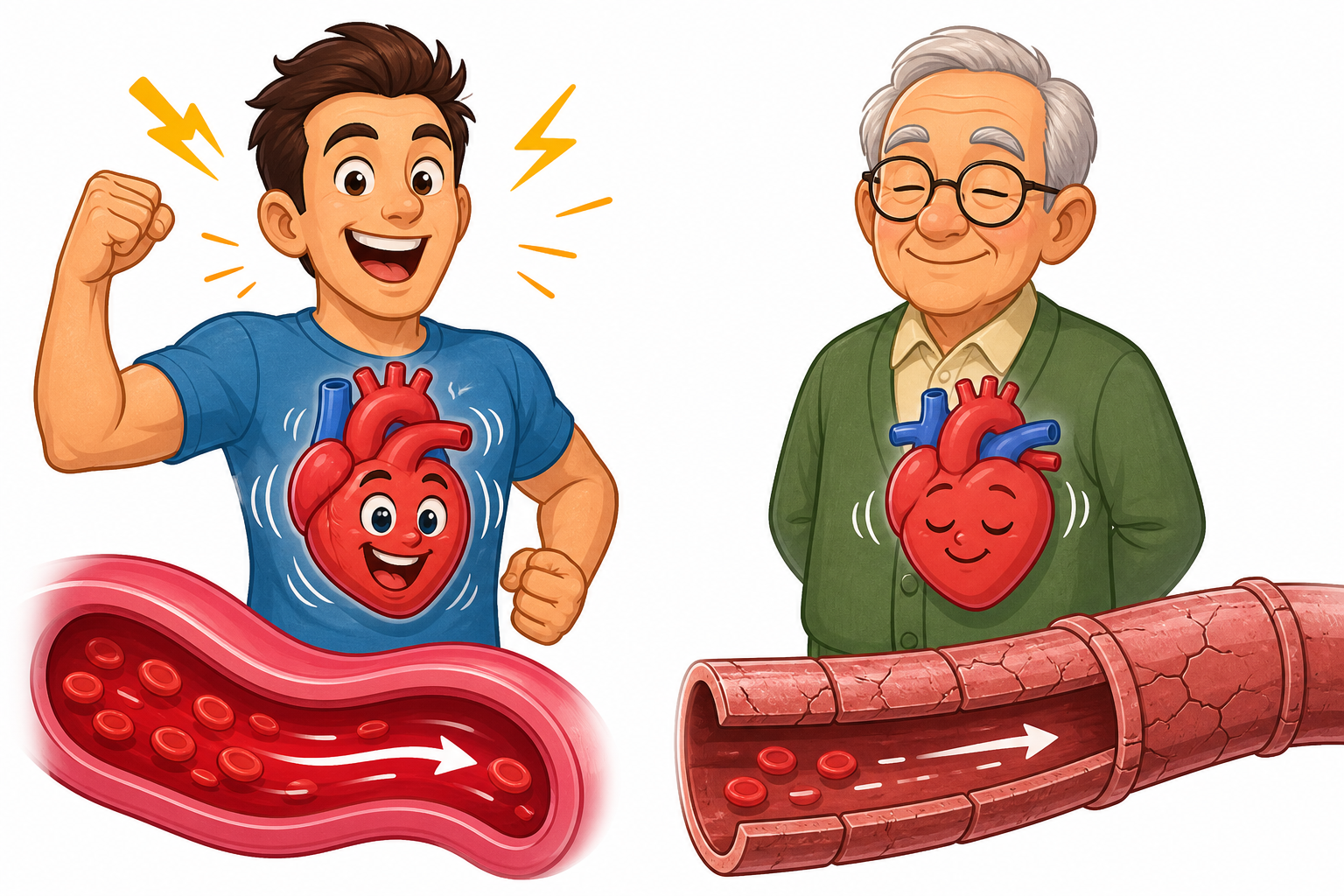
A 2017 review in Advances in Experimental Medicine and Biology explains this difference clearly:
- Young and Middle-Aged Adults: In people under 60, high blood pressure is frequently driven by an overactive sympathetic nervous system. Their hearts are pumping too hard and too fast, often linked to stress, obesity, or high resting heart rates. Because beta-blockers directly calm this overactive system, they are highly effective for this age group.
- Older Adults: In people over 60, high blood pressure is usually caused by arterial stiffness. As we age, our blood vessels lose their elasticity and become rigid. The heart itself might actually be pumping less blood, but the stiff pipes cause the pressure to rise. Traditional beta-blockers do not fix stiff arteries, which is why they tend to perform poorly as a first-line treatment in the elderly.
A 2023 analysis in High Blood Pressure & Cardiovascular Prevention confirms this, noting that treating a younger patient with a hyperactive nervous system requires a different tool than treating an older patient with stiff arteries.
Not All Beta-Blockers Are Created Equal
When we talk about beta-blockers, we are actually talking about a diverse family of drugs. Lumping them all together is like saying all vehicles drive the same, ignoring the difference between a bicycle and a tractor.
A 2010 review in Vascular Health and Risk Management breaks beta-blockers down into different generations:
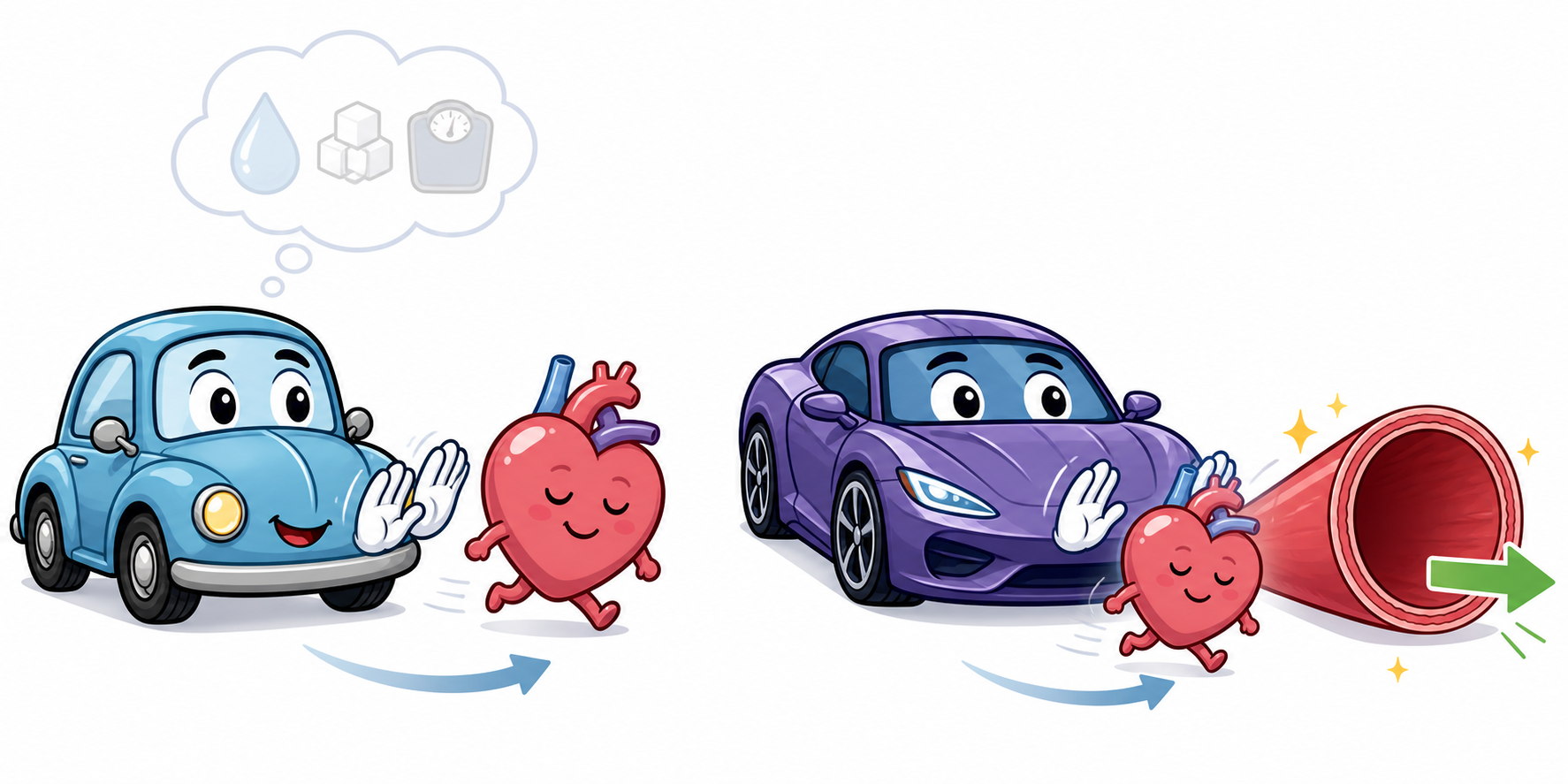
First and Second Generation (The Classics): Drugs like propranolol, atenolol, and metoprolol belong here. They are excellent at slowing the heart rate. However, they can sometimes cause metabolic side effects. For example, they can slightly decrease insulin sensitivity and increase the risk of developing diabetes over time. They also do not actively relax the blood vessels.
Third Generation (The Vasodilators): Newer drugs like carvedilol and nebivolol are different. In addition to slowing the heart, they actively cause vasodilation (vay-zo-dy-LAY-shun), meaning they force the blood vessels to relax and widen.
A 2012 update in Drugs of Today points out that these third-generation beta-blockers do not have the same negative effects on blood sugar or metabolism as the older drugs. Because they relax blood vessels, they are generally much better tolerated and are highly effective for a wider range of patients, including older adults who have stiff arteries.
Who Benefits Most from Beta-Blockers?
While they may not be the automatic first choice for everyone with slightly elevated blood pressure, beta-blockers remain the absolute gold standard for patients with specific overlapping health conditions.
A 2022 review in Hypertension emphasizes that treatment must be individualized. Beta-blockers are highly beneficial for:
- People with Heart Failure: For patients with weakened heart muscles, beta-blockers are lifesaving. By slowing the heart rate, they give the heart more time to fill with blood between beats and protect the muscle from being overworked by adrenaline.
- Heart Attack Survivors: A 1989 study in JAMA and decades of subsequent research confirm that beta-blockers help prevent second heart attacks and improve survival rates after a cardiac event.
- People with High Resting Heart Rates: If your high blood pressure is accompanied by a naturally fast heartbeat, a beta-blocker directly addresses both issues.
- Migraine Sufferers: Interestingly, certain beta-blockers like propranolol cross into the brain and are highly effective at preventing migraines. A 2008 review in Headache notes that for a young patient who has both migraines and high blood pressure, a beta-blocker can act as a “two-for-one” treatment.
Conversely, doctors exercise caution when prescribing traditional beta-blockers to individuals at high risk for diabetes, as older beta-blockers can mask the symptoms of low blood sugar and slightly impair glucose metabolism.
Related: The Science of Managing High Blood Pressure: What Actually Works
Common Misunderstandings About Beta-Blockers
Because these drugs have been around for over 50 years, several myths have developed around their side effects.
Myth: Beta-blockers cause severe depression.
Many people fear that because beta-blockers “slow things down,” they cause clinical depression. A 2019 review in The American Journal of Medicine investigated this and found that the risk is largely a myth. While they can cause fatigue, large-scale studies show no significant increase in depressive symptoms compared to placebos. The belief that they cause depression is often a “nocebo” effect, where expecting a side effect makes you feel it.
Myth: You cannot take beta-blockers if you have asthma.
Historically, doctors avoided beta-blockers in asthma patients because blocking beta-receptors in the lungs can theoretically trigger asthma attacks. However, modern “cardioselective” beta-blockers (which only target the heart) are much safer. While caution is still required, having mild lung issues no longer automatically disqualifies someone from receiving these drugs if their heart desperately needs them.
Myth: They always cause weight gain.
While older beta-blockers can cause a mild amount of weight gain (usually 2 to 4 pounds) by slightly lowering the resting metabolic rate, this is not a universal rule. Newer, vasodilating beta-blockers like carvedilol are generally weight-neutral.
Practical Guidance for Patients
If your doctor has prescribed a beta-blocker, the research highlights a few practical rules for success:
1. Do not stop them abruptly: This is the most critical rule of beta-blocker therapy. Over time, your body creates more beta-receptors to try and catch whatever adrenaline it can. If you suddenly stop the medication, your heart is flooded with adrenaline. A 2013 case report in the Journal of Hypertension detailed how abruptly stopping a beta-blocker can cause a dangerous spike in blood pressure and even trigger serious heart complications. Always taper off slowly under medical supervision.
2. Monitor your 24-hour coverage: A 1996 study of ambulatory blood pressure found that some “once-daily” beta-blockers do not actually control blood pressure for a full 24 hours. If you feel your heart racing in the morning before your next dose, tell your doctor. You may need a different formulation or a twice-daily dosing schedule.
3. Watch for fatigue during exercise: Because beta-blockers cap your maximum heart rate, you may feel unusually tired during intense workouts. This is normal, but if it severely impacts your quality of life, your doctor might adjust your dose or switch you to a newer generation drug.
The Bottom Line
Beta-blockers are no longer the automatic first choice for every single person with high blood pressure. For the average older adult with uncomplicated hypertension, other medications like calcium channel blockers or ACE inhibitors are usually better starting points.
However, beta-blockers remain incredibly powerful and necessary tools. If you are a younger adult with a hyperactive nervous system, if you suffer from migraines, or if you have an underlying heart condition like heart failure or a previous heart attack, beta-blockers are often the exact right medicine for the job. Furthermore, newer third-generation beta-blockers have eliminated many of the side effects that gave the older drugs a bad reputation.
Always discuss your specific medical history, age, and lifestyle with your doctor to determine if a beta-blocker is the right fit for your cardiovascular health.
Quick Reference: Key Studies
| Study Focus | Key Finding | Source |
|---|---|---|
| Hypertension Guidelines | JNC 8 guidelines removed beta-blockers as a first-line treatment for uncomplicated high blood pressure due to lower stroke protection compared to other classes. | PMID 26042879 |
| Age and Effectiveness | Beta-blockers are highly effective in younger/middle-aged patients with high sympathetic nerve activity, but less effective in older adults with stiff arteries. | PMID 27957711 |
| Drug Generations | Third-generation beta-blockers (carvedilol, nebivolol) cause vasodilation and avoid the negative blood sugar side effects of older drugs (atenolol). | PMID 20539838 |
| Misconceptions | Large meta-analyses show that beta-blockers do not significantly increase the risk of clinical depression, despite persistent myths. | PMID 30817899 |
| Withdrawal Risks | Abruptly stopping beta-blockers can cause severe rebound high blood pressure and cardiac complications. | PMID 23303357 |
Last updated: October 2026
This article synthesizes findings from peer-reviewed research. It is for educational purposes only and does not constitute medical advice. Consult a healthcare provider before starting any new regimen.
Leave a Reply