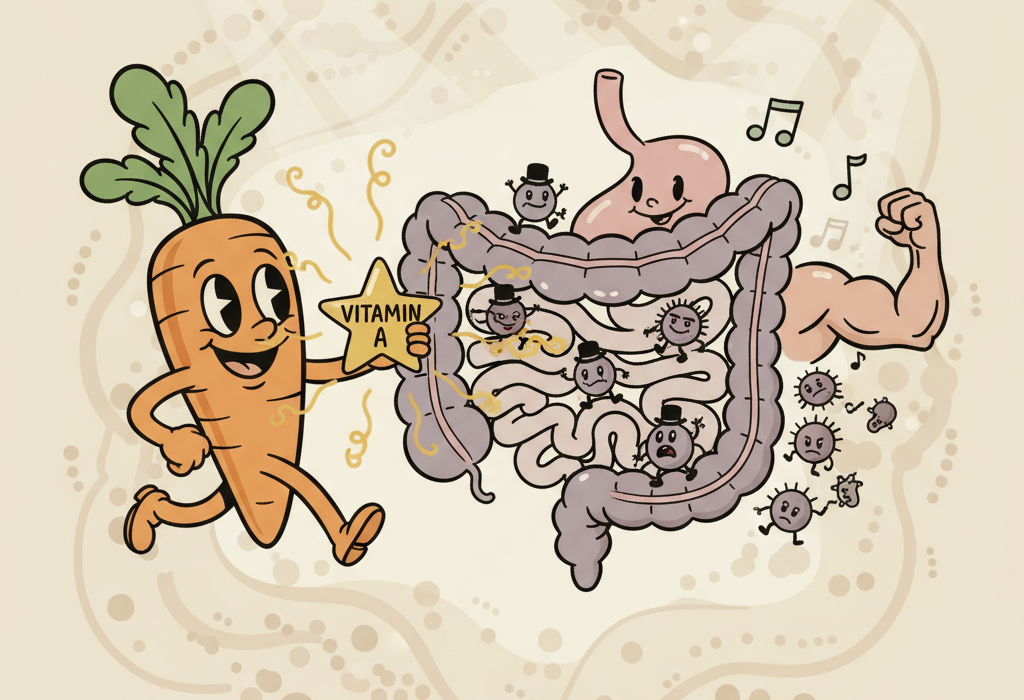
When most of us think about Vitamin A, we picture eating carrots for better eyesight. While it is true that Vitamin A is essential for vision, scientists are increasingly focusing on a completely different part of the body: your digestive system.
Recent research shows that Vitamin A and your gut bacteria share a complex, cooperative relationship. Your gut relies on Vitamin A to maintain a strong physical barrier and a calm immune system. At the same time, your body relies on specific gut bacteria to help convert the Vitamin A from your food into a form your cells can actually use.

This article explores how this essential nutrient and your microbiome work together, what happens when this system breaks down, and how it impacts everything from digestion to brain health.
The Core Tension: A Two-Way Street
To understand this topic, we first need to define two key concepts:
- Microbiome (MY-kroh-BY-ohm) – the community of trillions of bacteria, viruses, and fungi living in your digestive tract.
- Retinoic acid (RET-in-OH-ik AS-id) – the active, broken-down form of Vitamin A that your body’s cells can actually use to perform their jobs.
The core tension in this research is that simply eating enough Vitamin A is not always enough. If your gut microbiome is out of balance, your body may struggle to convert Vitamin A into retinoic acid. Conversely, if your diet lacks Vitamin A, your gut bacteria can shift into an unhealthy state, leading to inflammation and a weakened intestinal wall.
What the Research Shows
Scientists have studied the relationship between Vitamin A and gut health across multiple bodily systems. The findings show that this nutrient is a major manager of your body’s internal defenses.
Protecting the Gut Barrier and Immune System
Your intestinal lining is a barrier that absorbs nutrients while keeping harmful bacteria and toxins out of your bloodstream. A 2025 study in bioRxiv found that the gut microbiome actually directs the flow of Vitamin A. The bacteria signal the cells lining your gut to pass Vitamin A down to immune cells. These immune cells then use the Vitamin A to mature and learn how to protect the intestines without causing unnecessary inflammation.
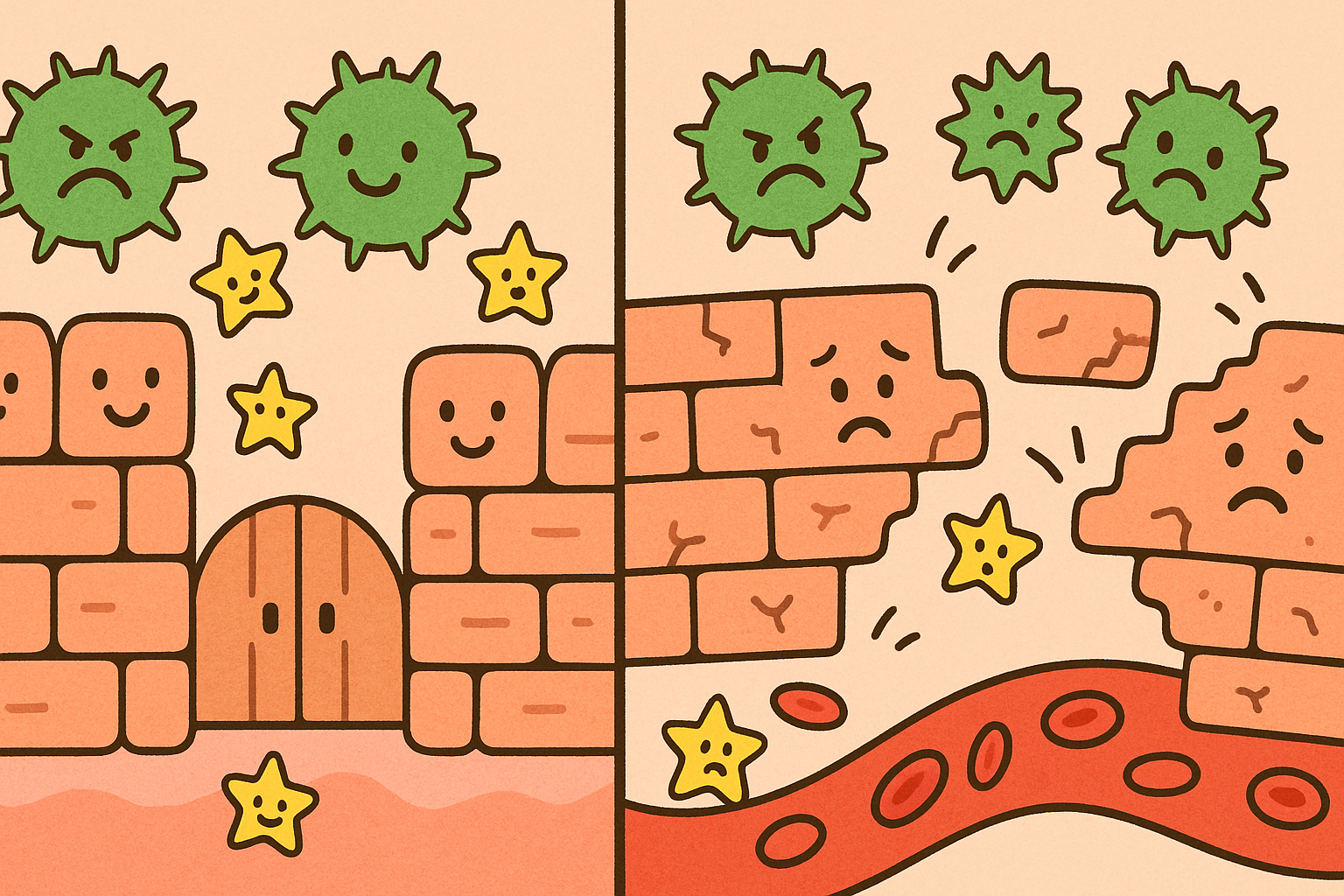
When this process works well, the gut barrier stays strong. When it fails, the barrier can become overly permeable. Related: What Science Actually Says About Leaky Gut and Your Health.
Specific types of beneficial bacteria play a direct role in this process:
Akkermansia muciniphila (AK-er-MAN-see-uh myoo-SIN-ih-fil-uh) – A 2024 study in Microbiome showed that live Akkermansia* bacteria boost the production of retinoic acid in immune cells. This helps the body produce healing proteins that repair the gut lining and reduce colitis (severe colon inflammation).
- Lactobacillus intestinalis (LAK-toh-buh-SIL-us in-TES-tin-al-is) – A 2023 study in Advanced Science found that this specific bacterium works directly with the host’s body to increase retinoic acid production, which suppresses inflammatory immune responses in the colon.
The Gut-Brain Connection: Alzheimer’s and Autism
What happens in the gut rarely stays in the gut. The health of your microbiome directly impacts your brain, a concept known as the gut-brain axis. Related: How Your Gut Microbiome Actually Affects Brain Health.
Research suggests that a lack of Vitamin A can worsen cognitive decline. A 2024 study in Frontiers in Nutrition looked at mice genetically prone to Alzheimer’s disease. The mice fed a Vitamin A-deficient diet had worse memory, higher levels of brain plaques, and higher levels of gut inflammation. They also had a less diverse gut microbiome. When the mice were given adequate Vitamin A, their gut bacteria diversity improved, and their cognitive decline slowed.
Another 2021 study in Frontiers in Aging Neuroscience confirmed these findings, showing that Vitamin A deficiency alters the gut microbiome (specifically reducing beneficial Lactobacillus bacteria) and directly worsens learning and memory deficits in Alzheimer’s models.
Furthermore, scientific reviews have explored the link between Vitamin A, the gut, and autism spectrum disorder (ASD). A 2025 review in Nutritional Neuroscience and a 2024 review in the Journal of Dietary Supplements both highlight that children with autism often experience distinct changes in their gut microbiome alongside lower levels of Vitamin A. While we cannot say that Vitamin A deficiency causes autism, the research suggests that inadequate Vitamin A during early development might influence the gut-brain axis in ways that affect neurological development.
Stress, Metabolism, and Whole-Body Health
Vitamin A also influences how your body manages energy and responds to stress.
A 2018 study in The Journal of Nutritional Biochemistry found that Vitamin A deficiency in mice completely altered their gut bacteria. The deficient mice had higher blood sugar, altered liver function, and a reduced ability to produce short-chain fatty acids (beneficial compounds created by gut bacteria). This suggests that without enough Vitamin A, the microbiome cannot properly assist the body in regulating metabolism.
Surprisingly, this gut-nutrient connection even extends to reproductive health. A 2026 study in Nature Communications discovered that chronic psychological stress damages the gut barrier and depletes beneficial Lactobacillus bacteria. This disruption stops the body from properly absorbing Vitamin A and Vitamin E, which ultimately leads to reduced male fertility. Supplementing with both the missing bacteria and the vitamins helped reverse the damage.
How This Might Work: The Fiber Connection
If you want your body to use Vitamin A effectively, you also need to eat dietary fiber.
A 2025 review in the American Journal of Physiology outlined exactly how this biological teamwork happens. When you eat fiber, your gut bacteria ferment it to create a compound called butyrate. Butyrate acts like a chemical key that unlocks specific genes in your intestinal cells. Once these genes are unlocked, your cells can produce the enzymes needed to convert dietary Vitamin A into active retinoic acid.
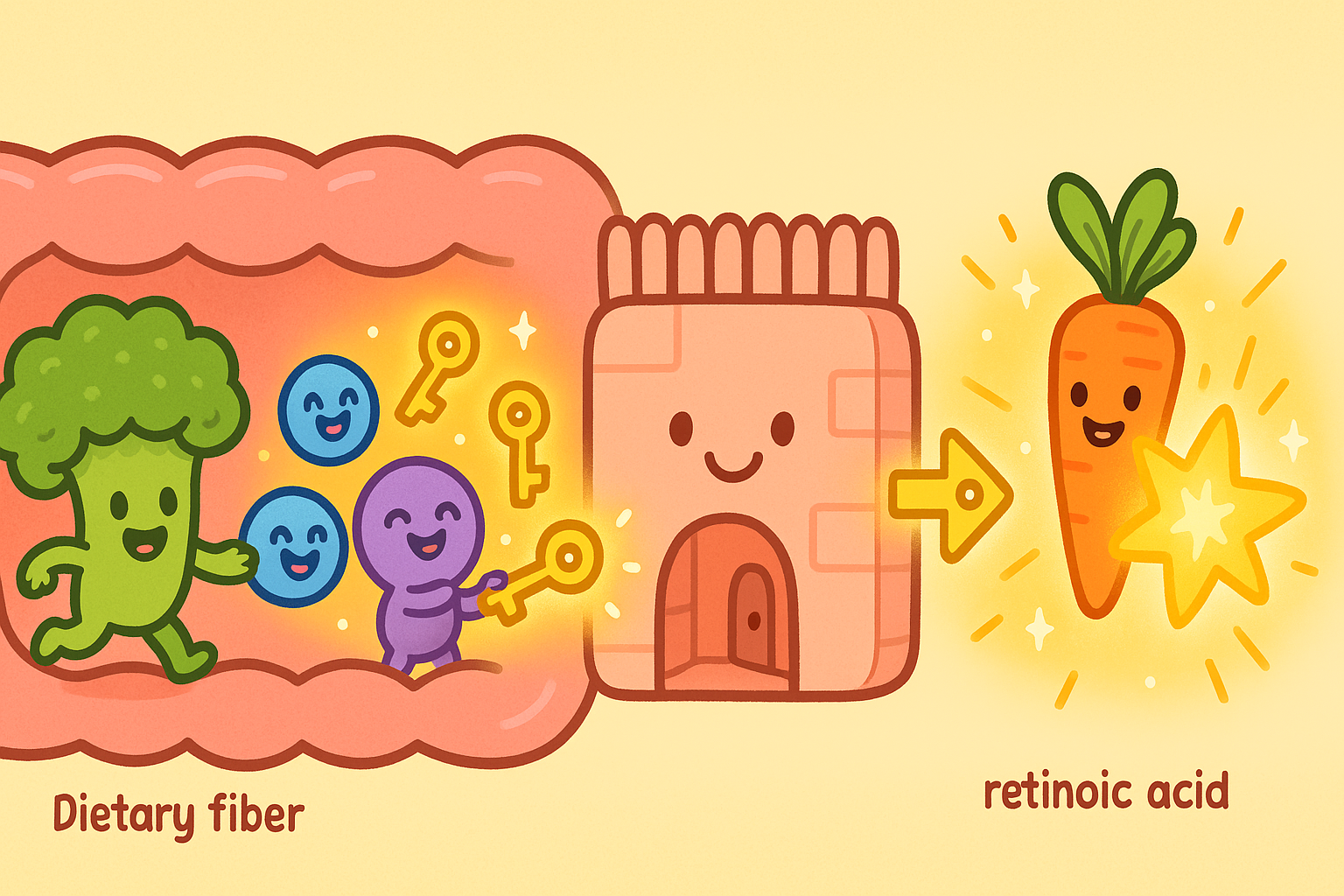
Without fiber, your bacteria cannot make butyrate. Without butyrate, your cells cannot process Vitamin A. Without active Vitamin A, your gut lining weakens, allowing inflammation to spread.
Who Benefits Or Needs Caution
Who might benefit:
- Individuals with inflammatory digestive issues may benefit from ensuring adequate Vitamin A intake, as it helps maintain the intestinal barrier.
- Older adults concerned about cognitive health may benefit from a diet rich in Vitamin A and fiber to support the gut-brain axis.
Who needs caution:
- Pregnant women: High doses of Vitamin A from supplements (specifically retinol) can be toxic and cause birth defects. Pregnant women should get their Vitamin A from whole foods (like beta-carotene in vegetables) and follow their doctor’s guidance.
- Supplement users: Vitamin A is a fat-soluble vitamin, meaning your body stores the excess in your liver. Taking high-dose supplements for a long time can lead to liver toxicity. It is generally safer to get Vitamin A from a varied diet.
Common Questions About Vitamin A and Gut Health
Can gut bacteria produce Vitamin A on their own?
No. Your body and your gut bacteria cannot create Vitamin A from scratch. You must get it from your diet (through animal products like liver and eggs, or plant products like sweet potatoes and spinach). However, your gut bacteria are essential for helping your body process and use the Vitamin A you eat.
Does Vitamin A heal a leaky gut?
Research shows that active Vitamin A (retinoic acid) is required to build “tight junctions.” Think of your gut lining like a brick wall; tight junctions are the mortar holding the bricks together. While Vitamin A alone is not a magic cure, a deficiency will make it very difficult for the gut lining to repair itself.
Should I take a Vitamin A supplement for my gut?
Most healthy people can get enough Vitamin A from a balanced diet. Because high doses of Vitamin A supplements can be toxic, it is best to focus on eating a mix of colorful vegetables, healthy fats, and fiber to support both your nutrient levels and your microbiome. Always consult a doctor before starting a new supplement.
The Bottom Line
Vitamin A and your gut microbiome are intimately connected. Your gut lining and immune system require Vitamin A to function properly and keep inflammation in check. At the same time, your body relies on a healthy community of gut bacteria (and the fiber they eat) to convert dietary Vitamin A into a usable form.
While we know that Vitamin A deficiency is strongly correlated with gut dysbiosis, increased inflammation, and worsened cognitive decline in animal models, more research is needed to understand exactly how targeted Vitamin A therapies might treat human diseases. For now, the most evidence-based approach to supporting this system is maintaining a diet rich in both fiber and diverse sources of Vitamin A.
Quick Reference: Key Studies
| Study Focus | Key Finding | Source |
|---|---|---|
| Stress, Gut, and Fertility | Chronic stress depletes Lactobacillus, impairing Vitamin A absorption and leading to male infertility. | PMID 42103725 |
| Alzheimer’s and Gut Health | Vitamin A deficiency worsens cognitive decline, brain plaques, and gut dysbiosis in Alzheimer’s mouse models. | PMID 38606018 |
| Immune System Regulation | The gut microbiome directs Vitamin A to immune cells, helping them mature and protect the intestinal lining. | PMID 40964372 |
| Akkermansia and Colitis | Live Akkermansia bacteria boost retinoic acid production in immune cells, reducing colon inflammation. | PMID 39734222 |
| Fiber and Vitamin A Synergy | Dietary fiber helps gut bacteria produce butyrate, which is required for the body to properly process Vitamin A. | PMID 40796226 |
| Metabolism and Blood Sugar | Vitamin A deficiency alters the gut microbiome, leading to higher blood sugar and altered energy metabolism. | PMID 29227833 |
Last updated: October 2026
This article synthesizes findings from peer-reviewed research. It is for educational purposes only and does not constitute medical advice. Consult a healthcare provider before starting any new regimen.



Leave a Reply