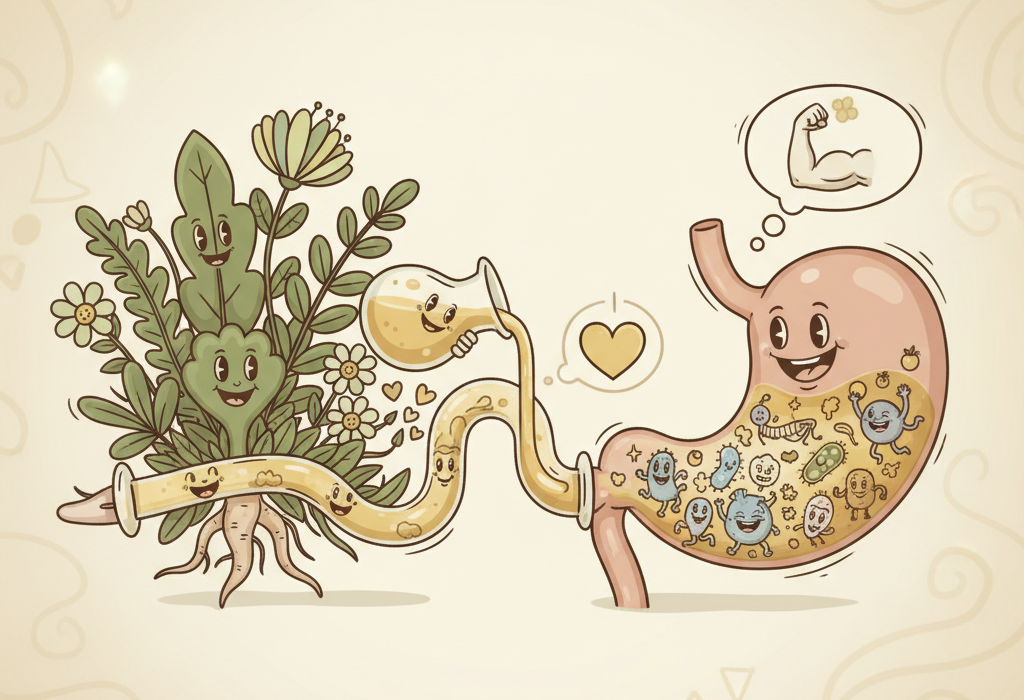
When you take a herbal supplement or drink a cup of medicinal tea, you might assume the active ingredients travel straight into your bloodstream. However, science reveals a much more complex journey. Before most plant compounds can affect your body, they must first pass through your digestive system, where they interact with trillions of resident bacteria.
Recent research reveals that herbal medicine and the digestive system have a bidirectional relationship. This means they influence each other. Herbs can change the balance of bacteria in your gut. At the same time, your gut bacteria act like a chemical processing plant, breaking down plant compounds into forms your body can actually use.
If you want to understand What Science Actually Says About Herbal Medicine Benefits, you have to look at the gut. This article explores how plant compounds and gut bacteria interact, how this relationship affects metabolic and brain health, and what current research reveals about this biological partnership.
What the Research Shows
Scientists have studied the relationship between plant-based medicines and digestive bacteria across various conditions, from obesity to sleep disorders. The research highlights a few clear patterns in how these two systems interact.
The “Unseen Pharmacist” Effect
Many plant compounds are naturally difficult for the human body to absorb. In their raw form, they simply pass through the digestive tract.
A 2022 review in the International Journal of Environmental Research and Public Health describes the gut microbiome as an “unseen pharmacist.” The bacteria in our intestines perform chemical reactions that our own bodies cannot do. This process is called biotransformation (bye-oh-trans-for-MAY-shun), which is when living organisms change a chemical into a different, often more active, form.

For example, ginseng contains compounds called ginsenosides. On their own, these compounds are poorly absorbed. However, specific gut bacteria break them down into a new molecule called Compound K. It is actually Compound K that provides many of the health benefits associated with ginseng. If a person lacks the right bacteria to make this conversion, the herb may be less effective for them.
Similarly, curcumin, the main compound in turmeric, is notoriously hard for the body to absorb. Gut bacteria convert curcumin into a different molecule called tetrahydrocurcumin, which is more easily absorbed and used by the body.
Metabolic Health, Obesity, and Diabetes
Metabolic conditions like obesity and type 2 diabetes are closely linked to the health of the digestive tract. A 2023 review in Frontiers in Endocrinology notes that people with these conditions often have an imbalance in their gut bacteria. This imbalance is known as dysbiosis (dis-bye-OH-sis).
Herbal medicines appear to help correct this imbalance. For instance, studies on green tea show that its active compounds, known as catechins, act as a food source for beneficial bacteria. A 2021 review in Molecules found that green tea compounds stimulate the growth of bacteria like Bifidobacterium and Akkermansia. These specific bacteria are associated with healthier body weights and better blood sugar control.
Additionally, a 2019 study in Nature Communications investigated Pu-erh tea, a traditional fermented tea. The researchers found that a specific compound in the tea called theabrownin changed the gut bacteria in both mice and humans. The tea suppressed specific bacteria that interfere with bile acids. By changing the bacterial balance, the tea helped the body process cholesterol more efficiently, leading to reduced cholesterol levels in the blood and liver.
The Gut-Brain and Gut-Kidney Connections
The effects of this herbal-bacterial partnership extend far beyond the stomach.
A 2024 study in Archives of Pharmacal Research explored how herbal medicines might help with neurodegenerative conditions like Alzheimer’s and Parkinson’s disease. The researchers noted that herbs can reduce inflammation in the gut, which in turn reduces inflammation in the brain. This supports How the Gut-Brain Connection Actually Works: What the Latest Science Says. By promoting healthy bacteria, herbs help maintain a strong intestinal barrier, preventing harmful toxins from leaking into the bloodstream and triggering systemic inflammation.
Similarly, a 2025 study in Medicine looked at the gut-kidney axis. The researchers found that certain gut bacteria are directly linked to the risk of chronic kidney disease. They identified that specific herbal medicines, such as Fructus Aurantii, can target these exact bacteria, potentially reducing the burden on the kidneys by lowering the amount of toxins produced in the gut.
Improving Sleep and Insomnia
Surprisingly, the gut microbiome may even play a role in how herbal medicines improve sleep. A 2024 clinical trial in Frontiers in Cellular and Infection Microbiology tested two traditional Chinese herbal formulas on patients with insomnia.
After four weeks, the patients reported significantly better sleep. When researchers analyzed the patients’ digestive bacteria, they found that the herbal treatments had enriched beneficial bacteria (like Bacteroides coprophilus) and reduced markers of systemic inflammation. The study suggests that the sleep improvements were directly tied to these microbial shifts.
How This Might Work
Scientists believe herbal medicines and the gut microbiome interact through a few primary mechanisms:
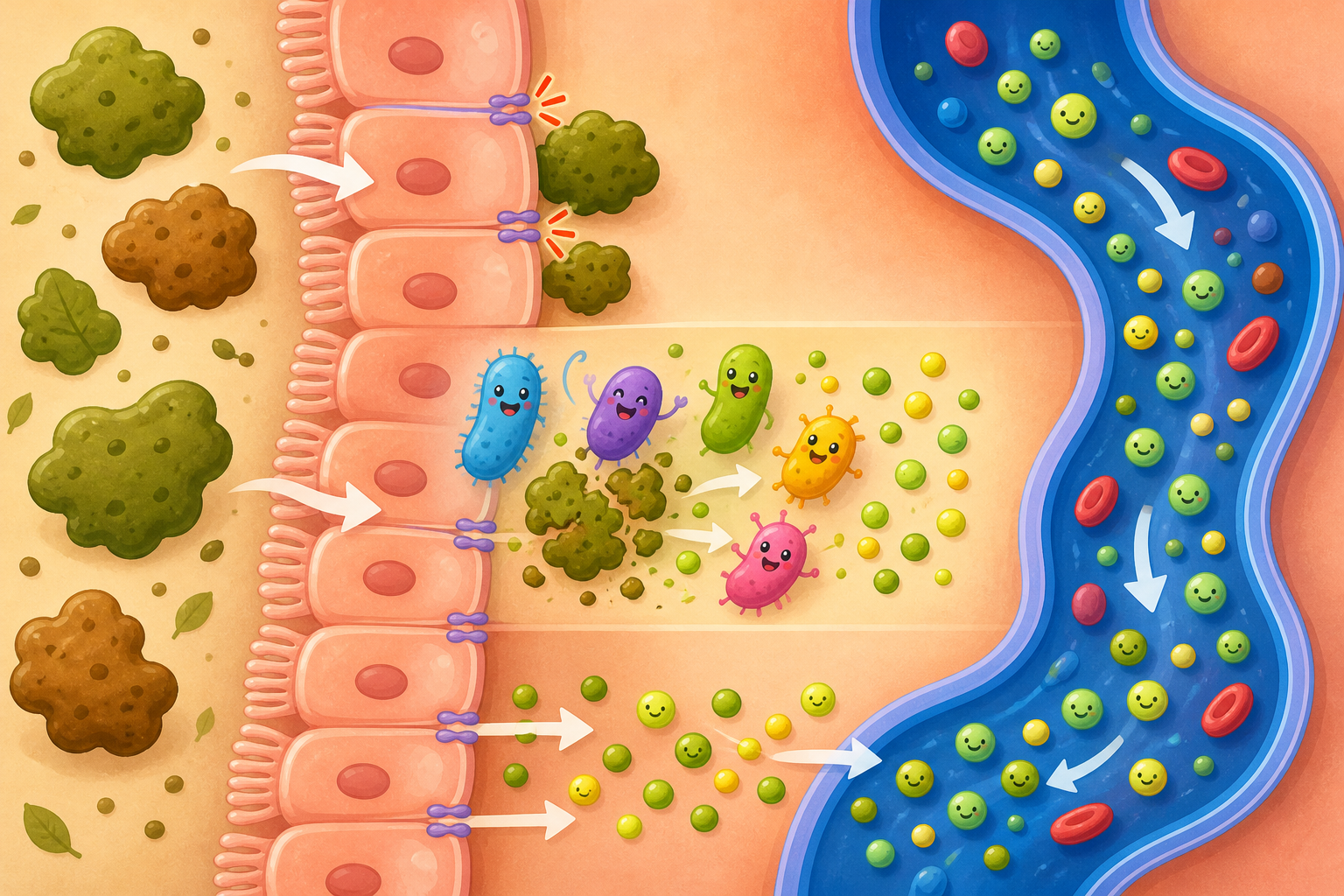
- Producing Short-Chain Fatty Acids (SCFAs): When gut bacteria digest certain herbal compounds, they produce SCFAs. These are tiny energy molecules that nourish the cells lining the colon. SCFAs help reduce inflammation and keep the intestinal barrier strong.
- Acting as Selective Antimicrobials: Some herbal compounds act like mild, selective antibiotics. A 2022 review in Frontiers in Cellular and Infection Microbiology notes that plant compounds can inhibit the growth of harmful, disease-causing bacteria while leaving beneficial bacteria unharmed.
- Improving Bioavailability: Bioavailability (bye-oh-uh-vay-luh-BIL-uh-tee) refers to how much of a substance actually enters your bloodstream. By breaking down large, complex plant molecules into smaller pieces, gut bacteria make it possible for the human body to absorb and use the medicine.
This connects to How Your Gut Microbiome and Oxidative Stress Control Your Health, as a healthy bacterial balance prevents oxidative damage to cells.
Where The Science Is Still Uncertain
While the connection between herbal medicine and gut bacteria is well-documented, there are still significant gaps in our understanding.
First, because every person has a highly unique gut microbiome, herbal medicines do not work the same way for everyone. If you lack the specific bacteria needed to break down a certain herb, you may not get the same benefit as someone else. Personalized medicine based on individual microbiome testing is still in its early stages.
Second, much of the detailed mechanism research has been conducted in test tubes or animal models (like mice). While human trials are increasing, animals and humans have different digestive systems and bacterial communities. Results from a mouse study do not always translate perfectly to human health.
Common Questions About Herbal Medicine and Gut Health
Do everyday teas actually change gut bacteria?
Yes. Studies show that drinking green tea, black tea, or Pu-erh tea on a regular basis can alter the balance of bacteria in your digestive tract, usually by increasing beneficial bacteria and reducing harmful ones.
Do I need a healthy gut for herbal medicines to work?
To some extent, yes. Because your gut bacteria are responsible for activating many plant compounds, a severely imbalanced microbiome might make certain herbal supplements less effective.
The Bottom Line
Scientific research shows that herbal medicines and the gut microbiome rely on each other. Herbs provide nutrients that help beneficial bacteria thrive while suppressing harmful microbes. In return, these bacteria process the herbs into active compounds that the human body can absorb and use.
Current evidence suggests this partnership plays a role in managing weight, controlling blood sugar, reducing systemic inflammation, and even improving sleep. However, because everyone’s microbiome is unique, the effectiveness of herbal treatments can vary from person to person. As research continues, scientists hope to better understand exactly which bacteria process which herbs, potentially leading to highly personalized natural treatments.
Quick Reference: Key Studies
| Study Focus | Key Finding | Source |
|---|---|---|
| Pu-erh Tea and Cholesterol | Theabrownin in Pu-erh tea reduces cholesterol by altering gut microbes and changing bile acid metabolism. | PMID 31672964 |
| Herbal Formulas and Insomnia | Traditional herbal decoctions improved sleep quality in humans while simultaneously altering gut bacteria profiles. | PMID 38817449 |
| Green Tea and Microbiome | Green tea compounds (EGCG) stimulate beneficial bacteria like Bifidobacterium and increase SCFA production. | PMID 34206736 |
| Biotransformation of Herbs | Gut bacteria act as an “unseen pharmacist,” breaking down poorly absorbed herbs (like ginseng) into usable compounds. | PMID 36293657 |
| Gut-Brain Axis and Herbs | Herbal medicines may help neurodegenerative diseases by reducing gut inflammation and altering microbial metabolites. | PMID 38225532 |
| Colorectal Cancer Prevention | Herbal bioactive products improve microbiota composition and repair the intestinal barrier, reducing cancer risk factors. | PMID 36051242 |
Last updated: November 2026
This article synthesizes findings from peer-reviewed research. It is for educational purposes only and does not constitute medical advice. Consult a healthcare provider before starting any new regimen.
Leave a Reply