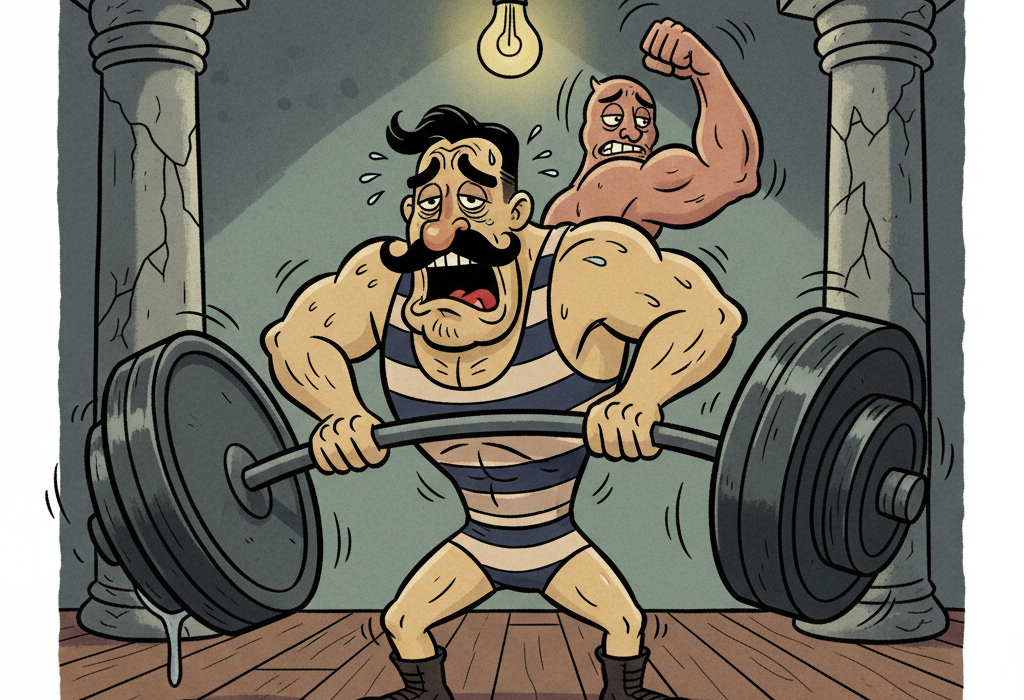
Have you ever wondered why your muscles shake during a heavy set of squats, or why you feel completely drained the day after a hard workout? For decades, gym culture has promoted the idea of “no pain, no gain.” Many people believe that to build muscle and get stronger, you must push your body to the absolute limit until your muscles fail.
However, modern sports science tells a different story. Research shows that pushing to total muscle failure causes prolonged fatigue that can take up to 72 hours to resolve. More importantly, you do not need to exhaust your muscles completely to see significant improvements in strength and size.
This article explores what actually happens when your muscles get tired, how long it takes to recover, and what the latest research says about optimizing your workouts.
What is Neuromuscular Fatigue?
When we talk about feeling tired from exercise, scientists use the term neuromuscular fatigue (ner-oh-MUS-kyoo-ler fuh-TEEG). This simply means a temporary drop in your ability to produce physical force.
Fatigue is not just one thing. It is actually a combination of two different processes happening in your body at the same time:
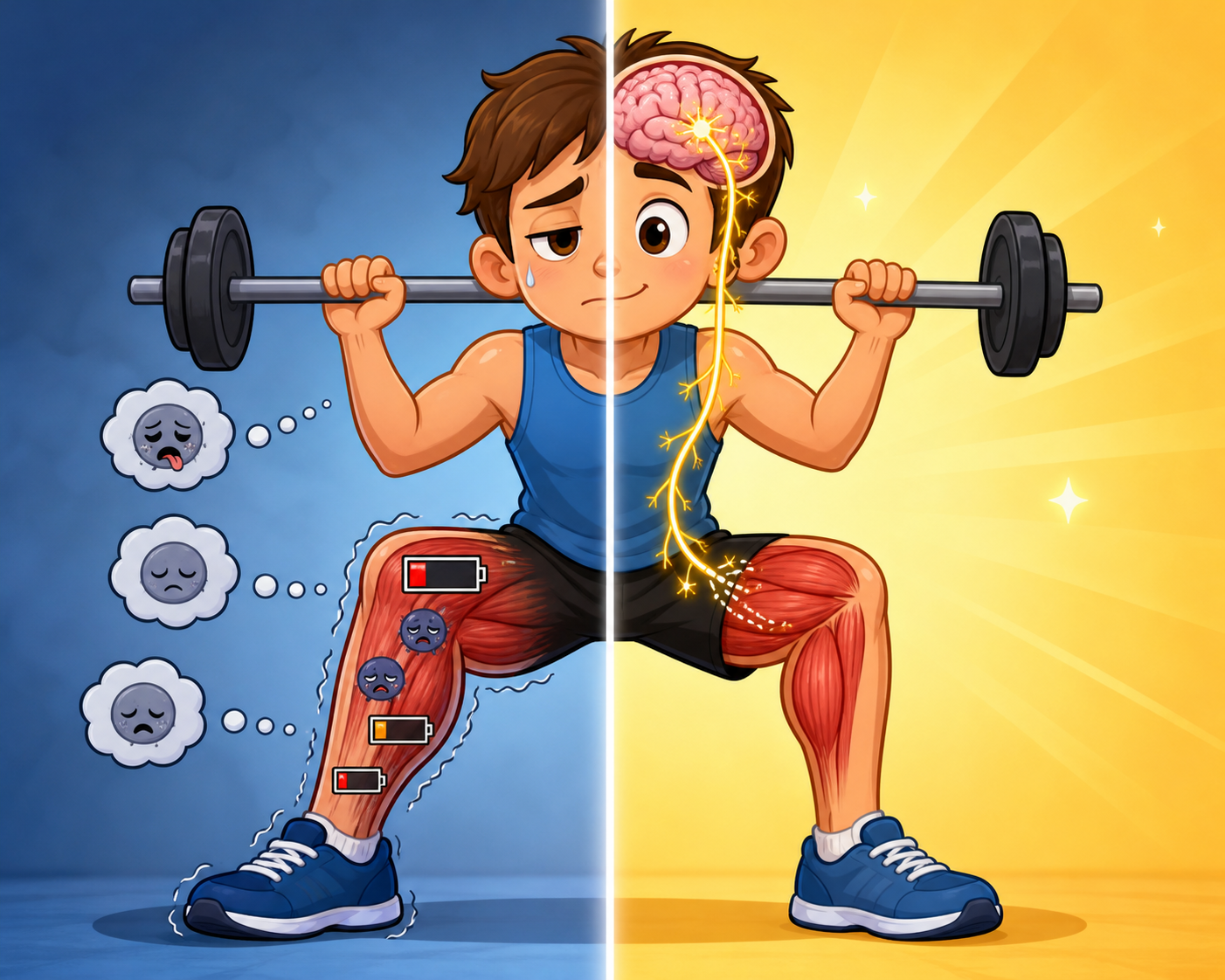
- Peripheral fatigue: This happens directly in the muscle itself. As you lift weights, your muscles use up local energy stores and accumulate by-products like lactic acid. The muscle fibers physically struggle to keep contracting.
- Central fatigue: This happens in your central nervous system (SEN-trul NER-vus SIS-tum), which includes your brain and spinal cord. Your brain sends electrical signals to your muscles telling them to move. During a hard workout, the brain essentially gets tired of sending these signals, and the messages become weaker.
A 2018 study in Medicine and Science in Sports and Exercise looked closely at these two types of fatigue. Researchers tested athletes after heavy strength training, jump training, and sprint training. They found that all three types of exercise caused both central and peripheral fatigue.
Interestingly, the central fatigue (the brain’s ability to signal the muscles) recovered relatively quickly, usually within 24 to 48 hours. However, the peripheral fatigue (the local muscle exhaustion) took up to 72 hours to fully resolve.
Related: The Science of Post-Exercise Recovery: What Actually Works
Does Training to Failure Build More Muscle?
One of the biggest debates in fitness is whether you need to train to failure. Training to failure means lifting a weight until you physically cannot complete another repetition with good form.
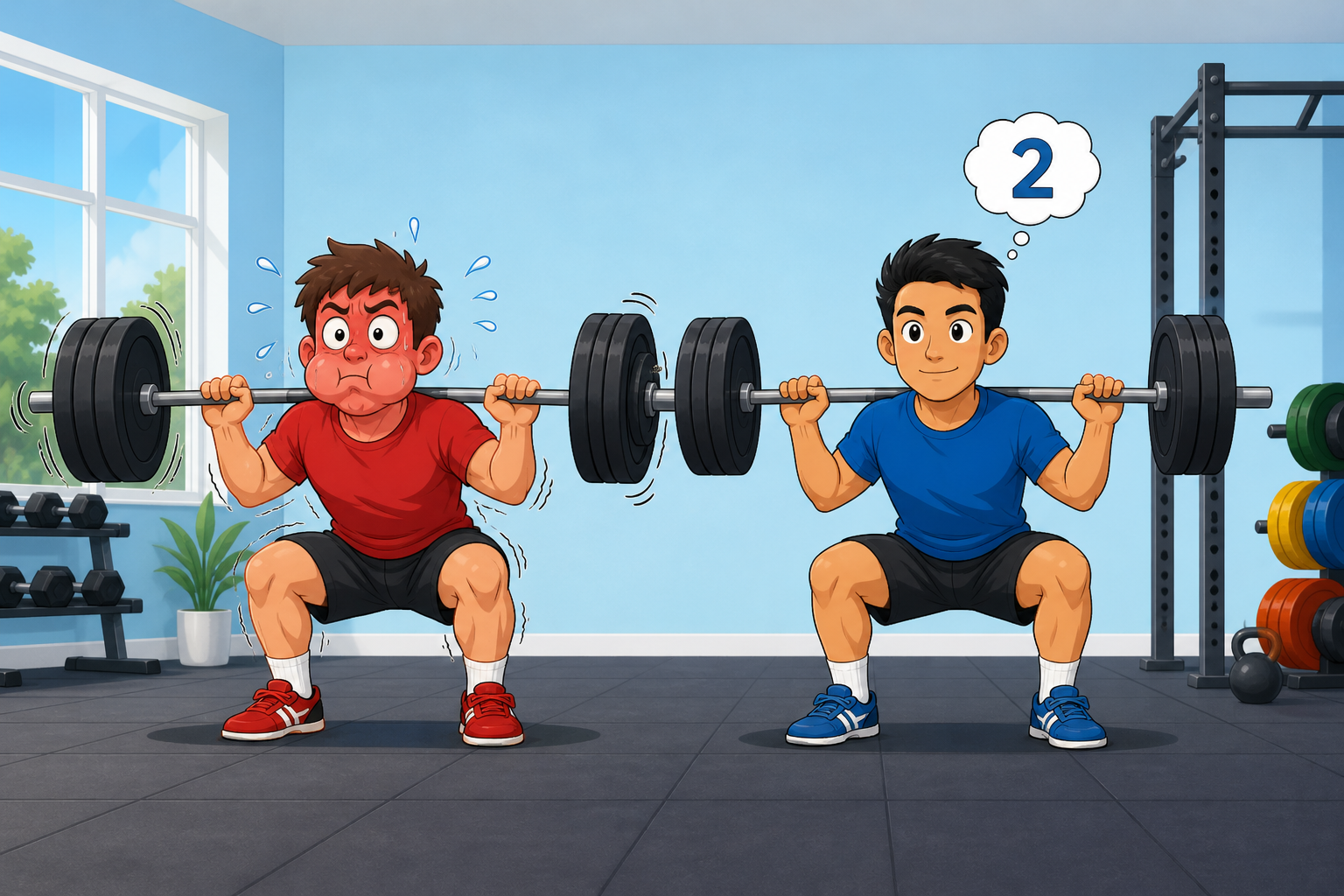
Scientists measure how close you are to failure by looking at “velocity loss.” As your muscles get tired during a set, the speed at which you lift the weight naturally slows down. A 2011 study in Medicine and Science in Sports and Exercise confirmed that this loss of speed is a highly accurate way to measure both muscle fatigue and metabolic stress.
To see if training to failure is necessary, researchers compared two different approaches to squat training in a 2020 study in Medicine and Science in Sports and Exercise.
- Group 1 (20% Velocity Loss): Stopped their sets when their lifting speed dropped by 20%. This meant they left several repetitions “in the tank.”
- Group 2 (40% Velocity Loss): Pushed their sets until their lifting speed dropped by 40%. This meant they trained very close to total muscle failure.
What the Research Shows
The results were revealing. Both groups gained the same amount of maximum strength. The group that stopped early (20% velocity loss) actually saw better improvements in athletic performance, such as vertical jump height.
The group that trained to failure (40% velocity loss) did experience slightly more hypertrophy (hi-PER-truh-fee), which is the scientific term for muscle growth. However, this extra muscle growth came at a high cost. The failure group experienced negative changes in their nervous system and a loss of fast-twitch muscle fibers, which are responsible for quick, explosive movements.
A similar 2017 study in the Scandinavian Journal of Medicine & Science in Sports confirmed these findings. The researchers noted that the group stopping at a 20% speed loss achieved similar strength gains while doing 40% less total work than the failure group.
While training to failure can stimulate muscle growth, it is not required for getting stronger. For most people, stopping a few repetitions short of failure provides excellent results while avoiding excessive stress on the body.
How Long Does It Take to Recover from Weightlifting?
Recovery is just as important as the workout itself. If you train a muscle again before it has recovered, you limit your progress and increase your risk of injury.
A 2017 study in the European Journal of Applied Physiology tracked how long it takes the body to bounce back from different types of workouts. The researchers compared training to failure against training that stopped short of failure.
They found that training to failure caused a massive disruption to the body’s hormones and metabolism. Markers of muscle damage and fatigue remained elevated for a long time. The researchers concluded that training to failure significantly slows down recovery, requiring up to 48 to 72 hours before the nervous system and muscles are back to normal.
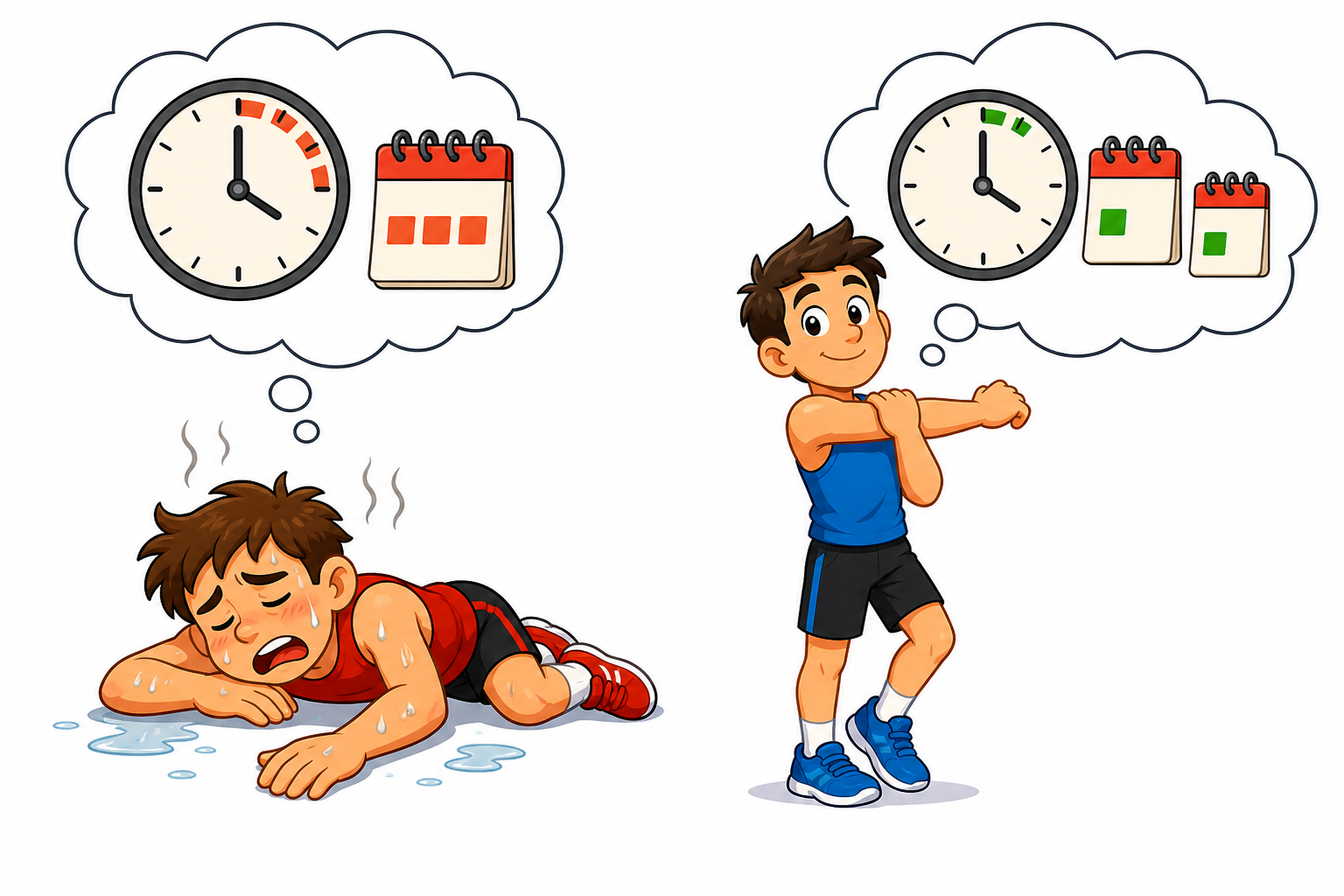
By avoiding total failure, athletes were able to recover their strength and energy much faster, usually between 24 and 48 hours. This faster recovery allows for more frequent, high-quality training sessions.
How Often Should You Train a Muscle?
If recovery takes 24 to 72 hours, how often should you train? A 2016 review in Sports Medicine analyzed multiple studies to find the optimal training frequency for muscle growth.
The review concluded that training a major muscle group twice a week produces superior muscle growth compared to training it only once a week. Because stopping short of failure allows you to recover faster, it makes training muscles twice a week much more manageable.
Related: The Science of Weight Training: How Resistance Exercise Changes Your Body
Practical Guidance: Tracking Fatigue Without Fancy Equipment
Professional athletes use lasers and computers to measure the exact speed of their lifts. Fortunately, you do not need expensive equipment to track your fatigue.
Research shows that simple self-rating scales are highly effective. A 2025 study in Sensors found that a person’s Rating of Perceived Exertion (RPE) strongly matches the actual physical fatigue measured by force sensors.
Another common method is Repetitions in Reserve (RIR). This simply means estimating how many more repetitions you could do before failing. A 2025 study in the Journal of Strength and Conditioning Research compared using RPE and RIR against traditional percentage-based training. The researchers found that using RPE and RIR helped lifters avoid accidental failure, maintained better training volume, and resulted in less overall soreness.
To apply this to your own workouts:
- Aim for an RPE of 7 or 8 out of 10 for most of your sets.
- Aim to leave 2 to 3 Repetitions in Reserve (RIR) at the end of a set.
Does Repetition Speed Matter?
Some fitness programs suggest lifting weights very slowly to increase the “time under tension” for the muscles. Does this actually help?
A 2015 review in Sports Medicine looked at how repetition duration affects muscle growth. The researchers found that muscle growth is very similar whether a single repetition takes 0.5 seconds or up to 8 seconds to complete.
However, the review noted that intentionally lifting very slowly (taking more than 10 seconds per repetition) is actually inferior for muscle growth. Lifting that slowly forces you to use very light weights, which fails to properly stimulate the muscle fibers required for maximum growth. For the best results, control the weight on the way down, and lift it with a normal, natural speed on the way up.
How Nutrition and Supplements Impact Muscle Fatigue
Proper nutrition plays a massive role in how quickly you recover from muscle fatigue. Several supplements have been heavily researched for their ability to speed up this process.
Creatine Monohydrate
Creatine is a naturally occurring compound that helps your muscles produce energy during heavy lifting. A 2025 trial in the Journal of the International Society of Sports Nutrition tested the effects of short-term creatine use on resistance-trained men.
The researchers found that just three days of creatine supplementation significantly increased the number of repetitions the men could perform. It also reduced their cardiovascular stress and accelerated the recovery of their muscle strength between workout days.
Related: Does Creatine Actually Work? What Science Says About Muscle, Brains, and Aging
Whey Protein
Protein is the building block of muscle tissue. A 2018 review in Nutrients examined how whey protein affects the recovery of muscle function after strength training. The analysis showed that consuming whey protein helped restore muscle contractility and strength between 24 and 96 hours after a tough workout.
Collagen Peptides
Collagen is a protein that supports connective tissues like tendons and ligaments. A 2024 review in Nutrients found that specific low-molecular-weight collagen peptides (2000-3500 daltons) can help mitigate the stress and muscle damage caused by strenuous exercise. Supplementing with collagen may help athletes recover their strength faster and reduce post-workout soreness.
Special Populations: Strength Training and Cancer Recovery
Muscle fatigue is not just a concern for athletes. It is a major issue for individuals undergoing medical treatments, such as chemotherapy.
A 2017 study in the Journal of Cachexia, Sarcopenia and Muscle looked at breast cancer patients receiving different treatments. The research found that patients undergoing chemotherapy experienced up to 25% lower leg strength and significantly faster muscle fatigue compared to healthy women.
However, strength training can be a powerful tool for recovery. A 2025 study in the FASEB Journal found that women with breast cancer who participated in heavy-load strength training during chemotherapy saw improvements in their cardiovascular fitness, muscle enzymes, and overall quality of life. This highlights that properly managed strength training is safe and highly beneficial, even during intense medical treatments.
The Bottom Line / Takeaways
Understanding how your muscles fatigue and recover is the key to building a safe, effective workout routine. Here is what we know based on the current science:
- Failure is not required: You do not need to push your muscles to total failure to build strength or size. Stopping 2 to 3 repetitions short of failure provides excellent results.
- Recovery takes time: Heavy workouts cause both central (brain) and peripheral (muscle) fatigue. Total recovery can take up to 72 hours, especially if you train to failure.
- Frequency matters: Training a muscle group twice a week yields better muscle growth than training it once a week.
- Speed is flexible: Lifting at a natural, controlled pace (0.5 to 8 seconds per repetition) is optimal. Super-slow lifting is less effective.
- Nutrition helps: Supplements like creatine and whey protein have strong evidence supporting their ability to reduce fatigue and speed up strength recovery.
By managing your fatigue and focusing on consistent, high-quality efforts rather than complete exhaustion, you can make steady progress while keeping your body healthy and resilient.
Quick Reference: Key Studies
| Study Focus | Key Finding | Source |
|---|---|---|
| Velocity Loss & Hypertrophy | Stopping sets before failure (20% velocity loss) gives similar strength gains and better jump performance than training to failure (40% velocity loss). | PMID 32049887 |
| Recovery Timelines | Training to failure significantly slows down recovery of metabolic and hormonal markers, requiring up to 48-72 hours. | PMID 28965198 |
| Central vs. Peripheral Fatigue | Heavy strength training causes prolonged peripheral (muscle) fatigue lasting up to 72 hours, while central (brain) fatigue recovers faster. | PMID 30067591 |
| Training Frequency | Training major muscle groups twice a week promotes superior muscle growth compared to training them once a week. | PMID 27102172 |
| Repetition Duration | Muscle growth is similar across repetition durations ranging from 0.5 to 8 seconds. Very slow lifting (>10 seconds) is inferior. | PMID 25601394 |
| Creatine & Recovery | Short-term creatine use (3 days) enhances strength, reduces cardiovascular stress, and speeds recovery in trained men. | PMID 41579075 |
| Whey Protein & Recovery | Whey protein supplementation helps restore muscle contractile function between 24 and 96 hours after resistance training. | PMID 29462923 |
Last updated: November 2026
This article synthesizes findings from peer-reviewed research. It is for educational purposes only and does not constitute medical advice. Consult a healthcare provider before starting any new regimen.
Leave a Reply