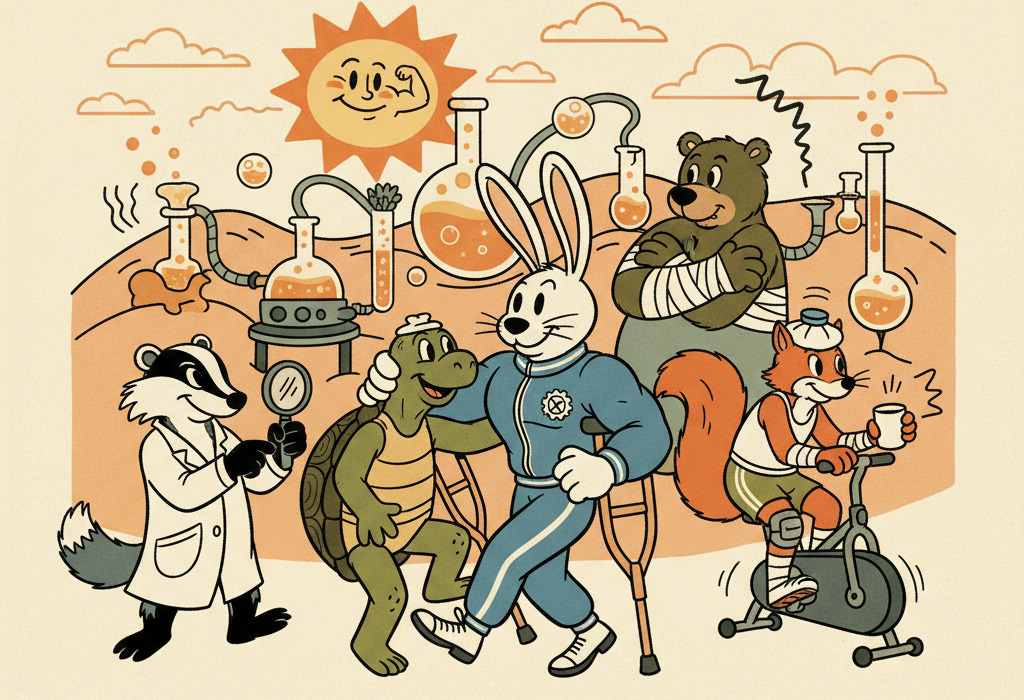
Understanding Athletic Injury Recovery
Few things are more frustrating for an active person than getting sidelined by an injury. Whether it is a rolled ankle from a weekend soccer game or a strained hamstring from training, the immediate question is always the same: how fast can I get back to normal?
For decades, the standard advice for athletic injury recovery was simple. We were told to rest, apply ice, and wait. However, modern sports science paints a very different picture. Recovery is not a passive waiting game. It is a highly active biological process. Your body is essentially running a construction site, tearing down damaged tissue and laying down new cellular scaffolding.
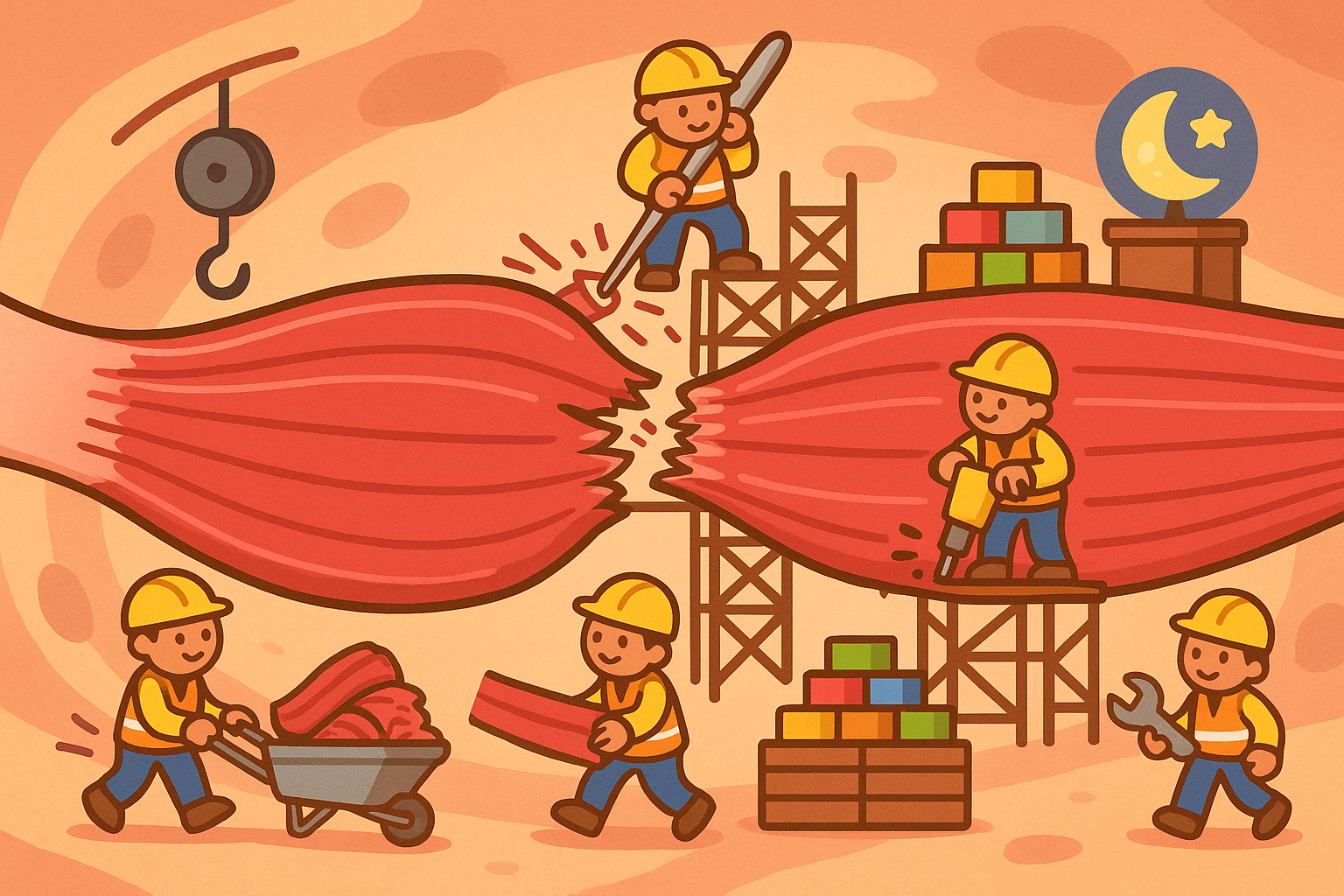
To do this efficiently, your body requires specific mechanical signals, exact nutritional building blocks, high-quality sleep, and even psychological readiness. When any of these elements are missing, recovery slows down, and the risk of getting hurt again goes up.
This article synthesizes the latest peer-reviewed research on how the body actually heals from sports injuries and what science says you can do to support that process.
What the Research Shows About Healing
The Myth of Complete Rest
When you pull a muscle or sprain a joint, your instinct might be to avoid moving it entirely. While immediate protection is necessary, prolonged rest can actually do more harm than good.
A 2007 review in Best Practice & Research: Clinical Rheumatology looked closely at how skeletal muscle heals. The researchers found that a short period of immobilization, usually just 3 to 7 days, is highly beneficial. It allows the initial bleeding to stop and gives the new scar tissue enough strength to hold the torn muscle fibers together.
However, resting beyond this brief window causes problems. Prolonged rest leads to muscle shrinkage and creates dense, stiff scar tissue. The research shows that starting early, pain-free movement actually helps the new muscle fibers align correctly. Movement acts like a physical blueprint, telling the new cells exactly how they need to line up to handle future stress.
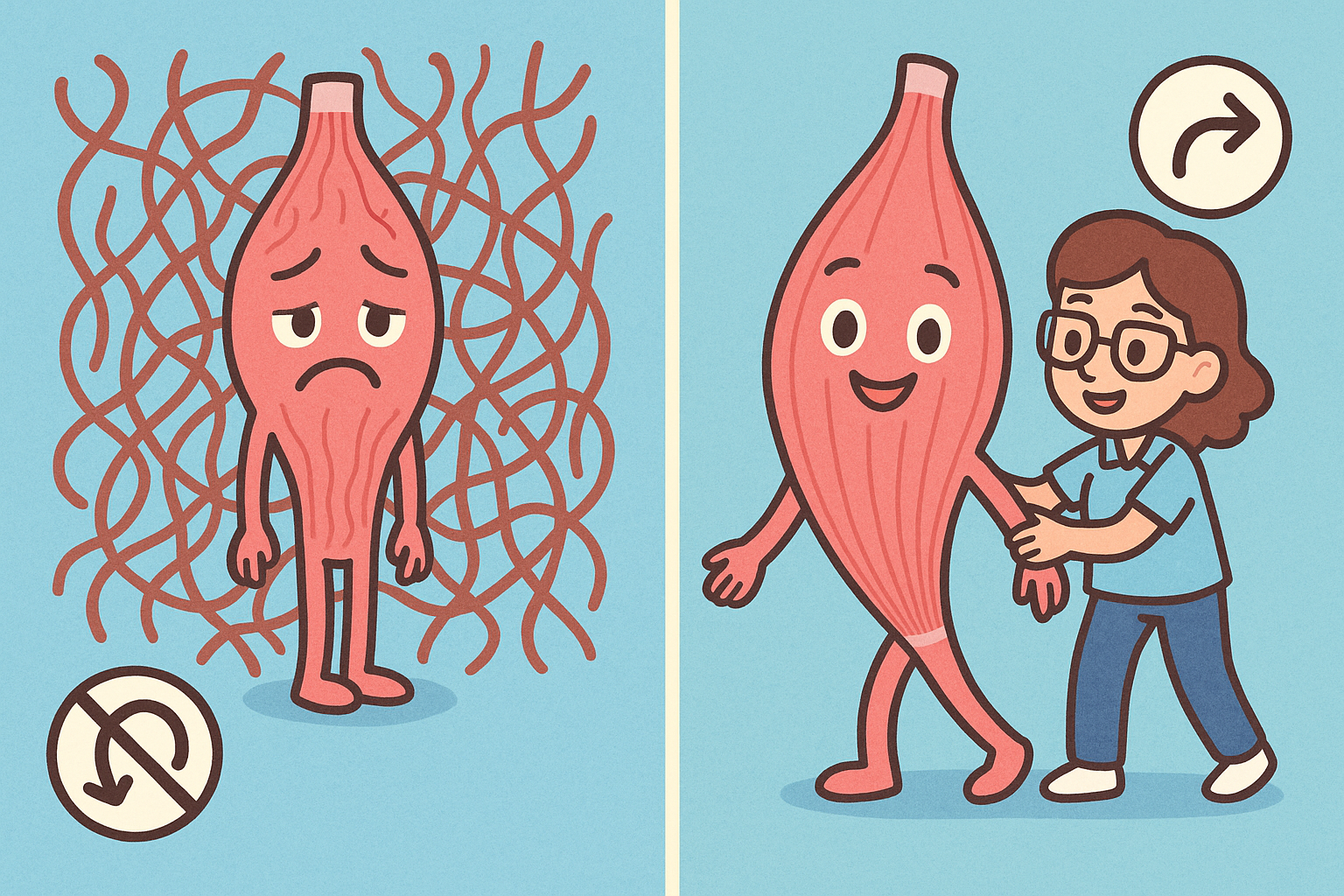
This principle applies to ligaments as well. A 2016 study in Clinics in Sports Medicine on medial collateral ligament (MCL) injuries in the knee found that non-operative treatment with early range-of-motion exercises yields excellent outcomes for partial tears. The key is progressing based on specific physical milestones rather than just waiting a set number of weeks.
Nutrition as a Repair Tool
Healing damaged tissue requires a massive amount of energy and raw materials. Many athletes make the mistake of drastically cutting their calories when they get injured because they are no longer exercising.
Research published in Nutrients in 2020 highlights a phenomenon called Anabolic resistance (an-uh-BOL-ik ree-ZIS-tuhns). This is when your body becomes less efficient at using dietary protein to build and repair muscle due to physical inactivity. To overcome this resistance, injured athletes actually need slightly more protein than usual. The researchers recommend 1.6 to 2.5 grams of protein per kilogram of body weight, spread evenly across four to six meals a day. Each meal should contain 20 to 35 grams of protein to trigger the muscle-building process.
Related: Not All Protein Is Created Equal: What Your Body Actually Absorbs
Different tissues also require different nutrients:
- Muscle Injuries: Require consistent protein pacing and adequate calories. Amino acids, specifically leucine, are critical for signaling the body to build new muscle.
- Tendon and Ligament Injuries: Tendons have poor blood supply, making them notoriously slow to heal. A 2019 review in the International Journal of Sport Nutrition and Exercise Metabolism found that consuming 15 grams of gelatin or hydrolyzed collagen alongside Vitamin C about an hour before rehabilitation exercises can double the rate of collagen synthesis in the body.
- Bone Injuries: Stress fractures are common in sports with heavy running or jumping. Research indicates that low energy availability (not eating enough calories to support your activity level) is a primary driver of bone injuries. Ensuring adequate calcium, Vitamin D, and total daily calories is essential for bone repair.
The Hidden Role of Sleep
Sleep is perhaps the most powerful, yet most neglected, recovery tool available. During deep sleep, the pituitary gland releases growth hormone, which is responsible for tissue regeneration and repair.
A 2017 study in Pediatric Annals found that adolescent athletes who sleep less than 8 hours per night are 1.7 times more likely to suffer an injury compared to those who sleep 8 hours or more.
Furthermore, a 2020 review in Sleep Medicine Clinics detailed how sleep deprivation directly impairs recovery. Lack of sleep decreases the body’s ability to replenish muscle glycogen (stored energy), increases the perception of physical effort, and alters the immune system. When you are sleep-deprived, your body enters a pro-inflammatory state, which can disrupt the normal timeline of tissue healing.
The Brain-Body Connection in Recovery
Physical healing is only half of the equation. The psychological impact of an injury plays a massive role in whether an athlete successfully returns to their sport.
A 2024 review in Sports Health explored how mental health affects injury outcomes. The researchers noted that athletic injury frequently triggers symptoms of depression and anxiety. In turn, these mental health challenges are associated with prolonged recovery times and a higher risk of getting hurt again.
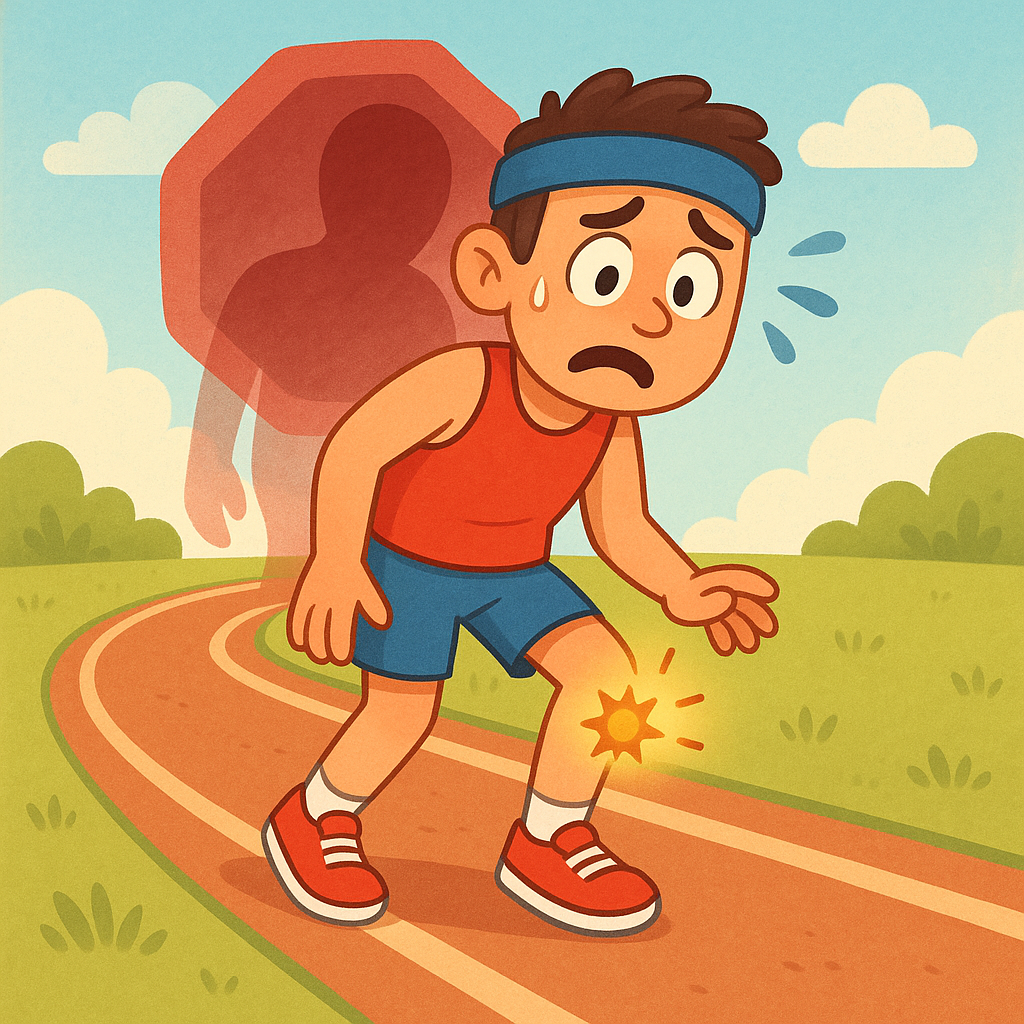
One specific psychological barrier is Kinesiophobia (kin-EE-see-oh-FOE-bee-uh), which is the fear of movement or reinjury. A 2025 systematic review focusing on ACL reconstruction recovery found that kinesiophobia significantly impedes an athlete’s ability to return to sport. Even if the knee is physically fully healed, the brain may subconsciously alter the athlete’s biomechanics to protect the joint. This altered movement pattern places unusual stress on other parts of the body, ironically increasing the risk of a new injury.
Related: Cortisol and Stress: What Science Actually Shows About the HPA Axis
Common Questions About Athletic Recovery
Does prolonged rest help concussions heal faster?
Historically, people with concussions were placed in dark rooms with zero stimulation until their symptoms disappeared. Recent science strongly contradicts this approach. A 2018 clinical review in the Annals of Internal Medicine highlights that while 1 to 2 days of physical and cognitive rest is beneficial, strict prolonged rest actually delays recovery. After the first 48 hours, a gradual, symptom-guided return to light cognitive and physical activity helps the brain recalibrate better than total isolation.
Is stretching the best way to heal a pulled hamstring?
While stretching feels good, it is not the most effective way to rehabilitate a hamstring strain. A 2010 study in The Journal of Orthopaedic and Sports Physical Therapy found that programs focusing on progressive agility and trunk stabilization resulted in significantly fewer reinjuries compared to programs that only focused on stretching and basic strengthening. Furthermore, introducing Eccentric contractions (ek-SEN-trik kun-TRAK-shun), where the muscle lengthens while under tension, helps the healing muscle fibers absorb force better.
Do injectable peptides like BPC-157 speed up recovery?
Injectable peptides have become highly popular in fitness communities for injury recovery. A 2025 review in Arthroscopy noted that while early animal and laboratory research on peptides like BPC-157 shows promise for tissue repair and reduced inflammation, there is currently a severe lack of high-quality human clinical trials. Furthermore, these substances remain largely unregulated. While they may represent the future of regenerative medicine, the science is still in its infancy.
Practical Guidance for Optimizing Recovery
Based on the synthesis of current research, here are evidence-based steps to support injury recovery:
1. Prioritize Protein Pacing: Do not drastically drop your calorie intake. Eat 20 to 35 grams of high-quality protein every 3 to 4 hours to prevent muscle loss and support tissue repair.
2. Use Strategic Loading: For tendon and ligament injuries, consider consuming 15 grams of gelatin or collagen with Vitamin C one hour before your physical therapy exercises to maximize collagen production.
3. Protect Your Sleep Window: Treat sleep as a medical intervention. Aim for 8 to 10 hours of quality sleep per night. Keep the room cool and avoid screens before bed to allow natural melatonin production.
4. Address the Mental Game: Recognize that frustration, anxiety, and fear of reinjury are normal biological responses to trauma. Working with a sports psychologist or using guided imagery can help bridge the gap between physical healing and mental readiness.
5. Move Safely, Early: After the initial 3 to 7 days of protecting the injury, begin gentle, pain-free movement as guided by a physical therapist.
Where The Science Is Still Uncertain
While we know much more about recovery today than we did twenty years ago, several areas remain uncertain.
The use of Platelet-Rich Plasma (PRP) injections is heavily debated. A 2019 review in the Journal of the American Academy of Orthopaedic Surgeons noted that while leukocyte-poor PRP shows some potential to hasten recovery in specific hamstring muscle belly injuries, results across other types of injuries are highly mixed. It is not a guaranteed cure-all.
Additionally, while the science on collagen supplementation for tendon health is very promising, researchers are still working to determine the exact optimal dosing and timing for different populations, such as older adults versus teenagers.
The Bottom Line
Recovering from a sports injury is a complex, active process. The evidence clearly shows that prolonged, complete rest is rarely the best answer. Instead, the fastest and safest path back to full performance involves a combination of early, guided movement, adequate calorie and protein intake, prioritized sleep, and psychological support. By giving your body the right building blocks and the right mechanical signals, you can help direct the healing process and lower your risk of future injuries.
Quick Reference: Key Studies
| Study Focus | Key Finding | Source |
|---|---|---|
| Muscle Healing | Short immobilization (3-7 days) followed by early mobilization optimizes muscle fiber regeneration and limits scarring. | PMID 17512485 |
| Rehab Nutrition | Injured athletes require 1.6-2.5 g/kg/day of protein, spaced evenly, to overcome anabolic resistance and prevent muscle loss. | PMID 32824034 |
| Tendon Repair | Consuming 15g of gelatin with Vitamin C before exercise can significantly increase collagen synthesis for tendon healing. | PMID 30676133 |
| Sleep & Injury | Adolescent athletes sleeping less than 8 hours per night are 1.7 times more likely to suffer a sports injury. | PMID 28287684 |
| Psychology & ACL | Kinesiophobia (fear of reinjury) significantly impedes return to sport and alters biomechanics after ACL reconstruction. | PMID 39041333 |
| Concussion Rest | Prolonged strict rest delays concussion recovery; 1-2 days of rest followed by gradual symptom-guided activity is superior. | PMID 29971425 |
| Hamstring Rehab | Progressive agility and trunk stabilization exercises reduce hamstring reinjury rates better than isolated stretching. | PMID 20118524 |
Last updated: May 2026
This article synthesizes findings from peer-reviewed research. It is for educational purposes only and does not constitute medical advice. Consult a healthcare provider before starting any new regimen.
Leave a Reply