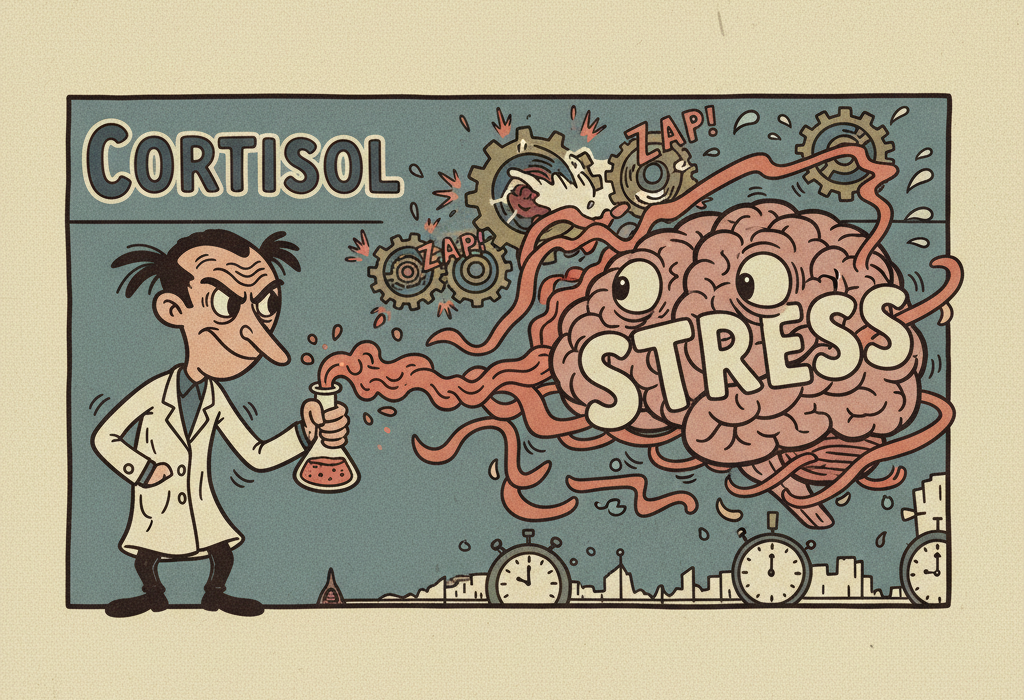
When you experience a sudden scare, like a car swerving into your lane, you feel an immediate physical reaction. Your heart races, your muscles tense, and your breathing quickens. This is your body’s alarm system at work, and a hormone called cortisol is one of the main drivers of this response.
For years, wellness articles have painted cortisol as the ultimate enemy of good health. We are told that stress equals high cortisol, and high cortisol equals weight gain, fatigue, and disease. However, the scientific reality is much more nuanced.
Modern research shows that stress does not always lead to high cortisol. In fact, chronic stress can actually cause your body to produce less cortisol over time. Furthermore, your mindset, your relationships, and even your partner’s stress levels can physically alter how your body manages this vital hormone.
Let us explore what peer-reviewed science actually says about cortisol, how our bodies adapt to stress, and what we can do to support our hormonal health.
Understanding the Body’s Stress Thermostat
To understand stress, we first need to understand the system that controls it.
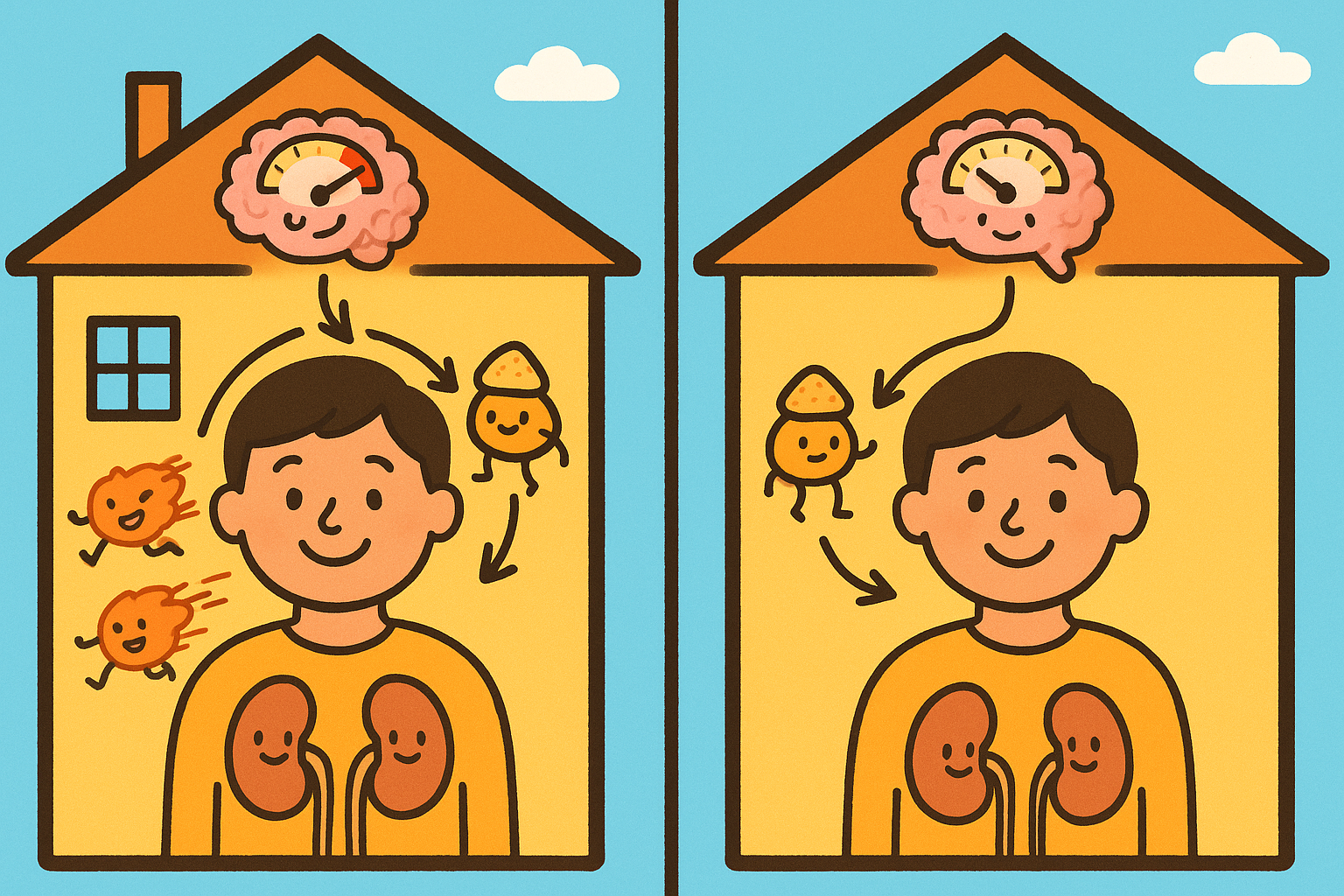
Your body manages stress through the HPA axis (Hy-poh-thuh-LAM-ik Pih-TOO-ih-tair-ee Uh-DREE-nul ak-sis). This is a communication network between your brain (the hypothalamus and pituitary gland) and your adrenal glands, which sit on top of your kidneys.
Think of the HPA axis like a thermostat in a house.
- When the brain senses a threat, it turns the thermostat up, signaling the adrenal glands to release Cortisol (KOR-tuh-zawl).
- Cortisol floods your bloodstream, mobilizing glucose (sugar) for immediate energy, suppressing your digestive and immune systems, and preparing you to fight or flee.
- Once the threat passes, cortisol levels drop, and the thermostat returns to a normal, resting state.
Under normal conditions, cortisol follows a predictable daily rhythm. It spikes sharply in the first hour after you wake up. This is called the Cortisol awakening response (KOR-tuh-zawl uh-WAYK-en-ing ree-SPONS), and it helps you feel alert and ready for the day. Throughout the afternoon and evening, cortisol gradually drops, reaching its lowest point at midnight so you can sleep. This gradual decline is known as your Diurnal slope (dy-ER-nul SLOPE).
Does Stress Always Raise Cortisol?
The short answer is no. How your body reacts to stress depends heavily on whether the stress is acute (short-term) or chronic (long-term).
Acute Stress Spikes Cortisol
When you face a temporary challenge, your cortisol reliably spikes. However, the body is highly adaptable. A 2023 study in Acta medica academica monitored women undergoing elective Caesarean sections. Researchers found that women having their first C-section had significantly higher cortisol levels before, during, and after the birth compared to women having their second C-section. Because the second group knew what to expect, their bodies initiated a much smaller stress response.
Chronic Stress Can Blunt Cortisol
If the HPA axis is a thermostat, chronic stress is like leaving the heat running with the windows open. Eventually, the system breaks down.
When people face relentless, long-term stress, their bodies often adapt by turning the volume down on cortisol production. This is known as a “blunted” cortisol response.
For example, a 2025 study in The journals of gerontology looked at midlife and older parents caring for children with developmental disabilities. The researchers found that on days when these parents experienced higher-than-average daily stressors, their morning cortisol spike was actually blunted. Their bodies, exhausted by years of chronic stress, stopped mounting a normal morning hormonal response.
Similarly, a 2020 study in Stress measured chronic stress by analyzing cortisol trapped in fingernail clippings of young adults. The researchers found that Indigenous adults who reported a high number of severe, chronic stressful life events actually showed lower fingernail cortisol levels than those facing fewer stressors.
Related: What Blood Tests for Inflammation Actually Tell Us About Your Health
Comparing Acute vs. Chronic Stress Responses
| Stress Type | Example | Typical Cortisol Response | Health Impact |
|---|---|---|---|
| Acute | Taking a difficult exam, giving a speech | Sharp spike, followed by a quick return to normal | Adaptive and healthy; provides energy and focus |
| Chronic | Long-term caregiving, systemic adversity | Blunted morning spike, flattened daily curve | Maladaptive; linked to fatigue and inflammation |
How Your Mindset Changes Your Hormones
It is not just what happens to you that dictates your cortisol response, but how you perceive it.
In a fascinating 2020 study in Hormones and behavior, researchers brought young women into a lab to perform a highly stressful public speaking and math task. Before the test, researchers randomly gave the women either positive or negative bogus feedback about their natural stress-coping abilities.
The women who were told they had “excellent” coping skills (creating a positive expectancy) approached the task feeling less threatened. Biologically, this positive mindset paid off. These women showed better heart rate variability (a sign of a calm nervous system) and produced significantly less cortisol during the stress test compared to the women who were given negative feedback.
Furthermore, our underlying biology shapes how we perceive stress in the first place. A 2025 study in Psychoneuroendocrinology found that in young men, baseline levels of testosterone and cortisol actively changed how stressful they found a psychosocial task to be. Hormones influence our mindset, and our mindset influences our hormones.
Stress is Contagious: The Relationship Factor
We often view stress as an individual problem, but research shows that our HPA axis is deeply connected to the people around us.
A 2020 study in Psychoneuroendocrinology monitored the cortisol levels of 43 married couples throughout the day. The couples were asked to engage in a 20-minute discussion about a source of marital conflict. The results were striking:
- If a person had a highly stressed partner, their own daily cortisol slope became flatter and less healthy.
- If the couple used negative behaviors during the argument (like rolling their eyes or withdrawing), the person with the stressed partner had significantly higher cortisol levels for up to four hours after the fight.
- However, if the couple used positive behaviors (like active listening or humor), the partner’s stress did not cause a cortisol spike.
Just as relationships can trigger stress, they can also buffer it. A 2021 study in Stress followed college women through a stressful final exam period. Researchers found that before the students’ cortisol levels spiked in response to the exams, their bodies produced a steep surge of oxytocin. Oxytocin is a hormone associated with social bonding and calm. The women with higher oxytocin levels experienced more positive emotions and actually performed better on cognitive tests, suggesting that the body uses social bonding hormones to protect the brain “when the going gets tough.”
How Chronic Stress Might Fuel Inflammation
Why does a blunted cortisol response matter? It comes down to how cortisol interacts with your immune system.
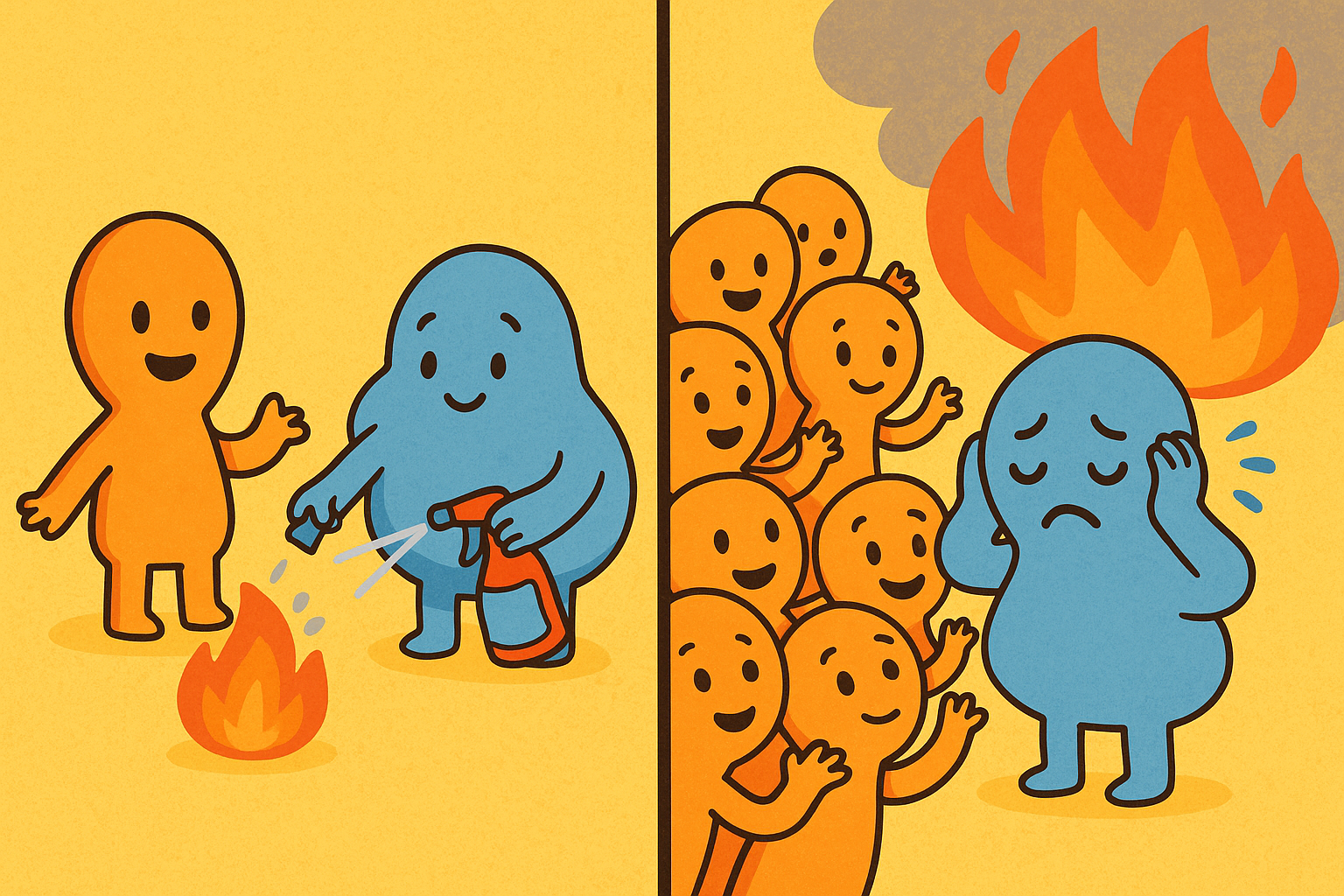
Cortisol is a natural anti-inflammatory. When you get a cut or an infection, cortisol helps keep the resulting inflammation from getting out of control. However, a 2021 review in Brain and behavior explains that during periods of chronic stress, the body is bathed in cortisol for so long that the immune system eventually stops listening to it.
This is called Cortisol resistance (KOR-tuh-zawl ree-ZIS-tuhns). When the immune system ignores cortisol, inflammation is allowed to run wild. This unchecked inflammation can cross into the brain, causing “sickness behaviors” like social withdrawal, loss of appetite, and extreme fatigue. This mechanism helps explain why chronic stress is so closely linked to depression and anxiety.
Related: How an Anti-Inflammatory Diet Actually Affects Your Body
Can Supplements Lower Cortisol?
Because high stress is so common, many people turn to supplements to help manage their cortisol levels. One of the most popular is Ashwagandha, an herb used in traditional Ayurvedic medicine.
A 2023 systematic review in Nutrients analyzed clinical trials involving Ashwagandha supplementation. The review found that taking Ashwagandha for 30 to 112 days consistently decreased plasma cortisol levels by 11 to 32 percent in stressed individuals, with very few short-term side effects.
However, the researchers issued a strong caution. Because Ashwagandha actively lowers cortisol, long-term use without medical supervision could potentially lead to adrenal hypofunction. This means the body might struggle to produce enough cortisol when it actually needs it, such as during a severe illness or infection.
Related: What Science Actually Says About Herbal Medicine Benefits
Where The Science Is Still Uncertain
While the link between everyday stress and cortisol is becoming clearer, the impact of severe early life stress (ELS) remains highly complex.
A large 2018 meta-analysis in Hormones and behavior examined dozens of studies on childhood trauma and adult cortisol levels. Surprisingly, they found no universal pattern. Some individuals with early life stress showed heightened cortisol responses, while others showed severely blunted responses. The researchers concluded that how ELS affects the body depends heavily on the specific type of trauma, the age it occurred, and whether the individual developed a psychiatric condition later in life. There is no “one size fits all” hormonal response to trauma.
Common Questions About Cortisol and Stress
Why do I feel tired all the time when I am stressed?
While acute stress gives you a burst of energy, chronic stress can flatten your daily cortisol curve. Without a healthy morning cortisol spike, you may wake up feeling exhausted, and a flattened daytime curve can leave you feeling drained all day.
Can doctors measure chronic stress?
Yes. While blood and saliva tests only show your cortisol levels at that exact moment, researchers can now measure cortisol trapped in hair and fingernails. Because nails and hair grow slowly, they provide a biological “receipt” of your cortisol production over several months.
Does all stress cause weight gain?
Not necessarily. While high cortisol can increase appetite and prompt the body to store visceral fat around the abdomen, chronic stress can also cause a blunted cortisol response and loss of appetite in some individuals. The physical response to stress is highly individualized.
The Bottom Line
Cortisol is not inherently bad. It is a vital hormone that provides energy, focus, and immune regulation when we face immediate challenges.
The true danger lies in chronic stress. When we endure long-term systemic stress, relationship conflict, or unresolved trauma, our HPA axis can become exhausted. This often leads to a flattened daily cortisol curve, a blunted stress response, and widespread inflammation.
However, the research also offers hope. By fostering a positive mindset, leaning on supportive social connections, and practicing healthy conflict resolution, we can actively help our bodies regulate cortisol and build resilience against the challenges of daily life.
Quick Reference: Key Studies
| Study Focus | Key Finding | Source |
|---|---|---|
| Acute vs. Repeated Stress | Mothers having a second C-section showed a significantly lower cortisol response than those having their first. | PMID 37933508 |
| Mindset and Expectancy | Believing you have good stress-coping skills reduces the actual cortisol produced during a stressful task. | PMID 31639385 |
| Marriage and Cortisol | Having a highly stressed partner flattens your daily cortisol curve, especially if negative behaviors are used during conflict. | PMID 32853875 |
| Chronic Stress Blunting | Indigenous young adults facing high systemic stress and adversity showed lower fingernail cortisol levels. | PMID 31651211 |
| Ashwagandha | Short-term supplementation (30-112 days) reduced cortisol by 11-32%, but long-term unmonitored use is cautioned against. | PMID 38140274 |
| Oxytocin and Stress | Naturalistic stress (like exams) triggers an oxytocin surge that helps buffer stress and improve cognitive accuracy. | PMID 33632072 |
| Early Life Stress | A meta-analysis found high heterogeneity in how childhood trauma affects adult cortisol, depending on trauma type and age. | PMID 29289660 |
Last updated: May 2026
This article synthesizes findings from peer-reviewed research. It is for educational purposes only and does not constitute medical advice. Consult a healthcare provider before starting any new regimen.
Leave a Reply