
Walk down any skincare aisle, and you will see hyaluronic acid on almost every label. It is marketed as the ultimate solution for dry, aging, or tired skin. But does applying this ingredient to your face actually do anything, or is it just clever marketing?
The short answer is yes, hyaluronic acid is highly effective at hydrating the skin. However, the science is much more nuanced than a typical product label suggests.
Hyaluronic acid (hy-al-yuh-RON-ic AS-id) is a naturally occurring sugar molecule in your body that acts like a microscopic moisture magnet. It can hold vast amounts of water, keeping tissues lubricated and plump. While research confirms it improves skin hydration, its success depends heavily on its molecular size and whether it is applied as a cream, injected by a doctor, or swallowed as a pill.
This article breaks down what peer-reviewed research actually says about hyaluronic acid, separating the proven benefits from the biological limitations.

How Hyaluronic Acid Actually Works in the Body
To understand how hyaluronic acid works, it helps to imagine your skin as a brick wall. The skin cells are the bricks, and the mortar holding them together is the extracellular matrix (eks-truh-SELL-yoo-ler MAY-triks). This matrix is a structural support network outside your cells, made up of collagen, elastin, and hyaluronic acid.
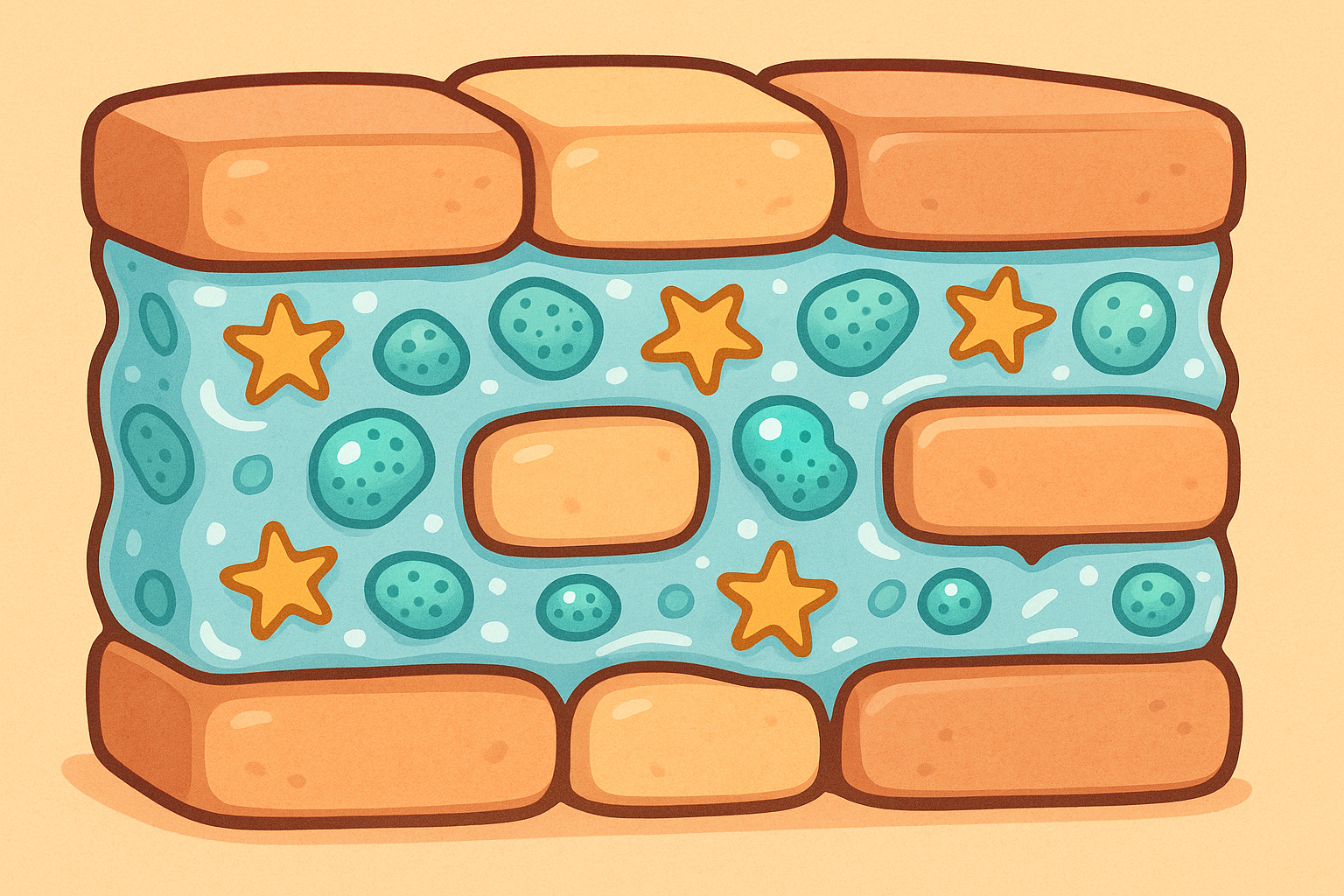
In this matrix, hyaluronic acid acts like a sponge. It binds to water molecules, providing structural volume and keeping the environment moist. This moisture is critical for fibroblasts (FY-bro-blasts), which are the specialized cells responsible for building new collagen.
As we age, our bodies produce less hyaluronic acid. A 2020 review in Cells notes that this natural decline leads to a loss of skin tension, increased dryness, and the formation of wrinkles.
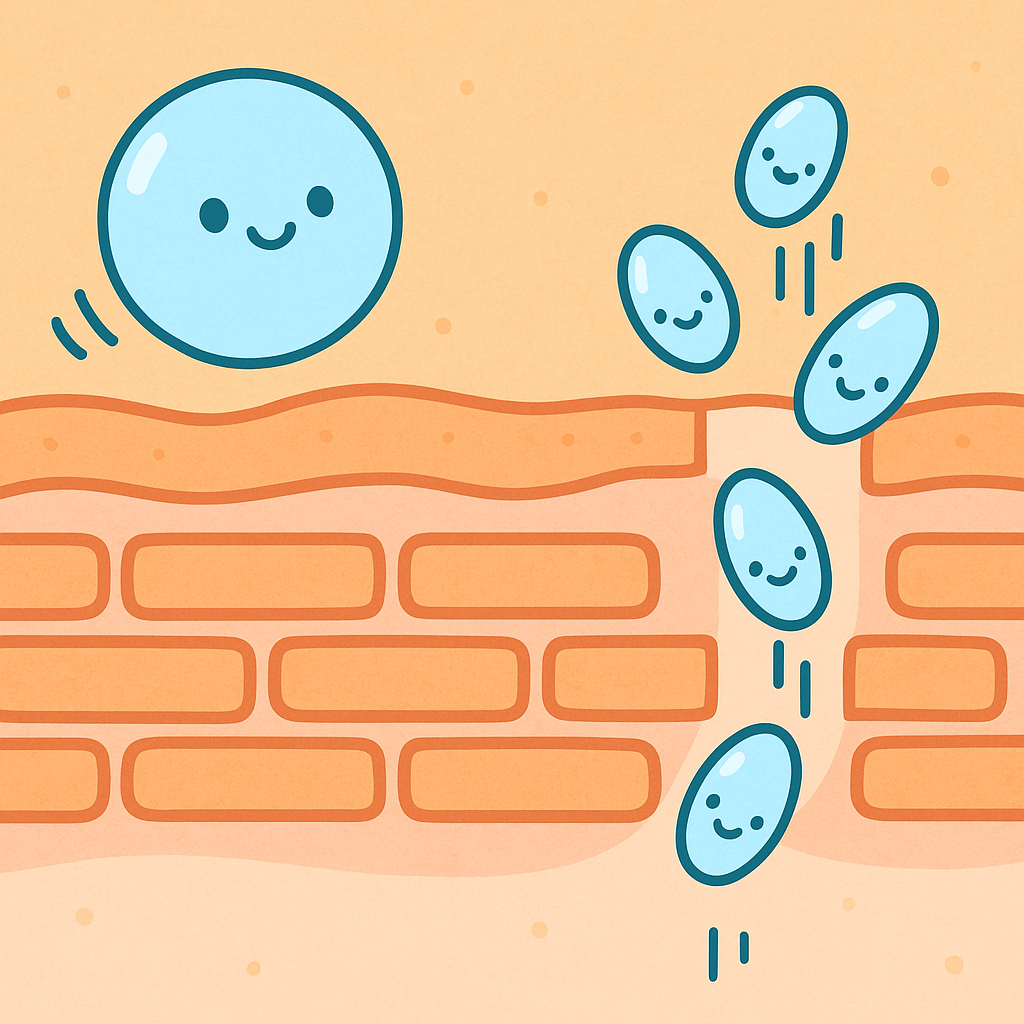
However, simply putting hyaluronic acid back onto the skin is not a guaranteed fix. The human skin is designed to be a barrier, keeping outside substances from getting in. This brings us to the most important concept in hyaluronic acid science: molecular weight.
The Importance of Molecular Weight
In science, the size of a molecule is measured in Daltons. Hyaluronic acid comes in different sizes, and the body reacts to these sizes differently:
- High Molecular Weight (HMW): These are large, long molecules. In the body, they act as anti-inflammatory signals and provide deep hydration and volume.
- Low Molecular Weight (LMW): These are smaller, fragmented molecules. The body often interprets these small fragments as a signal that tissue has been damaged, which triggers an immune response and promotes new blood vessel growth to heal wounds.
When a skincare company formulates a product, the size of the hyaluronic acid molecule dictates exactly what the product will do.
Does Topical Hyaluronic Acid Penetrate the Skin?
A common criticism of hyaluronic acid serums is that the molecules are simply too large to pass through the skin barrier.
To test this, researchers used advanced laser imaging called Raman spectroscopy to track where different sizes of hyaluronic acid actually go when applied to human skin. According to a 2016 study in Skin Research and Technology, the results were clear, and they depended entirely on size:
- High molecular weight hyaluronic acid (1000 to 1400 kDa) did not penetrate the skin at all. It remained entirely on the surface.
- Low molecular weight hyaluronic acid (20 to 300 kDa) successfully passed through the stratum corneum (STRA-tum KOR-nee-um), which is the outermost layer of dead skin cells, and reached the deeper living layers of the epidermis.
This does not mean large molecules are useless. When large hyaluronic acid molecules sit on the skin’s surface, they form a breathable film that grabs moisture from the air and traps water underneath it, preventing it from evaporating. This provides immediate, temporary surface hydration and smoothing.
Conversely, the smaller molecules penetrate deeper to provide internal hydration and signal the skin to repair itself. Because of this, many modern, science-backed serums combine both large and small molecules to treat multiple layers of the skin simultaneously.
Related: The Science of Anti-Aging Skincare: What Actually Works
What Science Says About Injectable Skin Boosters
Because topical creams have physical limitations, dermatologists often bypass the skin barrier entirely by injecting hyaluronic acid directly into the dermis.
While traditional dermal fillers use thick, “cross-linked” hyaluronic acid to physically replace lost volume in the cheeks or lips, a newer approach uses thin, unlinked hyaluronic acid spread lightly across the face. These are often called “skin boosters.”
A 2024 review in Skin Research and Technology explains that the goal of a skin booster is not to change the shape of the face, but to flood the deeper skin layers with hydration. This expands the tissue slightly, which physically stretches the fibroblasts and encourages them to produce new collagen.
But how well do these injections actually improve skin quality?
A 2025 meta-analysis in the Journal of Cosmetic Dermatology looked at data from multiple randomized clinical trials to find out. The researchers found clear benefits, but also distinct limitations:
- What improved: Patients saw significant, measurable improvements in skin hydration and overall skin radiance (glow) compared to control groups.
- What did not improve: The injections did not significantly improve skin elasticity (bounce) or the melanin index (dark spots and pigmentation).
The researchers concluded that while injecting hyaluronic acid is an excellent way to reverse dryness and dullness caused by aging, it does not necessarily tighten loose skin or erase sun damage.
It is also worth noting that these injections are not permanent. The body naturally produces an enzyme called hyaluronidase (hy-al-yur-ON-ih-dase) which constantly breaks down hyaluronic acid. Because of this natural recycling process, the effects of skin boosters typically fade over several months.
Can Swallowing Hyaluronic Acid Improve Skin?
If creams sit on the surface and injections are temporary and invasive, what about oral supplements?
Historically, scientists were skeptical that swallowing hyaluronic acid would do anything for the skin. The assumption was that stomach acid would destroy the molecule before it could reach the bloodstream. However, recent studies show that certain types of hyaluronic acid can survive digestion and reach the skin.
A 2023 double-blind clinical trial in Skin Research and Technology tested this on 129 women of varying ages and skin types. The participants drank either a placebo, 100 milligrams of hyaluronic acid, or 200 milligrams of hyaluronic acid daily.
The results showed that taking hyaluronic acid orally significantly promoted skin hydration after 2 to 8 weeks in both young and elderly groups. Furthermore, ultrasound measurements taken after 12 weeks showed an actual increase in epidermal thickness, suggesting the skin barrier had become structurally healthier.
Where the Evidence is Mixed
While standalone hyaluronic acid supplements show promise, their role in combination supplements is less clear.
A 2024 trial published in Nutrients tested whether adding 30 milligrams of hyaluronic acid to a daily collagen and vitamin C supplement would improve results. After 16 weeks, the researchers found that while the supplement generally improved skin density and reduced wrinkles, the group that took hyaluronic acid did not see superior results compared to the group that took collagen alone.
This suggests that while oral hyaluronic acid helps hydrate the skin, it may not provide dramatic additional anti-aging benefits if you are already consuming other effective skin-supporting proteins like collagen.
The Medical Side: Wound Healing and Burn Repair
Beyond cosmetic anti-aging, hyaluronic acid plays a critical role in clinical medicine, particularly for severe wounds, burns, and diabetic ulcers.
When the skin is severely damaged, the body naturally floods the area with high molecular weight hyaluronic acid to form a protective clot and recruit immune cells. As the healing progresses, the body breaks this down into smaller fragments to stimulate new blood vessel growth.
Medical science has harnessed this natural process. A 2020 review in Carbohydrate Polymers outlines how hospitals use advanced hyaluronic acid sponges, films, and hydrogels to treat severe injuries. These medical dressings absorb excess wound fluid while maintaining a moist environment that prevents cell death.
Recently, scientists have begun combining hyaluronic acid with other technologies to treat specific types of skin damage. For example, a 2025 study in the International Journal of Biological Macromolecules tested a hyaluronic acid hydrogel designed specifically to treat severe skin dryness and damage caused by ultraviolet (UV) radiation. The hydrogel effectively delivered repairing compounds deep into the skin, reducing inflammation and promoting faster tissue repair.
Related: Protecting Skin From UV Damage: What the Latest Science Says
Delivery Methods Compared
To understand which type of hyaluronic acid is right for a specific goal, it is helpful to look at how the delivery methods compare based on current research.
| Delivery Method | Primary Benefit | Depth of Action | Scientific Consensus |
|---|---|---|---|
| Topical (High MW) | Immediate surface smoothing | Stratum corneum (surface) | Forms a barrier to prevent water loss; washes off. |
| Topical (Low MW) | Internal hydration | Epidermis (mid-level) | Penetrates successfully; helps regulate skin repair. |
| Injectable (Boosters) | Deep hydration, radiance | Dermis (deep) | Highly effective for moisture and glow; temporary. |
| Oral (Pills/Powders) | Full-body hydration | All skin layers via blood | Improves overall moisture and epidermal thickness over time. |
Common Questions About Hyaluronic Acid
Does hyaluronic acid permanently erase wrinkles?
No. Topically, it temporarily plumps the skin with water, making fine lines less visible until it washes off. Injected, it provides longer-lasting volume, but the body naturally breaks it down over several months.
Can hyaluronic acid dry out your skin?
Yes, under specific conditions. Because it acts like a sponge, if you apply it to a dry face in a very dry climate, it may pull water out of your deeper skin layers instead of the air. It is best applied to damp skin and sealed with a moisturizer.
Is it safe for sensitive skin?
Because hyaluronic acid is naturally produced by the human body, allergic reactions to the molecule itself are exceedingly rare. However, people can react to preservatives or other ingredients mixed into the serum or gel.
The Bottom Line
Hyaluronic acid is not just a marketing buzzword; it is a fundamental biological molecule necessary for healthy, hydrated tissue.
Research clearly shows that it is effective at moisturizing the skin, but its capabilities are strictly defined by physics and biology. Large molecules applied to the skin will only hydrate the surface, while smaller molecules can penetrate deeper. Injecting it directly into the skin provides undeniable improvements in hydration and radiance, though it will not magically restore lost elasticity. Surprisingly, oral supplements also show strong evidence for improving overall skin moisture from the inside out.
Ultimately, hyaluronic acid is an excellent tool for managing skin hydration and supporting tissue repair, provided you choose the right delivery method for your specific goals.
Quick Reference: Key Studies
| Study Focus | Key Finding | Source |
|---|---|---|
| Topical Penetration | Low molecular weight HA penetrates the skin barrier, while high molecular weight HA stays on the surface. | PMID 25877232 |
| Injectable HA Efficacy | Meta-analysis showed local HA injections significantly improve skin hydration and radiance, but not elasticity. | PMID 39807700 |
| Oral Supplementation | 100-200mg of oral HA daily improved skin hydration and epidermal thickness over 12 weeks. | PMID 38009035 |
| Oral HA vs Collagen | Adding HA to a collagen supplement did not show superior skin density improvements compared to collagen alone. | PMID 38931263 |
| Medical Wound Dressings | HA sponges and hydrogels actively promote cell migration and angiogenesis in severe wounds. | PMID 32507198 |
| UV Damage Repair | HA hydrogels successfully delivered compounds to treat inflammation and dryness caused by photoaging. | PMID 40174445 |
Last updated: May 2026
This article synthesizes findings from peer-reviewed research. It is for educational purposes only and does not constitute medical advice. Consult a healthcare provider before starting any new regimen.



Leave a Reply