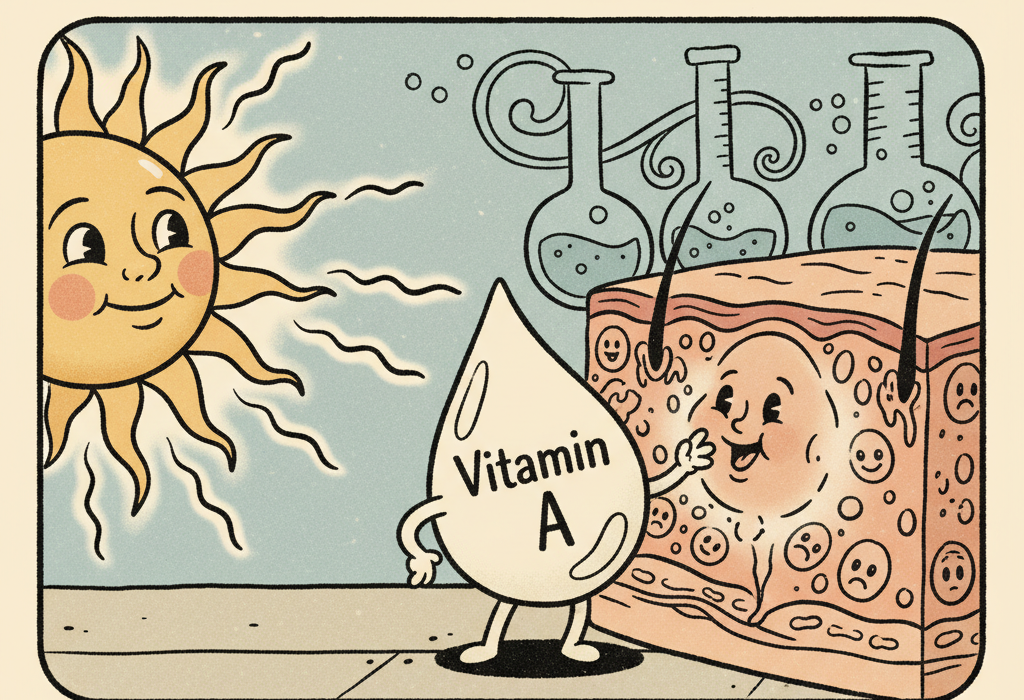
If you have ever looked into skincare routines for wrinkles or acne, you have likely come across retinol. This popular ingredient is a form of Vitamin A. Dermatologists frequently recommend it, and cosmetic companies feature it prominently in their products. But how much of the hype is backed by solid science?
To answer this, we have to look closely at what researchers have discovered about how Vitamin A interacts with our biology. The short answer is that Vitamin A is highly effective for skin health, particularly when applied directly to the skin for aging and acne. However, taking it as an oral supplement requires caution due to mixed research on long-term safety and skin cancer risks.
This article breaks down how Vitamin A actually works in your skin, the difference between topical creams and dietary supplements, and what the latest peer-reviewed research says about its benefits and limitations.
How Vitamin A Works in the Skin
To understand why Vitamin A is so widely used in dermatology, it helps to understand its biological role. Vitamin A is not a single chemical. It belongs to a family of compounds called retinoids (RET-in-oyds).
Your skin is highly responsive to retinoids because your skin cells contain specific receptors for them. You can think of these receptors as tiny keyholes on the surface of your DNA. When a retinoid molecule (the key) enters the cell and binds to these receptors, it turns certain genes on or off.

This genetic signaling tells the cell to behave in specific ways. For example, it can instruct keratinocytes (kuh-RAT-in-oh-sites), the primary cells in your outer skin layer, to multiply faster. This speeds up the shedding of old, damaged cells and the creation of new, healthy ones.
At the same time, retinoids travel deeper into the skin to interact with fibroblasts (FY-bro-blasts). These are the cells responsible for producing collagen (KOL-uh-jen), the structural protein that keeps skin firm. By stimulating fibroblasts, Vitamin A helps rebuild the skin’s structural foundation.
Related: The Science of Anti-Aging Skincare: What Actually Works
What the Research Shows
Scientific studies generally divide Vitamin A research into two categories: topical application (creams and serums applied to the skin) and systemic intake (food and oral supplements). The results for these two delivery methods are very different.
Topical Retinoids for Aging and Sun Damage
Repeated exposure to ultraviolet light from the sun causes a process called photoaging (foe-toe-AGE-ing). Over time, this leads to deep wrinkles, skin thinning, and uneven pigmentation.
A 2025 review in the International Journal of Cosmetic Science confirms that topical retinoids remain the clinical “gold standard” for treating photoaged skin. Researchers note that applying retinoids directly to the skin helps reverse the physical signs of aging by:
- Thickening the epidermis: As we age, our outer skin layer thins. Retinoids stimulate cell growth to restore this thickness.
- Boosting collagen: Retinoids block the enzymes that break down collagen while simultaneously encouraging the production of new collagen fibers.
- Improving hydration: Retinoids increase the skin’s natural production of hyaluronic acid, a molecule that holds water and keeps skin plump.
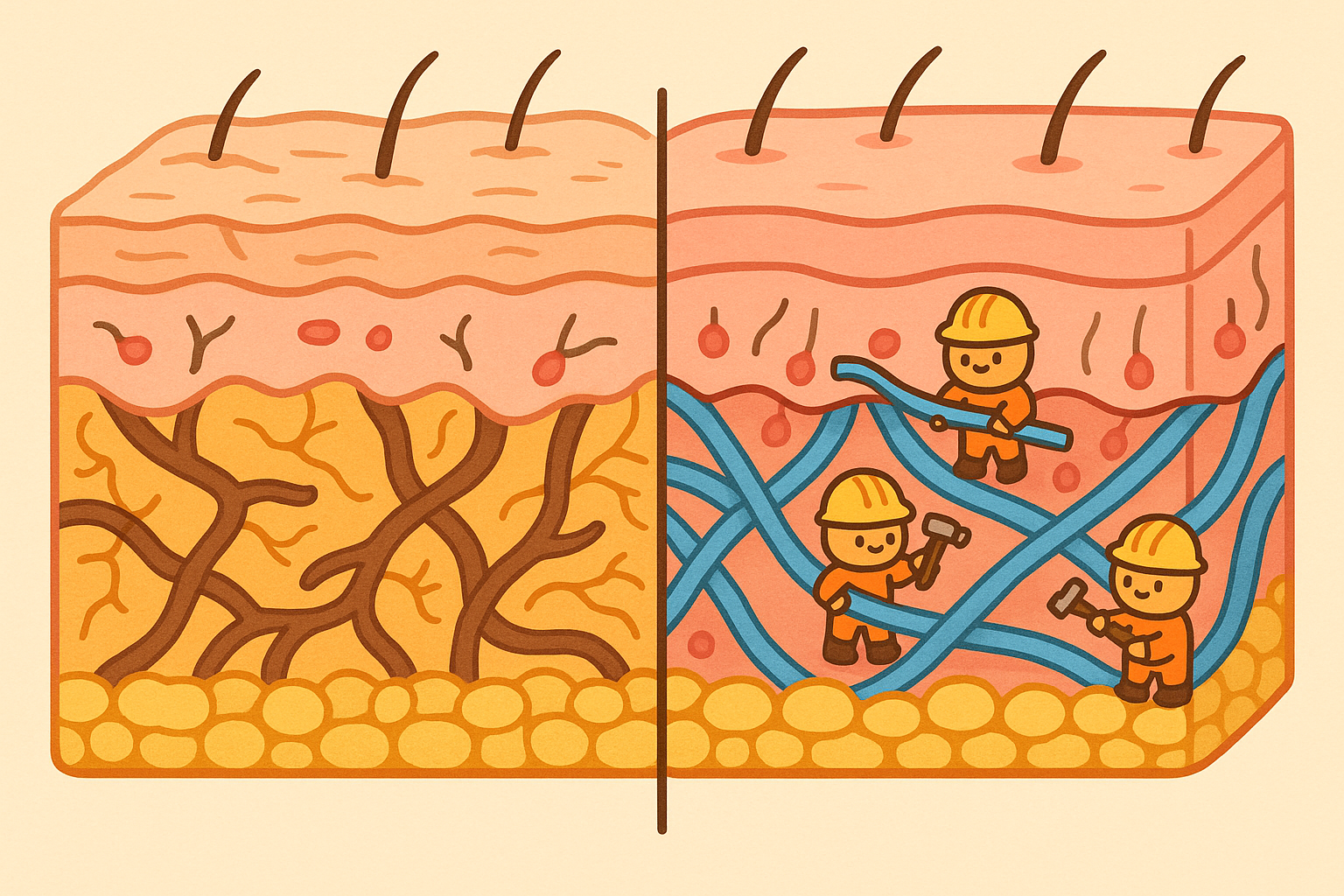
However, this process is not without side effects. The same 2025 review notes that prescription-strength retinoids (like tretinoin) frequently cause retinoid-induced dermatitis. This includes redness, peeling, and dryness as the skin adjusts to the rapid cellular turnover. Over-the-counter options like retinol or retinaldehyde are weaker and take longer to work, but they are generally better tolerated by sensitive skin.
Dietary Supplements and Skin Cancer Risks
While applying Vitamin A to the skin has clear anti-aging benefits, taking it in pill form presents a more complicated picture.
Many people take antioxidant supplements, including Vitamin A and beta-carotene, hoping to protect their skin from the inside out. However, a massive 2024 study in Skin Health and Disease looked at over 52,000 postmenopausal women over an average of 17 years. The researchers wanted to see if dietary and supplemental Vitamin A protected against skin cancer.
The results were surprising. The study found no protective effect against melanoma. More importantly, it found that women with the highest intake of dietary and supplemental Vitamin A actually had a slightly higher risk of developing non-melanoma skin cancers (like basal cell and squamous cell carcinomas).
Why would an antioxidant increase cancer risk? Researchers suggest that at very high concentrations, certain antioxidants can behave as pro-oxidants. Instead of neutralizing free radicals, excessive doses might actually cause cellular stress. While normal dietary intake from whole foods is safe and necessary, this study suggests that taking high-dose Vitamin A supplements does not protect against skin cancer and may even carry slight risks for older adults.
Skin Immunity and the Microbiome
Beyond wrinkles and sun damage, Vitamin A plays a fascinating role in how your skin defends itself against harmful bacteria. Your skin is covered in an invisible ecosystem of bacteria, fungi, and viruses known as the skin microbiome.
A 2023 review in Pharmacological Reports highlights that Vitamin A is crucial for the skin’s immune system. It helps regulate mast cells, which are involved in allergic reactions and inflammation. When Vitamin A levels are adequate, the skin is better equipped to produce antimicrobial proteins that fight off bad bacteria.

For example, Vitamin A helps the skin produce a protein called RELM-alpha. This protein acts like a natural antibiotic. According to a 2024 review in Medicina, people deficient in Vitamin A are much more susceptible to skin infections from bacteria like Staphylococcus aureus, which is known to trigger severe eczema flare-ups.
Interestingly, a 2022 study in the journal Cell found that certain viruses (like dengue and Zika) suppress the skin’s production of this RELM-alpha protein. This allows specific bacteria to overgrow and produce a scent that attracts mosquitoes. When researchers gave a Vitamin A derivative to infected subjects, it restored the antimicrobial protein, reduced the bacteria, and made the subjects less attractive to mosquitoes.
Related: The Science of Your Skin Microbiome: How Invisible Bacteria Protect You
Wound Healing and Scarring
Vitamin A also heavily influences how the skin repairs itself after an injury.
A 2023 study published in Nature investigated the specific cells responsible for wound healing and scar formation. Researchers identified a specific group of progenitor cells deep in the skin. They discovered that retinoic acid (the active form of Vitamin A) acts as a crucial “gatekeeper” during the healing process.
During the early stages of a wound, retinoic acid helps promote necessary inflammation to clean the wound. However, the study found that if retinoic acid signaling remains too high for too long, it prevents the cells from transitioning into the phase where they actually rebuild the tissue. This shows that the body tightly regulates Vitamin A levels to balance proper healing against excessive scarring.
Common Questions About Vitamin A and Skin
Does eating carrots improve my skin?
Carrots are rich in beta-carotene, which your body converts into Vitamin A. A 2024 study in Nutrients notes that dietary beta-carotene can accumulate in the skin and provide a very mild natural defense against UV-induced redness. However, this effect is small and absolutely does not replace the need for traditional sunscreen.
Related: Protecting Skin From UV Damage: What the Latest Science Says
Why do retinol creams cause peeling and redness?
Topical retinoids speed up the life cycle of your skin cells. This rapid turnover forces the top layer of skin to shed old cells faster than your body is used to. This can compromise the skin’s moisture barrier temporarily, leading to dryness, redness, and peeling until the skin adapts.
Can I get enough Vitamin A just from food?
Yes. A balanced diet containing leafy greens, colored vegetables, and moderate amounts of dairy or eggs usually provides all the Vitamin A your body needs for basic skin maintenance and immune function.
Who Benefits Or Needs Caution
Who Benefits Most:
- People with photoaged skin: Those looking to reduce the appearance of fine lines, wrinkles, and sun spots benefit greatly from topical retinoids.
- People with acne: Prescription topical retinoids and oral isotretinoin are highly effective at unclogging pores and reducing acne-causing bacteria.
Who Needs Caution:
- Pregnant women: High doses of oral Vitamin A and topical prescription retinoids are strongly discouraged during pregnancy due to the known risk of birth defects.
- Older adults taking supplements: Based on recent large-scale studies, postmenopausal women should be cautious about taking high-dose Vitamin A supplements for skin health, as it may slightly elevate the risk of non-melanoma skin cancers.
- People with sensitive skin: Those with rosacea or severe eczema should consult a dermatologist before starting topical retinoids, as they can cause severe irritation.
The Bottom Line
The scientific consensus on Vitamin A is clear but nuanced. When applied topically, retinoids are one of the most thoroughly researched and proven ingredients for treating acne and reversing the visible signs of skin aging. They work at a cellular level to boost collagen and increase cell turnover.
However, the “more is better” approach does not apply to oral Vitamin A. While getting adequate Vitamin A from a balanced diet is essential for your skin’s immune system and microbiome, taking high-dose supplements does not appear to protect against skin cancer. In fact, excessive supplementation may carry slight risks for certain populations.
For most people, the best approach to skin health involves a nutrient-rich diet for internal support, combined with topical retinoids and daily sunscreen for external protection.
Quick Reference: Key Studies
| Study Focus | Key Finding | Source |
|---|---|---|
| Cosmetic Retinoids | Topical retinoids reverse photoaging by thickening the epidermis and increasing collagen production, though they can cause temporary dermatitis. | PMID 39128883 |
| Skin Cancer Risk | High intake of dietary and supplemental Vitamin A in postmenopausal women was associated with a slightly higher risk of non-melanoma skin cancer. | PMID 39624744 |
| Skin Immunity | Vitamin A increases the skin’s production of antimicrobial proteins, helping to defend against harmful bacteria like Staphylococcus aureus. | PMID 38256329 |
| Wound Healing | Retinoic acid acts as a signaling gatekeeper for skin cells, controlling the balance between wound inflammation and tissue repair. | PMID 37968392 |
| Microbiome & Viruses | Vitamin A derivatives can restore antimicrobial proteins in virus-infected skin, altering the skin microbiome and reducing mosquito attraction. | PMID 35777355 |
Last updated: May 2026
This article synthesizes findings from peer-reviewed research. It is for educational purposes only and does not constitute medical advice. Consult a healthcare provider before starting any new regimen.



Leave a Reply