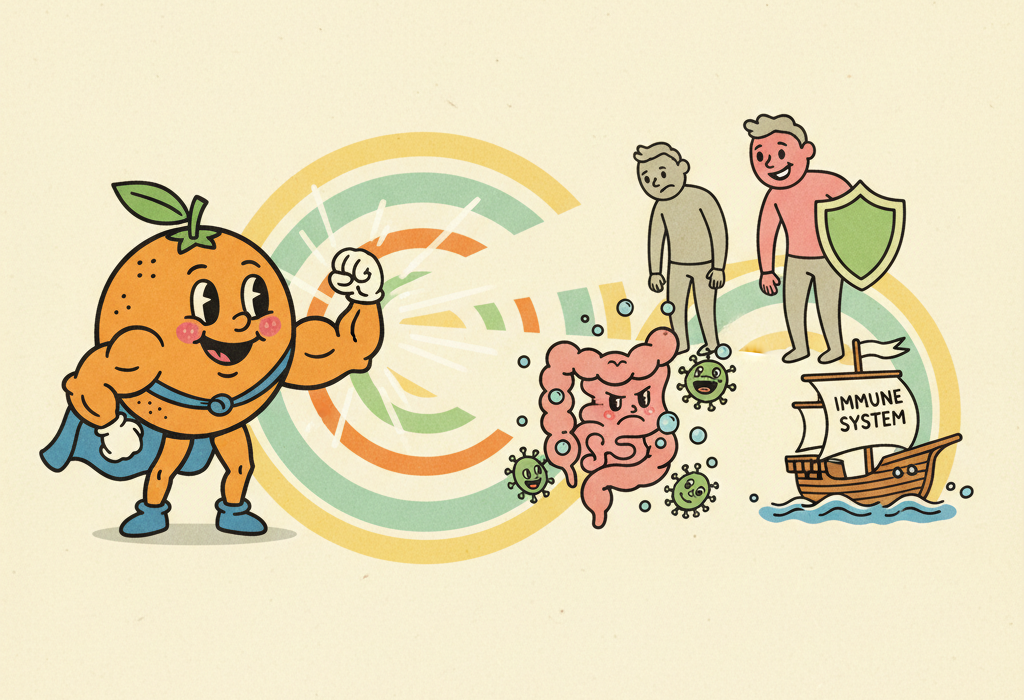
For generations, reaching for a glass of orange juice at the first sign of a sniffle has been a common household reflex. Vitamin C is one of the most widely recognized and supplemented nutrients in the world. It is added to everything from immune-boosting drink powders to anti-aging face serums.
But what does this popular vitamin actually do inside your body?
Research shows that vitamin C is absolutely essential for human survival. It helps build your skin, supports your immune system, and protects your cells from damage. However, science also shows that taking massive doses of vitamin C will not cure every illness, and your body actively limits how much of it you can absorb at one time.
This article explores what peer-reviewed research actually says about vitamin C, examining its role in fighting colds, improving skin, and managing complex diseases.
How Vitamin C Works in the Body
Unlike most animals, humans cannot make their own vitamin C. A genetic mutation in our distant ancestors left us unable to produce it, meaning we must get it entirely from our diet.
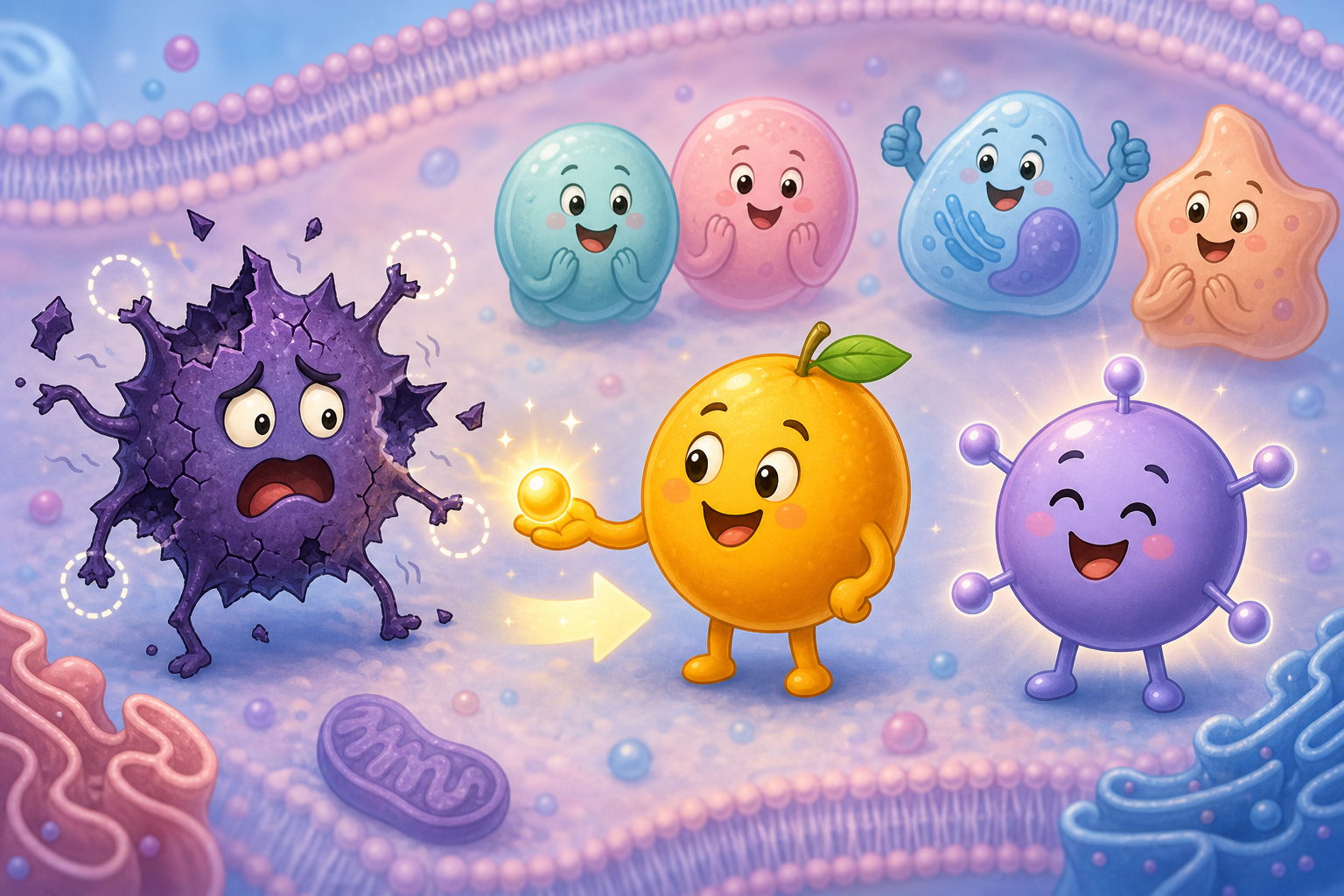
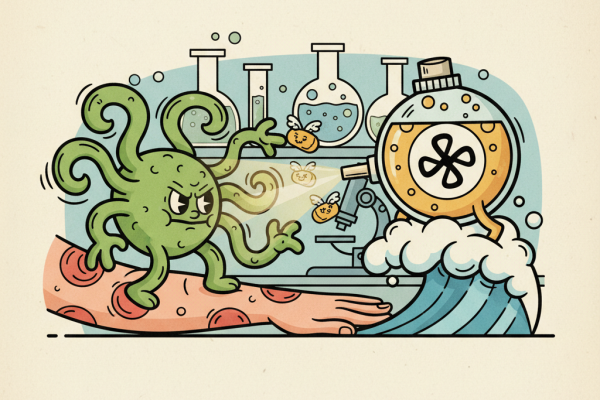
At a chemical level, vitamin C (also known as ascorbic acid) has one main job: it is an electron donor. By giving away its electrons, it acts as an antioxidant (an-tee-OX-ih-dant), which is a molecule that protects your cells from damage.
Every day, your body produces harmful, unstable molecules called free radicals. These are generated by normal digestion, but also by pollution, cigarette smoke, and ultraviolet sunlight. When free radicals outnumber your body’s defenses, it creates a state called oxidative stress (ox-ih-DAY-tiv stress). Oxidative stress damages your cells and DNA, and is linked to aging and many chronic diseases.
Vitamin C neutralizes free radicals by giving them an electron, effectively disarming them before they can cause harm.
Related: How Your Body Actually Detoxifies: The Science of Cellular Cleanup
The Absorption Limit
One of the most important things to understand about vitamin C is that taking more does not mean your body uses more.
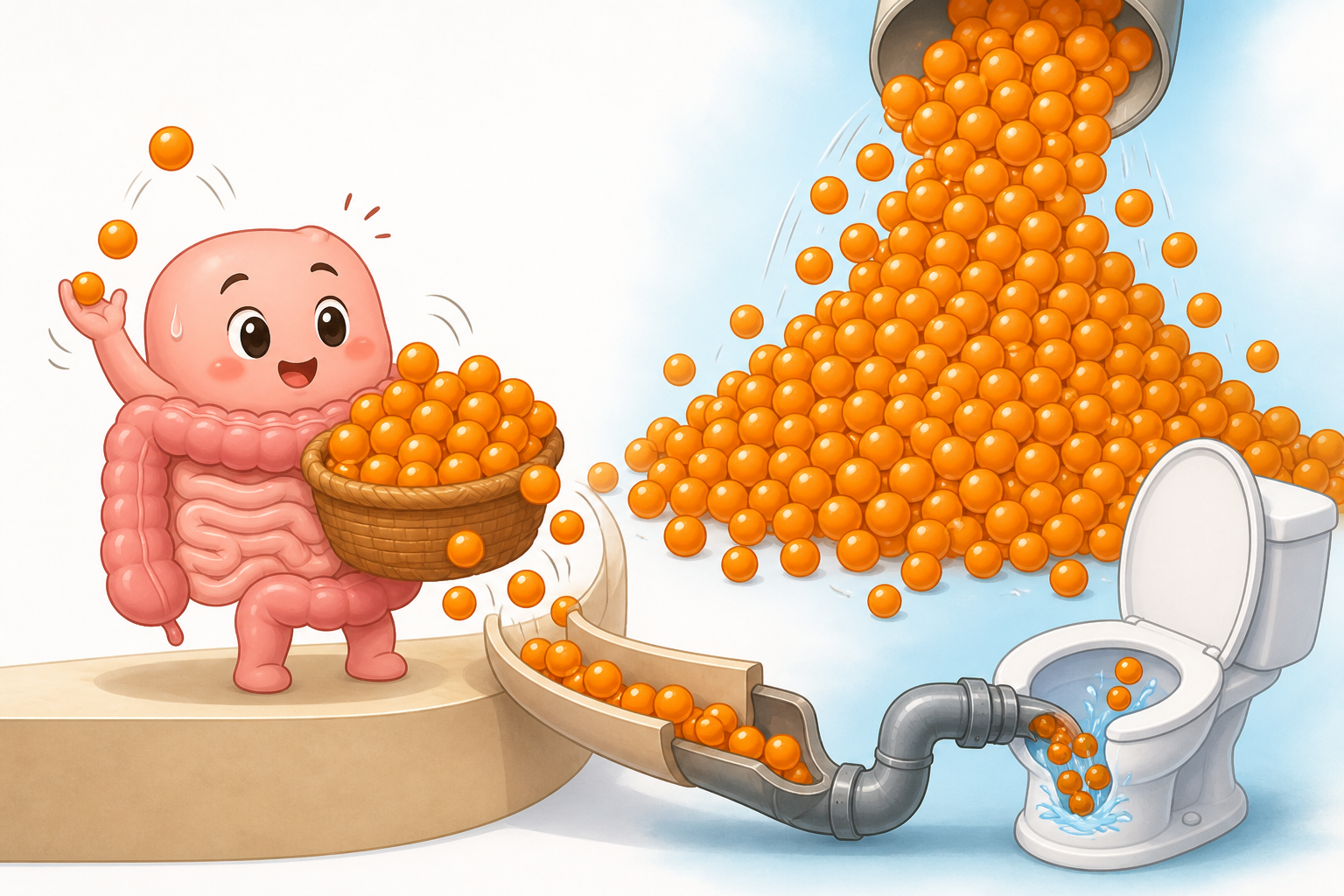
A 2004 study in the Annals of Internal Medicine demonstrated that your body tightly controls vitamin C levels in your blood. When you consume vitamin C through food or standard supplements (around 200 to 400 milligrams), your body absorbs almost all of it.
However, if you take a massive oral dose (like 1,000 or 2,000 milligrams at once), your intestines stop absorbing it efficiently. Your blood levels hit a strict ceiling, and your kidneys simply flush the excess vitamin C out in your urine. This is why swallowing handfuls of vitamin C pills often results in expensive urine rather than better health.
Does Vitamin C Actually Prevent the Common Cold?
The idea that vitamin C prevents the common cold was popularized in the 1970s by Linus Pauling, a Nobel Prize-winning chemist. Since then, researchers have rigorously tested this claim.
According to a 2023 meta-analysis in BMC Public Health, taking vitamin C every day does not reduce the average person’s chances of catching a cold. For the general public, regular supplementation will not keep you from getting sick.
However, the research did find two specific benefits:
1. It shortens cold duration and severity: In people who took at least 1 gram (1,000 mg) of vitamin C regularly, the severity of their colds decreased by 15 percent. It was particularly effective at reducing the duration of severe symptoms like fever and chills.
2. It prevents colds in extreme physical stress: In five specific trials involving marathon runners, skiers, and soldiers training in freezing environments, taking vitamin C actually halved their risk of catching a cold.
For the average person, vitamin C is not a shield against viruses, but it may help your body clear the symptoms a little faster once you are already sick.
Related: What Science Actually Says About Flu Vaccination Benefits
Vitamin C and Skin Health
Your skin contains high concentrations of vitamin C, particularly in the outer layer (the epidermis). It plays two critical roles in keeping your skin healthy.
First, vitamin C is a required building block for collagen (KOL-uh-jen), which is the main structural protein that keeps your skin firm and elastic. Without vitamin C, the enzymes that build collagen cannot function. This is why severe vitamin C deficiency leads to scurvy (SKUR-vee), a disease where skin becomes fragile, wounds stop healing, and gums bleed.

Second, it acts as a primary defense against sun damage. A 2017 review in Nutrients explains that while vitamin C is not a sunscreen, its antioxidant properties help neutralize the free radicals generated by ultraviolet (UV) light, reducing early wrinkling and cellular damage.
Topical Serums vs. Oral Supplements
Many skincare products feature vitamin C. Research shows that applying it directly to the skin can be effective, but only if formulated correctly. Vitamin C is highly unstable and breaks down quickly when exposed to air and light. It also struggles to penetrate the skin’s outer barrier unless it is formulated at a highly acidic pH (below 4.0).
If your diet is already rich in vitamin C, taking extra oral supplements will likely not increase the vitamin C levels in your skin, because your blood is already saturated.
Related: The Science of Your Skin Barrier: How It Works and How to Protect It
Intravenous (IV) Vitamin C and Cancer Research
One of the most intensely studied, and debated, areas of vitamin C research is its use in cancer treatment.
As mentioned earlier, your body limits how much vitamin C you can absorb from pills. However, if vitamin C is administered intravenously (in-truh-VEE-nus), meaning directly into a vein, it bypasses the digestive system. A 2004 pharmacokinetic study showed that IV delivery can create blood concentrations up to 140 times higher than the maximum oral dose.
At these massive, medically supervised doses, vitamin C stops acting like a standard antioxidant. Instead, it interacts with metals in the blood (like iron) to generate hydrogen peroxide. Normal, healthy cells can easily clear this hydrogen peroxide. However, many cancer cells have defective defenses and cannot handle the stress, causing them to die.
According to a 2019 review in Nature Reviews Cancer, high-dose IV vitamin C has shown the ability to selectively target cancer cells in laboratory and animal studies. It may also help overcome cancer cells’ resistance to chemotherapy.
In human clinical trials, high-dose IV vitamin C is generally well tolerated. A 2026 systematic review in the Journal of Medicine and Life found that it may improve quality of life and reduce the toxic side effects of chemotherapy for cancer patients. However, evidence showing that it actively shrinks tumors or extends life in humans remains exploratory. It is currently viewed as a supportive therapy, not a standalone cure.
The Disappointment in Sepsis Treatment
Sepsis is a life-threatening emergency where the body’s immune system overreacts to an infection, leading to organ failure. During sepsis, vitamin C levels in the body plummet rapidly.
A few years ago, a small study suggested that giving sepsis patients a combination of IV vitamin C, thiamine, and steroids drastically improved survival. This sparked massive interest in intensive care units worldwide.
Unfortunately, larger and more rigorous studies have failed to prove this benefit. A 2025 randomized controlled trial known as the C-EASIE trial tested early administration of IV vitamin C in emergency room patients with sepsis. The researchers found no significant reduction in organ failure.
Similarly, another major trial called LOVIT actually found a slightly higher risk of death or persistent organ dysfunction in sepsis patients receiving high-dose IV vitamin C. As noted in a 2024 review in Current Opinion in Critical Care, routine use of high-dose vitamin C for sepsis is no longer recommended, as the evidence leans toward it being unhelpful or potentially harmful in this specific scenario.
Where Vitamin C Fails to Show Benefit
Because vitamin C is involved in so many bodily processes, it has been tested for dozens of diseases. A 2016 review in Obstetrical & Gynecological Survey summarized several areas where early promises did not hold up to rigorous testing:
- Heart Disease: While eating a diet high in fruits and vegetables lowers heart disease risk, taking vitamin C supplements does not prevent heart attacks or strokes.
- Pregnancy Complications: Large trials show that supplementing with vitamin C does not prevent preterm labor or preeclampsia (dangerously high blood pressure during pregnancy).
- Alzheimer’s and Dementia: Studies following older adults for years have found no difference in cognitive decline between those who take vitamin C supplements and those who do not.
- ALS (Lou Gehrig’s Disease): A 2022 review by the ALSUntangled group noted that while some animal models showed promise, a human trial showed no benefit, and vitamin C is not recommended as an ALS treatment.
Who Benefits Or Needs Caution
While vitamin C is highly safe for the vast majority of people, certain groups should be careful, and others may need more than average.
Who benefits most:
- Smokers: Cigarette smoke creates massive oxidative stress. Smokers deplete their vitamin C stores much faster than non-smokers and generally require an extra 35 mg per day to maintain healthy blood levels.
- People with poor diets: Individuals who eat highly processed diets with few fresh fruits or vegetables are at risk for marginal deficiency.
Who needs caution:
- People prone to kidney stones: High doses of vitamin C (over 1,000 mg per day) are broken down by the body into a substance called oxalate. Excess oxalate can bind with calcium in the kidneys to form stones.
- People with G6PD deficiency: This is a genetic condition affecting red blood cells. Receiving massive, intravenous doses of vitamin C can cause their red blood cells to rupture (hemolysis).
- People with iron overload disorders: Vitamin C significantly increases the amount of iron your body absorbs from plant-based foods. People with hemochromatosis (a disease where the body stores too much iron) should avoid large vitamin C supplements with meals.
Common Questions About Vitamin C
Can I take too much vitamin C?
Yes, though it is rarely dangerous. Because your body cannot store large amounts, taking more than 2,000 mg a day will likely cause stomach cramps, nausea, and diarrhea as the unabsorbed vitamin pulls water into your intestines.
Does vitamin C prevent pneumonia?
According to a 2017 review in Nutrients, vitamin C does not prevent pneumonia in the general population. It has only shown preventive benefits in highly specific, extreme situations (like military recruits in harsh training).
Are natural food sources better than synthetic pills?
Chemically, the ascorbic acid in a pill is identical to the ascorbic acid in an orange. Your body absorbs both equally well. However, eating whole foods provides additional nutrients, fiber, and other antioxidants that work together for better overall health.
The Bottom Line
Vitamin C is a vital nutrient that acts as a cellular shield, supports your immune system, and builds the collagen that holds your body together.
For the average healthy person, a diet rich in fruits and vegetables provides all the vitamin C the body can effectively use. Taking massive oral supplements will not supercharge your immune system, prevent heart disease, or act as a cure-all, simply because your body flushes out what it does not need.
While high-dose intravenous vitamin C shows interesting potential as a supportive therapy in cancer care, it has failed to prove effective for treating sepsis or preventing most chronic diseases. Ultimately, maintaining a healthy baseline of vitamin C through your diet is the most scientifically proven way to reap its benefits.
Quick Reference: Key Studies
| Study Focus | Key Finding | Source |
|---|---|---|
| Cancer and IV Vitamin C | High-dose IV vitamin C acts as a pro-oxidant, generating hydrogen peroxide that selectively harms cancer cells in lab settings. | PMID 30967651 |
| Common Cold | Routine vitamin C does not prevent colds in the general public, but reduces symptom severity and duration by about 15%. | PMID 38082300 |
| Sepsis Treatment | Early administration of IV vitamin C in emergency rooms did not reduce organ dysfunction or improve sepsis survival. | PMID 40269974 |
| Skin Health | Vitamin C is essential for collagen synthesis and helps protect skin cells from UV-induced oxidative damage. | PMID 28805671 |
| Pharmacokinetics | Oral vitamin C absorption is strictly capped by the body; only IV administration can achieve massive blood concentrations. | PMID 15068981 |
| General Disease Prevention | Large trials show vitamin C supplementation does not prevent preeclampsia, preterm birth, or cardiovascular disease. | PMID 26987583 |
Last updated: June 2026
This article synthesizes findings from peer-reviewed research. It is for educational purposes only and does not constitute medical advice. Consult a healthcare provider before starting any new regimen.
Leave a Reply