
Imagine your immune system as a highly advanced home security network. In a healthy body, it only sounds the alarm when a real intruder, like a virus or bacteria, tries to break in. But if you have an autoimmune condition like rheumatoid arthritis, the security system gets confused. It starts sounding the alarm constantly and attacks the house itself, causing swelling, pain, and damage to your joints.

For decades, the standard medical approach has been to use strong medications to turn down the volume on this alarm system. While these drugs are highly effective, they can sometimes cause unwanted side effects or leave the body vulnerable to real infections. Because of this, many patients look for additional ways to manage their pain and inflammation.
One of the most popular complementary therapies is acupuncture. But for a long time, the scientific community was divided. Did inserting tiny needles into the skin actually do anything for arthritis, or was it just a placebo effect?
Recent scientific advancements have given us a much clearer picture. By looking at cellular biology and large-scale data, researchers are finally understanding how acupuncture interacts with the nervous and immune systems.
Here is a breakdown of what the latest science actually shows about acupuncture for arthritis.
The Core Tension: Why Scientists Used to Disagree
If you looked at the research on acupuncture for rheumatoid arthritis ten or fifteen years ago, the conclusions were largely disappointing.
A 2005 Cochrane review and a 2008 systematic review both concluded that acupuncture did not show specific benefits for pain or inflammation when compared to “sham” acupuncture. Sham acupuncture is a fake version of the treatment where needles are inserted superficially or in the wrong spots. A later 2018 review in Medwave echoed these findings, stating that acupuncture likely had little to no impact on the disease.
So, why are modern scientists taking a second look?
The answer lies in how we study the treatment. Researchers realized that creating a “fake” acupuncture needle is incredibly difficult. The skin is packed with sensitive nerve endings. Even if a needle is inserted in a fake spot or only presses against the skin without penetrating, it still sends a physical signal to the brain.
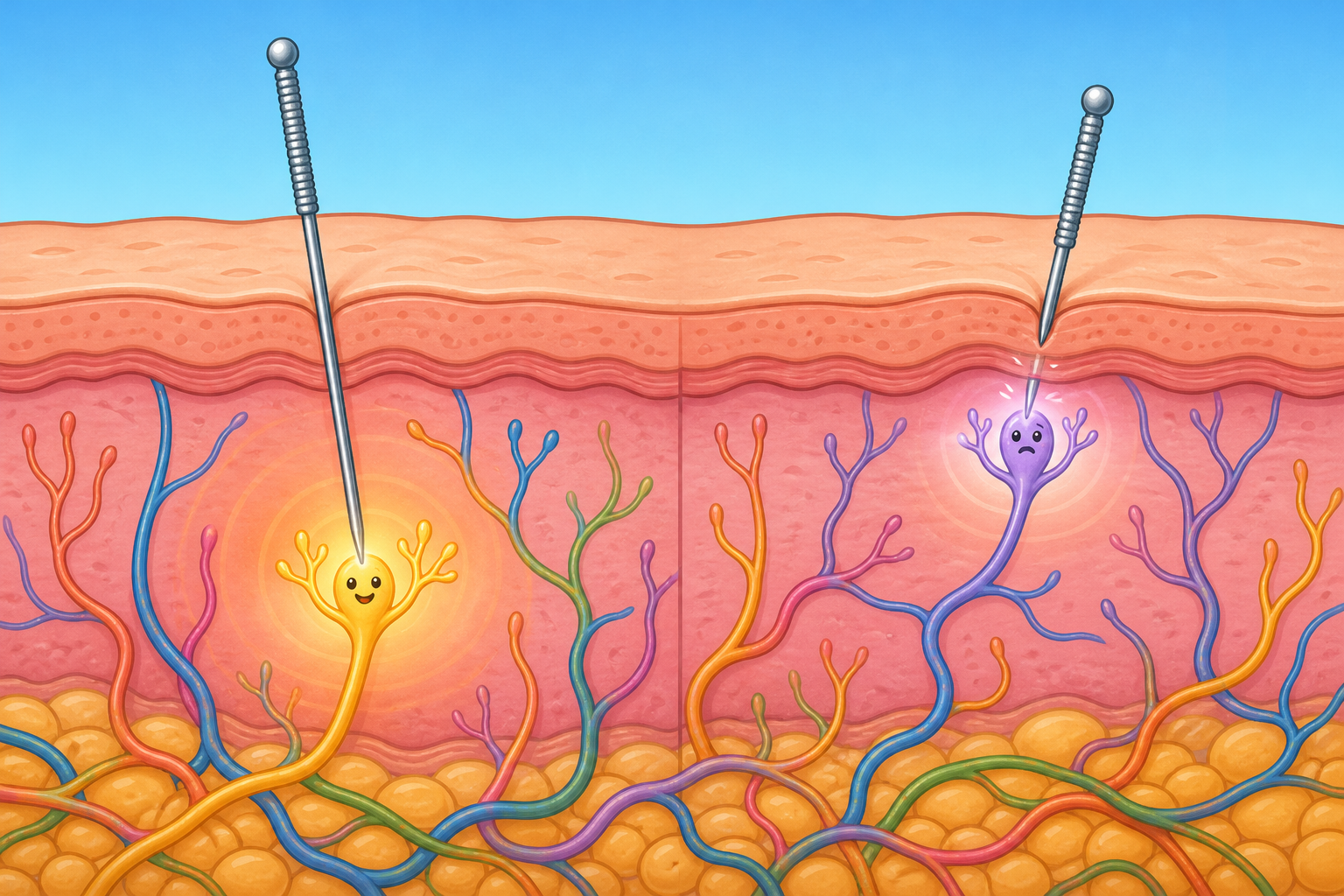
A 2026 network meta-analysis in the Journal of Integrative Medicine pointed out this exact flaw. The researchers noted that using “sham” acupuncture on actual acupoints triggers a real biological response, which makes the actual treatment look less effective by comparison. When researchers began designing better studies and comparing different types of acupuncture against standard medical care, the results shifted dramatically.
What the Newest Research Shows
Recent studies have moved away from asking if acupuncture works and started asking which types of acupuncture work best when combined with standard medical care.
Electroacupuncture Leads the Pack
Traditional manual acupuncture involves inserting thin needles and occasionally twisting them by hand. However, many modern clinics use electroacupuncture (ee-LEK-tro-ak-yoo-punk-cher). This involves attaching small clips to the needles and passing a very gentle, pulsing electrical current through them.
A massive 2022 network meta-analysis in Frontiers in Immunology looked at 32 clinical trials involving over 2,100 patients with rheumatoid arthritis. The researchers compared various treatments, including traditional acupuncture, electroacupuncture, and medications alone.
The findings were striking. Electroacupuncture combined with standard arthritis medications was the most effective approach for improving the Disease Activity Score (DAS28), which is a medical tool used to measure swollen joints and overall disease severity.
The 2026 network meta-analysis confirmed this, concluding that electroacupuncture demonstrated the highest efficacy for pain relief in rheumatoid arthritis patients, outperforming both conventional manual acupuncture and standard therapy alone.
Benefits Beyond Rheumatoid Arthritis
While much of the research focuses on rheumatoid arthritis, studies suggest acupuncture may help other forms of joint inflammation as well.
- Gouty Arthritis: A 2013 meta-analysis in Rheumatology looked at 10 randomized controlled trials involving 852 patients with gout. The researchers found that acupuncture significantly decreased pain scores. Surprisingly, several of the included studies also showed a significant decrease in blood uric acid levels, which is the root cause of gout flare-ups.
- Juvenile Idiopathic Arthritis (JIA): Children with arthritis often experience chronic pain even when their joint swelling is controlled by medication. A 2025 review in Frontiers in Immunology highlighted that acupuncture shows significant potential for managing pediatric pain safely, reducing the need for long-term pain medications in children.
How This Might Work: The Biology Behind the Needles
For a long time, acupuncture was explained using traditional concepts of energy flow. Today, scientists use microscopes and blood tests to track exactly what happens in the body when a needle is inserted.
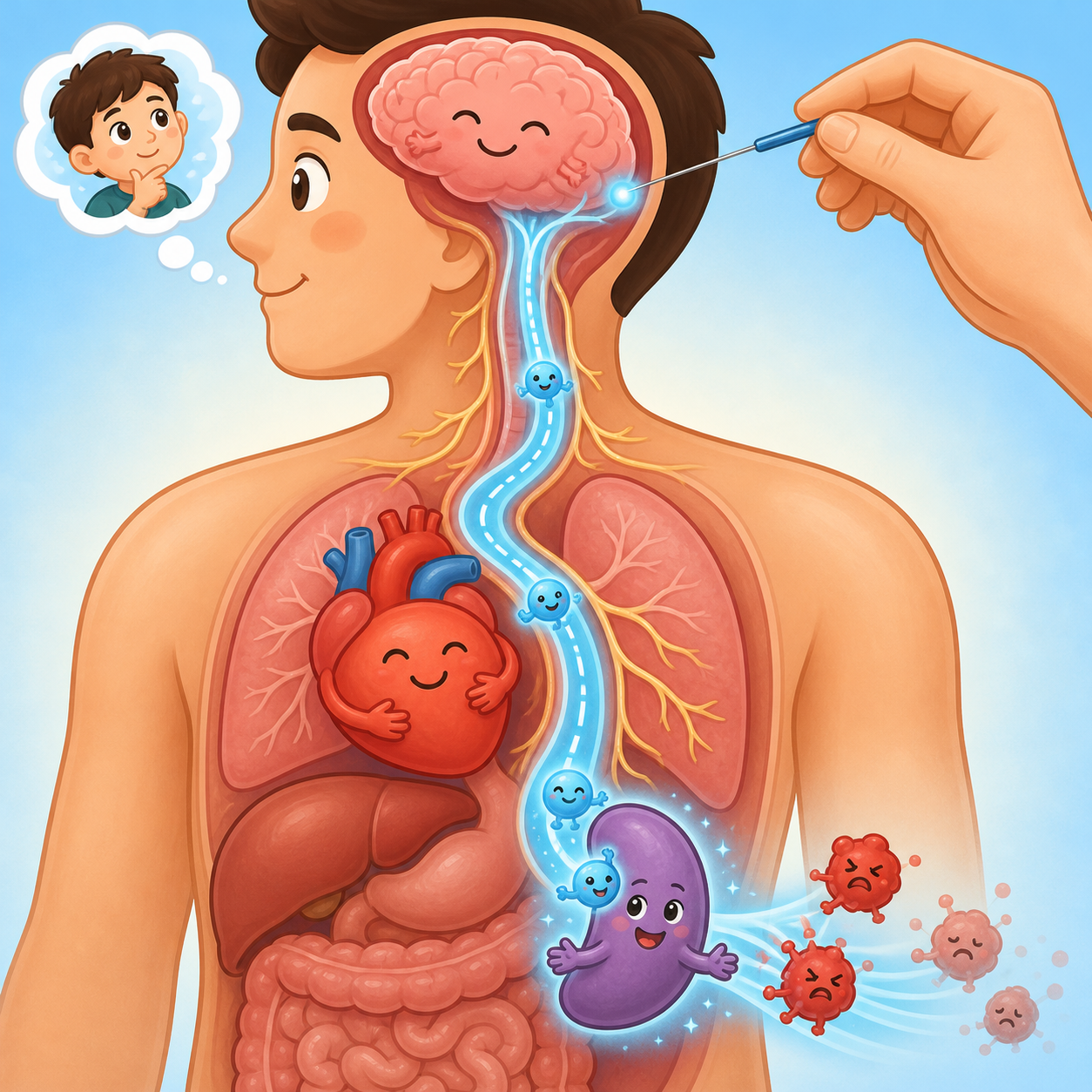
A 2026 review in The American Journal of Chinese Medicine mapped out the biological mechanisms of acupuncture in rheumatoid arthritis. It turns out that inserting a needle into specific points triggers a chain reaction that reaches the brain and alters the immune system.
1. Calming the Vagus Nerve
The vagus nerve is a massive nerve highway that connects your brain to your internal organs. It controls your body’s “rest and digest” response. Research shows that stimulating certain acupoints sends a signal up to the brain, which then sends a calming signal down the vagus nerve to the spleen and other immune organs. This pathway tells the body to stop producing inflammatory chemicals like TNF-alpha and Interleukin-6, which are the exact chemicals that arthritis drugs target. Related: How Cortisol and Antioxidants Control Your Stress Response
2. Shifting Immune Cells from Attack to Repair
Your body contains specialized cleanup cells called macrophages (MAK-roh-fayj) and microglia (my-kroh-GLEE-uh). In arthritis, these cells get stuck in an aggressive “M1” state, where they constantly promote inflammation.
The 2025 review on juvenile arthritis explains that acupuncture helps “reprogram” these cells. The physical stimulation of the needle encourages these immune cells to shift into an “M2” state. In the M2 state, these cells stop releasing inflammatory toxins and start releasing healing proteins that repair tissue and calm nerve endings.
3. Protecting the Bones
In severe rheumatoid arthritis, inflammation triggers the body to create osteoclasts, which are cells that eat away at bone tissue. Acupuncture has been shown to reduce the levels of a specific protein called RANKL, which is responsible for creating these bone-destroying cells. By lowering RANKL, acupuncture helps protect the physical structure of the joint.
Practical Guidance: How It Is Actually Done
If you are considering acupuncture for arthritis, it helps to know what modern clinical protocols look like.
According to a 2017 literature study in Chinese Acupuncture & Moxibustion, acupuncturists do not just place needles directly into the swollen joint. They typically use a combination of local points near the pain and distant points on the arms or legs. The most frequently used point in arthritis research is Zusanli (ST36), located on the lower leg, which is heavily associated with reducing systemic inflammation.
For elderly patients or those who are afraid of needles, new technologies are emerging. A 2022 study in Lasers in Medical Science tested “laser acupuncture” on older adults with rheumatoid arthritis. Instead of needles, they used a specialized infrared laser to stimulate the acupoints. After four weeks, the patients who received laser therapy showed significant reductions in joint pain and inflammatory markers in their blood compared to those who only did physical therapy.
Who Needs Caution
While acupuncture is generally very safe, it is not for everyone, and certain variations of the practice carry real risks.
Avoid Gold Thread Acupuncture
In some regions, an alternative practice involves permanently inserting tiny pieces of sterile gold thread into the skin at acupuncture points. A 2017 report in The New England Journal of Medicine highlighted a case where a patient with rheumatoid arthritis suffered severe joint deformities, and X-rays revealed hundreds of tiny gold threads permanently embedded around her joints. Foreign objects should never be permanently left inside the body to treat arthritis.
Be Wary of Bee Venom Acupuncture
Some practitioners inject diluted bee venom into acupuncture points, claiming it reduces inflammation. However, a 2014 systematic review in BMJ Open found that the evidence supporting this is of very low quality. Furthermore, bee venom carries a significant risk of severe allergic reactions (anaphylaxis).
Always Consult Your Rheumatologist
Acupuncture should never replace disease-modifying antirheumatic drugs (DMARDs) or biologic medications. Joint damage from untreated rheumatoid arthritis is permanent. Acupuncture is meant to be used alongside your prescribed medications to help manage pain and improve your quality of life.
Common Questions About Acupuncture and Arthritis
Does acupuncture hurt?
Acupuncture needles are hair-thin, much smaller than the needles used for blood draws. Most people feel a slight pinch, followed by a sensation of heaviness, tingling, or warmth, which researchers call “De Qi”.
How many sessions does it take to work?
Clinical trials usually measure results after 4 to 12 weeks of consistent treatment (often 1 to 3 times a week). It is generally not a quick fix, but rather a cumulative therapy that builds over time.
Can it lower my inflammatory markers?
Some studies show that acupuncture can help lower C-reactive protein (CRP) and Erythrocyte Sedimentation Rate (ESR), which are blood markers used to track inflammation. However, results vary from person to person. Related: What Blood Tests for Inflammation Actually Tell Us About Your Health
The Bottom Line / Takeaways
The scientific understanding of acupuncture has come a long way. While older studies struggled to prove its effectiveness against flawed placebos, modern research utilizing large patient groups and cellular biology paints a more optimistic picture.
- It works best as a team player: Acupuncture is most effective when used alongside standard arthritis medications, not as a replacement.
- Electroacupuncture shows the strongest evidence: Adding a gentle electrical current to the needles appears to provide better pain relief and disease management than manual acupuncture alone.
- It changes body chemistry: Acupuncture helps shift immune cells from an attacking state to a healing state and activates calming nerve pathways.
- Stick to standard needles: Avoid alternative practices that involve bee venom or leaving foreign materials like gold threads in the skin.
If you are struggling with lingering joint pain despite taking your arthritis medications, standard acupuncture or electroacupuncture is a safe, evidence-based option worth discussing with your healthcare provider.
Quick Reference: Key Studies
| Study Focus | Key Finding | Source |
|---|---|---|
| Biological Mechanisms | Acupuncture regulates macrophage polarization, reduces oxidative stress, and protects bone joints by inhibiting osteoclast generation. | PMID 41717898 |
| Network Meta-Analysis (2026) | Electroacupuncture demonstrated the highest efficacy for rheumatoid arthritis pain relief compared to manual acupuncture and standard therapy. | PMID 41102052 |
| Network Meta-Analysis (2022) | Electroacupuncture combined with standard medications was the most effective therapy for improving overall disease activity scores (DAS28). | PMID 35320944 |
| Juvenile Idiopathic Arthritis | Acupuncture targets the neuro-immune axis, shifting microglia to an anti-inflammatory state to relieve chronic pain in children. | PMID 41583480 |
| Laser Acupuncture | Laser acupuncture significantly reduced inflammation markers (CRP, IL-6) and oxidative stress in elderly patients with rheumatoid arthritis. | PMID 33738615 |
| Gouty Arthritis | Acupuncture safely and effectively decreased pain scores and lowered blood uric acid levels in patients with gout. | PMID 23424263 |
| Gold Thread Complications | A case report highlighted severe joint damage and deformity caused by the permanent insertion of gold threads for arthritis treatment. | PMID 29117488 |
Last updated: October 2026
This article synthesizes findings from peer-reviewed research. It is for educational purposes only and does not constitute medical advice. Consult a healthcare provider before starting any new regimen.

Leave a Reply