Have you ever tried standing on one leg while brushing your teeth? It sounds simple, but you might find your ankle wobbling and your arms flailing to stay upright. Balance is something we rarely think about until we start to lose it.
Whether you are an athlete trying to prevent ankle sprains, an older adult looking to avoid falls, or someone recovering from a stroke, balance training is often recommended. But balance is not just a single skill. It is a complex interaction between your muscles, your nerves, and your sensory system.
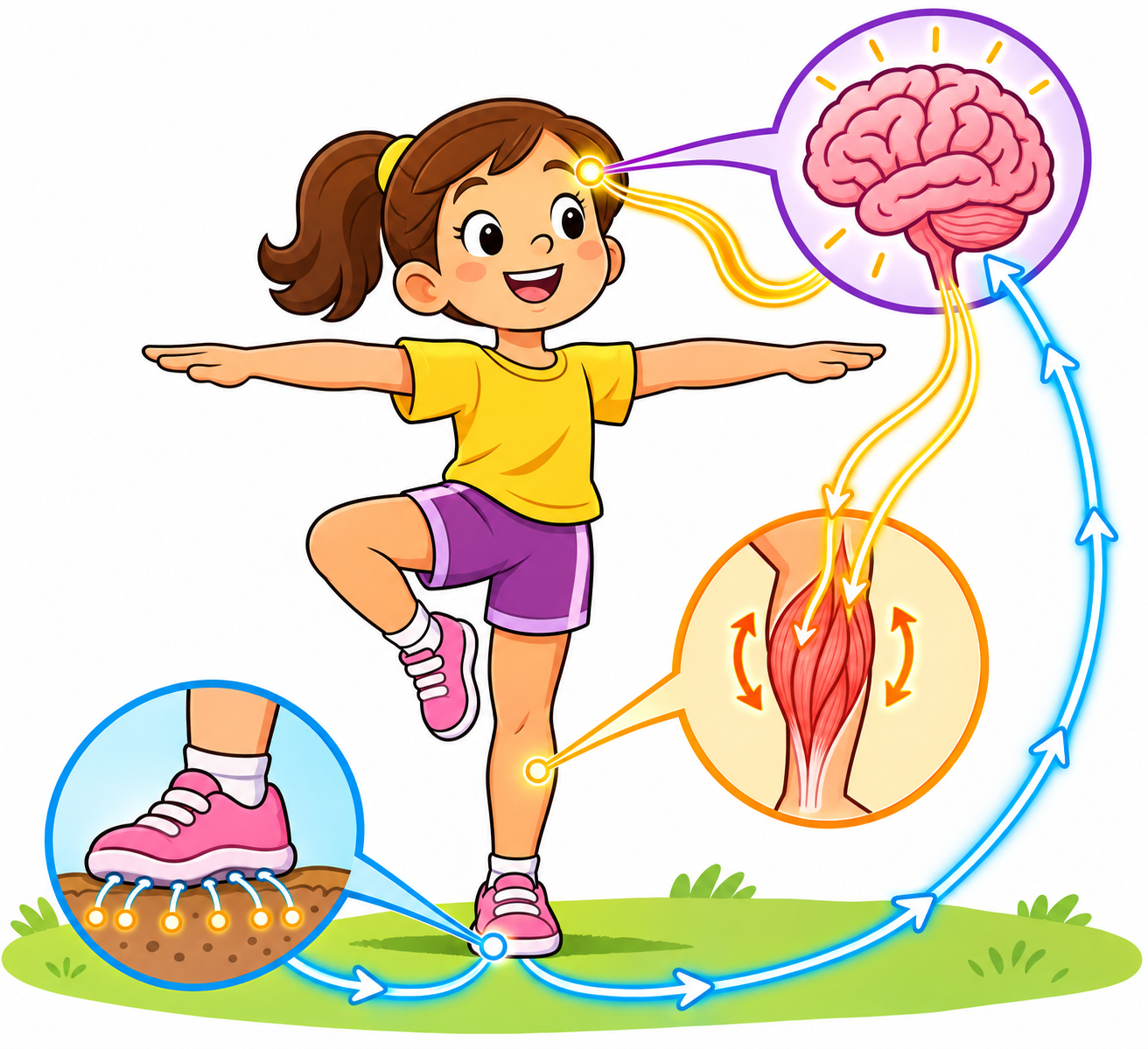
Because balance relies on so many different systems, scientists have tested a wide variety of ways to train it. These range from simple bodyweight exercises to high-tech vibration plates and robotic treadmills. The research shows that balance training does work, but the effectiveness of specific exercises depends heavily on your current physical condition and the exact methods used.
Common Questions About Lower Body Balance Training
What is the best way to improve balance?
Research suggests that a combination of neuromuscular exercises (which train the brain-muscle connection) and basic strength training provides the most consistent improvements in balance and injury prevention.
Do vibration plates actually improve balance?
Whole-body vibration can improve balance in specific groups, such as stroke survivors and people with nerve damage. However, the evidence for healthy, young adults is highly mixed.
Why is feeling the ground important for balance?
Your body relies on sensory feedback from the soles of your feet to make micro-adjustments. Removing that bodyweight pressure can actually limit how well your balance improves during walking exercises.
How Your Muscles Keep You Upright
To understand how balance training works, we first have to look at what happens in the body when we try to stand still. Scientists often use the Single Limb Stance (standing on one leg) to measure static balance.
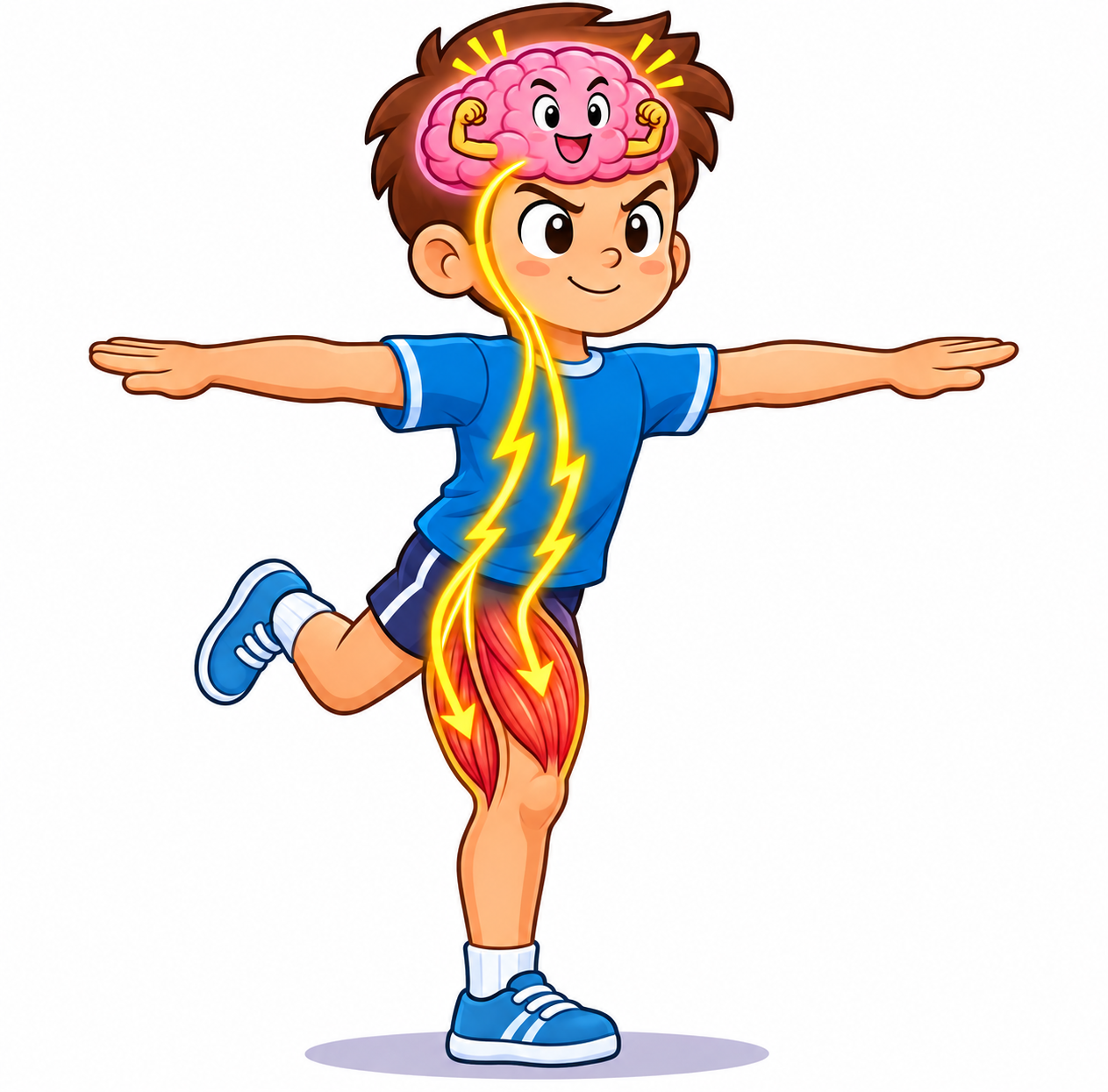
When you stand on one leg, your body is performing a constant, invisible dance of muscle contractions. A 2017 study using motion sensors and balance boards analyzed which muscles do the most work during a single-leg stance. The researchers found that muscles like the biceps femoris (the back of the thigh), the psoas major (a deep hip muscle), and the sartorius (a long muscle running down the thigh) are highly active.
Interestingly, the study compared normal-weight individuals to obese individuals. The researchers found that obese individuals had to activate the muscles in their standing leg much more intensely just to remain upright. Because their muscles were working so hard just to maintain a basic stance, they had less “headroom” or reserve strength left over to catch themselves if they were bumped or started to fall. This highlights why overall lower body strength is a critical foundation for good balance.
Related: The Science of Weight Training for Beginners: What Actually Works
Neuromuscular and Eccentric Exercises: Training the Brain-Muscle Connection
One of the most effective ways to improve balance is through neuromuscular training (noo-roh-MUS-kyoo-ler). This type of training focuses on teaching the nerves and muscles to communicate more efficiently, often using exercises that challenge coordination, agility, and stability.
Injury Prevention in Athletes
Neuromuscular training is highly effective for athletes who need dynamic balance (staying stable while moving). A cluster randomized controlled trial of 112 basketball players tested a specific neuromuscular warm-up. Instead of just jogging and stretching, the players did a 20-minute routine involving active stretching, single-leg jumps, balance drills, and core strength exercises.
Over the course of a season, the group doing the neuromuscular warm-up had a 74 percent lower rate of ankle sprains compared to the group doing a standard warm-up. They also showed a strong trend toward fewer knee injuries.
Similarly, research on elite female basketball players found that an 8-week bodyweight neuromuscular training program significantly improved their scores on the Y-Balance Test, a standard physical therapy assessment that measures how far you can reach with one leg while balancing on the other.
Eccentric Training for Healthy Adults
Another effective method is eccentric contraction (ek-SEN-trik) training. An eccentric contraction happens when a muscle lengthens while under tension, like when you slowly lower yourself into a squat.
In a study testing eccentric training with gliding discs, healthy adults performed exercises where they slowly slid one foot out in various directions. After 12 sessions, the participants showed a 59 percent improvement in their ability to control their balance, alongside a 21 percent increase in lower body explosive strength. By challenging the muscles while they lengthen, the body learns to stabilize joints more effectively.
The Whole-Body Vibration Debate: Does Shaking Help?
Whole-body vibration (WBV) involves standing or performing squats on a platform that vibrates rapidly. The theory is that the rapid shaking forces the muscles to contract and relax dozens of times per second, stimulating the nervous system and improving stability.
However, the research on WBV is heavily debated, and the results seem to depend entirely on who is standing on the platform.
Where Vibration Training Excels
WBV shows the most promise for individuals recovering from injuries or neurological conditions.
- Stroke Rehabilitation: A 2022 meta-analysis of 22 trials involving stroke patients found that WBV training had a clear, positive effect on balance and walking speed compared to standard therapy alone.
- Diabetic Nerve Damage: People with Type 2 diabetes often suffer from nerve damage in their feet, which ruins their balance. A clinical trial involving Type 2 diabetic patients with lower limb burn injuries found that adding WBV to a standard balance program significantly improved their postural stability and balance confidence.
- Older Adults: A randomized trial on older women found that WBV improved their balance, but specifically when their eyes were closed. This suggests the vibration helped them rely more on the physical sensation in their legs and feet rather than their vision.
Where Vibration Training Falls Short
For healthy, younger individuals, WBV might not offer much extra benefit. A study on healthy university students found that a 6-week WBV program produced absolutely zero changes in lower-extremity muscle strength or balance compared to doing the exact same exercises on solid ground.
Conversely, other research on well-trained adults found that 4 weeks of WBV did improve balance control and local muscle endurance compared to a control group. Because the results in healthy adults are so mixed, scientists believe that factors like the exact frequency of the vibration, the amplitude, and the person’s baseline fitness play a massive role in whether WBV works.
Treadmills and Technology: Why Feeling the Ground Matters
For people with mild balance impairments, walking on a treadmill is a common rehabilitation tool. Recently, clinics have introduced lower-body positive pressure treadmills. These machines use a bubble of air pressure to lift the person slightly, supporting a percentage of their body weight so they can walk with less joint pain.
While this sounds ideal, it comes with a hidden drawback for balance. A 2025 randomized controlled trial compared traditional treadmill walking to walking on a positive pressure treadmill (supporting 20 percent of the user’s body weight).
While all groups improved their mobility over 10 weeks, the traditional treadmill group showed better long-term improvements in clinical balance scores. Why? Proprioception (pro-pree-oh-SEP-shun). Proprioception is your body’s ability to sense its position in space. When the machine supported the participants’ body weight, they received less sensory feedback from the soles of their feet pressing into the ground. Feeling the full weight of gravity helps the nervous system learn how to balance.
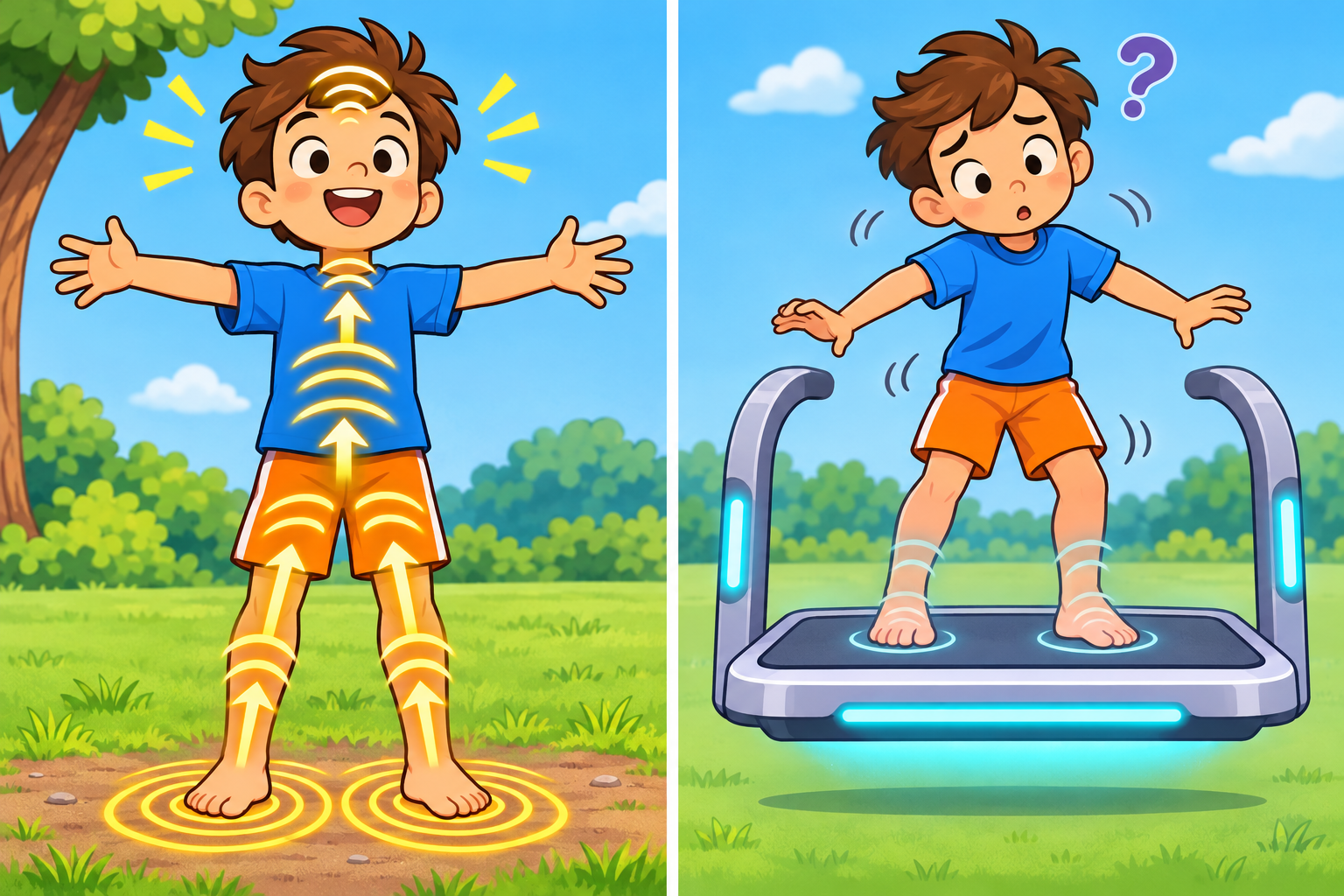
However, technology can still be highly effective when used correctly. A 2025 trial combining high-intensity interval training with robot-assisted gait therapy found that stroke patients experienced massive improvements in balance and walking speed. The robotic assistance helped guide their legs through proper walking motions, allowing them to train at higher intensities than they could on their own.
Who Benefits Or Needs Caution
- Athletes and Healthy Adults: Benefit most from neuromuscular warm-ups, single-leg stability drills, and eccentric training. Strength training should be prioritized to build a foundation before attempting highly explosive balance exercises. A meta-analysis on youth training confirmed that building basic strength first is necessary before moving to power and dynamic balance training.
- Stroke Survivors and Diabetics: Benefit greatly from Whole-Body Vibration (WBV) and structured, supervised gait training, as these methods safely stimulate damaged or recovering nervous systems.
- Older Adults: Can benefit from basic strength training and WBV, but should be cautious with anti-gravity treadmills if their primary goal is improving balance, as full ground contact provides necessary sensory feedback.
Related: The Science of Balance Training for Fall Prevention: What Actually Works
The Bottom Line
Balance training is highly effective, but the science shows that the best method depends entirely on your starting point. For healthy individuals and athletes, challenging the brain-muscle connection through neuromuscular warm-ups, single-leg exercises, and eccentric movements is the most reliable way to improve stability and prevent injuries like ankle sprains.
For clinical populations, such as stroke survivors or those with nerve damage, technologies like Whole-Body Vibration and robotic treadmills can provide the necessary stimulation to retrain the nervous system. However, we also know that sensory feedback from the ground is critical. Whatever method you choose, consistency and progressive challenge are required to keep your body steady on its feet.
Quick Reference: Key Studies
| Study Focus | Key Finding | Source |
|---|---|---|
| Muscle Activation in Balance | Biceps femoris and psoas major are critical for single-leg balance; obese individuals require higher activation, leaving less reserve strength. | PMID 29060803 |
| Neuromuscular Warm-ups | A 20-minute neuromuscular warm-up reduced ankle sprains by 74% in basketball players. | PMID 36208619 |
| Eccentric Training | Sliding disc exercises improved balance control by 59% and increased lower body strength. | PMID 34945261 |
| Whole-Body Vibration (Stroke) | Meta-analysis showed WBV significantly improves balance and walking function in stroke patients. | PMID 36684839 |
| Whole-Body Vibration (Healthy) | A 6-week trial on healthy university students found no improvements in balance or strength from WBV. | PMID 37266365 |
| Bodyweight Support Treadmills | Traditional treadmills improved balance better than anti-gravity treadmills due to better sensory feedback from the ground. | PMID 41200661 |
| Robotic Gait Training | High-intensity interval training combined with robotic assistance vastly improved balance in chronic stroke patients. | PMID 40753404 |
Last updated: November 2026
This article synthesizes findings from peer-reviewed research. It is for educational purposes only and does not constitute medical advice. Consult a healthcare provider before starting any new regimen.


Leave a Reply