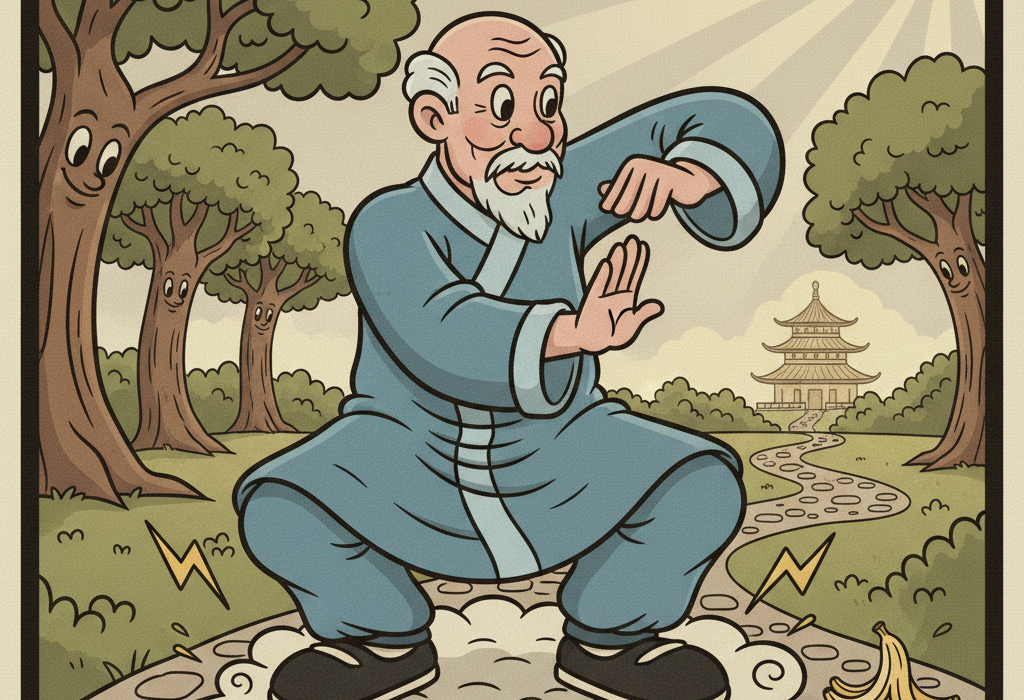
Falling is a major concern as we age. A simple trip or slip can lead to serious injuries, a loss of independence, and a lingering fear of falling again. While many people assume that losing balance is just a normal part of getting older, science tells a different story.
So, does Tai Chi actually prevent falls? Yes. Extensive research shows that practicing Tai Chi regularly can reduce the rate of falls in older adults by 20% to 43%. It achieves this by improving balance, strengthening leg muscles, and enhancing the brain’s ability to coordinate movement.
Think of your body’s balance system like a smartphone’s GPS. As we age, the signal between your brain, your muscles, and your joints can get weaker. Tai Chi acts like a software update. By moving slowly and deliberately, you train your brain and body to communicate better, helping you stay upright when you encounter an unexpected bump or slippery floor.

Here is a breakdown of what peer-reviewed research actually says about Tai Chi, how it works, and how to use it for fall prevention.
What the Research Shows About Tai Chi and Falls
Scientists have studied Tai Chi extensively over the last two decades. Because it involves continuous weight shifting and posture control, it is frequently compared to traditional physical therapy and standard exercise programs.
Reductions in Fall Rates
A massive 2020 review for the World Health Organization analyzed 116 studies involving over 25,000 older adults. The researchers found high-certainty evidence that balance and functional exercises, including Tai Chi, reduce the rate of falls by about 23% compared to doing nothing.
Similarly, a 2017 meta-analysis in the Journal of the American Geriatrics Society found that Tai Chi practice reduced the rate of falls by 43% in the short term (under 12 months) and 13% in the long term. More importantly, this same study found that Tai Chi reduced the rate of injurious falls by 50% in the short term.
Real-World Injury Prevention
It is one thing to test balance in a lab, but what happens in everyday life? A 2023 population-based study in Finland followed 914 women over two years. Half of the women were given access to city sports facilities and a 6-month supervised program that included Tai Chi and gym sessions. The researchers observed a 14.3% reduction in overall falls. Most notably, falls that caused severe injury and pain dropped by 41%, and fall-related fractures decreased by 38%.
How It Compares to Other Exercises
Research suggests Tai Chi holds its own against traditional physical therapy. A 2025 systematic review in Frontiers in Public Health compared complex, multi-part exercise programs against single-focus programs. The researchers noted that Tai Chi alone was sometimes just as effective, or even more effective, at reducing actual falls than complex programs that required expensive gym equipment.
Related: The Science of Balance Training for Fall Prevention: What Actually Works
How This Might Work: The Biology of Balance
Tai Chi might look like a simple, relaxing routine, but it is highly demanding on your nervous system and muscles. The practice improves balance through three primary mechanisms.
1. Improving Proprioception
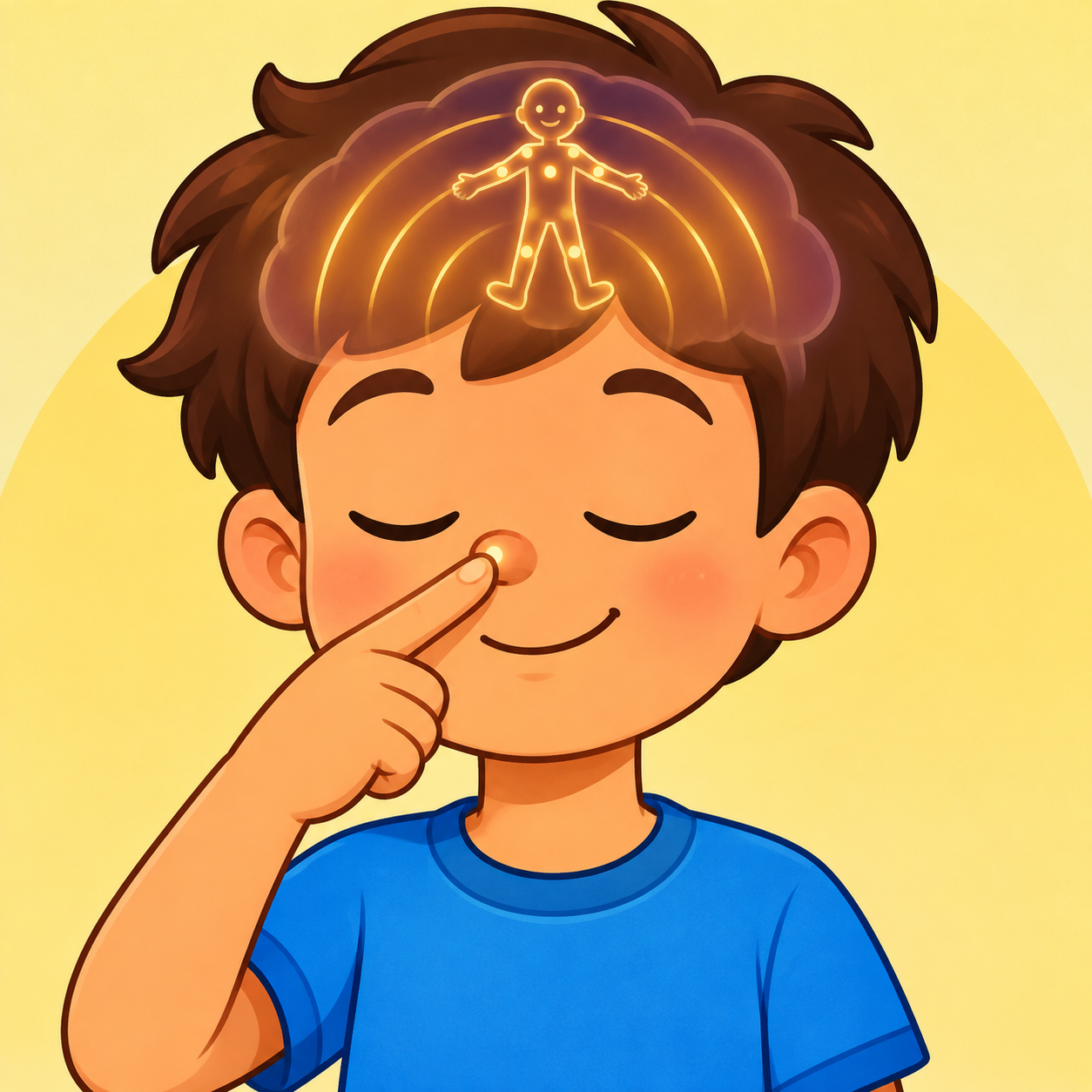
Proprioception (pro-pree-oh-SEP-shun) is your body’s ability to sense its location, movements, and actions. It is how you can touch your nose with your eyes closed.
Age and certain medical conditions can dull this sense. Tai Chi requires you to move slowly while paying strict attention to the exact position of your hands, feet, and torso. This constant mindfulness strengthens the neural pathways between your limbs and your brain, improving your spatial awareness.
2. Building Neuromuscular Strength
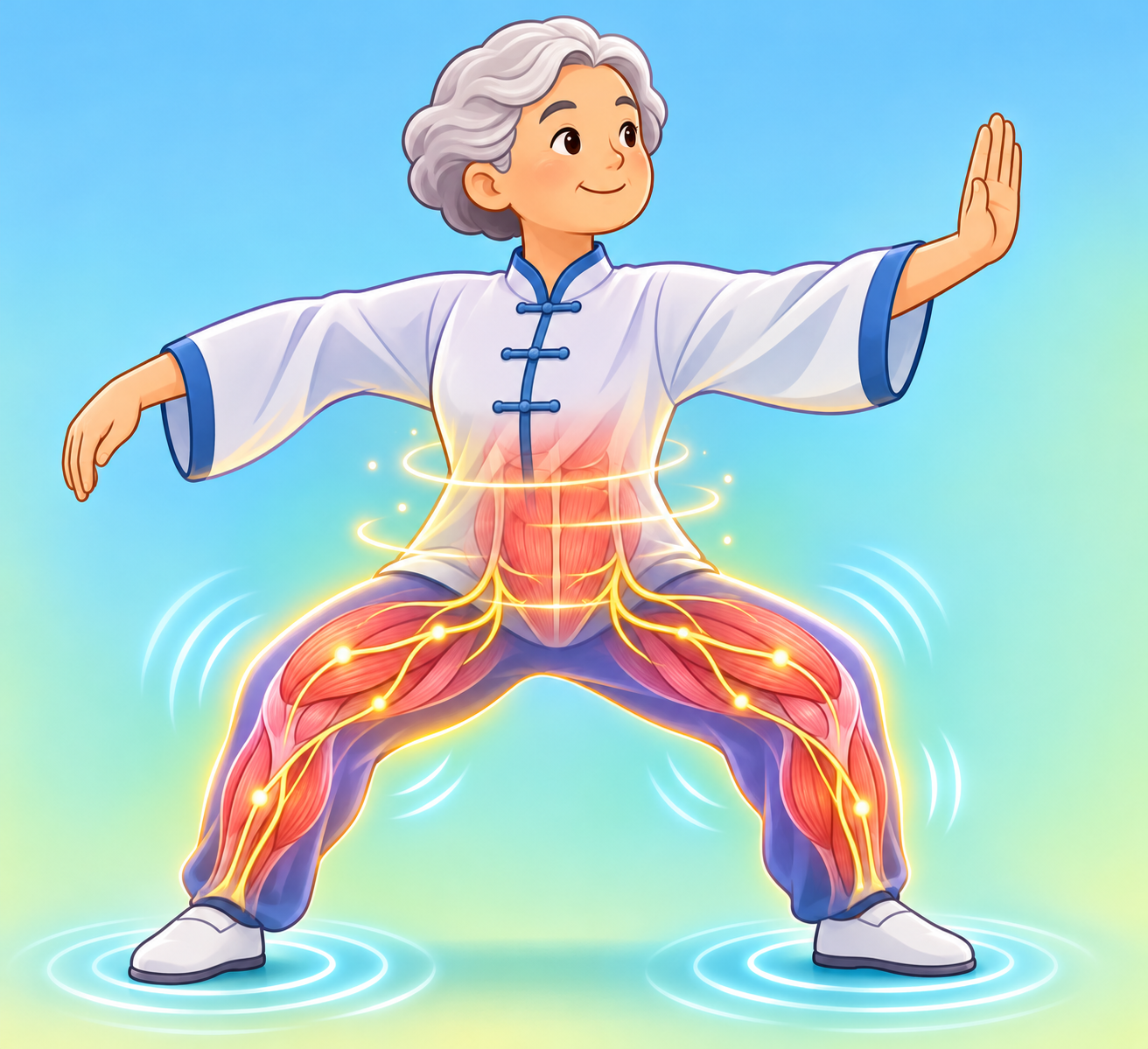
Neuromuscular control (noor-oh-MUS-kyoo-ler) refers to how well your nerves communicate with your muscles to produce coordinated movement.
Because Tai Chi is performed in a semi-squatting stance, your leg muscles are under constant tension. This builds endurance in the quadriceps, hamstrings, and the small stabilizing muscles around your ankles. A 2025 review in Sports noted that Tai Chi improves this neuromuscular response, helping older adults react faster if they start to lose their balance.
3. Enhancing Cognitive Function
Balance is not just physical; it requires mental processing. You have to navigate obstacles, talk, and walk at the same time. A 2021 critical analysis in the Journal of Aging and Physical Activity highlighted that Tai Chi may offer superior benefits over standard exercise because of its positive effects on cognitive functioning. The deep concentration required to memorize and execute Tai Chi movements translates to better multitasking and attention when walking down a busy street.
Who Benefits Most From Tai Chi?
The vast majority of research focuses on community-dwelling older adults (people aged 60 and older living independently). However, specific groups may see unique benefits:
- People with diabetic neuropathy: Nerve damage from diabetes can cause numbness in the feet, severely increasing fall risk. A 2024 review in Clinical Interventions in Aging found that Tai Chi, especially when combined with mental imagery, successfully improved balance and reduced fall risk in this population.
- Older adults with chronic pain: A 2023 study in Aging Clinical and Experimental Research suggests that because Tai Chi is a gentle, mind-body practice, it helps relieve multisite pain symptoms while simultaneously lowering the risk of falls.
- Postmenopausal women: A 2024 meta-analysis found that Tai Chi helps maintain bone mineral density in the spine. While this specific sub-study did not show a statistically significant drop in the raw number of falls for this exact group, the improvement in bone health means that if a fall does occur, a fracture is less likely.
Note on limitations: While evidence is very strong for older adults living independently, a 2021 review points out that evidence remains unclear on whether Tai Chi is equally effective for seniors living in long-term care facilities or hospitals, as they may have more severe mobility limitations.
Related: How to Promote Healthy Aging and Longevity: What the Latest Science Shows
Practical Guidance: How to Start
If you want to use Tai Chi to prevent falls, the science offers some clear guidelines on how to get the best results.
- Choose the right style: There are several styles of Tai Chi. A 2023 meta-analysis in Frontiers in Public Health compared different forms and found that Yang-style Tai Chi (which features slow, continuous, large movements) was generally more effective for balance than Sun-style Tai Chi.
- Aim for consistency: The same 2023 review found that effectiveness increases with time and frequency. Practicing two to three times a week is significantly better than once a week.
- Stick with it for at least 12 weeks: Most clinical trials require participants to practice for 12 to 24 weeks before measuring results. Balance adaptations in the brain and muscles take time.
- Virtual classes work too: During the COVID-19 pandemic, researchers tested virtual Tai Chi programs. A 2022 study in The American Journal of Nursing found that older adults could successfully learn the forms via video calls, maintaining high satisfaction and adherence rates.
Common Questions About Tai Chi and Falls
Is Tai Chi too slow to actually build muscle?
While the movements are slow, they require you to support your body weight on one leg at a time while bending your knees. This continuous tension builds significant functional strength in the lower body, which is exactly what you need to catch yourself during a trip.
Do I need to be flexible to start?
No. Tai Chi is highly adaptable. You only move within a range of motion that feels comfortable. Over time, the gentle stretching involved in the practice naturally improves joint flexibility.
Does Tai Chi help with the fear of falling?
Yes. Fear of falling often causes older adults to restrict their daily activities, which leads to muscle loss and actually increases fall risk. Research shows that as Tai Chi improves physical balance, it also builds psychological confidence, helping break this negative cycle.
The Bottom Line
Based on decades of randomized controlled trials, there is high-certainty evidence that Tai Chi is an effective way to prevent falls in community-dwelling older adults.
By combining slow, weight-bearing movements with deep concentration, Tai Chi improves muscle strength, spatial awareness, and cognitive focus. While it is not a quick fix, practicing a style like Yang Tai Chi two to three times a week for several months can reduce your risk of falling by roughly 20% to 40%. For older adults looking to maintain their independence, it is one of the most thoroughly researched and accessible options available.
Quick Reference: Key Studies
| Study Focus | Key Finding | Source |
|---|---|---|
| WHO Guidelines on Falls | High-certainty evidence shows exercise, including Tai Chi, reduces the rate of falls by 23%. | PMID 33239019 |
| Short vs. Long Term Effects | Tai Chi reduced fall rates by 43% in the short term (<12 months) and reduced injurious falls by 50%. | PMID 28736853 |
| Tai Chi Styles & Frequency | Yang-style Tai Chi is highly effective. Practicing 2-3 times a week yields better results than once a week. | PMID 37736087 |
| Real-World Injury Prevention | A 2-year study found a 6-month supervised exercise and Tai Chi program reduced severe injury falls by 41%. | PMID 37097767 |
| Diabetic Neuropathy | Tai Chi combined with mental imagery improved balance and reduced fall risk in patients with nerve damage. | PMID 39050517 |
| Multicomponent vs. Single | Tai Chi alone was found to be just as effective, or sometimes more effective, than complex multi-exercise programs. | PMID 40791619 |
Last updated: November 2026
This article synthesizes findings from peer-reviewed research. It is for educational purposes only and does not constitute medical advice. Consult a healthcare provider before starting any new regimen.

Leave a Reply