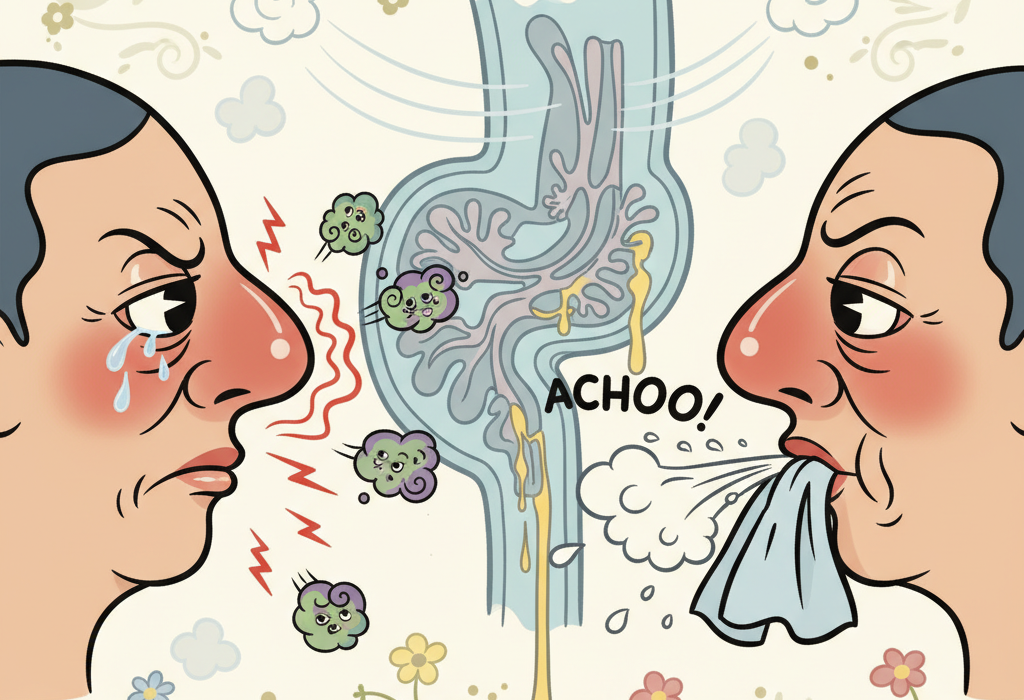
Have you ever had a cold that simply refused to go away? Weeks later, your nose is still stuffed, your face aches, and you have a lingering cough. You might not have a cold at all. You might be dealing with sinusitis, and your allergies could be the hidden trigger.
Sinusitis is incredibly common. A 2003 review in the Journal of Long-Term Effects of Medical Implants noted that about one in eight people in the United States will experience sinusitis at some point in their lives. The researchers highlighted that chronic sinus issues can reduce a person’s quality of life more severely than back pain or heart failure.
But what exactly is happening inside your head when your sinuses act up? And why do people with allergies seem to get sinus infections so often? By looking at decades of peer-reviewed research, we can understand how the nose, sinuses, and lungs all work together, and how to find relief when the system breaks down.
How Your Sinuses Actually Work
To understand why sinuses get infected, it helps to know how they function when you are healthy.
Your paranasal sinuses are hollow, air-filled cavities located within the bones of your face and skull. You have four pairs of them, located behind your forehead, cheeks, eyes, and nasal bones.
These cavities are not just empty space. They are lined with a special tissue that produces mucus. This tissue is covered in tiny, hair-like structures called cilia.
A 1992 study in The Journal of Allergy and Clinical Immunology explains a critical process called mucociliary clearance (myoo-koh-SIL-ee-air-ee KLEER-uhns). This is the system your body uses to keep your sinuses clean. The cilia beat in a coordinated rhythm, constantly sweeping mucus, trapped dust, and bacteria toward small exit doors called ostia (AHS-tee-uh).
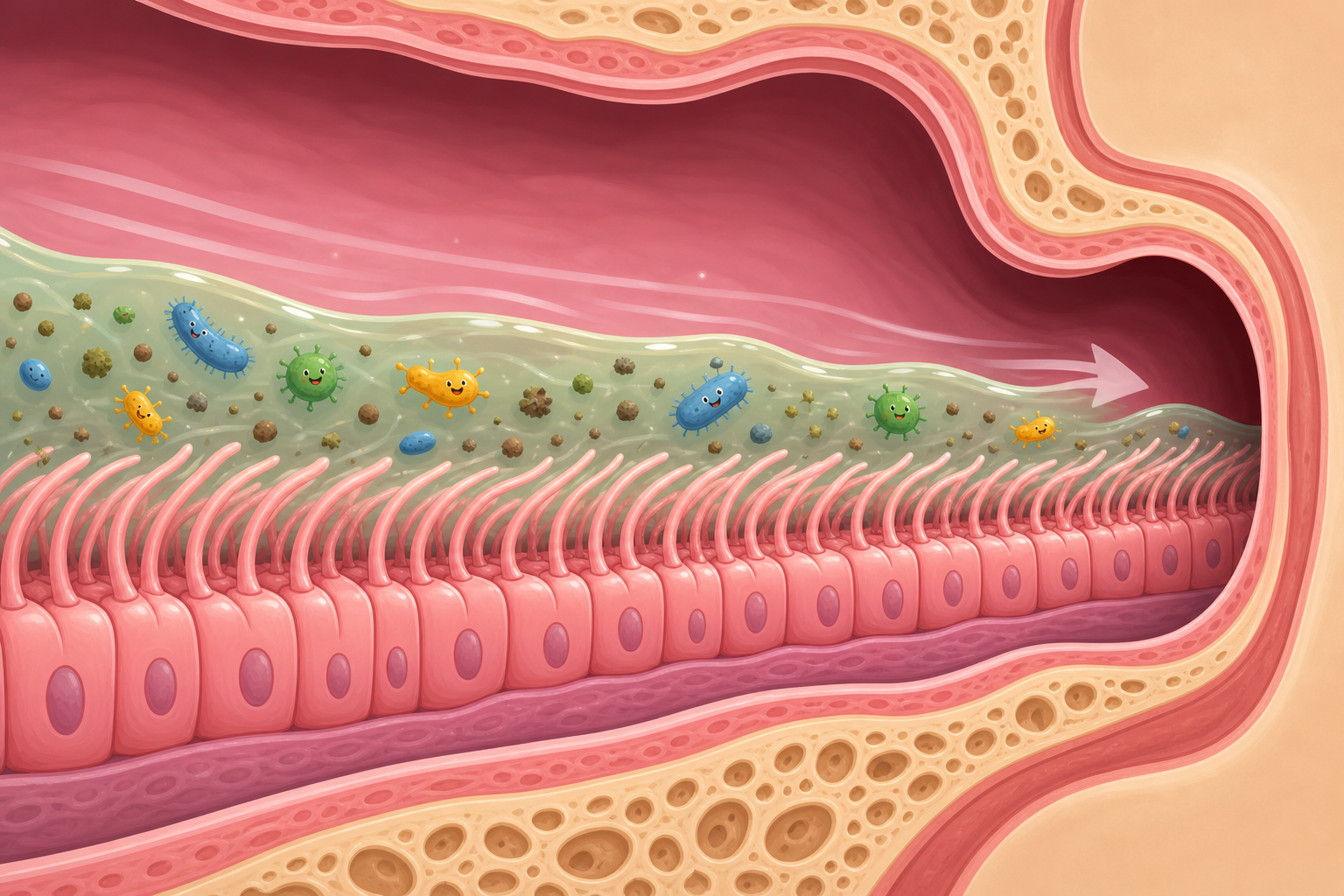
From the ostia, the mucus drains into your nasal cavity and down the back of your throat. You swallow it without ever noticing. This system warms, humidifies, and filters the air you breathe.
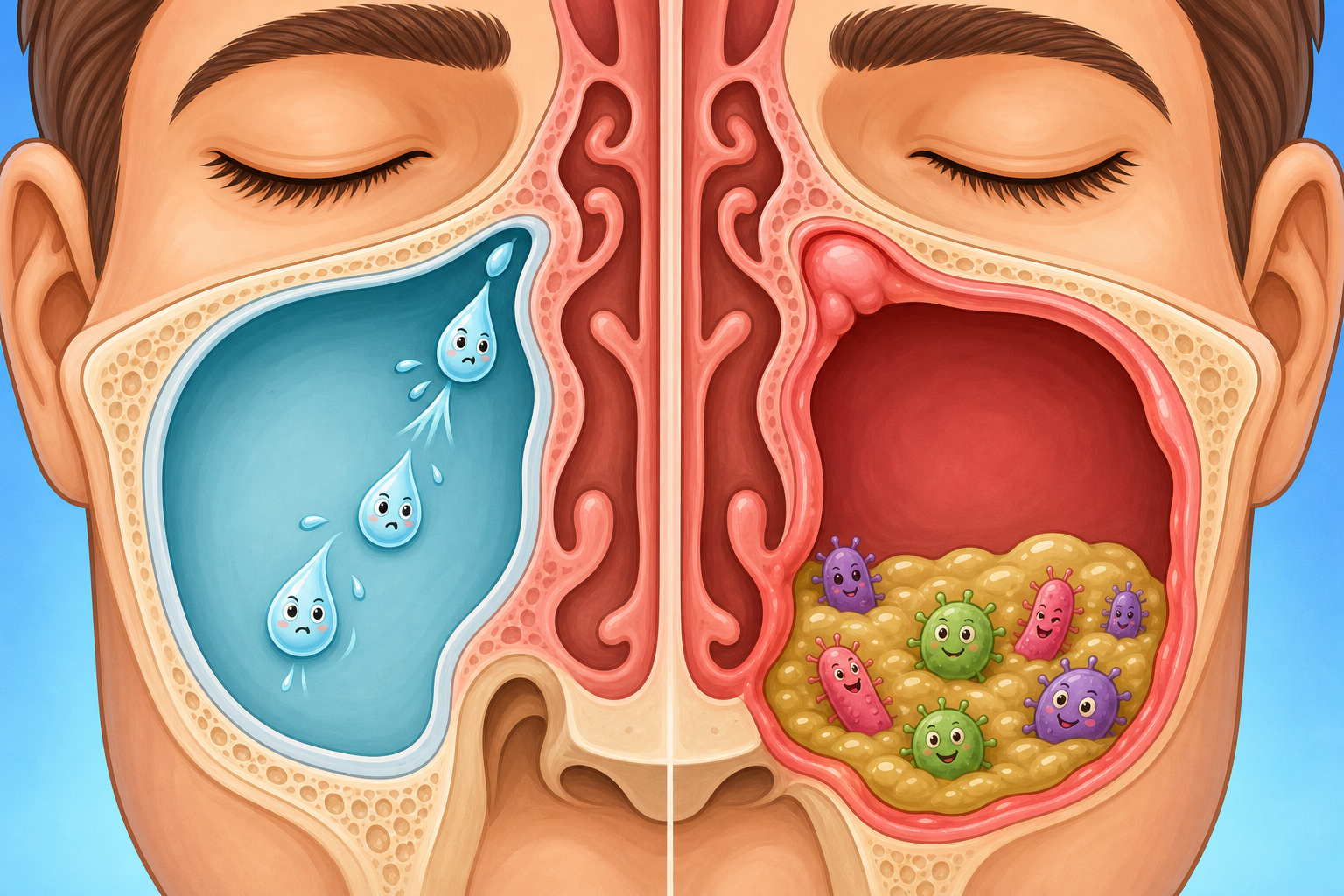
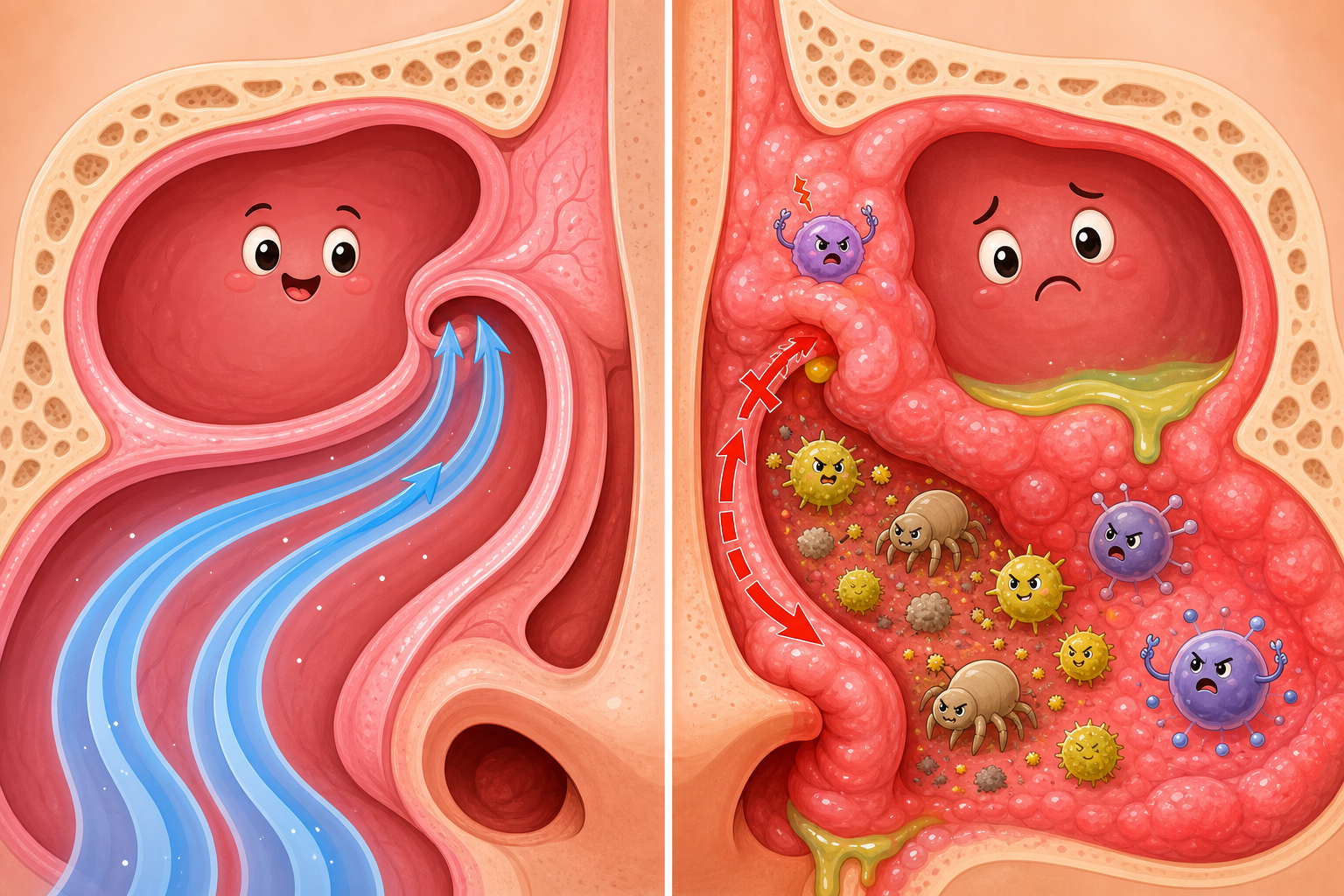
However, there is a design flaw in human anatomy. A 1988 review in The Journal of Allergy and Clinical Immunology points out that the ostia for the maxillary sinuses (the ones behind your cheeks) are located at the top of the sinus cavity. This means they have to drain upward against gravity. When the ostia become blocked, the mucus cannot escape. It pools inside the dark, warm sinus cavity, creating a perfect environment for bacteria to grow. This is sinusitis.
The Allergy and Sinusitis Connection
So, what causes the ostia to become blocked in the first place? Often, the culprit is inflammation, and allergies are a major driver of nasal inflammation.
When you have allergic rhinitis (hay fever), your immune system overreacts to harmless particles like pollen, dust mites, or pet dander. Your body releases chemicals that cause the lining of your nasal passages to swell.
A 1997 study in Acta Oto-Rhino-Laryngologica Belgica confirmed that nasal allergy is a significant risk factor for developing chronic inflammatory sinusitis. The constant allergic swelling physically blocks the sinus exit pathways.
Interestingly, the researchers found that when patients required sinus surgery to clear the blockages, both allergic and non-allergic patients experienced the same level of symptom relief. This suggests that while allergies often start the cascade of swelling and blockage, the physical obstruction is the ultimate problem that needs to be fixed.
Related: Why Do Some Children Develop Allergies and Asthma? What the Latest Science Shows
The Asthma Connection: The Unified Airway
Doctors used to treat the nose and the lungs as completely separate systems. Today, medical science recognizes the concept of the “unified airway.” What happens in your upper airway (your nose and sinuses) directly impacts your lower airway (your lungs).
A 1992 review in The Journal of Allergy and Clinical Immunology explored the strong connection between sinusitis and asthma. The researchers noted that treating a patient’s sinus infection frequently leads to a significant improvement in their asthma symptoms.
There are a few reasons why this happens:
1. Postnasal Drip: Infected mucus drips down the back of the throat and into the lungs, causing irritation and inflammation.
2. The Vagal Reflex: The nose and lungs share nerve pathways. Irritation in the sinuses can trigger a reflex in the nervous system that causes the airways in the lungs to constrict.
3. Mouth Breathing: When your nose is blocked, you breathe through your mouth. This means the air hitting your lungs is cold, dry, and unfiltered, which can trigger asthma attacks.
A 1987 study in the Southern Medical Journal also highlighted a specific condition known as the “aspirin triad.” This involves a combination of aspirin intolerance, asthma, and nasal polyps (non-cancerous growths in the sinuses). For these patients, managing sinus inflammation is absolutely critical for controlling their asthma.
The Mystery of the Chronic Cough
If you have a cough that lasts longer than eight weeks, it is considered a chronic cough. Many people assume a chronic cough means they have a lung problem.
However, a 2007 review in the Annals of Allergy, Asthma & Immunology found that one of the most common causes of chronic cough is actually upper airway cough syndrome, which is often driven by sinusitis and postnasal drip.
When mucus constantly drips down the back of your throat, it irritates the vocal cords and the cough receptors in your airway. Allergists often find that by treating the underlying sinus inflammation or allergy, the chronic cough finally disappears.
Fungal Sinusitis: When Mold is the Problem
Most acute sinus infections are caused by viruses or bacteria. However, fungi (molds) can also cause severe sinus problems. Fungal spores are everywhere in the air we breathe, but they only cause issues in certain people.
Research published in a 1998 issue of The American Journal of the Medical Sciences outlines different classifications of fungal sinusitis. Two of the most important types are allergic and invasive.
Allergic Fungal Rhinosinusitis (AFRS)
According to a 2018 study in The Journal of Allergy and Clinical Immunology, AFRS occurs in people with healthy immune systems who have a severe allergic reaction to inhaled fungi.
In AFRS, the body sends a massive amount of white blood cells called eosinophils (ee-oh-SIN-oh-fils) to the sinuses. This creates a thick, sticky mucus known as “allergic mucin.” This condition almost always requires surgical removal of the thick mucus, followed by oral corticosteroids to prevent the inflammation from returning.
Acute Invasive Fungal Sinusitis (AIFS)
Unlike the allergic version, AIFS is a medical emergency. A 2023 study in the American Journal of Rhinology & Allergy examined the genetics of this aggressive disease. The researchers looked at the sinus tissue of patients with AIFS and found significant changes in genes related to cell adhesion and blood vessel formation. This type of infection usually only affects people with severely weakened immune systems, and it requires immediate medical intervention.
Sinusitis in Children
Children are not just small adults, and their sinus issues develop differently.
A 2007 report in Current Allergy and Asthma Reports explains that pediatric bacterial sinusitis usually follows a standard viral cold. Because children get colds much more frequently than adults, they are at a higher risk for sinus infections.
Doctors look for specific predisposing factors in children who get recurrent sinus infections. These include:
- Undiagnosed allergic rhinitis
- Structural abnormalities in the nose
- Gastroesophageal reflux disease (GERD)
Acid reflux can actually reach the back of the nasal passages, causing inflammation that blocks the sinuses. Identifying these hidden triggers is crucial for preventing future infections.
Related: What Science Actually Says About Managing GERD and Acid Reflux
How Age Changes Your Sinuses
As we grow older, every part of our body changes, including our noses.
A 2016 review in the International Forum of Allergy & Rhinology proposed the term presbynasalis (prez-bee-nay-ZAL-is) to describe the aging nose. The researchers noted several normal changes that happen as we age:
1. Immunosenescence (ih-myoo-no-suh-NES-uhns): The immune system becomes less responsive, making it slightly harder to fight off sinus infections.
2. Increased Rhinorrhea: Older adults frequently experience a chronic runny nose.
3. Diminished Olfaction: The sense of smell naturally decreases over time.
Importantly, the researchers found that if an older adult requires sinus surgery to clear chronic blockages, the procedures are generally very safe and effective.
Medical and Surgical Treatments
Treating sinusitis depends entirely on finding the root cause. A 1986 study in Allergologia et Immunopathologia emphasizes that doctors must look beyond the immediate infection to understand why the blockage happened in the first place.
For acute sinusitis, medical management is the first step. This often includes:
- Saline irrigation to physically wash out mucus
- Nasal steroid sprays to reduce allergic swelling
- Decongestants to open the ostia
- Antibiotics (only if the infection is bacterial, not viral)
If the sinuses remain blocked for more than three months despite medication, it is considered chronic sinusitis. At this stage, the tissue inside the sinuses may be irreversibly altered. In these cases, functional endoscopic sinus surgery is often used to physically widen the natural drainage pathways, allowing the sinuses to clean themselves normally again.
Common Questions About Sinusitis and Allergies
Can allergies turn into a sinus infection?
Yes. Allergies cause the nasal passages to swell, which blocks the natural drainage pathways of the sinuses. When mucus gets trapped, bacteria can grow, leading to a sinus infection.
How can I tell the difference between allergies and a sinus infection?
Allergies typically cause clear, watery nasal discharge, sneezing, and itchy eyes. A sinus infection usually involves thick, discolored mucus, facial pressure, pain in the teeth, and sometimes a low-grade fever.
Do antibiotics help with sinus allergies?
No. Antibiotics only kill bacteria. They do not reduce allergic inflammation or treat viral colds. Taking antibiotics for allergies will not help and can contribute to antibiotic resistance.
Can postnasal drip cause a chronic cough?
Yes. Postnasal drip from allergies or sinusitis is one of the leading causes of a chronic cough. The constant dripping irritates the throat and triggers the cough reflex.
The Bottom Line / Takeaways
The research clearly shows that your sinuses, your immune system, and your lungs are deeply connected.
- Allergies are a major trigger. Allergic inflammation blocks the sinus exit doors, trapping mucus and allowing bacteria to thrive.
- The lungs suffer too. Chronic sinus inflammation can worsen asthma and cause a persistent chronic cough.
- Anatomy matters. The upward drainage of the cheek sinuses makes humans naturally prone to sinus blockages.
- Treatment requires finding the root cause. Fixing a sinus problem often means managing underlying allergies, acid reflux, or structural issues, rather than just taking repeated rounds of antibiotics.
If you suffer from constant sinus pressure or a cough that will not quit, treating your underlying allergies might be the key to finally breathing easily again.
Quick Reference: Key Studies
| Study Focus | Key Finding | Source |
|---|---|---|
| Quality of Life | Sinusitis affects 1 in 8 people and can reduce quality of life more than back pain or heart failure. | PMID 14516184 |
| Allergy Connection | Nasal allergy is a significant risk factor for chronic inflammatory sinusitis. | PMID 9444371 |
| Asthma Link | Treating sinusitis frequently leads to improvement in a patient’s asthma symptoms. | PMID 1527345 |
| Chronic Cough | Upper airway cough syndrome (driven by sinusitis) is a leading cause of chronic cough. | PMID 17458425 |
| Aging Nose | Aging causes normal sinus changes, including a weaker immune response and decreased smell, termed presbynasalis. | PMID 27279549 |
| Fungal Sinusitis | Allergic fungal rhinosinusitis creates thick mucus and usually requires surgical removal. | PMID 30080526 |
Last updated: June 2026
This article synthesizes findings from peer-reviewed research. It is for educational purposes only and does not constitute medical advice. Consult a healthcare provider before starting any new regimen.

Leave a Reply