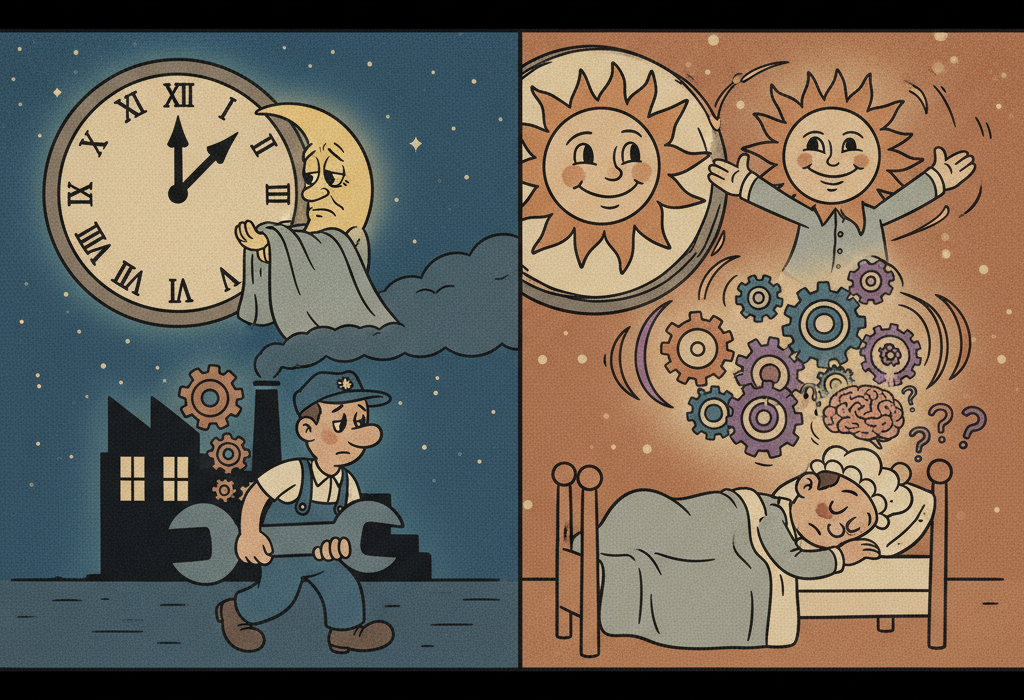
Modern society runs around the clock. From nurses and doctors saving lives at 3:00 a.m. to factory workers and truck drivers keeping supply chains moving, an estimated 15 to 30 percent of adults work outside the traditional daytime schedule. While this 24/7 availability is necessary for our world to function, it asks our bodies to do something they were not naturally designed to do: stay awake when it is dark and sleep when it is light.
For decades, scientists have studied how these unusual hours affect human health. The core issue revolves around the circadian rhythm (sir-KAY-dee-un RITH-um), which is the 24-hour internal clock that runs in the background of your brain and cycles between sleepiness and alertness at regular intervals.
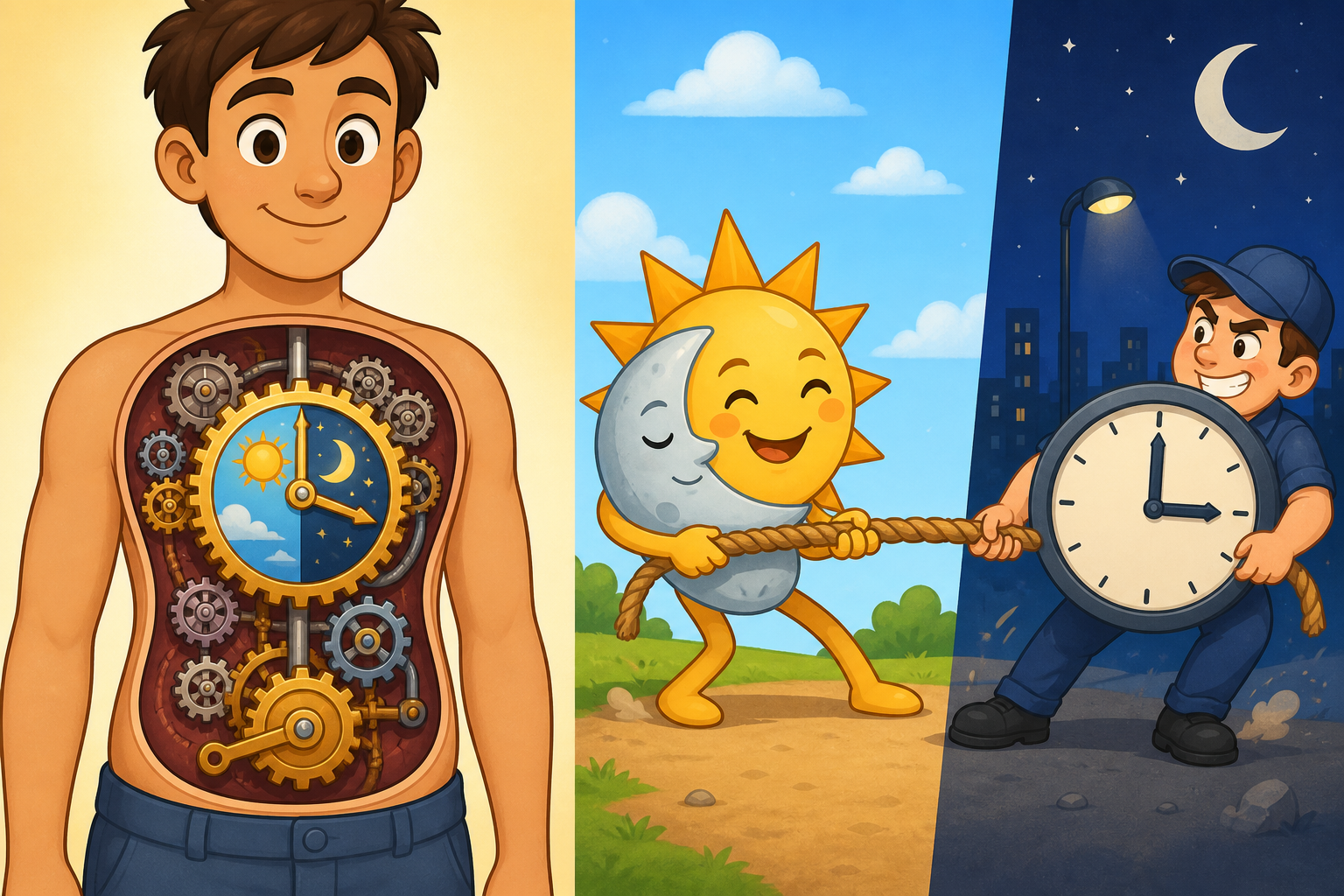
When your work schedule contradicts this natural rhythm, it creates a biological tug-of-war. This article will explore what peer-reviewed research actually shows about how shift work affects the body, why some people handle it better than others, and what science-backed steps can help manage the impact.
What the Research Shows About Shift Work
When we talk about shift work, we are referring to any schedule that falls outside the standard daytime hours. This includes permanent night shifts, rotating shifts, and early morning shifts. Research shows that these schedules can have a profound impact on various body systems.
The Disruption of Sleep and Alertness
The most immediate and obvious effect of shift work is on sleep. A 2016 systematic review in BMJ found that shift workers frequently experience shortened sleep duration and poor sleep quality. This is particularly true for those working night shifts or early morning shifts.
When a night shift worker tries to sleep during the day, they are fighting their body’s natural drive to be awake. A 2019 study on healthcare workers in Scientific Reports showed that sleep is most severely restricted between consecutive night shifts and during “quick returns” (when a worker transitions from an evening shift directly into a morning shift). The researchers noted that objective performance and alertness were significantly impaired during night shifts, even if the workers felt like they were getting used to the schedule.
Hormone Havoc: Cortisol and Melatonin
Your circadian rhythm tightly controls the release of specific hormones. Two of the most important are melatonin, which makes you sleepy, and cortisol, which wakes you up and helps manage stress.
Under normal conditions, cortisol (KOR-tuh-sol) levels spike sharply right after you wake up, preparing you for the day. This is called the Cortisol Awakening Response. However, a 2025 review in the International Journal of Molecular Sciences found that night shift work blunts this morning spike and flattens the normal daily curve of cortisol. Instead of rising and falling predictably, cortisol levels remain somewhat elevated throughout the day and night. This state of chronic low-grade stress can increase blood pressure and blood sugar.
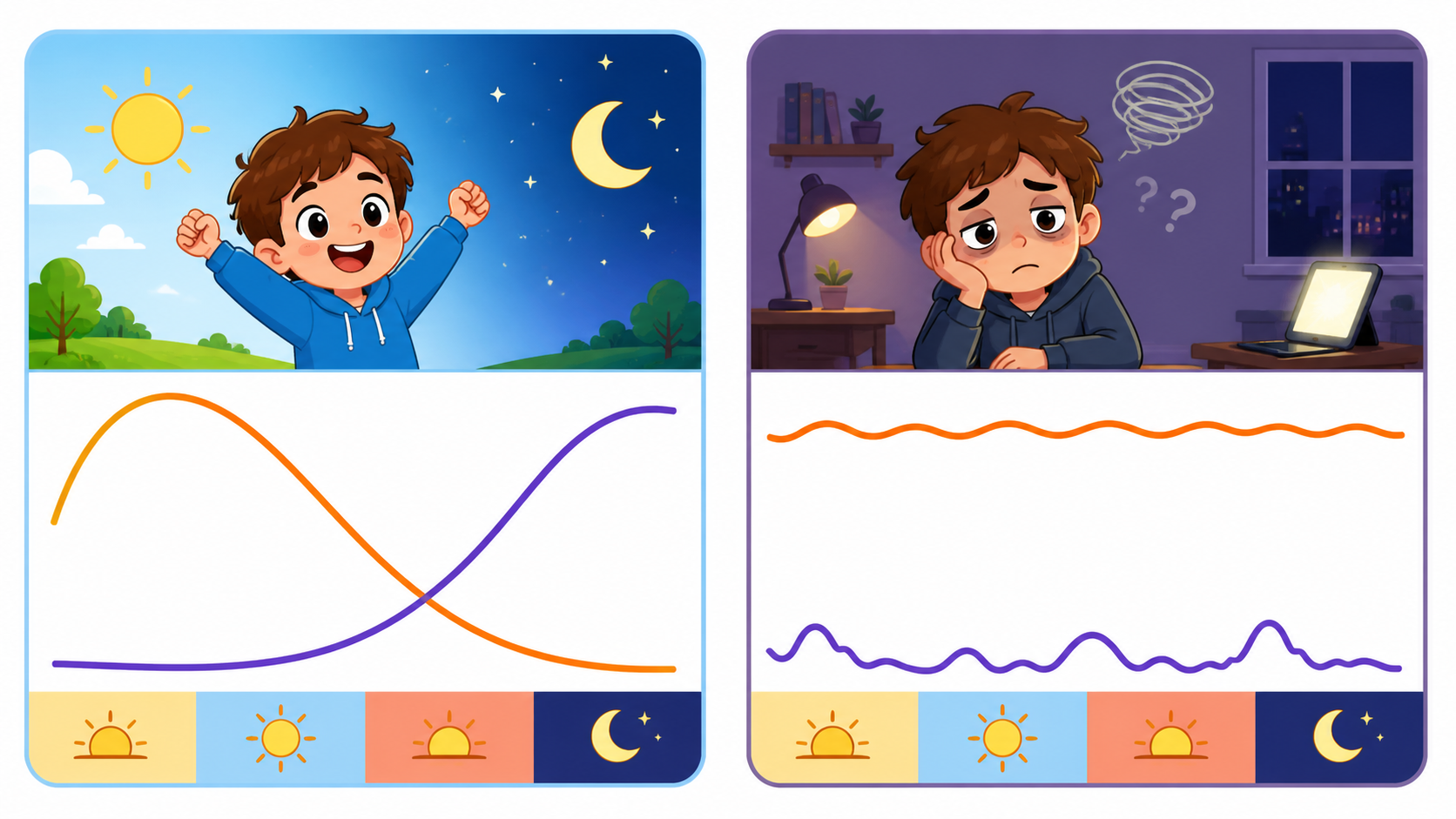
Similarly, irregular shift patterns can cause chaos for these hormones. A 2022 study of midwives in Frontiers in Public Health found that those working highly irregular night shifts had more inhibited and disrupted cortisol rhythms compared to those working regular, predictable shifts.
Cardiovascular and Metabolic Strain
Because hormones like cortisol are altered, shift work is associated with changes in heart health and metabolism.
A 2024 study in Industrial Health tracked the heart rates of nurses continuously for two weeks. The researchers found that the normal 24-hour rhythm of the heart rate was significantly flattened and delayed during night shifts. Alarmingly, it took more than two full days of rest for the heart rate rhythm to begin recovering after a night shift ended.
Over the long term, this strain can add up. A 2019 systematic review in Occupational Medicine analyzed 24 studies and found that shift workers face a higher risk of metabolic syndrome, type 2 diabetes, and cardiovascular disease compared to daytime workers.
The Gut Microbiome Connection
Scientists are increasingly looking at how shift work affects the digestive system. Your gut is home to trillions of bacteria, collectively known as the microbiome (my-kroh-BY-ohm).
A 2025 review in Critical Reviews in Oncogenesis highlights that the bacteria in our gut have their own circadian rhythms. When a host works night shifts and eats at irregular hours, it causes a misalignment between the host’s central clock and the gut bacteria’s clock. This can lead to dysbiosis (an imbalance of gut bacteria) and increased systemic inflammation, which may partly explain why shift workers frequently experience gastrointestinal discomfort.
Related: How Your Gut Microbiome Actually Affects Brain Health
How This Might Work: The Out-of-Sync Orchestra
To understand why shift work impacts so many different body systems, it helps to look at how the body keeps time.
Your body is like a massive symphony orchestra. The conductor is a tiny cluster of cells in the brain called the suprachiasmatic nucleus (SOO-pruh-kai-az-MAT-ik NOO-klee-us), or SCN. The SCN is the master clock, and it sets the tempo based primarily on light and dark.
However, every organ in your body (the liver, the heart, the muscles, the gut) has its own internal clock, known as a peripheral clock. These peripheral clocks take cues from the master clock, but they also take cues from your behavior, especially when you eat and when you exercise.
A 2022 review in the Journal of Biological Rhythms explains a concept called “internal desynchronization.” When you work a night shift, the artificial light and your wakefulness confuse the master clock, but it stubbornly tries to stay on a daytime schedule. Meanwhile, because you are eating meals in the middle of the night, your liver and digestive clocks shift their timing to match your food intake.
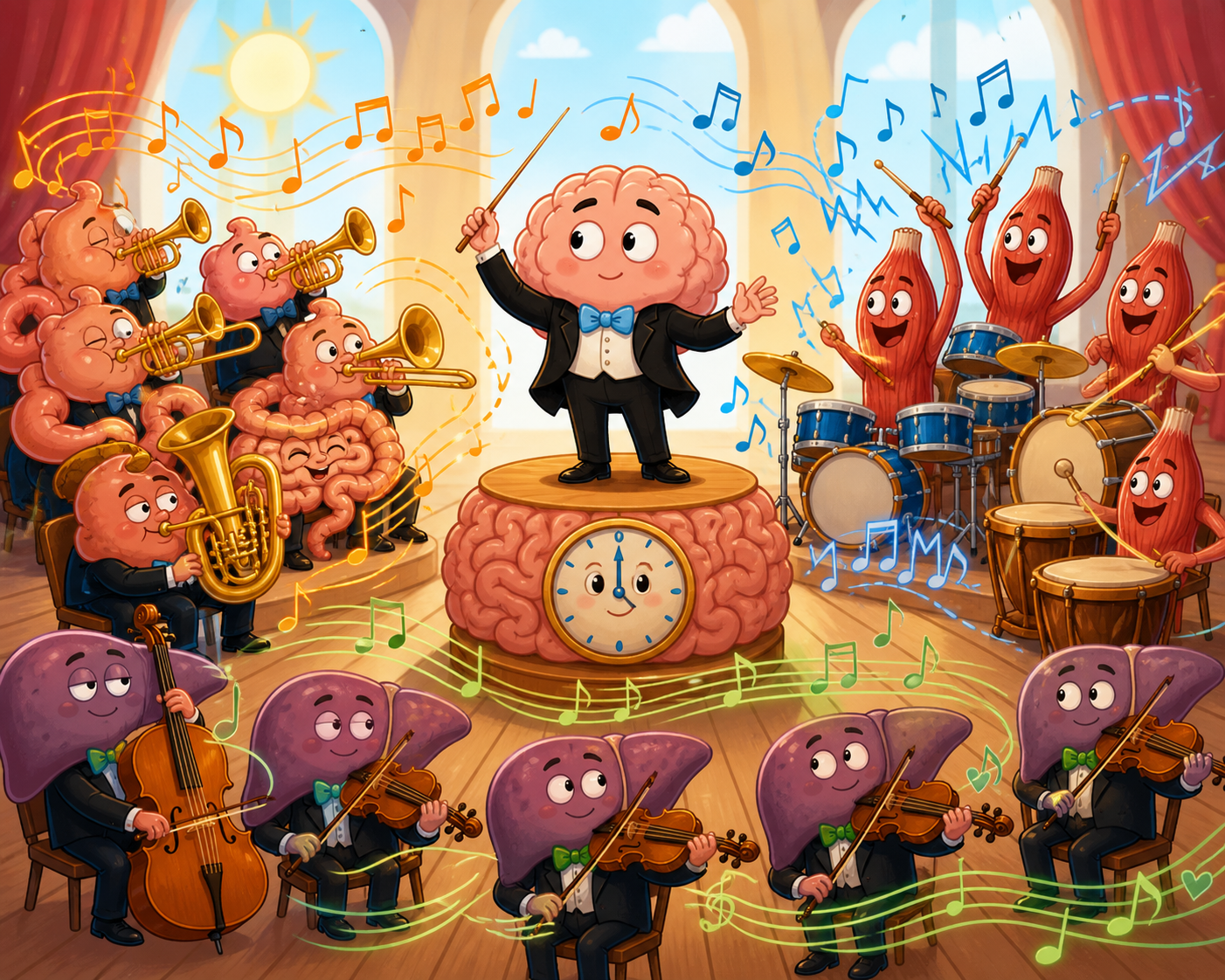
Suddenly, the conductor is waving the baton for a slow, quiet lullaby, but the horn section (your digestive system) is loudly playing a fast march. This internal mismatch is what causes the grogginess, indigestion, and long-term metabolic strain associated with shift work.
| Clock Type | Location | Primary Time-Setter | Reaction to Shift Work |
|---|---|---|---|
| Master Clock | Brain (SCN) | Light exposure | Resists changing; tries to keep you on a day schedule. |
| Peripheral Clocks | Liver, Muscles, Gut | Food timing and exercise | Shifts rapidly based on when you eat your meals. |
Who Benefits Or Needs Caution: The Role of Chronotypes
Not everyone responds to shift work in the same way. A major factor in how well you tolerate unusual hours is your chronotype (KROH-noh-type), which is your natural genetic preference for being a morning person or an evening person.
- Morning Types (Larks): People who naturally wake up early tend to struggle the most with night shifts. Their body temperature drops early in the evening, making it incredibly difficult for them to stay awake and alert during the night. However, they handle early morning shifts very well.
- Evening Types (Owls): People who naturally stay up late generally tolerate night shifts better. However, a 2020 study in the International Journal of Environmental Research and Public Health found that evening types suffer greatly when forced to work fixed early morning shifts, often reporting the poorest sleep quality.
Additionally, shift work can interact with social and economic factors. A 2020 review looking at shift work and breast cancer noted that lower-wage workers who have no control over their schedules experience compounded stress. The biological stress of disrupted sleep is worsened by the psychological stress of unpredictable shifts and arranging child care, a combination researchers call “weathering.”
Common Misunderstandings About Shift Work
Myth: If you work nights long enough, your body completely adapts.
It is a common belief that veteran night shift workers have fully flipped their internal clocks. Research shows this is rarely true. According to the 2022 review in the Journal of Biological Rhythms, only about 25 percent of night workers ever show signs of full circadian adaptation. Because most shift workers revert to a normal daytime schedule on their days off to see family and friends, the master clock never gets the consistent signals it needs to permanently flip.
Myth: Shift work directly causes cancer.
While the World Health Organization classifies night shift work as a “probable carcinogen” (specifically related to breast and prostate cancer), it is vital to understand the difference between correlation and causation. Shift work is associated with a higher risk, but it does not guarantee disease. The risk is believed to come from the suppression of melatonin by artificial light at night, but lifestyle factors like diet, exercise, and genetics still play massive roles in overall risk.
Practical Guidance: What Science Says Helps
While we cannot eliminate shift work from society, research points to several actionable strategies that can help minimize the negative impacts on the body.
1. Optimize Light Exposure
A 2024 study in the journal Sleep tested “circadian-informed lighting” during simulated night shifts. Researchers exposed workers to bright, blue-enriched light during the early parts of the night shift, and dim, blue-depleted light toward the end of the shift. This lighting strategy significantly improved worker vigilance, reduced sleepiness, and resulted in an extra 52 minutes of daytime sleep following the shift.
- Action: Seek bright light at the start of a night shift. Wear dark sunglasses on your commute home in the morning to block sunlight, which prevents your master clock from thinking it is time to wake up.
Related: How Your Circadian Rhythm Controls Sleep (And What Science Says About Fixing It)
2. Time Your Meals Carefully
Because peripheral clocks in the liver and gut are set by food, eating a heavy meal at 3:00 a.m. can cause severe internal desynchronization. A 2020 review in Endocrinology suggests that Time-Restricted Feeding (TRF) can help.
- Action: Try to eat your main meals before your night shift begins or early in the shift. Avoid heavy, high-carbohydrate meals in the middle of the biological night when your body is least equipped to process sugar.
3. Smarter Schedule Rotation
For workplaces that use rotating shifts, the direction of the rotation matters.
- Action: Evidence suggests that “forward rotation” (moving from morning shift, to evening shift, to night shift) is easier on the body than “backward rotation.” Furthermore, avoiding “quick returns” (having less than 11 hours of rest between two different shifts) is critical for preventing severe sleep deprivation.
The Bottom Line
The scientific consensus is clear: shift work, particularly night work and irregular rotating shifts, disrupts the body’s natural circadian rhythm. This disruption goes beyond just feeling tired. It creates an internal mismatch between the brain’s master clock and the clocks in our organs, which is associated with an increased risk of metabolic issues, cardiovascular strain, and certain chronic diseases.
However, it is important not to panic. While the risks are real, they are often manageable. Not everyone is affected equally, and your natural chronotype plays a large role in what shifts you can handle. By strategically managing light exposure, keeping meal times as consistent as possible, and advocating for ergonomic shift scheduling (like forward rotations and adequate rest periods), shift workers can significantly cushion the impact on their biological clocks.
Quick Reference: Key Studies
| Study Focus | Key Finding | Source |
|---|---|---|
| Circadian Lighting | Blue-enriched light at work and dim light before bed improved vigilance and added 52 minutes of sleep. | PMID 39078935 |
| Heart Rate Rhythms | Night shifts flatten the daily heart rate rhythm, requiring more than two days of rest to fully recover. | PMID 38749757 |
| Internal Desynchrony | Master clocks resist adapting to night shifts, while peripheral clocks (like in the gut) shift based on meals. | PMID 34969316 |
| Shift Work & Health | Systematic review confirms shift work increases risks for metabolic syndrome, diabetes, and heart disease. | PMID 31132107 |
| Sleep Restriction | Sleep is most restricted during consecutive night shifts and “quick returns” between evening and day shifts. | PMID 30874565 |
| Gut Microbiome | Circadian misalignment from shift work alters gut bacteria, contributing to inflammation and dysbiosis. | PMID 40561433 |
Last updated: September 2026
This article synthesizes findings from peer-reviewed research. It is for educational purposes only and does not constitute medical advice. Consult a healthcare provider before starting any new regimen.
Leave a Reply