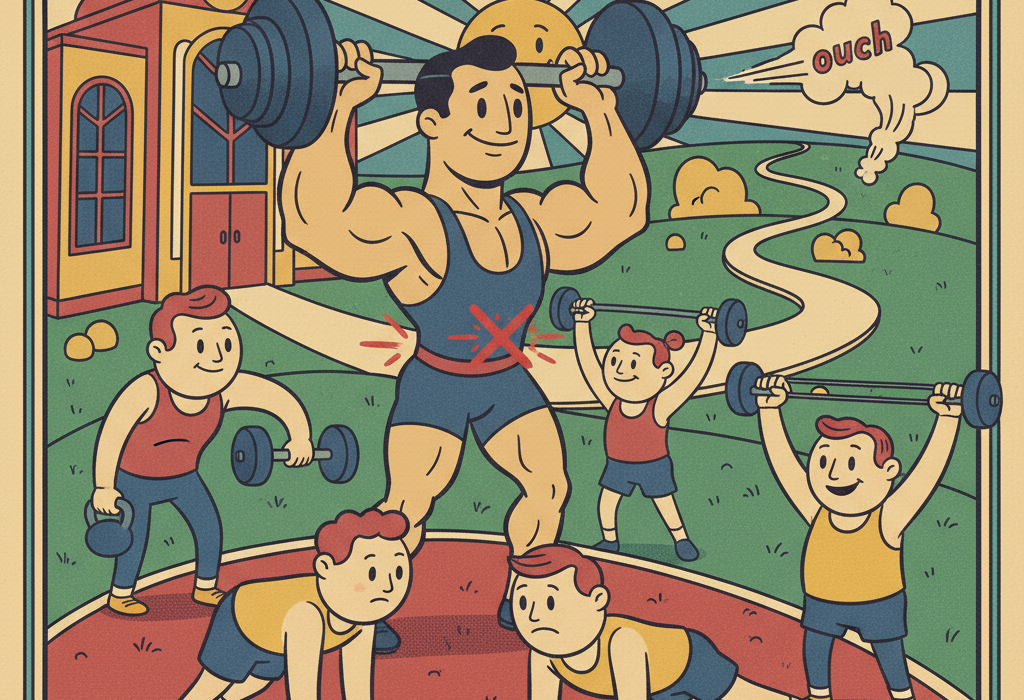
Imagine waking up with a stiff, aching lower back. For decades, the standard medical advice for this problem was to lie down and rest. We now know that prolonged rest can actually make the problem worse. Today, scientists are looking at an approach that sounds almost like the opposite of rest. That approach is strength training.
For many people, the idea of lifting weights when their back hurts sounds risky. However, a growing body of research shows that strengthening the muscles around your spine is one of the most reliable ways to reduce pain and improve daily function.
This article explores what the latest scientific studies say about using strength training to treat back pain, which exercises work best, and who should be cautious before picking up a barbell.
Understanding Chronic Low Back Pain
Before looking at the solutions, it helps to understand the problem. Most research on this topic focuses on a condition called non-specific chronic low back pain (KRON-ik non-spuh-SIF-ik loh bak payn).
This term describes pain that lasts for more than 12 weeks and does not have a clear, specific medical cause like a bone fracture, infection, or tumor. It is incredibly common. The spine is a complex structure of bones, discs, nerves, and muscles. When the muscles supporting the spine become weak or fatigued, the burden falls on the passive structures, like the ligaments and spinal discs, leading to discomfort.
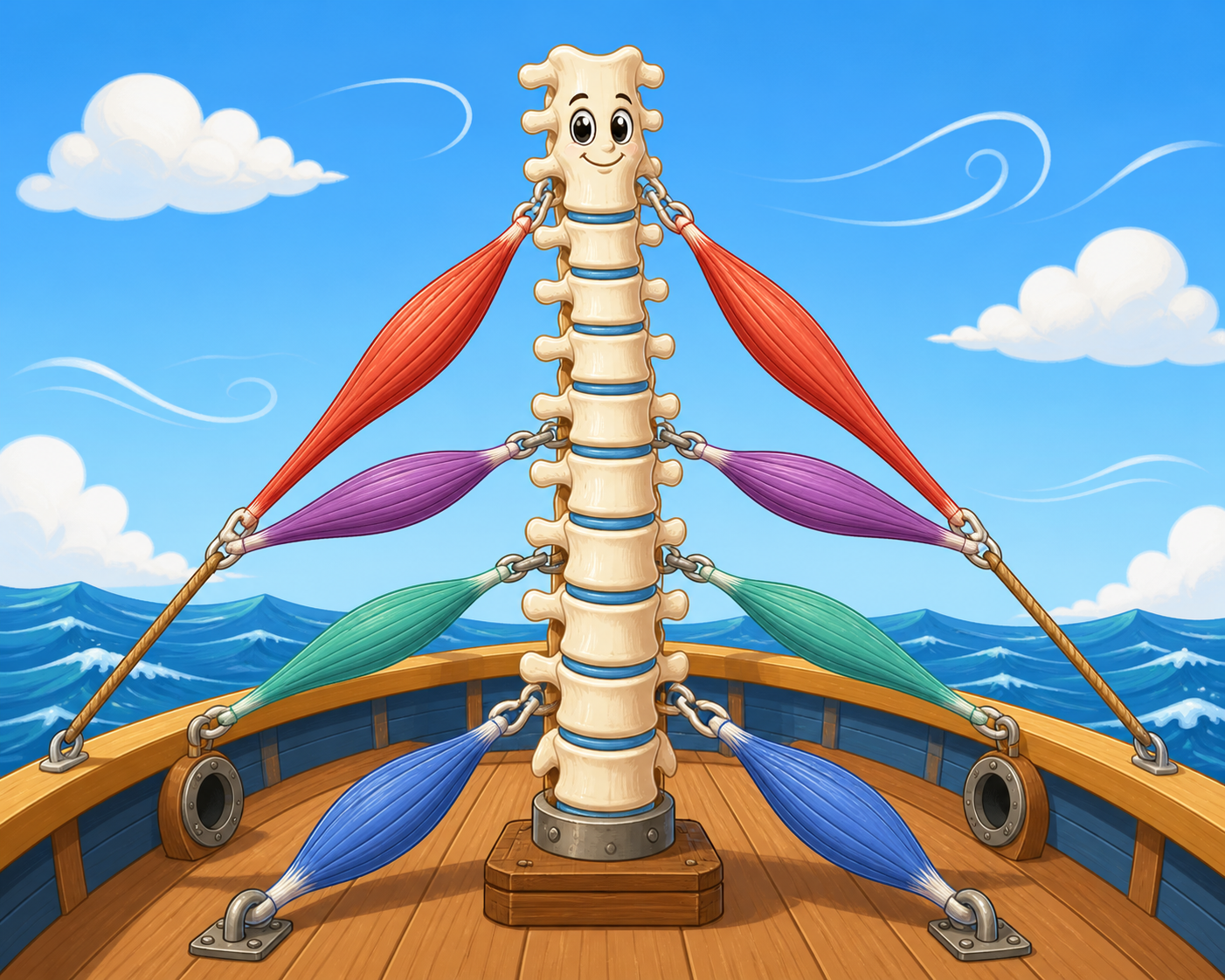
Your spine is a lot like the mast of a ship. The mast itself cannot stand up against strong winds without the thick ropes pulling it tight from all sides. In your body, your muscles act as those ropes. If the ropes are weak, the mast takes too much stress.
What the Research Shows: The Power of Resistance
When researchers want to know if a treatment works, they look at multiple studies over time. A 2026 review in Disability and rehabilitation analyzed ten different clinical trials. The researchers concluded that resistance training programs effectively reduce pain intensity and disability in patients with chronic low back pain.
But is strength training better than other types of exercise? To answer this, scientists use a tool called a network meta-analysis, which compares many different treatments at once.
A 2022 review in The Journal of orthopaedic and sports physical therapy compared 118 trials involving nearly 10,000 participants. They found that almost all physical exercises helped, but the absolute best interventions for reducing disability were Pilates, strength training, and core-based exercises.
Similarly, an earlier 2020 review in the British journal of sports medicine found that resistance training was highly effective for improving physical function and mental health in back pain patients.
Related: The Science of Weight Training: How Resistance Exercise Changes Your Body
The Muscles That Protect Your Spine
When we talk about strength training for back pain, we are not just talking about doing sit-ups. The research points to specific muscle groups that need attention.
The Posterior Chain
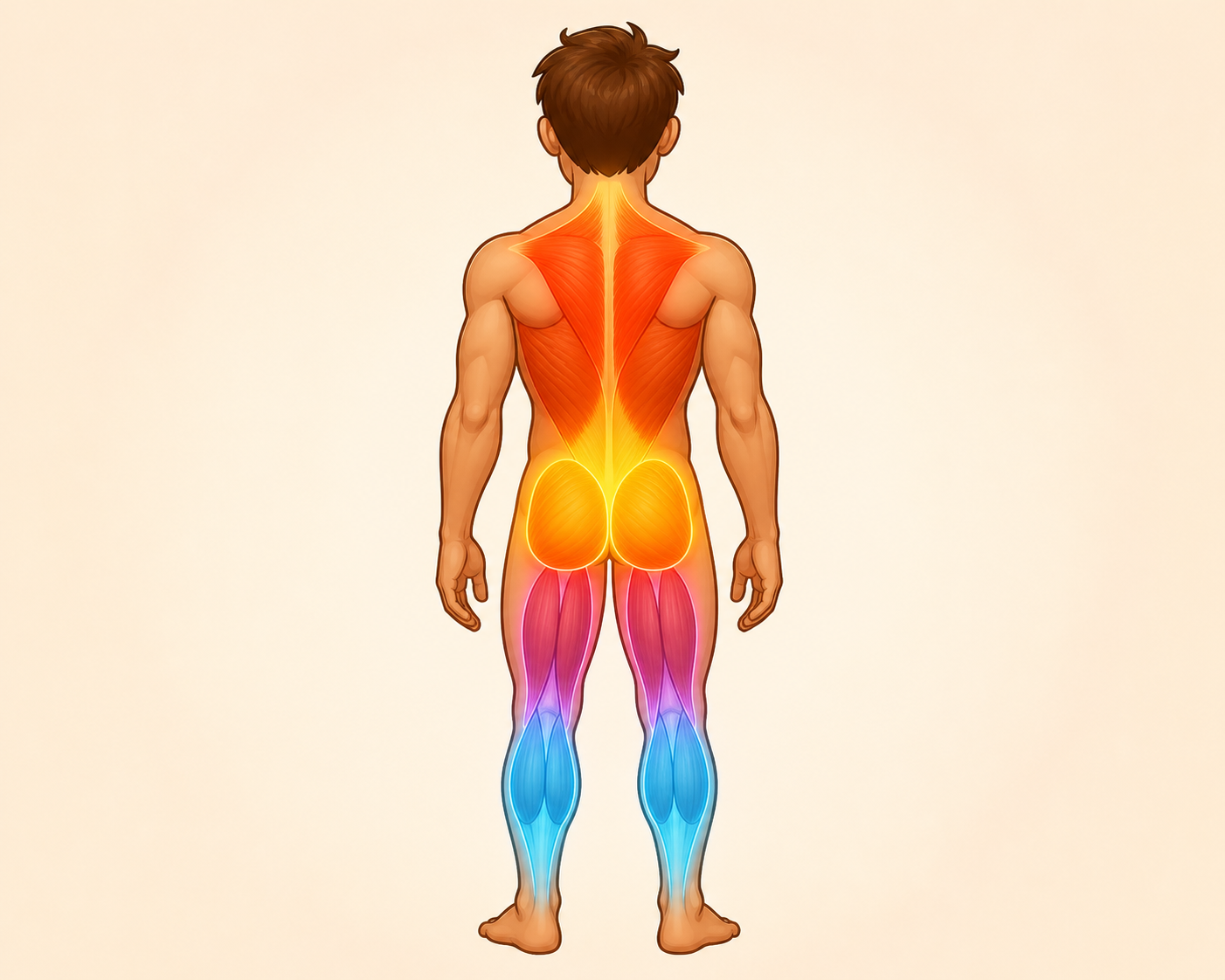
The posterior chain (pos-TEER-ee-or chayn) refers to the muscles along the back of your body, running from your upper back down to your calves. These muscles work together to keep you upright and help you lift objects.
A 2021 study in Sports medicine – open compared posterior chain resistance training to general exercise and walking. The researchers found that training the posterior chain was significantly more effective at reducing pain and disability, and increasing muscle strength. The benefits were especially clear when the training lasted between 12 and 16 weeks.
Glutes and Hamstrings
Your glutes (buttock muscles) and hamstrings (back of the thigh) are the engine of your lower body. If they are weak, your lower back has to do extra work every time you stand up or bend over.
A 2024 study in Medicina tested a program combining gluteal muscle strengthening with core stabilization. After four weeks, the patients had significant decreases in pain and improvements in their quality of life.
Another 2025 study in Scientific reports looked at the hamstrings. Researchers found that a six-week program combining balance and hamstring training effectively reduced pain intensity and improved back strength in people with non-specific low back pain.
The Core and Breathing Connection
Your core is not just your visible abdominal muscles. It includes deep muscles like the multifidus (mul-TIFF-ih-dus), which runs along your spine, and your diaphragm, which controls your breathing.
A 2025 study in Frontiers in public health tested what happens when you combine core training with specific breathing exercises. The researchers found that this combination resulted in significantly greater pain reduction and functional improvement compared to core training alone. Proper breathing increases pressure inside the abdomen, which creates a natural corset that stabilizes the spine.
Related: The Science of Pilates and Breathing: How Controlled Breath Changes Your Body
The Deadlift Debate: Is It Safe for Bad Backs?
The deadlift (DED-lift) is a free weight exercise where you lift a barbell from the floor by extending your hips and knees. It is known as one of the best exercises for building the posterior chain. Because it places a heavy load on the body, many people assume it is dangerous for the lower back.
Research paints a more nuanced picture. A 2021 review in the Journal of sport rehabilitation found that exercise programs including deadlifts can yield improvements in pain and function. However, the deadlift is not a magic cure for everyone.
A 2015 study in the Journal of strength and conditioning research looked specifically at which patients benefit from deadlift training. They found that the patients who saw the best results had three things in common at the start of the program:
1. They had lower levels of initial pain.
2. They had less daily disability.
3. They had good endurance in their hip and back muscles.
If a patient had severe pain or very poor muscle endurance, the deadlift was not the right starting point. These individuals needed to start with lighter, more controlled movements before progressing to heavy lifting.
Preventing Future Pain
One of the most frustrating things about low back pain is that it often comes back. About one-third of people who experience an episode of back pain will have another one within a year.
Strength training appears to be an excellent tool for breaking this cycle. A 2020 trial in the International journal of environmental research and public health compared a progressive strength training program to a standard “Back-School” education program.
Over the next 100 days, the group that did progressive strength training had a recurrence rate of only 8.3 percent. The group receiving standard care had a recurrence rate of 33.3 percent. The strength training group also showed increased lumbar strength and fewer overall pain sites.
Overcoming the Fear of Movement
When your back hurts, it is natural to want to stop moving. Over time, this can develop into kinesiophobia (kih-nee-see-oh-FOH-bee-uh), which is the fear of movement or physical activity due to the belief that it will cause injury.
Unfortunately, avoiding movement leads to muscle weakness. This condition is sometimes called sarcopenia (sar-koh-PEE-nee-uh), which is the gradual loss of muscle mass. A 2012 review in Current sports medicine reports highlights that resistance training acts as medicine by reversing muscle loss, improving movement control, and boosting self-esteem.
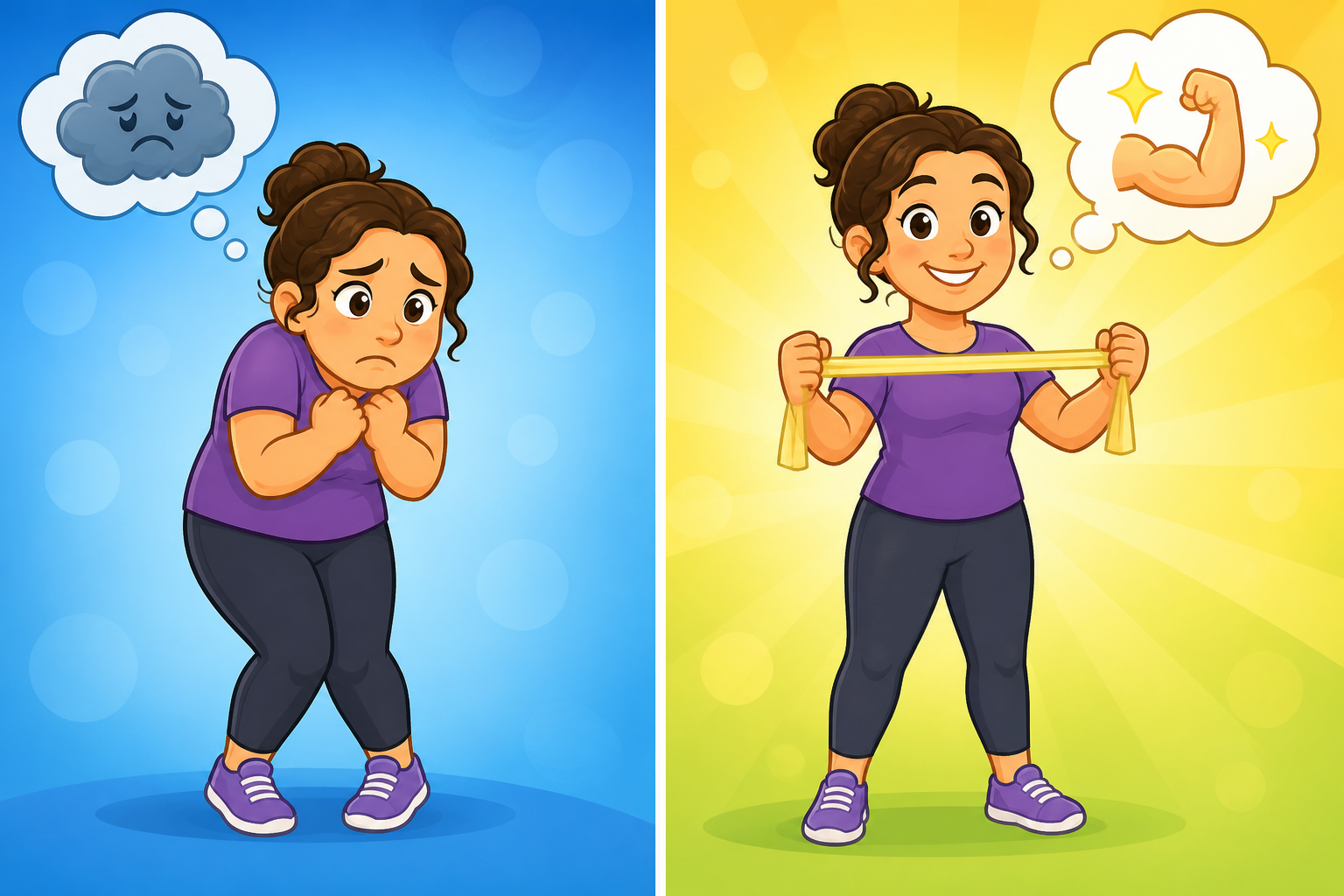
By carefully and progressively lifting weights, patients learn that their backs are actually strong and capable. As they see their strength increase, their fear of movement decreases.
Related: The Science of Weight Training for Beginners: What Actually Works
Who Benefits Or Needs Caution
Pregnant Women
Low back and pelvic pain are very common during pregnancy. A 2025 review in Acta obstetricia et gynecologica Scandinavica looked at strength training in pregnant women. The researchers found that strength training can alleviate low back and sciatic pain, enhance mood, and improve overall quality of life during pregnancy.
People with High Pain or Low Mobility
As noted in the deadlift research, individuals with high levels of pain should not jump straight into heavy lifting. A 2021 trial in JAMA neurology compared standard strength and flexibility exercise to “motor skill training.” Motor skill training involves teaching a person how to perform daily functional activities without triggering their pain. For people who are highly limited, starting with motor skill training to correct painful movement patterns is often necessary before adding heavy resistance.
Practical Guidance
If you are considering strength training for back pain, the research supports the following practical steps:
- Start Light and Progress Slowly: The goal is to build endurance first, then strength. Start with bodyweight exercises or very light bands before moving to heavy weights.
- Focus on the Hips and Glutes: Exercises that target the posterior chain take the pressure off the lower back.
- Commit to 12 Weeks: The most significant benefits in the research appeared after 12 to 16 weeks of consistent training. Muscle adaptation takes time.
- Seek Supervision: Many of the successful studies involved supervised training. A physical therapist or qualified strength coach can ensure your form is correct.
- Breathe: Coordinate your breathing with your lifting to create natural core stability.
Common Questions About Strength Training for Back Pain
Will lifting heavy weights damage my spine?
When done with proper form and appropriate loads, lifting weights strengthens the muscles that protect the spine. Research shows that progressive resistance training actually reduces the recurrence of back pain.
Is Pilates better than lifting weights?
Network meta-analyses show that both Pilates and traditional strength training are highly effective. Pilates is excellent for core control and breathing, while weight training is superior for building absolute muscle strength. The best choice depends on what you enjoy and will do consistently.
Should I stretch or strengthen?
While stretching feels good temporarily, studies consistently show that strength training and motor control exercises provide better long-term pain relief and functional improvement than stretching alone.
The Bottom Line
The scientific evidence strongly supports resistance training as an effective treatment for chronic non-specific low back pain. By strengthening the posterior chain, glutes, and core, patients can reduce their pain, improve their daily function, and lower the chances of the pain returning.
We know with high confidence that staying active is better than bed rest. We also know that exercises must be scaled to the individual. A person with severe pain should start with light motor control exercises, while someone with mild pain might benefit greatly from heavier exercises like the deadlift.
While strength training is highly effective, it is not a quick fix. The research shows that patience, proper technique, and consistency over several months are required to see lasting changes.
Quick Reference: Key Studies
| Study Focus | Key Finding | Source |
|---|---|---|
| Exercise Types | Pilates, strength, and core exercises are the most effective options for reducing disability. | PMID 35722759 |
| Posterior Chain | 12-16 weeks of posterior chain training reduces pain better than general walking. | PMID 33683497 |
| Pain Recurrence | Progressive strength training drops back pain recurrence rates to 8.3% compared to 33.3% for standard care. | PMID 33187076 |
| Deadlifts | Deadlifts help back pain, but only for those with lower initial pain and good baseline muscle endurance. | PMID 25559899 |
| Glutes & Core | Combining glute strengthening with core stabilization significantly improves pain and fear of movement. | PMID 38929466 |
Last updated: September 2026
This article synthesizes findings from peer-reviewed research. It is for educational purposes only and does not constitute medical advice. Consult a healthcare provider before starting any new regimen.

Leave a Reply