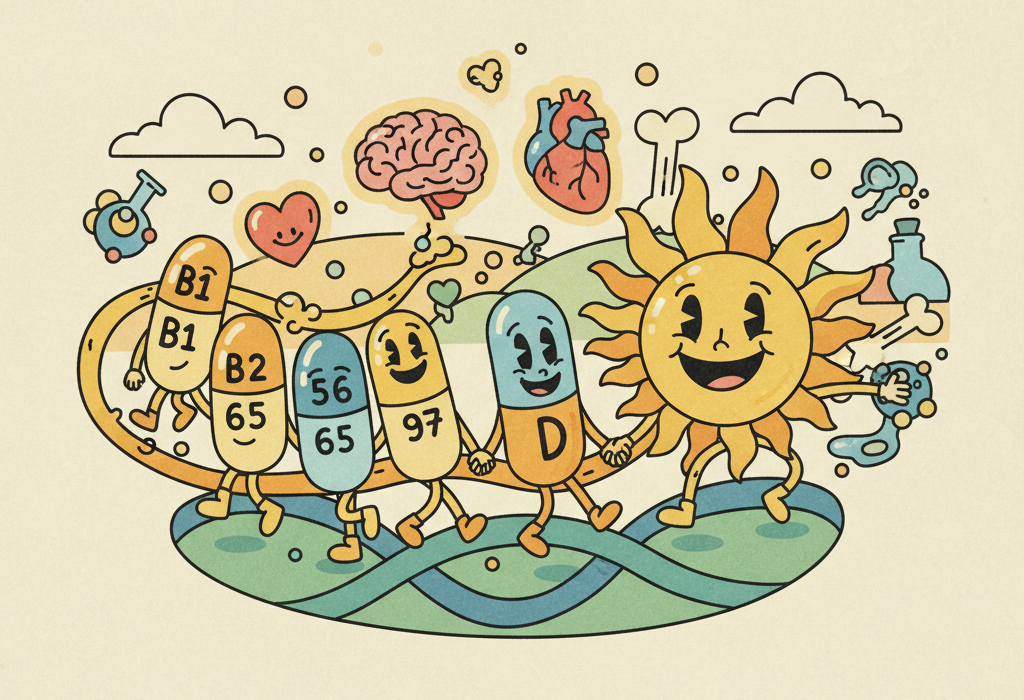
Many people take a daily multivitamin without thinking much about how the individual ingredients interact. We often think of Vitamin D as the “sunshine vitamin” that builds strong bones, while we associate the B-vitamin family with energy and metabolism.
However, a growing body of scientific research reveals that these nutrients do not operate alone. Inside your body, Vitamin D and B vitamins interact in complex ways. They rely on each other to regulate your mood, protect your brain as you age, and even manage the bacteria living in your gut.
This article breaks down what current peer-reviewed research actually says about how B vitamins and Vitamin D work together, who might benefit from taking them, and where we still need more evidence.
How This Might Work: The Gut and Cell Connection
To understand how Vitamin D and B vitamins interact, it helps to look at the digestive system. Your gut is home to trillions of bacteria, collectively known as the microbiome.
A 2016 paper in Medical hypotheses proposed a fascinating connection between Vitamin D, gut bacteria, and B vitamins. The researchers noted that humans get B vitamins from two sources: the food we eat and the bacteria living in our intestines. The hypothesis suggests that Vitamin D helps maintain a healthy environment for specific gut bacteria. When Vitamin D levels drop too low, the gut microbiome changes.

If the bacteria that naturally produce B vitamins (like vitamin B5, or pantothenic acid) die off, the body may experience a secondary B-vitamin deficiency. This lack of B vitamins can then stress the immune system and the nervous system, potentially leading to poor sleep and increased bodily inflammation. Related: How Your Gut Microbiome Actually Affects Brain Health
This synergy is also seen in animal models. A 2021 study in Voprosy pitaniia looked at rats with combined deficiencies in both Vitamin D and B vitamins. The researchers found that trying to correct a Vitamin D deficiency was much less effective if the rats were still deficient in B vitamins. The B vitamins were necessary to ensure the biological functions of Vitamin D could properly activate.
What the Research Shows: Mood and Mental Health
One of the most heavily researched overlaps between B vitamins and Vitamin D is their role in mental health, specifically regarding depression and anxiety. Both nutrients are required to produce neurotransmitters, which are the chemical messengers your brain uses to regulate mood, such as serotonin and dopamine.
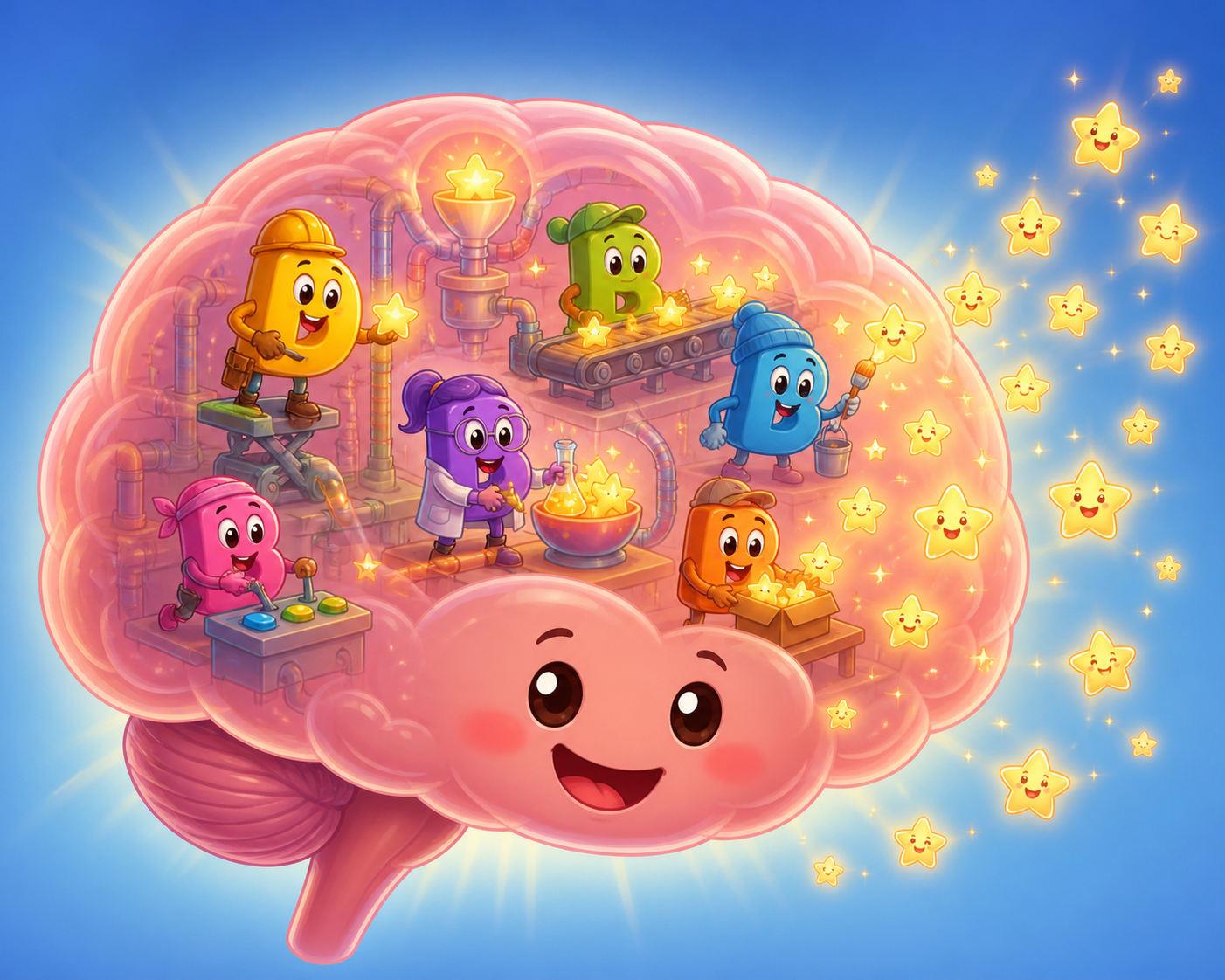
A 2023 systematic review in Nutritional neuroscience examined 20 randomized controlled trials involving over 2,200 subjects. The researchers looked at patients diagnosed with major depressive disorder and generalized anxiety disorder. They found that supplementing with Vitamin D alongside B vitamins (specifically B1, B6, B9, and B12) significantly decreased depression scores. The vitamins appeared to act as an effective helper strategy, improving the way patients responded to standard treatments.
Similarly, a 2023 review in Nutrients highlighted that deficiencies in Vitamin D and B vitamins (along with minerals like magnesium and zinc) have a significant impact on how the nervous system functions. The researchers noted that low levels of Vitamin D and B12 are frequently observed in individuals with depression.
Another 2024 review in Nutrients focused on Seasonal Affective Disorder (SAD) and general depression. It confirmed that B vitamins are crucial for neurological function, and Vitamin D deficiency, often caused by lack of sunlight in winter, is tightly linked to seasonal mood drops.
What the Research Shows: Brain Aging and Memory
As we age, our brains naturally undergo changes that can affect memory and focus. Scientists have been studying whether keeping nutrient levels high can slow this process down. Related: Can We Prevent Age-Related Cognitive Decline? What Science Actually Shows
A 2023 study in Nutrients observed 892 middle-aged and elderly adults in China to see how vitamin supplementation affected their cognitive abilities. The results showed that individuals with normal cognitive function who took daily supplements of Vitamin D, folic acid (Vitamin B9), and other B vitamins had a significantly lower risk of developing cognitive impairment. Furthermore, for those who already had Mild Cognitive Impairment (MCI), daily Vitamin D supplementation was associated with a lower risk of progressing to Alzheimer’s disease.
However, the relationship between these vitamins and brain health is not completely straightforward. A 2019 study in the Journal of human nutrition and dietetics looked specifically at adults aged 80 and older. As expected, they found that low Vitamin D levels (under 18 ng/mL) were associated with a higher prevalence of cognitive decline. But surprisingly, they also found that very high levels of Vitamin B12 (over 496 pg/mL) in this specific age group were linked to a higher risk of cognitive decline. This suggests that while correcting a deficiency is helpful, having excessively high levels of certain B vitamins in advanced age might not be beneficial.
What the Research Shows: Heart Health and Cellular Aging
Researchers are also exploring how B vitamins and Vitamin D affect our blood vessels and how our cells age over time.
Impact on TMAO
TMAO (trimethylamine N-oxide) – a compound produced by gut bacteria that, at high levels, is linked to an increased risk of heart disease.
A 2017 trial in Molecular nutrition & food research tested what happens to TMAO levels when people take Vitamin D alone versus Vitamin D combined with B vitamins (folic acid, B6, and B12). After one year, the group taking the combination of Vitamin D and B vitamins saw a significantly larger drop in their TMAO levels compared to the group taking Vitamin D alone. The B vitamins helped lower levels of homocysteine (an amino acid linked to heart issues), which seemed to help the body process nutrients in a more heart-healthy way.
Epigenetic Aging
Epigenetics (ep-ih-juh-NET-iks) – the study of how your behaviors and environment can change the way your genes work, essentially turning them “on” or “off” without changing the underlying DNA code.
A 2018 study in Nutrition, metabolism, and cardiovascular diseases looked at how Vitamin D and B vitamins affect “epigenetic age markers” which act like a biological clock for your cells. Participants took either Vitamin D and calcium, or Vitamin D, calcium, and B vitamins. The results were complex. The group taking the B vitamin combination showed slower aging in one specific gene marker, but potentially accelerated aging in another marker, particularly among younger participants who already had healthy nutrient levels. This reinforces the idea that B vitamin supplementation is highly beneficial for those with deficiencies, but may have mixed effects on cellular aging for those who are already healthy.
Who Benefits Most
While maintaining adequate vitamin levels is important for everyone, research points to specific groups who benefit the most from ensuring their B vitamins and Vitamin D are optimized.
Pregnant Women and Couples Trying to Conceive
During pregnancy, the body’s demand for nutrients skyrockets. The 2023 NiPPeR trial published in PLoS medicine followed over 1,700 women planning to conceive. Astonishingly, over 90% of the participants had marginal or low levels of either folate, riboflavin (B2), B12, or Vitamin D before they even became pregnant. Providing an enhanced supplement containing all these vitamins significantly reduced deficiency markers throughout the pregnancy and maintained better Vitamin B12 levels even six months after delivery.
Furthermore, a 2018 review in the American journal of obstetrics and gynecology confirmed that folic acid (B9) consistently lowers the frequency of infertility and improves success rates in fertility treatments.
Post-Bariatric Surgery Patients
People who undergo gastric bypass surgery have a much harder time absorbing nutrients from food. A 2018 trial in Obesity surgery compared a standard multivitamin to a specialized investigational multivitamin in patients who had Roux-en-Y gastric bypass. The specialized vitamin, which contained higher and more easily absorbed forms of Vitamin D, B12, and thiamine (B1), resulted in significantly better blood levels of these crucial nutrients three months after surgery.
Where the Science Is Still Uncertain
While the benefits of correcting vitamin deficiencies are clear, the science becomes uncertain when it comes to taking high-dose supplements if you are already healthy.
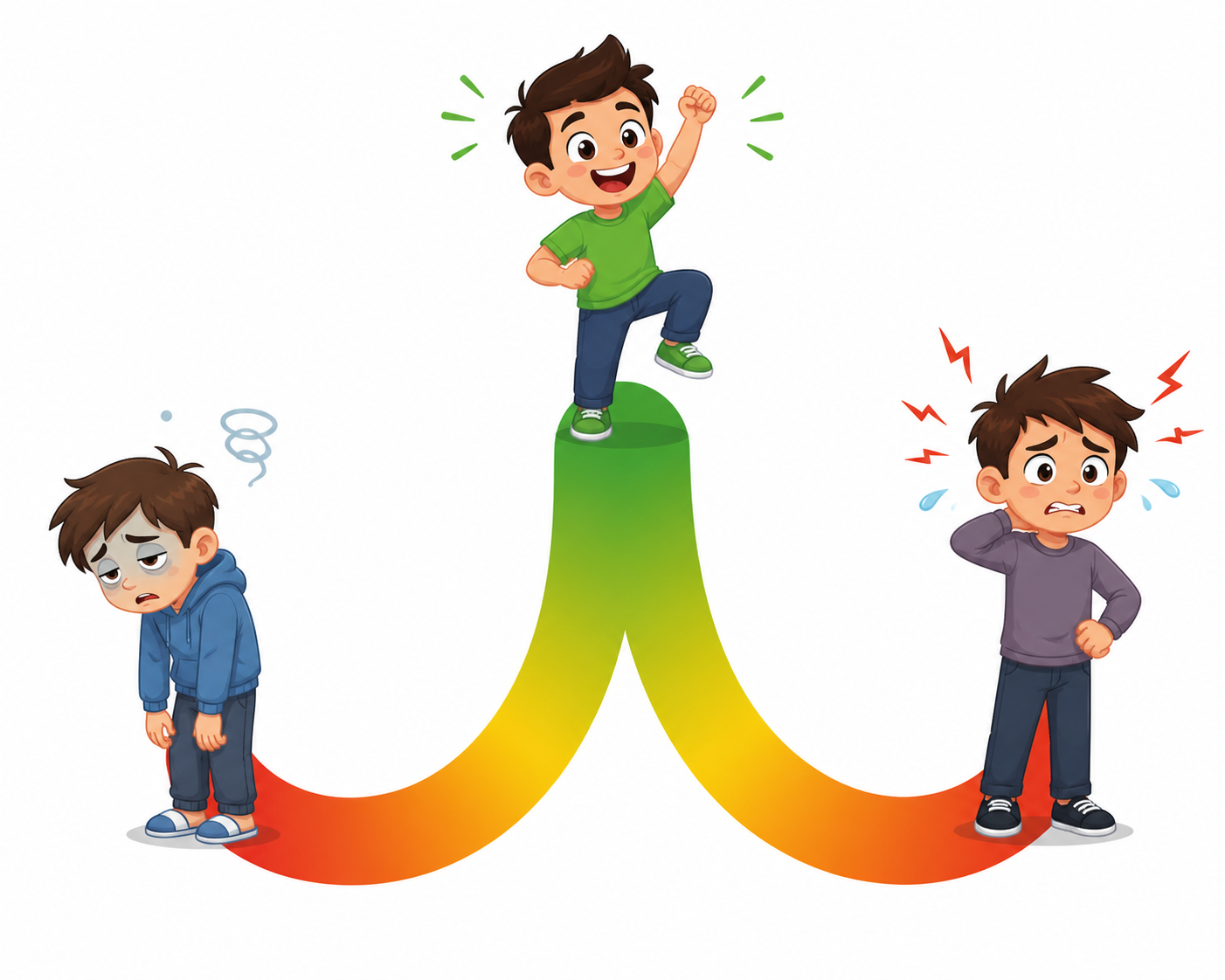
Researchers frequently observe a “U-shaped curve” with B vitamins. This means that both too little and too much can cause problems. For example, a 2024 review in Nutrients looking at gynecologic cancers noted that while normal folate levels protect DNA, excessive amounts of B vitamins might actually provide fuel for rapidly dividing cells. Therefore, scientists caution against taking massive doses of B vitamins unless directed by a doctor to treat a specific deficiency.
The Bottom Line
Based on current research, here is what we know about B vitamins and Vitamin D:
- They work together: Vitamin D and B vitamins rely on each other for proper absorption and biological function. Vitamin D may even help your gut bacteria produce certain B vitamins naturally.
- They protect the brain: Correcting deficiencies in these vitamins is consistently linked to better mood, lower anxiety, and a reduced risk of cognitive decline as we age.
- Deficiencies are common: A vast majority of people, especially pregnant women and older adults, lack optimal levels of at least one of these nutrients.
- More is not always better: While fixing a deficiency is highly beneficial, taking extremely high doses of B vitamins when you do not need them may have unintended effects on cellular aging and health.
If you suspect you are deficient in Vitamin D or B vitamins, a simple blood test from your healthcare provider can tell you exactly what you need.
Quick Reference: Key Studies
| Study Focus | Key Finding | Source |
|---|---|---|
| Depression & Anxiety | B vitamins and Vitamin D supplementation significantly improved responses to standard treatments for depression and anxiety. | PMID 35156551 |
| Cognitive Decline | Daily supplementation of Vitamin D, folic acid, and B vitamins was associated with a lower risk of cognitive impairment in older adults. | PMID 36904242 |
| Heart Health (TMAO) | Combining Vitamin D with B vitamins lowered plasma TMAO (a heart risk marker) more effectively than Vitamin D alone. | PMID 27569255 |
| Pregnancy & Fertility | Over 90% of women planning conception had low levels of B vitamins or Vitamin D. Supplementation effectively reduced these deficiencies. | PMID 38051700 |
| Elderly Health | In adults over 80, low Vitamin D was linked to cognitive decline, but excessively high Vitamin B12 was also linked to cognitive risks. | PMID 30821057 |
| Gut Microbiome | Hypothesis suggests Vitamin D deficiency alters gut bacteria, reducing natural B vitamin production and increasing inflammation. | PMID 27515213 |
Last updated: September 2026
This article synthesizes findings from peer-reviewed research. It is for educational purposes only and does not constitute medical advice. Consult a healthcare provider before starting any new regimen.

Leave a Reply