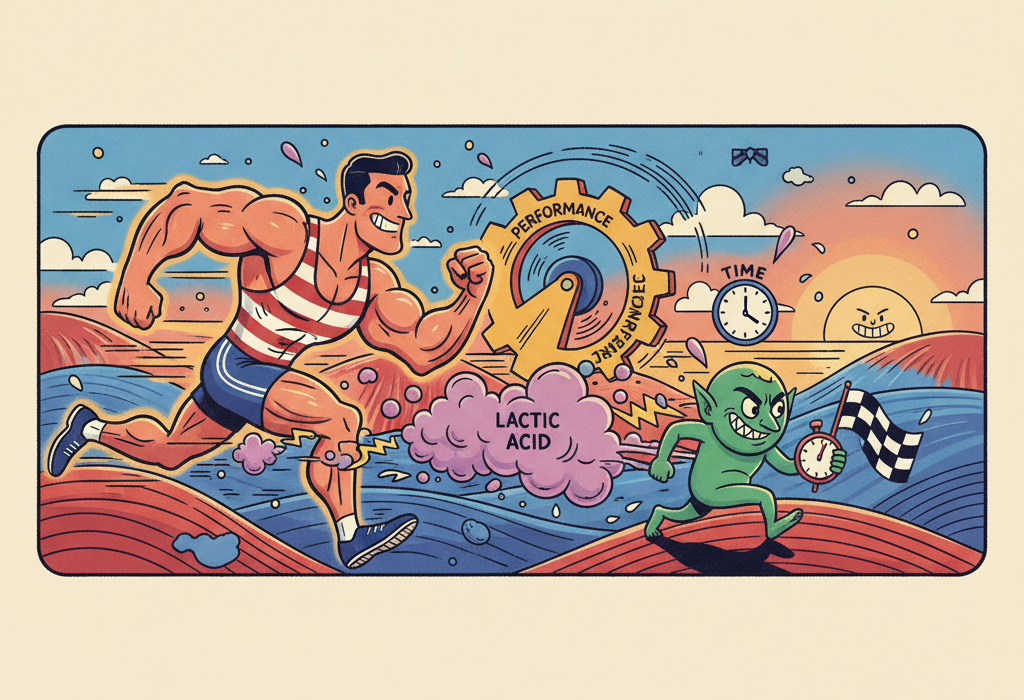
If you have ever pushed yourself through a tough workout, you know the feeling. Your muscles burn, your breathing gets heavy, and eventually, you are forced to slow down. For decades, coaches and athletes blamed this burning sensation and fatigue on “lactic acid.”
However, modern sports science has completely rewritten this story. Lactic acid is not a toxic waste product that ruins athletic performance. Instead, it is a critical energy source that your body relies on during intense exercise. By understanding how your body produces and clears this molecule, you can actually use it to measure your fitness, structure your workouts, and improve your endurance.
Here is a look at what recent scientific research actually shows about athletic performance, lactic acid, and how you can train your body to handle it better.
The Misunderstood Molecule: What Is Lactic Acid?
To understand the research, we first need to clarify a few basic terms.
- Lactic acid (LAK-tik AS-id) and Lactate (LAK-tayt) are often used interchangeably in the fitness world. When you exercise intensely, your body breaks down carbohydrates for quick energy. A byproduct of this process is lactate, along with hydrogen ions. It is actually the buildup of those hydrogen ions that makes your muscles acidic and causes the “burn,” not the lactate itself.
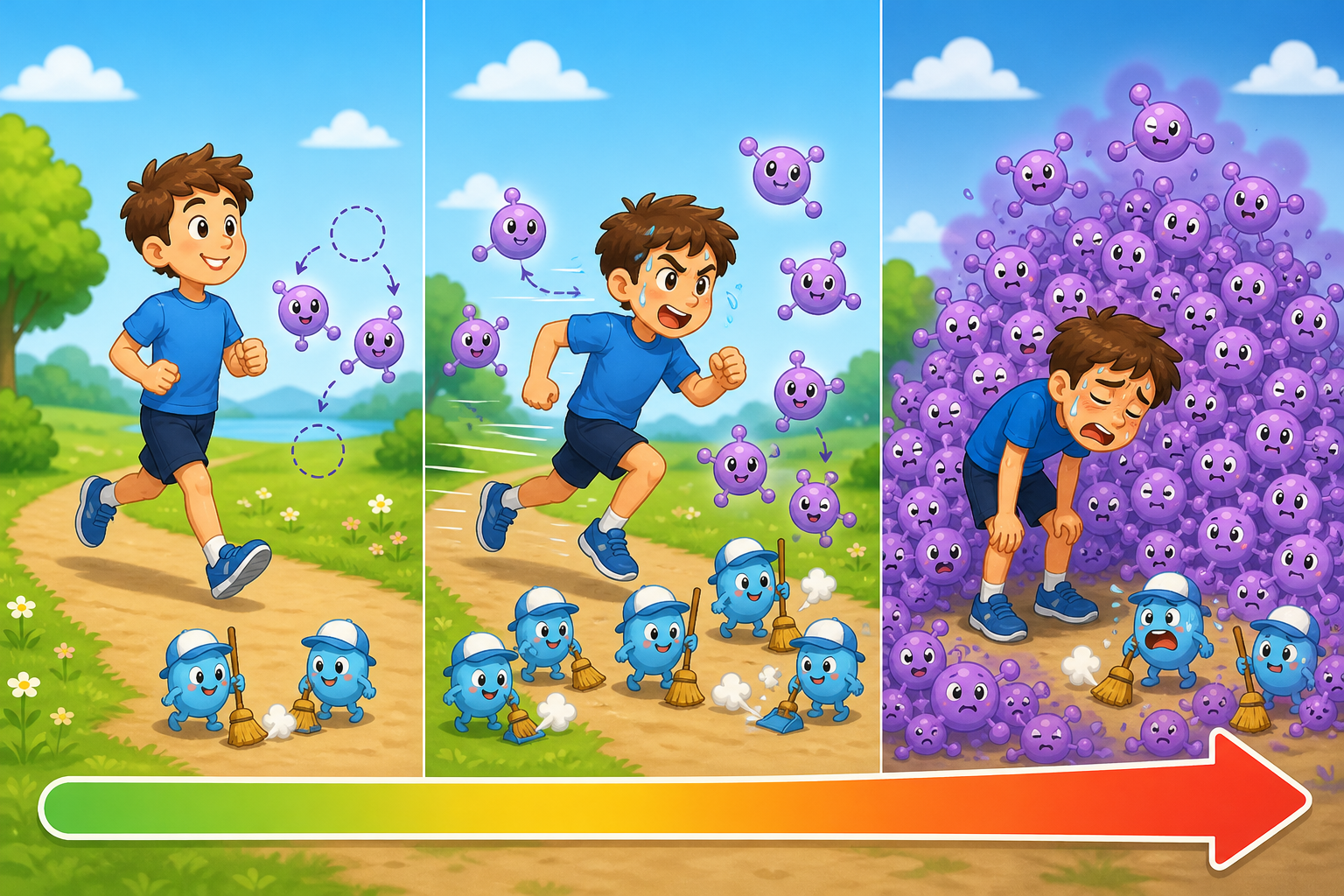
- Lactate threshold (LAK-tayt THRESH-hold) is the specific exercise intensity where your blood lactate begins to accumulate faster than your body can clear it away.
Rather than causing fatigue, lactate actually delays it. A 2017 review in the European Journal of Sport Science explains that lactate acts as a highly efficient carbohydrate fuel. The researchers found that when athletes consume a mix of glucose and fructose during exercise, the liver converts the fructose into lactate. This lactate is then released into the bloodstream, shuttled directly to the working muscles, and burned for energy.

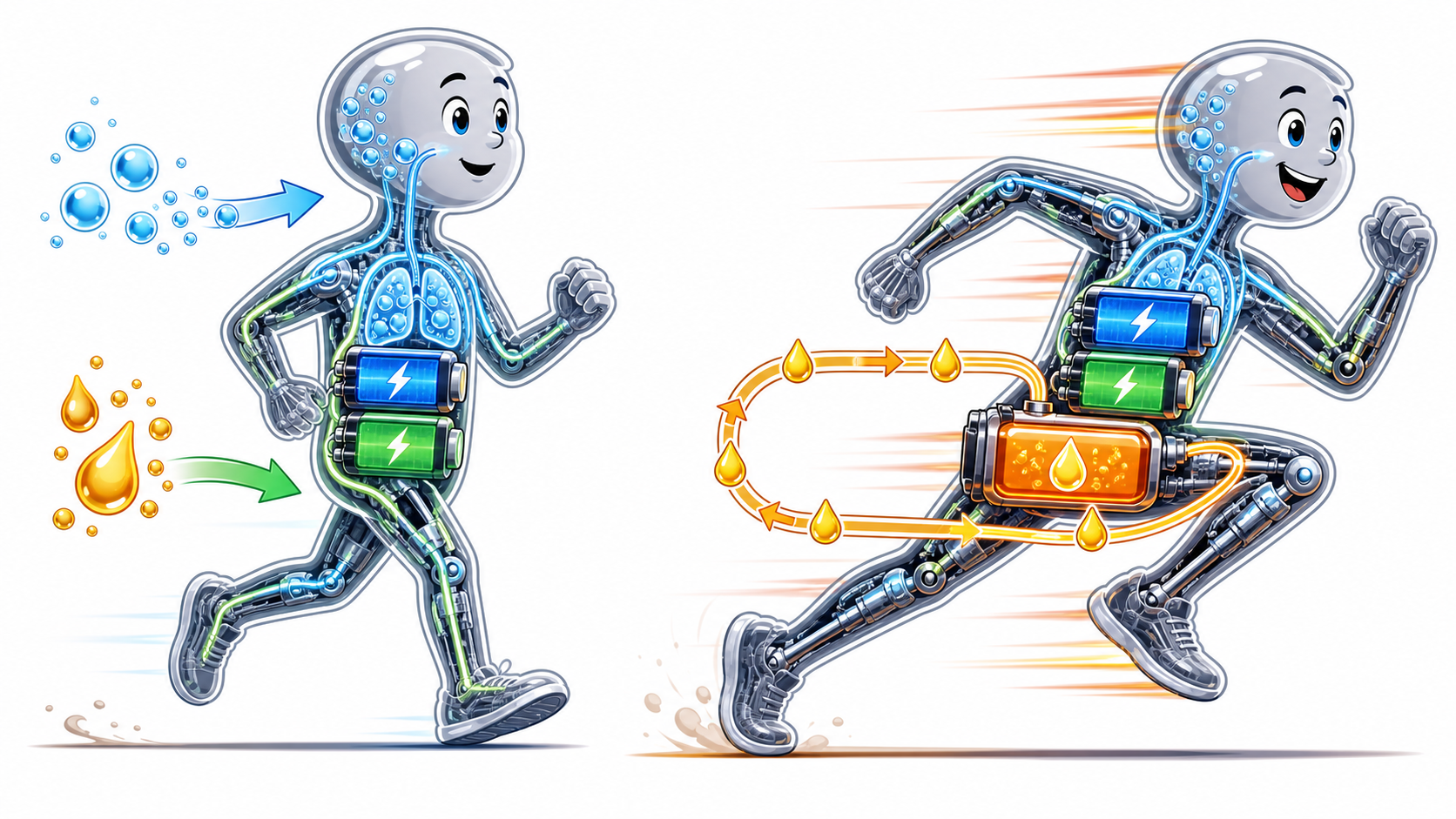
Think of your body like a hybrid car. When you are jogging lightly, you are running on your primary battery (oxygen and fat). When you sprint or push hard, the engine needs more power and switches to a secondary fuel source (carbohydrates), producing lactate in the process. Your body then recycles that lactate to keep the engine running as long as possible.
The Lactate Threshold: Your Body’s Warning Signal
If lactate is a fuel, why do we eventually get tired? The answer lies in how fast your body can process it.
A 2020 review in Sports Medicine examined the best methods for determining exercise intensity. The researchers noted that prescribing exercise based simply on a percentage of your maximum heart rate is often flawed. Instead, they advocate looking at the body’s physiological responses, specifically blood lactate levels.
They divide exercise into three distinct zones based on lactate:
1. Moderate Exercise: Your body clears lactate as fast as it makes it. Blood lactate levels stay near their baseline resting state. You can maintain this pace for a very long time.
2. Heavy Exercise: Blood lactate rises above baseline but eventually stabilizes or plateaus. You are working hard, but your body has found a new balance.
3. Severe Exercise: You have crossed your lactate threshold. Blood lactate continually rises without plateauing until you are forced to stop from exhaustion.
Knowing where your personal threshold lies is one of the most accurate ways to predict endurance performance. A 2019 review in Current Sports Medicine Reports confirms that identifying an athlete’s lactate threshold allows them to train much more efficiently than just guessing their heart rate zones.
Furthermore, this threshold is not completely static during a long event. A 2025 study in the European Journal of Sport Science tracked marathon runners during a 90-minute run. The researchers found that the speed at which the athletes hit their lactate threshold naturally deteriorated over time due to fatigue. The runners who experienced the smallest drop in their threshold speed over the 90 minutes were the ones who ultimately ran the fastest marathon times.
What the Research Shows: How Elite Athletes Handle Lactate
If you want to see the ultimate example of lactate efficiency, you can look at elite Kenyan distance runners. For decades, Kenyan runners have dominated international middle and long-distance events. Scientists have long studied their physiology to understand why.
A 2015 review in the Scandinavian Journal of Medicine & Science in Sports analyzed the physiological traits of these elite athletes. Interestingly, the researchers found that top Kenyan runners do not necessarily have a higher maximum oxygen uptake (VO2max) than elite European runners.
However, what sets them apart is their blood lactate response. The research shows that Kenyan elite runners have significantly lower blood lactate levels at a given running speed compared to other elite runners. This difference is most pronounced at very high exercise intensities. Because they generate less lactate (and the accompanying acidic hydrogen ions) at fast speeds, they can sustain a blistering race pace without crossing into the “severe” exercise zone that forces other runners to slow down.
Training Methods That Improve Your Lactate Threshold
For everyday athletes looking to improve their endurance, the goal is to shift the lactate threshold higher. This means training the body to run faster or cycle harder before lactate starts to rapidly accumulate. Research points to several effective training methods.
Heavy Strength Training
While endurance athletes often avoid the weight room for fear of getting bulky, The Science of Weight Training and Endurance: What Actually Works shows that lifting weights is highly beneficial. A 2014 review in the Scandinavian Journal of Medicine & Science in Sports found that combining heavy strength training with regular endurance training improves running and cycling economy. More importantly, it improves the power or velocity an athlete can sustain at their lactate threshold. The researchers suggest that heavy lifting trains the nervous system and makes the muscle fibers more fatigue-resistant, delaying the point at which the body relies on less efficient muscle fibers that produce more lactate.
Similarly, a 2025 study in the Journal of Sports Science & Medicine looked at female basketball players. The researchers found that high-intensity eccentric training (using a specialized flywheel device) significantly improved their anaerobic capacity and their ability to clear blood lactate compared to traditional barbell squats.
Block Periodization
Instead of doing the exact same mix of hard and easy workouts every week, some research supports “block periodization.” This means focusing heavily on one type of training for a short burst.
A 2014 study in the Scandinavian Journal of Medicine & Science in Sports tested this on trained cyclists. One group did a traditional routine: two high-intensity interval training (HIT) sessions a week for four weeks. The other group did a “block” routine: five HIT sessions in the first week, followed by just one HIT session a week for the next three weeks. Both groups did the exact same total amount of hard and easy training over the month.
The results were striking. The traditional group saw no significant changes. The block periodization group, however, saw a 10 to 12 percent improvement in the power output they could sustain at their lactate threshold. A 2018 case study of an elite cyclist using a similar block periodization strategy over 58 weeks also showed massive improvements in power output at the lactate threshold.
| Training Method | How It Works | Impact on Lactate |
|---|---|---|
| Heavy Strength Training | Lifting heavy weights (1-15 reps) alongside endurance training | Improves the speed/power you can sustain before hitting your lactate threshold. |
| Block Periodization | Concentrating high-intensity intervals into a 1-week block, followed by 3 weeks of mostly easy training | Can rapidly increase power output at the lactate threshold compared to evenly spaced workouts. |
| Flywheel Eccentric Training | Using specialized equipment to overload the lowering (eccentric) phase of a movement | Shown to improve anaerobic power and blood lactate clearance in court-sport athletes. |
Nutrition, Recovery, and Lactic Acid
Beyond how you train, what you consume and how you recover also plays a role in how your body handles lactate.
Active Recovery
It is common practice for athletes to do a light jog or easy spin on a bike after a hard workout to “flush out the lactic acid.” A 2019 systematic review in the Journal of Strength and Conditioning Research looked closely at this practice. The researchers confirmed that 6 to 10 minutes of active recovery does indeed return blood lactate to baseline levels faster than simply sitting still (passive recovery).
However, the review also noted a major caveat: just because active recovery clears lactate faster does not mean it improves performance in the next workout. The researchers concluded that blood lactate clearance rate is actually an unreliable marker for predicting enhanced subsequent performance. If you want to learn more about what genuinely helps muscles bounce back, you can read about The Science of Post-Exercise Recovery: What Actually Works.
Bicarbonate and Alkaline Diets
Because the fatigue associated with lactate is actually caused by acidic hydrogen ions, scientists have tested ways to neutralize that acid. A 2024 study in Nutrients tested highly trained athletes performing a 400-meter sprint on three consecutive days. One group consumed an alkaline diet and drank bicarbonate-rich water, while the other group drank a placebo. The group drinking the bicarbonate water showed improved lactate clearance and actually ran faster on their third day of racing compared to the placebo group. The bicarbonate helped buffer the acid in their blood, allowing them to tolerate the severe metabolic stress of repeated sprinting.
Caffeine
Caffeine is a well-known performance enhancer, but it also interacts with lactate. Another 2024 study in Nutrients tested male soccer players using different forms of coffee before an intense anaerobic cycling test. The researchers found that caffeinated coffee increased the athletes’ maximum power output and testosterone levels. Surprisingly, the athletes who consumed the caffeinated coffee also had the lowest lactic acid levels after the test compared to those who took a placebo or decaf coffee. The researchers suggest that caffeine alters how the body absorbs and mobilizes energy, slightly changing the lactate response.
Common Questions About Athletic Performance and Lactic Acid
Does lactic acid cause muscle soreness the next day?
No. The muscle soreness you feel 24 to 48 hours after a hard workout is called Delayed Onset Muscle Soreness (DOMS). It is caused by microscopic tears in your muscle fibers, not by lactic acid. Lactate is cleared from your blood within an hour or two after you stop exercising.
Is it better to have high or low lactate during a race?
It depends on the distance. For a 100-meter sprint, athletes want to generate massive amounts of lactate because it means they are producing energy rapidly. For a marathon, athletes want to keep blood lactate levels low and steady, because accumulating too much means they are burning through their limited carbohydrate stores too quickly and will soon fatigue.
Can I test my own lactate threshold?
While precise testing requires drawing small drops of blood during exercise in a lab, you can estimate your threshold. It generally aligns with the maximum effort you can sustain for about 45 to 60 minutes (like a hard 10K running race). Your breathing will be deep and rapid, and you will not be able to speak in full sentences.
The Bottom Line
Lactic acid has been unfairly demonized in the fitness world. The current body of scientific research shows that lactate is not a harmful waste product, but rather a vital fuel that your body uses to sustain intense exercise.
Instead of trying to avoid lactate, smart training is about teaching your body to produce it, clear it, and burn it more efficiently. By incorporating heavy strength training, experimenting with block periodization, and understanding your personal lactate threshold, you can push your limits further before fatigue sets in. While active recovery does help clear lactate from your blood faster, remember that true recovery involves much more than just flushing out a single molecule.
*
Quick Reference: Key Studies
| Study Focus | Key Finding | Source |
|---|---|---|
| Exercise Intensity | Prescribing exercise based on lactate thresholds (moderate, heavy, severe) is more accurate than using fixed heart rate percentages. | PMID 32729096 |
| Kenyan Runners | Elite Kenyan runners display significantly lower blood lactate levels at high speeds compared to other elite distance runners. | PMID 26589124 |
| Strength Training | Combining heavy strength training with endurance training improves the power and velocity athletes can sustain at their lactate threshold. | PMID 23914932 |
| Block Periodization | Concentrating high-intensity intervals into a 1-week block improved power at the lactate threshold by 10-12% compared to traditional training. | PMID 22646668 |
| Active Recovery | 6-10 minutes of active recovery clears blood lactate faster than resting, but this clearance rate does not reliably predict better subsequent performance. | PMID 29742750 |
| Bicarbonate Water | Consuming an alkaline diet and bicarbonate-rich water improved lactate clearance and maintained performance over 3 days of heavy sprinting. | PMID 38999735 |
| Fructose and Lactate | Fructose consumed during exercise is converted by the liver into lactate, which is then used as a fuel source by working muscles. | PMID 28441908 |
*
Last updated: October 2026
This article synthesizes findings from peer-reviewed research. It is for educational purposes only and does not constitute medical advice. Consult a healthcare provider before starting any new regimen.


Leave a Reply