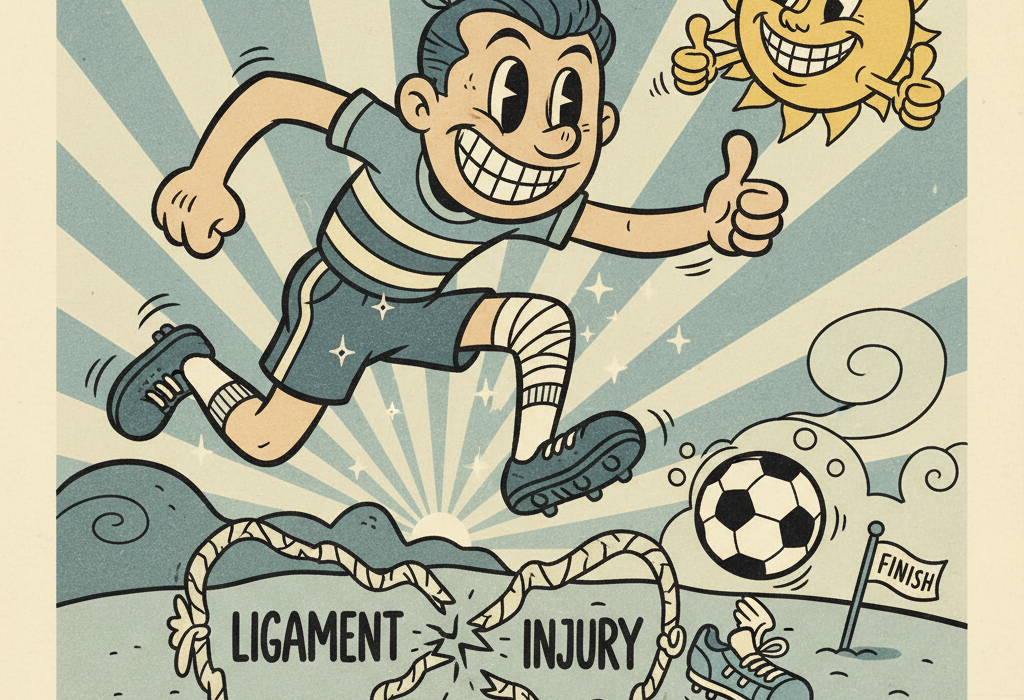
When an athlete suffers a ligament tear, the first question is almost always about time. “When can I play again?” For decades, the medical community relied heavily on the calendar to answer this question. If you tore a ligament in your knee, you might have been told to wait six to nine months, complete your physical therapy, and then return to the field.
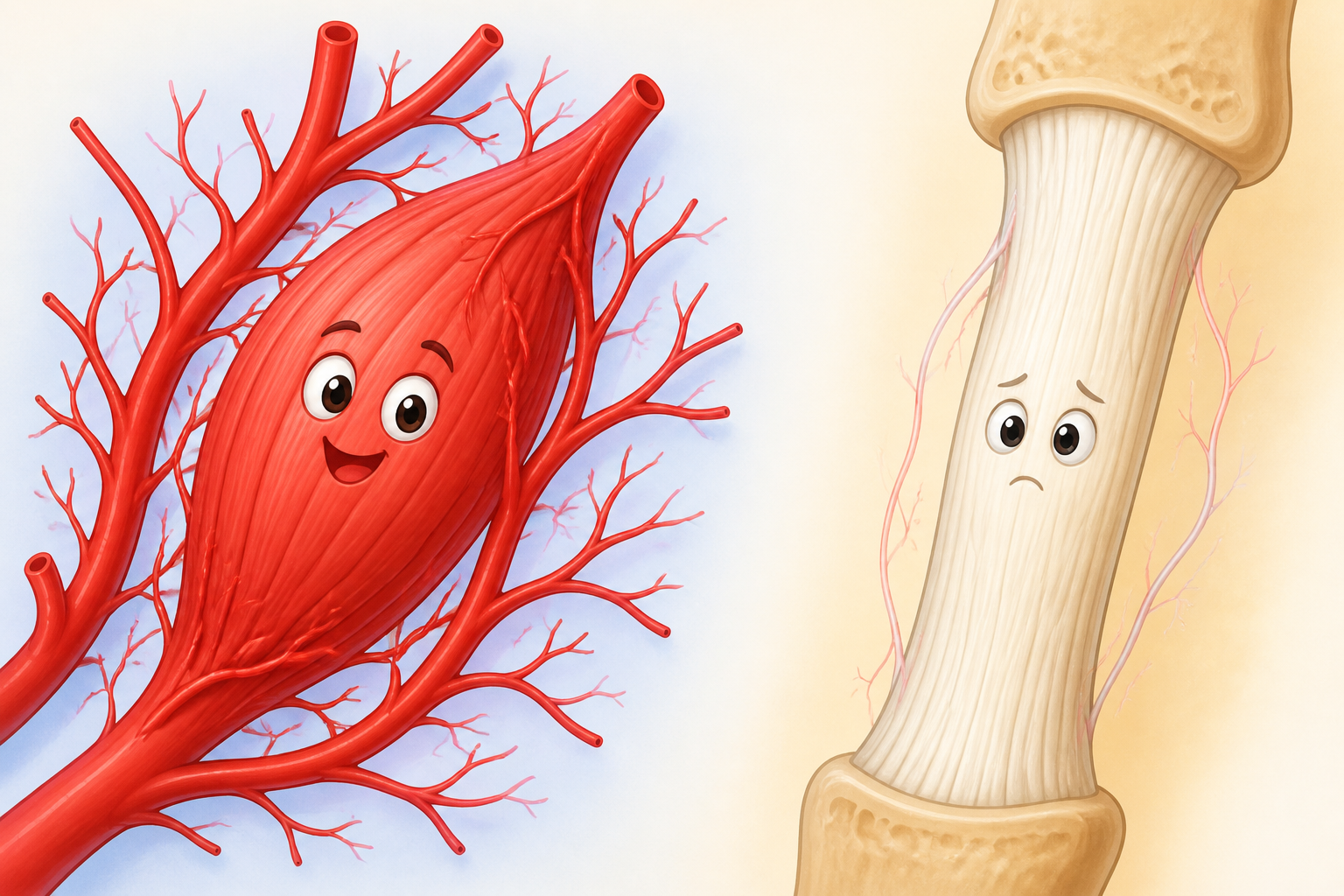
However, recent scientific research paints a much more complex picture. A ligament is a tough band of tissue that connects bone to bone. Because ligaments have a relatively poor blood supply compared to muscles, they heal slowly. But healing the tissue is only the first step.
Returning to sport after a ligament injury requires restoring muscle strength, retraining the brain, and overcoming the fear of reinjury. This article synthesizes the latest peer-reviewed research on how athletes successfully return to play after injuries to major ligaments, including those in the knee and elbow, and what actually reduces the risk of getting hurt again.
What the Research Shows
The Flaw of the Standard Timeline
For a long time, the standard protocol for returning to sport after an anterior cruciate ligament (an-TEER-ee-or KROO-she-ate LIG-uh-ment) tear, a major tissue band that stabilizes the knee, was purely time-based.
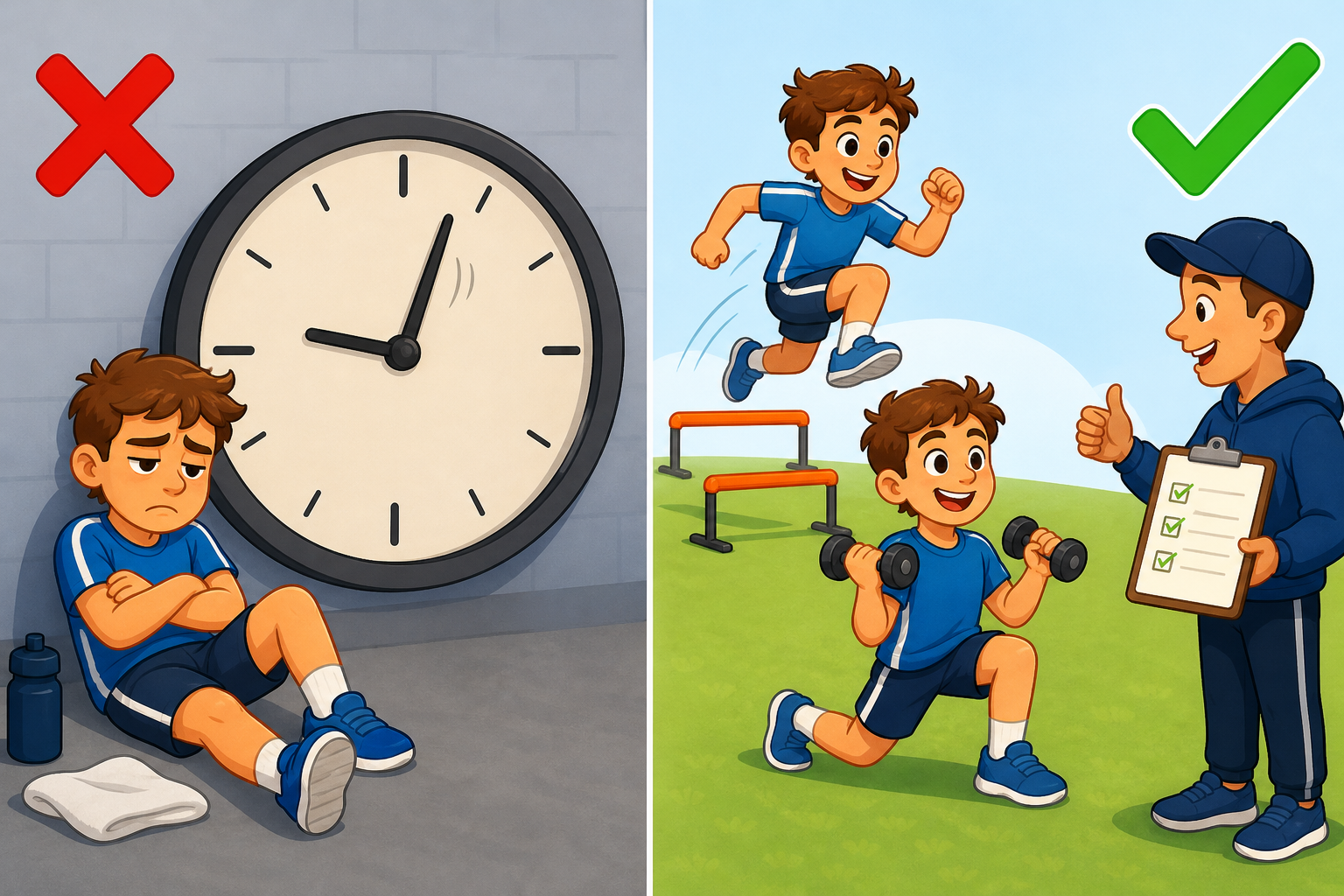
Today, experts strongly advise against this. A 2020 consensus statement in Knee Surgery, Sports Traumatology, Arthroscopy concluded that purely time-based return-to-sport decisions should be abandoned in clinical practice. The healing of a graft and the recovery of muscle control vary wildly from person to person.
Interestingly, waiting longer does not automatically guarantee safety if the physical work is not done. A 2025 study in the British Journal of Sports Medicine followed 530 male athletes recovering from ACL surgery. The researchers found that if athletes met strict physical discharge criteria, the exact timing of their return did not change their risk of a new injury. Whether they returned before or after the standard nine-month mark, their risk of a new knee injury was the same, provided they passed all objective physical tests. The true indicator of safety is completing the rehabilitation criteria, not just running out the clock.
Does Everyone Need Surgery?
It is a common assumption that a torn ligament automatically requires surgery to return to competitive sports. The research shows that this depends heavily on which ligament is injured.
For the ACL, surgery is often recommended for athletes in pivoting sports like soccer or basketball. However, a 2025 review in Sports Medicine compared athletes who had ACL reconstruction surgery to those who managed their injury with physical therapy alone. The researchers found no significant difference in return-to-sport rates or overall activity levels between the two groups. While the certainty of this evidence is considered low due to study designs, it suggests that intense, supervised physical therapy can be highly effective for some athletes without surgical intervention.
For the medial collateral ligament (MEE-dee-ul kuh-LAT-er-ul LIG-uh-ment), which runs along the inside of the knee, non-surgical treatment is the standard of care. Research in Clinics in Sports Medicine notes that athletes with partial MCL tears often return to play in just one to four weeks with bracing and therapy. Even athletes with complete MCL tears can sometimes return in five to seven weeks without surgery, though some complex cases still require operative repair.
In the elbow, the ulnar collateral ligament (UHL-ner kuh-LAT-er-ul LIG-uh-ment) is frequently injured in throwing athletes like baseball pitchers. A 2023 review in The American Journal of Sports Medicine examined athletes treated without surgery, usually with physical therapy and platelet-rich plasma injections. Nearly 80 percent of these athletes successfully returned to their sport. The study noted that tears closer to the top of the ligament (proximal tears) healed much better without surgery than tears near the bottom (distal tears).
The Hidden Brain Changes
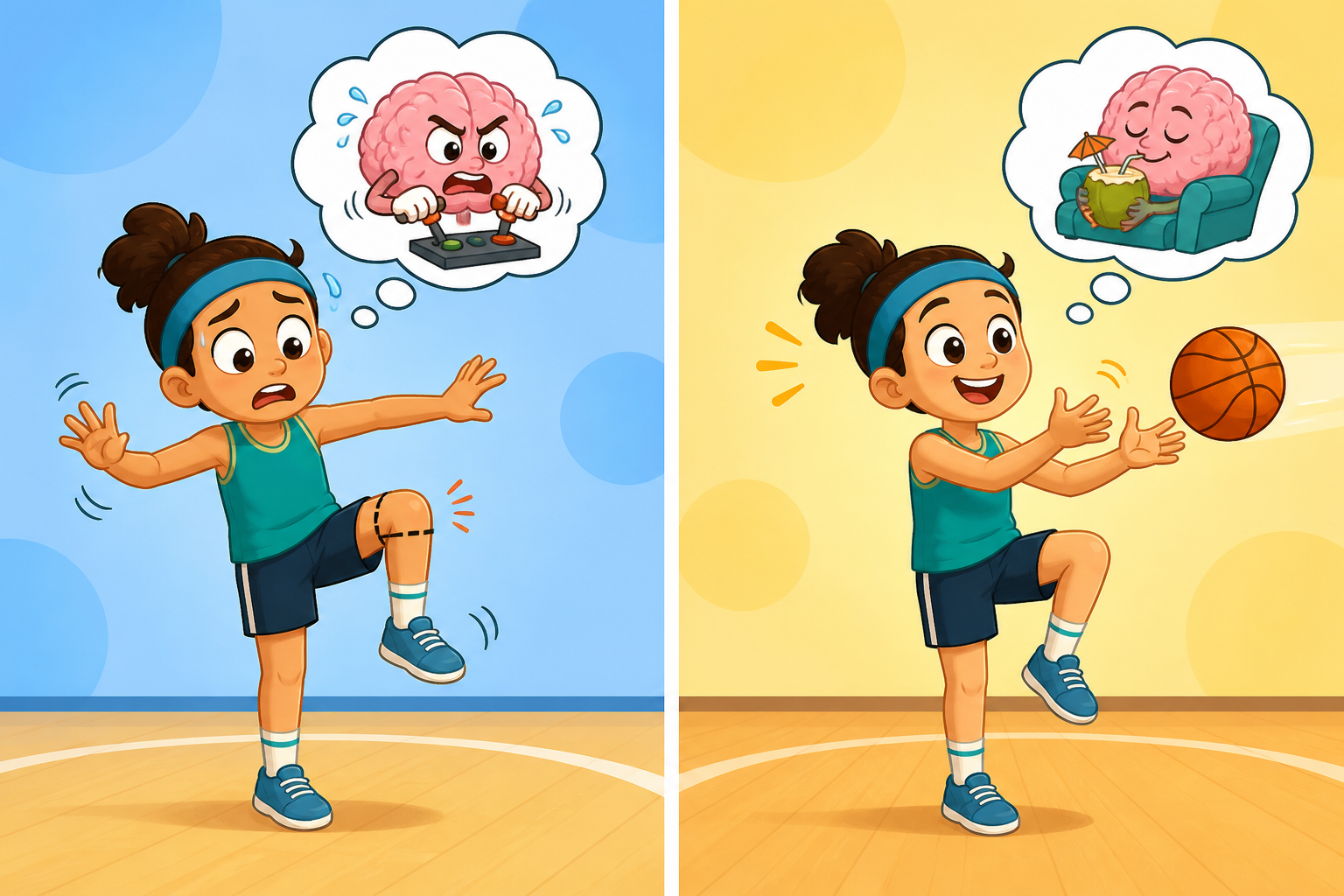
When you tear a ligament, you do not just damage the joint; you alter how your brain communicates with your body. Ligaments contain tiny sensors called mechanoreceptors that tell your brain where your joint is in space. When the ligament tears, this communication is severed.
To compensate, the brain undergoes neuroplasticity (nur-oh-plas-TIS-ih-tee), which is the brain’s ability to reorganize itself by forming new neural connections. A 2023 study in The Journal of Orthopaedic and Sports Physical Therapy explains that athletes recovering from ACL injuries begin to rely heavily on visual and conscious cognitive areas of the brain to control their knee.
Instead of moving automatically, the athlete has to unconsciously “think” about stabilizing their joint. In a quiet physical therapy clinic, this works fine. But in a chaotic sports environment where the athlete must track a ball, avoid defenders, and react instantly, this extra cognitive load can lead to coordination errors and reinjury. This is why modern rehabilitation emphasizes “dual-task” training, where the athlete must perform physical movements while also completing cognitive tasks, like catching a ball or responding to colored lights.
Who Benefits Most or Needs Caution
While anyone can recover from a ligament injury, research clearly identifies certain populations that face higher risks upon returning to sport.
Young Athletes: Age is a major risk factor for secondary injuries. A 2016 review in The American Journal of Sports Medicine found that the overall secondary ACL injury rate after surgery is about 15 percent. However, for athletes under the age of 25 who return to high-risk pivoting sports, the reinjury rate jumps to 23 percent. This equates to a 30 to 40 times greater risk of an ACL injury compared to uninjured people of the same age.
Female Athletes: A 2023 paper in The Bone & Joint Journal highlights that female athletes are up to eight times more likely to suffer an ACL tear than males. This is due to a combination of anatomical differences, hormonal factors that affect ligament laxity, and environmental factors like poorly adapted training equipment. Furthermore, female athletes often experience a higher fear of reinjury, which can compromise their return to sport.
| Population | Specific Risk Factor | Recommended Precaution |
|---|---|---|
| Athletes Under 25 | High risk of secondary injury (23%) | Strict adherence to objective testing before return |
| Female Athletes | Anatomical and hormonal laxity | Specialized neuromuscular training programs |
| UCL (Elbow) Injuries | Distal tears (lower end of ligament) | May require surgery more often than proximal tears |
The Psychological Barrier: Fear of Reinjury
Physical readiness and psychological readiness do not always match. An athlete’s knee might be perfectly stable, but if they do not trust it, they cannot play safely.
A 2017 review in Sports Health found that fear of reinjury is one of the most frequently cited reasons athletes reduce their sports participation or quit entirely. Fear causes athletes to alter their movement patterns. They might favor the injured leg, placing excessive stress on the uninjured leg. This compensatory movement is a major reason why athletes often tear the ligament in their opposite knee after returning to play.
To combat this, a 2025 systematic review in the Annals of Physical and Rehabilitation Medicine confirmed that greater psychological readiness is a key prognostic factor for a successful return. Many sports medicine teams now use validated psychological questionnaires, such as the ACL-RSI (Return to Sport After Injury) scale, to measure an athlete’s confidence and fear levels before clearing them to play.
Practical Guidance: The Stages of Returning to Play
Returning to sport is not a single event. It is a continuous process that should be broken down into specific, criteria-based phases. Related: The Science of Athletic Injury Recovery: What Actually Works
Phase 1: Prehabilitation
Rehabilitation should begin before surgery even happens. Prehabilitation (pree-huh-bil-ih-TAY-shun) involves physical therapy exercises done between the time of injury and the day of surgery. A 2020 study in PLoS One showed that patients who completed prehabilitation had significantly better self-reported knee function two years after surgery compared to those who only did postoperative rehab. The goal is to reduce swelling and restore a full range of motion before going into the operating room.
Phase 2: Mid-Stage Recovery
In the months following surgery, the focus shifts to building muscle mass and strength. A 2020 review in Sports Medicine emphasizes that athletes must restore the isolated strength of the muscles surrounding the joint. For the knee, this means intense focus on the quadriceps and hamstrings.
During this phase, the injured limb’s strength is constantly compared to the uninjured limb. The goal is to reach a Limb Symmetry Index (LSI) of at least 80 to 90 percent, meaning the injured leg is almost as strong as the healthy leg. Related: The Science of Weight Training: How Resistance Exercise Changes Your Body
Phase 3: Late-Stage Recovery and Fatigue Management
As the athlete gets closer to returning, the training must mimic the demands of the sport. A 2019 review in Sports Medicine points out that traditional rehab often fails to train explosive power and fatigue resistance.
Fatigue completely changes how the body moves. When muscles get tired, they lose their ability to absorb shock, passing that stress directly onto the ligaments. Therefore, athletes must be tested in a fatigued state. If an athlete has perfect landing mechanics when they are fresh but their knee caves inward when they are tired, they are not ready to return to a full game.
Phase 4: Passing the Final Tests
Before returning to unrestricted practice, athletes should pass a battery of tests. According to a 2024 review in Clinics in Sports Medicine, these tests should include:
- Strength Tests: Measuring the exact force the muscles can produce.
- Hop Tests: Single-leg hopping for distance and side-to-side hopping to measure power and stability.
- Movement Quality: Video analysis to ensure the knee does not buckle inward during jumps or cutting movements.
- Psychological Surveys: Ensuring the athlete feels confident and ready.
Common Questions About Returning to Sport
Can I return to my sport if I still have some pain?
Mild discomfort during early rehabilitation is normal, but sharp pain or joint swelling after exercise indicates that the tissue is being overloaded. You should be completely pain-free during sport-specific movements before returning to competitive play.
Why do so many athletes tear their other ACL?
After a ligament injury, athletes often unconsciously favor the injured limb and shift their weight to the healthy side. Over time, this places excessive strain on the uninjured knee, increasing the risk of a tear on the opposite side.
Does wearing a brace prevent reinjury?
While braces can provide psychological comfort and some mechanical support during the early return phases, research does not strongly support that functional braces prevent secondary ligament tears in high-speed, pivoting sports.
The Bottom Line
Returning to sport after a ligament injury is a complex journey that requires much more than simply waiting for a calendar date to pass. The research clearly shows that time-based clearance should be replaced by strict, objective physical and psychological testing.
While surgery is highly effective for many, conservative physical therapy can also yield excellent results depending on the specific ligament and the athlete’s goals. Ultimately, a successful return to play requires restoring explosive muscle strength, retraining the brain to react automatically, and rebuilding the athlete’s confidence to trust their body again.
Quick Reference: Key Studies
| Study Focus | Key Finding | Source |
|---|---|---|
| ACL Surgery vs. Rehab | Found no significant difference in return-to-sport rates between ACL reconstruction and rehab alone. | PMID 40603829 |
| Timing of Return | Time to return (before or after 9 months) did not impact reinjury risk if athletes met strict physical discharge criteria. | PMID 40011017 |
| Secondary Risk in Youth | Athletes under 25 returning to pivoting sports face a 23% risk of a secondary ACL injury. | PMID 26772611 |
| Brain and Movement | After an ACL injury, athletes rely more on visual-cognitive brain areas, requiring dual-task training to correct. | PMID 37186672 |
| Fear of Reinjury | Fear is a primary barrier to returning to sport and can negatively alter movement mechanics. | PMID 27590793 |
| Elbow UCL Injuries | Nearly 80% of athletes with UCL injuries returned to sport with nonoperative management. | PMID 36876746 |
Last updated: October 2026
This article synthesizes findings from peer-reviewed research. It is for educational purposes only and does not constitute medical advice. Consult a healthcare provider before starting any new regimen.
Leave a Reply