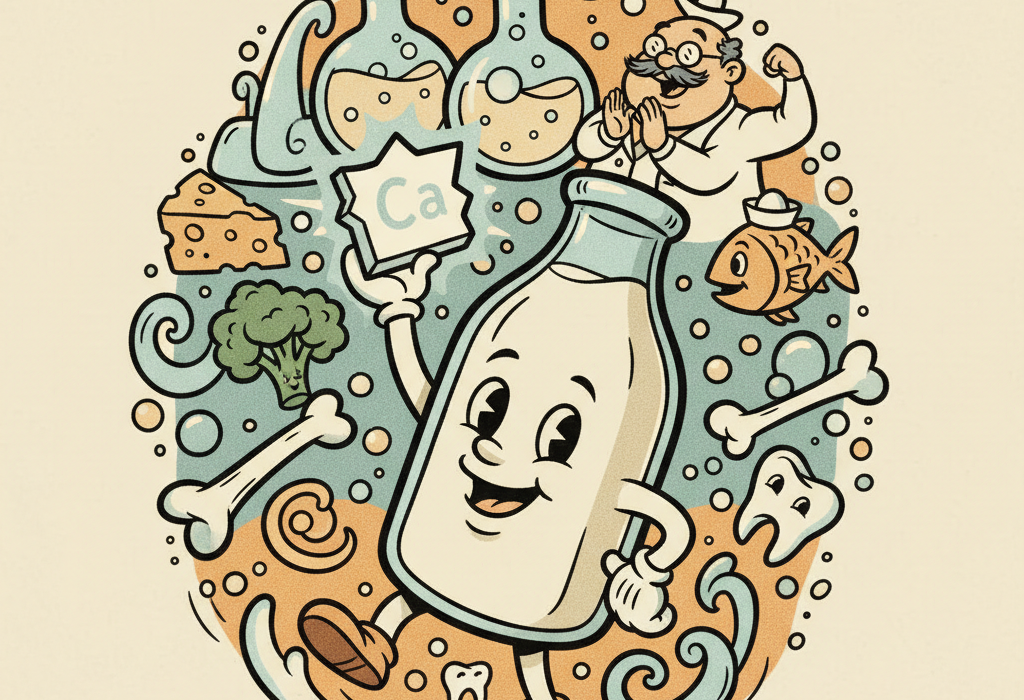
For decades, the message has been simple: drink your milk, take your calcium, and build strong bones. Calcium is indeed a vital mineral that our bodies need to function. It gives our skeleton its structure and plays a crucial role in muscle contractions and nerve signaling.
Because many people do not get enough calcium from their daily meals, calcium supplements have become one of the most popular daily vitamins in the world. However, the scientific community has recently started to question whether swallowing a concentrated pill of calcium has the same benefits as eating calcium-rich foods.
As it turns out, the body processes a sudden flood of calcium from a supplement very differently than the slow, steady drip of calcium from a meal. This difference has sparked a major medical debate. Some studies suggest that calcium supplements might not prevent fractures as well as we thought, and they could even carry unexpected risks for the heart.
Here is a clear, evidence-based look at what the latest research actually shows about calcium supplements, who really needs them, and how to take them safely.
What the Research Shows About Bone Health
The primary reason people take calcium supplements is to prevent osteoporosis (os-tee-oh-puh-ROH-sis), a condition where bones become weak and brittle. However, the evidence on whether supplements actually prevent broken bones is surprisingly mixed.
Modest Increases in Bone Density
Research consistently shows that calcium supplements can slightly increase bone mineral density (bone MIN-er-ul DEN-si-tee), which is a measurement of the amount of minerals in your bones. A 2020 review in Atherosclerosis noted that calcium supplementation generally increases bone density by about 1% to 2%.
Some specific formulations may have different effects. For example, a 2016 study in the Journal of the American College of Nutrition followed women taking a plant-sourced calcium supplement enhanced with other vitamins and minerals. Over seven years, the researchers observed a steady increase in bone mineral density of about 1.04% per year, which contrasted with the expected age-related bone loss.
Related: What Science Actually Says About Bone Density Testing
Do They Actually Prevent Fractures?
While a 1% to 2% increase in bone density sounds positive, scientists debate whether this small increase translates to fewer real-world bone fractures.
A comprehensive 2025 review in Current osteoporosis reports concluded that there is now a large body of evidence demonstrating that calcium supplements do not significantly prevent fractures in healthy, community-dwelling adults. The review noted that while supplements fill in some of the microscopic gaps in bone, they do not fundamentally change the long-term rate of bone loss.
Similarly, a detailed analysis published in the Clinical journal of the American Society of Nephrology argued that credible evidence proving calcium supplements reduce fracture risk is lacking, pointing out that many studies on the topic have been flawed by high dropout rates and poor participant compliance.
The Heart Health Controversy
The most significant shift in how doctors view calcium supplements revolves around cardiovascular health.
The “Calcium Spike” Effect
When you eat calcium-rich foods like yogurt or leafy greens, your body digests them slowly. The calcium enters your bloodstream gradually. However, when you take a 500mg or 1000mg calcium pill, it dissolves rapidly. This causes a sudden, unnatural spike in your blood calcium levels that can last for up to eight hours.
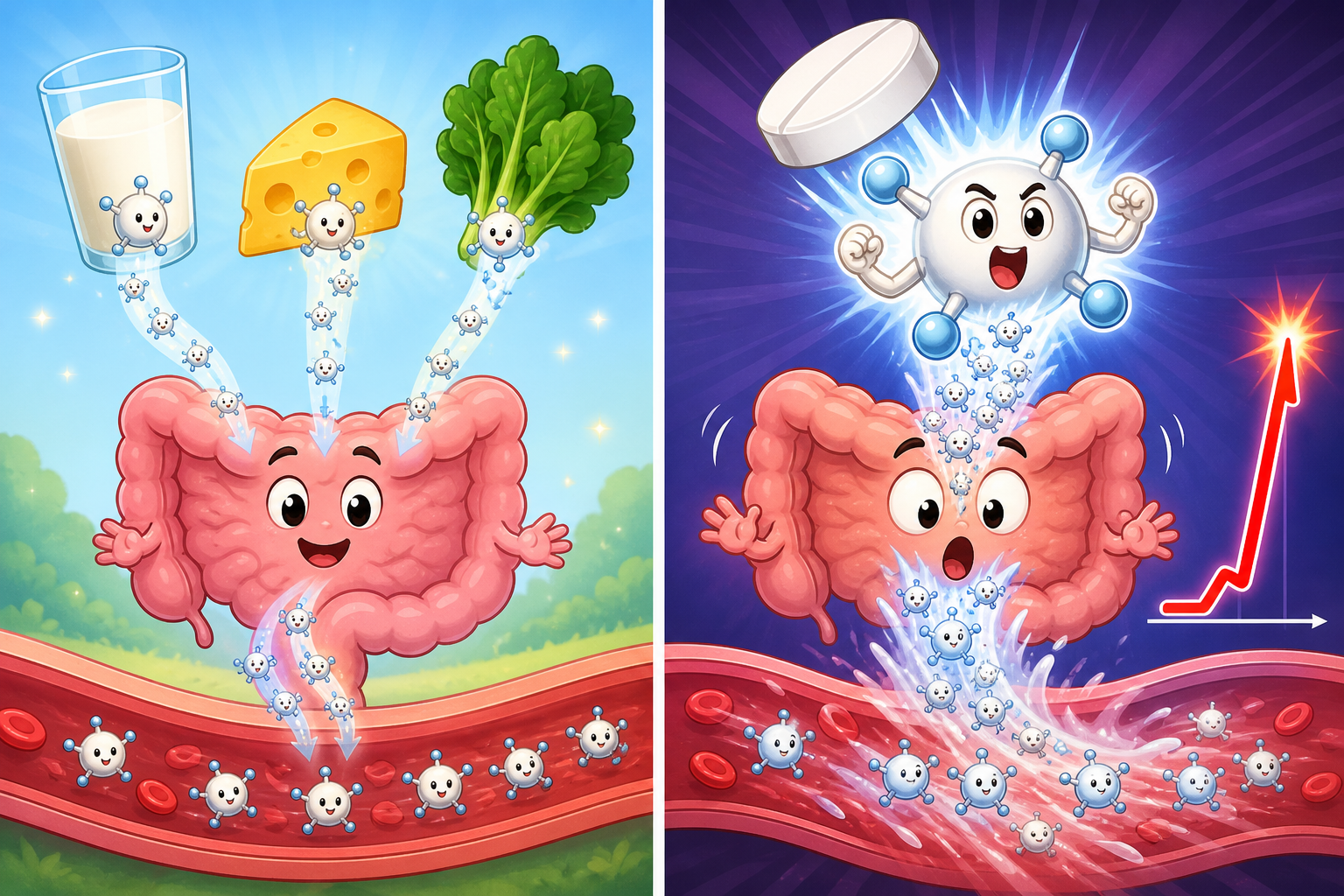
Researchers are concerned about what the body does with this sudden excess of calcium. According to the 2025 review in Current osteoporosis reports, this acute spike can temporarily increase blood pressure and make the blood more prone to clotting. More concerning, if the bones cannot absorb the calcium quickly enough, the body might deposit the excess mineral into the walls of blood vessels. Over time, this can contribute to hardened arteries.
Increased Risk for Certain Populations
Several studies have linked these calcium spikes to an increased risk of heart issues. A 2024 study in Diabetes care tracked over 434,000 participants and found that habitual use of calcium supplements was significantly associated with a higher risk of cardiovascular events and mortality, but only in people who had diabetes. For individuals without diabetes, the supplements did not show this increased heart risk.
Related: The Science of Managing High Blood Pressure: What Actually Works
It is highly important to note that the scientific community is not in total agreement here. A 2012 review in Advances in nutrition analyzed the data and argued that there is insufficient biological proof to definitively link calcium supplements to heart disease, suggesting that the benefits of preventing bone loss still outweigh potential risks.
However, almost all researchers agree on one crucial point: getting calcium from food does not carry any of these heart-related risks. The concern is strictly related to high-dose supplements.
Unexpected Benefits of Calcium Supplements
While the debate over bone and heart health continues, research has uncovered a few surprising areas where calcium supplements appear to be highly beneficial.
- Preventing Colon Polyps: A 2005 review in The American journal of gastroenterology found that calcium supplements can decrease the risk of recurrent colorectal adenomas (polyps that can sometimes lead to colon cancer). The calcium is believed to bind to irritating bile acids in the digestive tract, protecting the colon lining.
- Healthy Pregnancies in Deficient Areas: For women whose daily diets lack adequate calcium, supplementation during pregnancy can be vital. A 2021 study in the European journal of clinical nutrition focusing on a Chinese population found that calcium supplementation significantly reduced the risk of preterm birth, especially when taken consistently in the second and third trimesters.
Common Questions About Calcium Supplements
Do calcium supplements cause kidney stones?
This is a common worry, but the answer depends on how you take them. A 2017 review in Current urology reports found that taking calcium supplements on an empty stomach might slightly increase the risk of kidney stones. However, taking calcium supplements with a meal actually protects against kidney stones. The calcium binds to oxalates (compounds found in food) in your digestive tract, preventing them from reaching your kidneys where they would otherwise form stones.
Should I take Vitamin D with Calcium?
Yes. Vitamin D acts like a key that unlocks your intestines, allowing calcium to be absorbed into your bloodstream. Without adequate Vitamin D, your body will only absorb a fraction of the calcium you consume. A 2019 review in the Methodist DeBakey cardiovascular journal emphasizes that calcium and Vitamin D work best as a team for bone health.
Related: The Science of B Vitamins and Vitamin D: How They Work Together
Practical Guidance: How to Take Calcium Safely
If you and your doctor decide that you need a calcium supplement, the way you take it matters immensely.

1. Choose the Right Form
The two most common forms of calcium supplements are calcium carbonate and calcium citrate.
According to a 2007 review in Nutrition in clinical practice:
- Calcium Carbonate is the cheapest and most common form. It requires stomach acid to dissolve properly, so it must always be taken with food.
- Calcium Citrate is more easily absorbed and does not require stomach acid. It can be taken with or without food. It is the best choice for older adults, people with digestion issues, or anyone taking acid-reducing heartburn medications.
2. Mind the Dose
Your body is like a sponge when it comes to calcium, and it can only absorb so much at one time. The maximum amount of calcium your body can process in a single dose is 500 milligrams. If you take a 1000mg pill all at once, you will simply excrete the rest (or risk it depositing in your blood vessels). If your doctor wants you to take 1000mg a day, split it into two 500mg doses taken at different times of the day.
3. Beware of Label Inaccuracies
Because supplements are not strictly regulated like prescription drugs, what is on the label is not always what is in the bottle. A 2022 study in Molecules tested 108 different calcium supplements. They found that over half of the supplements (54.6%) contained significantly more calcium than the label stated. This is concerning because taking too much calcium can lead to side effects. Look for brands that are third-party tested (such as those with a USP or NSF seal) to ensure accuracy.
Who Needs Caution
While calcium is essential, certain groups should be careful with high-dose supplements:

- People with Diabetes: Due to the increased risk of cardiovascular events noted in recent research, individuals with diabetes should consult their cardiologist before starting a calcium supplement.
- Men at Risk for Prostate Cancer: The 2007 review in Nutrition in clinical practice noted that very high calcium intakes (over 1500mg per day) from food or supplements have been associated with a higher risk of advanced prostate cancer.
- People Taking Iron Supplements: Calcium strongly inhibits the absorption of iron. If you need both, take your iron supplement at least two hours apart from your calcium supplement, as noted in a 2002 study in Nutrition reviews.
The Bottom Line
The scientific consensus on calcium has shifted. More is not always better. Today, experts agree that you should try to get your daily calcium requirement (usually 1000mg to 1200mg) primarily through your diet. Dairy products, leafy greens, and fortified foods provide calcium in a slow, steady manner that your body handles perfectly.
Calcium supplements should be viewed exactly as their name implies: as a supplement to fill in the gaps of a deficient diet, not as a blanket preventive measure for everyone. If you do need a supplement, keep the dose low (under 500mg at a time), take it with food to prevent kidney stones, and ensure you are also getting enough Vitamin D to help your body actually use it.
Quick Reference: Key Studies
| Study Focus | Key Finding | Source |
|---|---|---|
| Heart Risk in Diabetes | Habitual calcium supplementation increased cardiovascular risk in people with diabetes, but not in those without. | PMID 37506393 |
| Fracture Prevention | Large review found that calcium supplements do not significantly prevent fractures in community-dwelling adults and may increase heart attack risk. | PMID 39937345 |
| Supplement Quality | 54.6% of tested calcium supplements contained significantly more calcium than declared on the label. | PMID 36500243 |
| Preterm Birth | Calcium supplementation reduced the risk of preterm birth in a population with low dietary calcium. | PMID 32814854 |
| Kidney Stones | Calcium supplements do not inherently cause kidney stones and may protect against them if taken with meals. | PMID 28233226 |
| Colon Polyps | Calcium supplements were shown to decrease the risk of recurrent colorectal adenomas. | PMID 15667498 |
Last updated: October 2026
This article synthesizes findings from peer-reviewed research. It is for educational purposes only and does not constitute medical advice. Consult a healthcare provider before starting any new regimen.

Leave a Reply