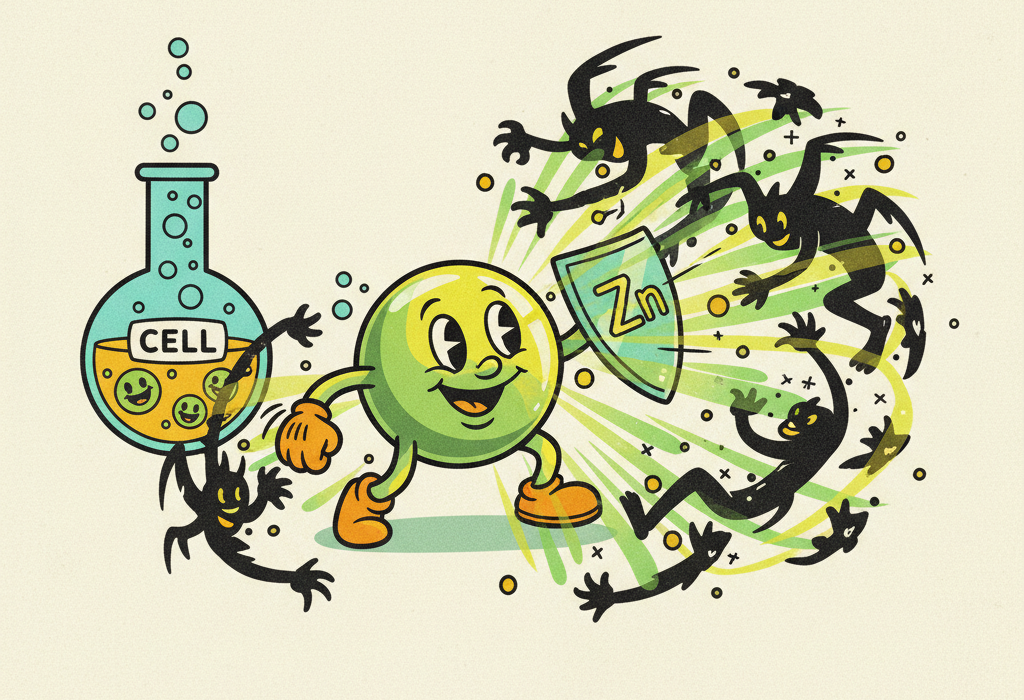
When you hear the word “antioxidant,” you probably picture vitamin C, berries, or green tea. These traditional antioxidants work by directly neutralizing harmful molecules in your body. Zinc, however, is completely different.
Zinc is an essential mineral found in every cell of your body. While it does not directly sweep up harmful molecules like vitamin C does, it acts more like a factory manager. It builds the machinery your body uses to protect itself, turns on protective genes, and shields your cells from damage.
Without enough zinc, your body’s natural defense systems begin to fail. To understand why this happens, we have to look at what the latest science reveals about zinc and its unique role in fighting cellular stress.
How This Might Work: The Science of Zinc and Cellular Defense
To understand how zinc protects your body, it helps to understand the threat it is fighting: oxidative stress (OX-ih-day-tiv stress).
Oxidative stress happens when there is an imbalance between free radicals (unstable molecules that damage cells) and antioxidants (molecules that neutralize them). Over time, excessive oxidative stress can damage DNA, proteins, and cell membranes. It is linked to aging, inflammation, and chronic diseases. Related: How Cortisol and Antioxidants Control Your Stress Response
According to a 2017 review in Inflammopharmacology, zinc protects your cells through three primary biological mechanisms:
1. Building Antioxidant Enzymes: Zinc is a necessary structural component of superoxide dismutase (soo-per-OX-ide DIS-moo-tase), often called SOD. SOD is one of the most powerful antioxidant enzymes in the human body. Without zinc, SOD simply cannot function, leaving cells vulnerable to damage.
2. Creating Protective Proteins: Zinc triggers the body to produce metallothioneins (meh-TAL-oh-THIGH-oh-neens). These are special proteins that act like cellular sponges. They bind to heavy metals and trap free radicals before they can harm the cell.
3. Shielding Cell Membranes: Iron and copper are essential minerals, but if they roam freely in the wrong places, they can trigger chemical reactions that create massive amounts of free radicals. Zinc competes with these metals, taking their place on cell membranes and preventing this destructive reaction from happening.
Furthermore, zinc acts as an anti-inflammatory agent. It helps block a protein complex called NF-κB (en-eff-kay-bee), which is responsible for turning on inflammation genes in the body. By keeping NF-κB in check, zinc stops the cycle of inflammation and oxidative stress from spiraling out of control.
What the Research Shows
Scientists have studied zinc’s protective effects across human populations, clinical models, and natural environments. The results consistently show that zinc is a fundamental requirement for a healthy antioxidant system.
Protecting Against Extreme Toxin Exposure
One of the clearest ways to see zinc’s power is by looking at people exposed to high levels of oxidative stress. Agricultural workers who spray pesticides often suffer from elevated oxidative damage because the chemicals generate massive amounts of free radicals in the body.
A 2019 study in the Journal of Complementary & Integrative Medicine followed 40 pesticide sprayers who had low natural antioxidant levels and high markers of cellular damage. The researchers gave the workers a daily zinc supplement for one month.
The results were striking. After just 30 days, the workers experienced a 41% drop in malondialdehyde (mal-on-di-AL-deh-hide), or MDA, which is a primary marker of oxidative damage. At the same time, their natural levels of SOD and other protective enzymes significantly increased. Interestingly, the zinc supplementation also improved their cholesterol profiles, lowering harmful triglycerides and raising beneficial HDL cholesterol.
Metabolic Health and Blood Sugar
High blood sugar levels are notorious for causing severe oxidative stress, which leads to the vascular complications often seen in diabetes.
A 2003 review in Clinical Chemistry and Laboratory Medicine notes that patients with Type 2 diabetes frequently excrete too much zinc in their urine, leading to a systemic zinc deficiency. This lack of zinc weakens the body’s antioxidant defenses right when they are needed most. Research indicates that restoring zinc levels in diabetic patients helps reduce lipid peroxidation (the rusting of cellular fats) and improves overall antioxidant capacity.
Recent animal studies support this connection. A 2025 study in the Nigerian Journal of Clinical Practice observed that rats with induced diabetes suffered from significant drops in serum zinc alongside a severe imbalance in their total oxidant status.
The Universality of Zinc: Clues from Nature
The biological rule that “low zinc equals high oxidative stress” applies across almost all living creatures.
For example, a 2020 study in Biological Trace Element Research looked at sheep grazing in the Wumeng mountainous region of China. Some pastures in this region have naturally zinc-deficient soil. The researchers found that sheep grazing on the zinc-deficient soil had failing antioxidant systems. Their blood showed significantly lower levels of protective enzymes and much higher levels of cellular damage compared to sheep grazing on normal soil.
Conversely, when agricultural scientists supplement animal diets with zinc, their natural defenses thrive. Studies on weaned piglets and Pekin ducks show that optimized zinc intake increases the activity of glutathione and SOD in muscle tissues, reducing cellular damage and improving overall health and growth.
Future Frontiers: Nanoparticles
Scientists are currently exploring how to make zinc even more effective using nanotechnology. By creating incredibly small particles of zinc oxide, researchers can improve how well the body absorbs and uses the mineral.
A 2019 study in the Journal of Trace Elements in Medicine and Biology tested zinc oxide nanoparticles on mice with gouty arthritis. Gout is driven by sharp uric acid crystals that trigger massive inflammation and oxidative stress in joints. The zinc nanoparticles significantly reduced uric acid levels, lowered reactive oxygen species, and boosted antioxidant enzymes like SOD and catalase.
Similarly, a 2025 study in the Journal of Controlled Release successfully used a specialized zinc nanoparticle complex to scavenge free radicals in the eyes of rats, slowing down the oxidative damage that leads to cataracts.
Who Benefits Or Needs Caution
Who might benefit:
- Individuals exposed to high environmental toxins or occupational chemicals.
- People with metabolic conditions like Type 2 diabetes, who may lose excess zinc through their urine.
- Older adults, as natural zinc absorption tends to decline with age. Related: Does Taking Antioxidants Actually Help You Live Longer?
Who needs caution:
- Anyone considering high-dose zinc supplements. Taking too much zinc (usually over 40 mg per day long-term) can block the body from absorbing copper, leading to a dangerous copper deficiency and neurological issues.
- People taking certain antibiotics (like tetracyclines), as zinc can bind to the medication in the stomach and stop it from working.
Common Questions About Zinc and Antioxidants
Is zinc an antioxidant like vitamin C?
No. Vitamin C is a direct antioxidant, meaning it travels around the body handing out electrons to neutralize free radicals. Zinc is an indirect antioxidant. It acts as a structural building block for the enzymes that do the actual neutralizing.
Can I just take a large amount of zinc to boost my immune system?
More is not always better. While correcting a zinc deficiency significantly improves your antioxidant defenses, taking massive doses of zinc does not give you “super” immunity. In fact, extreme zinc overload can actually cause oxidative stress and suppress immune function.
How do I know if I have enough zinc?
Blood tests for zinc are notoriously inaccurate because the body keeps very little zinc in the blood (most of it is stored inside your cells). Healthcare providers usually look at dietary habits, symptoms, and underlying health conditions to determine if supplementation is appropriate.
The Bottom Line
Zinc is not a traditional antioxidant, but it is entirely necessary for your body’s defense systems to function. It provides the structural backbone for crucial enzymes like SOD, stimulates the production of protective proteins, and blocks inflammatory pathways at the genetic level.
Research consistently shows that when humans or animals are deficient in zinc, their cellular defenses crumble, leading to increased oxidative damage. Restoring zinc levels effectively reverses this decline, improving both antioxidant capacity and metabolic health. However, because excess zinc can interfere with other essential minerals, maintaining a balanced intake through diet or moderate supplementation is the safest approach.
Quick Reference: Key Studies
| Study Focus | Key Finding | Source |
|---|---|---|
| Pesticide Sprayers | Zinc supplementation for 30 days significantly lowered oxidative damage (MDA) and improved antioxidant enzyme activity in workers exposed to toxins. | PMID 31421040 |
| Zinc & Inflammation | A review detailing how zinc acts as an antioxidant by inducing metallothioneins and blocking the NF-κB inflammation pathway. | PMID 28083748 |
| Type 2 Diabetes | Zinc status is often decreased in diabetic patients, and restoring it helps combat the oxidative stress that drives vascular complications. | PMID 12964803 |
| Environmental Deficiency | Sheep grazing on zinc-deficient soil suffered from weakened antioxidant systems and elevated cellular damage compared to sheep on normal soil. | PMID 31392543 |
| Gout and Nanoparticles | Oral administration of zinc oxide nanoparticles reduced uric acid and oxidative stress markers in mice with gouty arthritis. | PMID 31479800 |
Last updated: October 2026
This article synthesizes findings from peer-reviewed research. It is for educational purposes only and does not constitute medical advice. Consult a healthcare provider before starting any new regimen.

Leave a Reply