
Many people turn to meditation to relax, manage stress, or find a moment of peace in a busy world. But if you are skeptical about whether sitting quietly and focusing on your breath actually improves your health, you are not alone.
For decades, scientists have asked the exact same question. Does meditation actually work, or is it just a popular wellness trend?
The short answer is yes, it works. A massive body of peer-reviewed research shows that regular meditation can lead to moderate improvements in anxiety, depression, and pain. It can even change the physical structure of your brain. However, science also shows that meditation is not a magical cure for disease, and it is not necessarily better than other healthy habits like exercise.
Think of your brain like a busy highway. Meditation does not stop the cars from driving, but it acts like a traffic controller. It helps manage the flow of stressful thoughts so you do not experience a mental traffic jam.

This article breaks down exactly what the latest scientific research says about meditation and mindfulness, how it affects your body, and what we still do not know.
Understanding the Basics
Before diving into the research, it helps to understand what these terms actually mean. While they are often used interchangeably, they are slightly different.

- Mindfulness (MIND-ful-ness) is the practice of paying attention to the present moment on purpose, without judging your thoughts or feelings.
- Meditation (med-ih-TAY-shun) is a specific, formal practice where you use techniques to train your attention and awareness.
In short, mindfulness is a state of mind, and meditation is one of the exercises you use to achieve that state.
What the Research Shows About Mental Health
The most well-documented benefits of meditation revolve around mental health. When scientists look at large groups of people over time, clear patterns emerge.
It Moderately Reduces Anxiety and Depression
A landmark 2014 review in JAMA Internal Medicine analyzed 47 clinical trials involving over 3,000 participants. The researchers found moderate evidence that mindfulness meditation programs improve anxiety, depression, and pain.
Interestingly, the researchers noted that the effect sizes were small to moderate. This means meditation provides relief roughly equal to what a patient might experience from taking a standard antidepressant medication, but without the chemical side effects.
These mental health benefits apply across various populations. For example, a 2023 study in The Journal of Nursing Education found that a brief online mindfulness intervention significantly reduced depression, stress, and anxiety in nursing students. Similarly, a 2021 review in Clinical Obstetrics and Gynecology confirmed that mindfulness practices effectively reduce anxiety and depression during pregnancy and the postpartum period.
It Helps Regulate Emotions in Beginners
You do not need to be a monk with decades of experience to see benefits. A 2019 study in Behavioural Brain Research looked at people who had never meditated before. Half the group listened to a podcast, while the other half did a guided meditation for just 13 minutes a day.
After eight weeks, the meditation group showed decreased negative moods, enhanced attention, better working memory, and improved emotional regulation. The researchers concluded that even a short, practical daily habit provides significant cognitive benefits.
How Meditation Changes the Brain and Body
How does simply sitting and breathing lead to these health improvements? The answer lies in how meditation alters your biology.
Rewiring the Brain’s Stress Center
When you experience stress, your body activates a “fight or flight” response. Over time, chronic stress keeps this alarm bell ringing constantly.
Meditation helps quiet this alarm through neuroplasticity (nur-oh-plas-TIS-ih-tee), which is the brain’s ability to reorganize itself and form new physical connections.
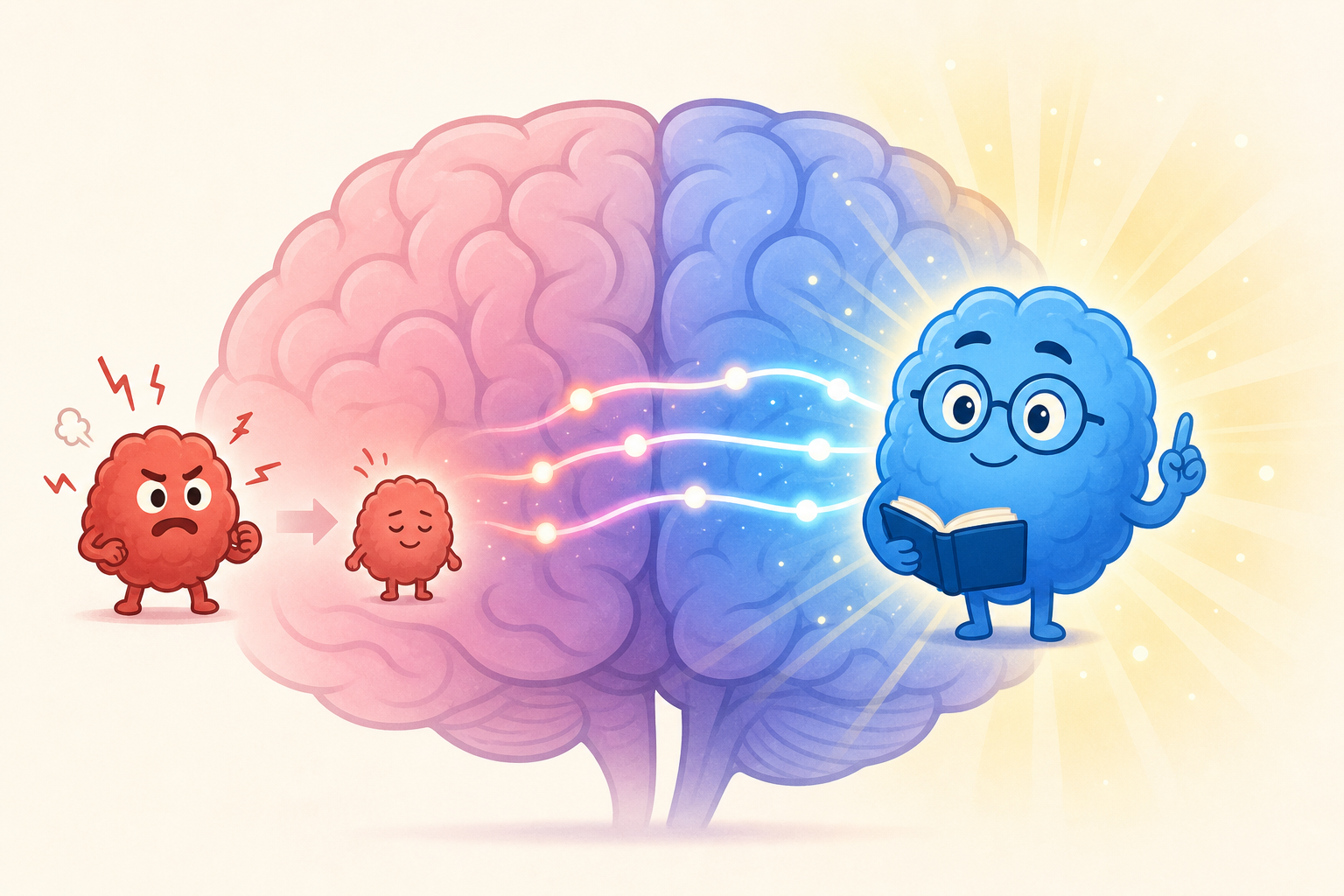
A 2020 review in the Irish Journal of Psychological Medicine noted that people who practice long-term meditation show structural changes in their brains. Specifically, they have decreased activity in the amygdala (uh-MIG-duh-luh), the part of the brain responsible for fear and stress processing. At the same time, they show increased activity in the prefrontal cortex, the area responsible for logic and decision-making.
Lowering Stress Hormones
Meditation also impacts your hormones. A 2025 review in Progress in Brain Research highlights that mindfulness and meditation improve autonomic nervous system balance. This leads to a reduction in the secretion of cortisol (KOR-tih-sol), which is the primary stress hormone in your body.
Related: Cortisol and Stress: What Science Actually Shows About the HPA Axis
Physical Health Benefits
While mental health is the primary focus of meditation research, scientists have also uncovered measurable physical benefits.
Managing Blood Pressure
Chronic stress is a major contributor to high blood pressure and cardiovascular disease. A 2019 meta-analysis in the Journal of Human Hypertension examined 107 studies on stress reduction and blood pressure.
The researchers found that Transcendental Meditation (a specific type of mantra-based meditation) was associated with significant reductions in blood pressure, lowering systolic pressure by an average of 5.0 mmHg and diastolic pressure by 2.8 mmHg.
Supporting Cancer Recovery
Meditation is increasingly used alongside traditional medical treatments for cancer patients. A 2021 clinical trial in the Journal of Clinical Oncology studied younger breast cancer survivors. The researchers found that mindful awareness practices significantly reduced depressive symptoms, fatigue, and insomnia.
Another 2025 study in Cancer Nursing looked at women undergoing mastectomy surgery. An eight-week program of mindfulness-based meditation and yoga led to significant reductions in perceived stress and improved body image and self-esteem.
Reducing Chronic Inflammation in Parkinson’s Disease
Emerging research suggests meditation may even influence systemic inflammation. A 2025 clinical trial in Psychotherapy and Psychosomatics studied patients with Parkinson’s disease.
Participants who engaged in an eight-week meditation or yoga program showed significant improvements in motor symptoms and quality of life. Even more surprisingly, blood tests revealed that the meditation group had significant reductions in Interleukin-6 (IL-6), a primary marker of chronic inflammation in the body.
Related: What Blood Tests for Inflammation Actually Tell Us About Your Health
Who Benefits Or Needs Caution
Research indicates that certain groups may experience unique benefits from mindfulness practices, while others should view it with realistic expectations.
- People with Addiction or Cravings: A 2024 trial in JAMA Network Open studied adults with Internet Gaming Disorder. The researchers found that mindfulness meditation significantly reduced gaming cravings. Brain scans showed that the meditation actually decreased activation in the brain regions associated with reward processing and craving.
- Athletes: A 2021 review in Current Sports Medicine Reports highlighted that mindfulness interventions can enhance athletic performance, improve mental health, and potentially reduce injury risk by improving focus and body awareness.
- People with Inflammatory Bowel Disease (IBD): It is important to temper expectations for certain physical diseases. A 2020 review in The American Journal of Gastroenterology noted that while stress triggers IBD flares, mindfulness therapies have not consistently demonstrated an ability to reduce clinical gut inflammation. They do, however, improve the patient’s overall quality of life and ability to cope with the illness.
Related: How the Gut-Brain Connection Actually Works: What the Latest Science Says
Common Misunderstandings or Myths
Because mindfulness is incredibly popular, it is often marketed as a cure-all. Science paints a more nuanced picture.
Myth: Meditation is always better than other treatments
Research does not support the idea that meditation is superior to other healthy behaviors. The large 2014 JAMA review found no evidence that meditation programs were better than active treatments like exercise, prescription drugs, or cognitive behavioral therapy. Instead, it is best viewed as a complementary tool that works alongside these treatments.
Myth: Meditation has no risks
A 2018 review in Perspectives on Psychological Science issued a strong warning about the “hype” surrounding mindfulness. The authors noted that misinformation and poor study designs in older research have led to exaggerated claims. Furthermore, they pointed out that for a small minority of people, intense meditation can trigger adverse psychological effects, such as increased anxiety or feelings of detachment. Anyone with a history of severe trauma or severe psychiatric conditions should approach intensive meditation carefully and ideally with a trained professional.
Common Questions About Meditation
How long do I need to meditate to see results?
You do not need to meditate for hours. Research shows that as little as 13 minutes of daily practice over eight weeks can produce measurable improvements in mood, memory, and emotional regulation.
Is meditation better than exercise for mental health?
Studies show they are both highly effective, but they work differently. A 2016 review comparing yoga and physical exercise found that both improve health, but practices involving mindfulness and breath regulation offer unique benefits for stress reduction. Doing both is likely the best approach.
Does meditation help you lose weight?
Currently, there is low or insufficient evidence to suggest that meditation programs directly influence weight loss or alter eating habits on their own.
The Bottom Line
The scientific consensus on meditation and mindfulness is largely positive, provided we keep our expectations grounded in reality.
What we know for sure:
- Regular mindfulness and meditation practice leads to small-to-moderate reductions in anxiety, depression, and pain.
- It physically alters the brain over time, reducing activity in the stress centers and increasing activity in areas related to emotional regulation.
- It is a highly effective, low-cost complementary therapy for managing the psychological burden of chronic illnesses like cancer and Parkinson’s disease.
What remains uncertain:
- It is still unclear exactly which specific types of meditation (e.g., focused attention versus mantra-based) are best for specific medical conditions.
- We need more rigorous, long-term studies to understand how meditation compares directly to pharmaceutical treatments over decades of a person’s life.
Meditation will not magically erase your problems or cure severe physical diseases. However, the evidence is clear that it provides your brain with the tools it needs to process stress more efficiently, making it a valuable addition to a healthy lifestyle.
Quick Reference: Key Studies
| Study Focus | Key Finding | Source |
|---|---|---|
| Mental Health Meta-Analysis | Found moderate evidence that mindfulness improves anxiety, depression, and pain, comparable to some medications. | PMID 24395196 |
| Brief Daily Practice | 13 minutes of daily meditation for 8 weeks improved attention, memory, and mood in beginners. | PMID 30153464 |
| Parkinson’s Disease | 8 weeks of meditation reduced chronic inflammation (IL-6) and improved motor symptoms. | PMID 40024243 |
| Addiction and Cravings | Mindfulness meditation decreased cravings and altered brain activation in adults with internet gaming disorder. | PMID 38888924 |
| Breast Cancer Recovery | Mindful awareness practices significantly reduced depressive symptoms, fatigue, and insomnia in survivors. | PMID 34406839 |
| Blood Pressure | Transcendental Meditation was associated with significant reductions in both systolic and diastolic blood pressure. | PMID 30425326 |
| The “Hype” Warning | Warns that poor methodology has led to exaggerated claims and highlights the need to recognize potential adverse effects. | PMID 29016274 |
Last updated: May 2026
This article synthesizes findings from peer-reviewed research. It is for educational purposes only and does not constitute medical advice. Consult a healthcare provider before starting any new regimen.


Leave a Reply