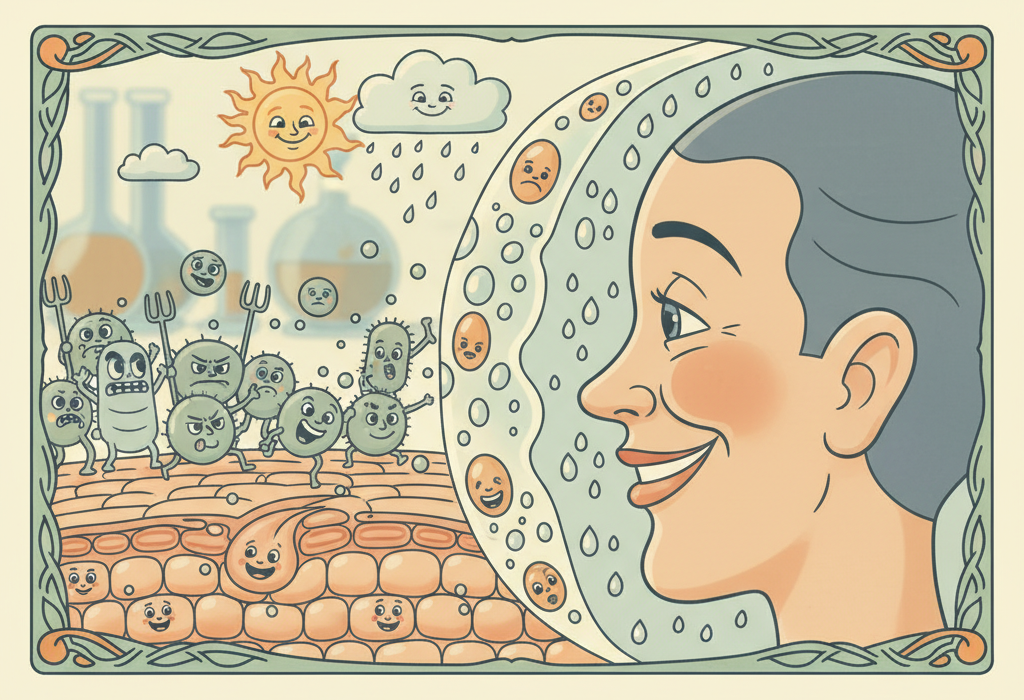
Have you ever wondered why your skin feels tight and dry after a hot shower, or why winter air seems to instantly cause flaking and irritation? The answer lies in a microscopic, invisible shield on the surface of your body.
This shield is known as the skin barrier. When it is healthy, it keeps moisture trapped inside your body and blocks harmful bacteria, allergens, and pollutants from getting in. When it is damaged, water escapes easily, leaving your skin dry, red, and vulnerable to conditions like eczema and psoriasis.
For a long time, we treated the outer layer of the skin as a collection of dead cells that just needed to be scrubbed away. However, recent scientific discoveries have shown that the skin barrier is highly active. It relies on a complex ecosystem of natural fats, helpful bacteria, and specific acidity levels to function properly.
This article breaks down what the latest peer-reviewed research actually shows about how the skin barrier works, what causes it to break down, and how you can protect it.
How Your Skin Barrier Actually Works
To understand the skin barrier, it helps to think of a brick wall.
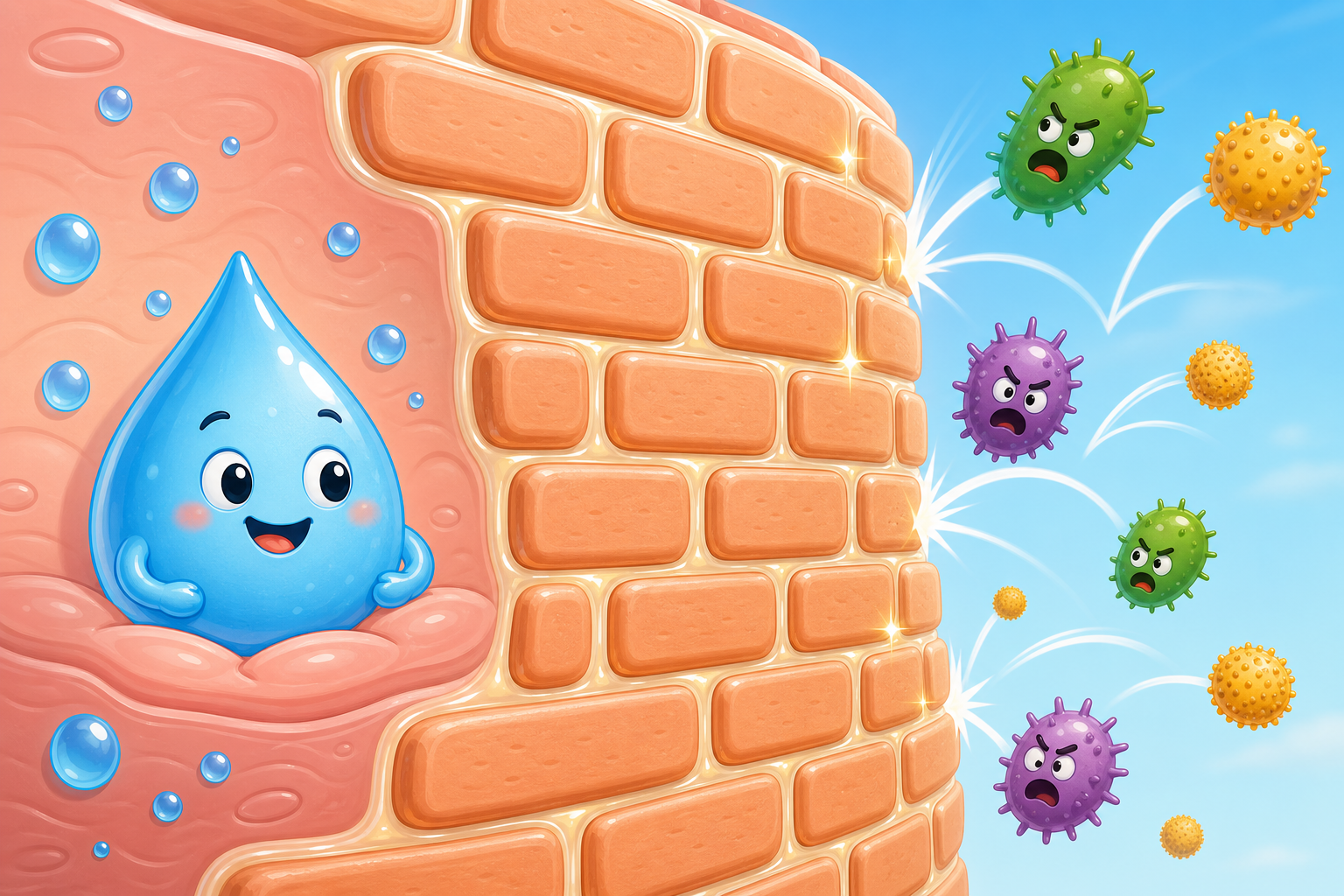
The “bricks” are dead skin cells called corneocytes. The “mortar” holding these bricks together is a mixture of natural fats (lipids). This brick-and-mortar structure makes up the stratum corneum (STRAH-tum COR-nee-um), the outermost layer of your skin.
The lipid “mortar” is incredibly important. According to a 2024 review in Progress in Lipid Research, this mixture is primarily made of three components:
- Ceramides (SAIR-uh-mides) – waxy lipid molecules that make up about 50% of the barrier.
- Cholesterol – which provides structural support.
- Free fatty acids – which help maintain the skin’s acidity.
Together, these lipids create a waterproof seal. But the physical structure is only one part of the story. The skin barrier also relies on chemical and biological defenses.
The Acid Mantle
Healthy skin is naturally acidic, with a pH level hovering around 4.5 to 5.5. This slight acidity is known as the acid mantle.
A 2023 study in Cells explains that this acidic environment is crucial for two reasons. First, the enzymes that build ceramides only work properly in an acidic environment. Second, harmful bacteria struggle to survive in acid, while beneficial skin bacteria thrive in it.

The Skin Microbiome
Your skin is covered in millions of invisible bacteria, fungi, and viruses. While “bacteria” often sounds bad, many of these microbes are essential for your health.
For example, a common beneficial bacteria called Staphylococcus epidermidis lives on healthy skin. A fascinating 2022 study in Cell Host & Microbe discovered that this specific bacteria actually secretes an enzyme that helps your skin produce more ceramides. In other words, your skin bacteria actively help build your physical moisture barrier.
Related: The Science of Your Skin Microbiome: How Invisible Bacteria Protect You
What the Research Shows About Barrier Damage
When the skin barrier is compromised, it leads to a condition scientists call “transepidermal water loss” (TEWL). This simply means water is evaporating out of the skin too quickly. Several factors can cause this breakdown.

Genetic Factors and Atopic Dermatitis
Some people are born with a genetically weaker skin barrier. This is highly visible in conditions like atopic dermatitis, the most common form of eczema.
According to a 2024 review in Advances in Experimental Medicine and Biology, up to 60% of people of European descent with atopic dermatitis have a mutation in the gene that produces filaggrin (FILL-uh-grin). Filaggrin is a protein that binds skin cells together and breaks down into natural moisturizing factors.
When filaggrin is missing or reduced, the skin cannot hold onto water. This creates microscopic cracks in the barrier. Allergens and irritants slip through these cracks, triggering the immune system and causing deep, itchy inflammation. The immune system’s response then further damages the barrier, creating a vicious cycle of dryness and itching.
Environmental Stressors
Your environment plays a massive role in barrier health. A 2016 study in the Journal of the European Academy of Dermatology and Venereology found that cold temperatures and low indoor humidity directly degrade the skin barrier.
Dry air pulls moisture directly from the stratum corneum. In response to cold weather, the skin also shrinks its blood vessels to conserve heat, which reduces the delivery of nutrients to the skin’s surface. This combination explains why “winter itch” is so common and why eczema flares up during colder months.
Harsh Cleansers and High pH
Using the wrong soap can actively destroy your barrier. Many traditional bar soaps are highly alkaline, meaning they have a high pH.
Research highlighted in Cells (2023) shows that washing with alkaline soaps strips away natural lipids and raises the skin’s pH. When the skin becomes too alkaline, the enzymes that normally help shed dead skin cells go into overdrive, causing the skin to peel and flake. An alkaline environment also encourages the growth of Staphylococcus aureus, a harmful bacteria closely linked to eczema flare-ups.
The Gut-Skin Connection
Science is increasingly showing that skin barrier health is not just about what you put on the outside of your body. It is also deeply connected to your digestive system through the gut-skin axis.
A 2025 review in Gut Microbes outlines how the bacteria in your gut communicate with your skin. When gut bacteria break down dietary fiber, they produce short-chain fatty acids (SCFAs). These SCFAs travel through the bloodstream and help regulate inflammation throughout the body, including the skin.
If the gut microbiome becomes imbalanced (a state called dysbiosis), it can trigger systemic inflammation that weakens the skin barrier from the inside out. Studies have shown that people with inflammatory bowel conditions often experience skin issues like psoriasis, highlighting this strong internal connection.
Related: Probiotics and Gut Health: What the Science Actually Shows
Practical Guidance: How to Protect and Repair Your Barrier
If your skin barrier is damaged, it typically takes a few weeks of consistent care to repair it. Based on current dermatological research, here are the most effective ways to support your skin.
1. Use pH-Balanced Cleansers
Because the acid mantle is vital for ceramide production and bacterial balance, avoid harsh, stripping soaps. Look for gentle, synthetic cleansers (often labeled as “syndets”) that are formulated with a slightly acidic pH (around 5.0 to 5.5).
2. Apply the Right Lipids
Moisturizers are not all created equal. To genuinely repair the barrier, you need to replace the missing “mortar.” A 2023 study in The Journal of Allergy and Clinical Immunology: In Practice notes that the most effective barrier repair creams contain a specific ratio of lipids: 3 parts ceramides, 1 part cholesterol, and 1 part free fatty acids.
3. Look for Glycerol (Glycerin)
Glycerol, also known as glycerin, is one of the most thoroughly researched skin care ingredients. A 2008 review in The British Journal of Dermatology confirmed that glycerol acts as a humectant, meaning it pulls water into the outer layer of the skin. It also helps the skin’s natural lipids transition into a healthy, fluid state, making it an excellent ingredient for treating winter xerosis (severe dry skin).
4. Consider Vitamin C for Structural Support
Vitamin C is highly concentrated in healthy skin. According to a 2017 review in Nutrients, Vitamin C is essential for the production of collagen, the protein that gives the deeper layers of your skin their strength. It also acts as a potent antioxidant, neutralizing damage from pollution and ultraviolet (UV) light. While topical Vitamin C serums can be helpful, ensuring you get enough Vitamin C through your diet is the most reliable way to support the skin’s deeper layers.
| Feature | Healthy Skin Barrier | Damaged Skin Barrier |
|---|---|---|
| Moisture Levels | High (water is locked in) | Low (water evaporates easily) |
| Skin pH | Acidic (4.5 – 5.5) | Alkaline (6.0 or higher) |
| Microbiome | Balanced, diverse bacteria | Often dominated by harmful bacteria |
| Appearance | Smooth, flexible, calm | Flaky, red, tight, itchy |
Common Questions About the Skin Barrier
How long does it take to repair a damaged skin barrier?
It generally takes 2 to 4 weeks of consistent, gentle care to repair a mildly compromised barrier. This is roughly the amount of time it takes for the skin to complete one full cycle of shedding and regenerating its outer cells.
Does drinking more water fix a dry skin barrier?
While staying hydrated is important for overall health, drinking excess water does not directly cure dry skin. The issue is usually not a lack of water inside the body, but rather a leaky barrier that allows existing water to evaporate into the air.
Can over-exfoliating damage the barrier?
Yes. Using physical scrubs or strong chemical acids too frequently removes the protective corneocytes (the “bricks”) before the skin is ready to shed them. This leaves the underlying layers exposed and vulnerable to irritation.
The Bottom Line
Your skin barrier is a highly active, complex system that relies on a specific balance of dead cells, natural fats, acidity, and microscopic bacteria.
Research clearly shows that when this barrier breaks down due to genetics, harsh weather, or alkaline soaps, it leads to chronic dryness and inflammation. However, by avoiding harsh cleansers, using moisturizers rich in ceramides and glycerin, and protecting the skin’s natural acid mantle, you can effectively rebuild and maintain this vital shield.
While science has uncovered a great deal about the physical lipids of the skin, we are still learning exactly how the gut microbiome and skin bacteria interact. As research continues, we will likely see more treatments focused not just on moisturizing the skin, but on feeding the helpful bacteria that live on it.
Quick Reference: Key Studies
| Study Focus | Key Finding | Source |
|---|---|---|
| Microbiome & Ceramides | S. epidermidis bacteria secrete an enzyme that helps the skin produce protective ceramides. | PMID 35123653 |
| Skin pH & Inflammation | An alkaline skin pH increases harmful bacteria and activates enzymes that break down the skin barrier. | PMID 38067173 |
| Atopic Dermatitis | Genetic mutations in the filaggrin protein lead to a leaky barrier, driving eczema and inflammation. | PMID 38724781 |
| Gut-Skin Axis | Gut bacteria produce short-chain fatty acids that help regulate skin inflammation and barrier health. | PMID 40050613 |
| Weather Impacts | Low humidity and cold temperatures directly decrease skin barrier function and increase irritation. | PMID 26449379 |
| Vitamin C & Skin | Vitamin C is highly concentrated in the epidermis and is required for collagen synthesis and antioxidant defense. | PMID 28805671 |
Last updated: May 2026
This article synthesizes findings from peer-reviewed research. It is for educational purposes only and does not constitute medical advice. Consult a healthcare provider before starting any new regimen.


Leave a Reply