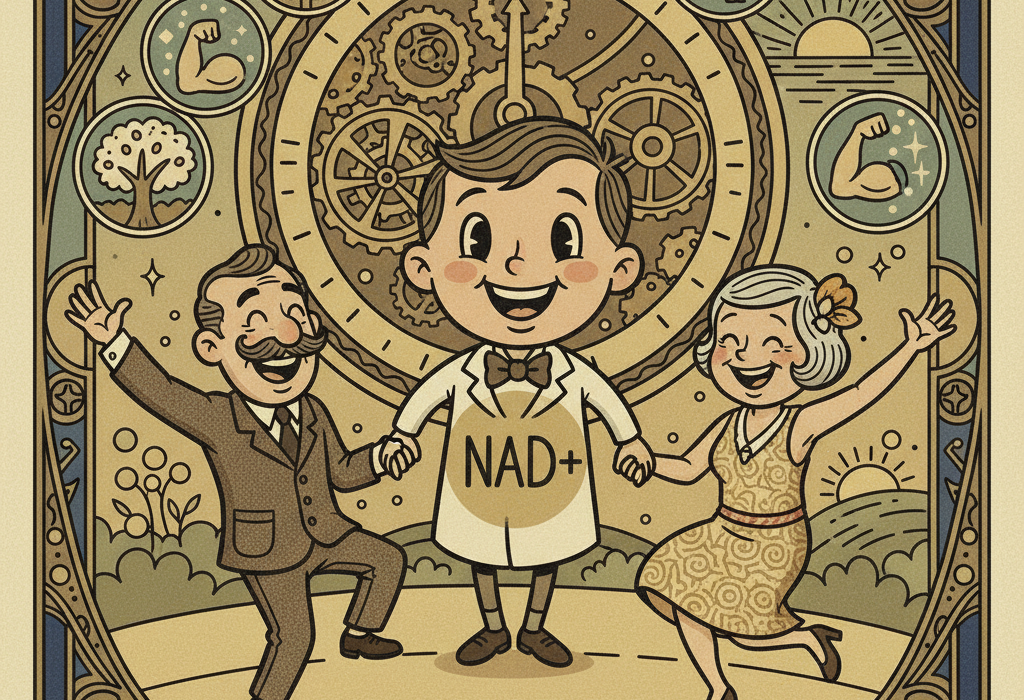
Have you ever wondered why we seem to have boundless energy in our twenties, only to feel our natural battery slowly drain as the decades pass? While aging is a complex process, scientists have identified a few key chemical changes that happen inside our cells over time. One of the most actively researched areas in the biology of aging involves a tiny, naturally occurring molecule called NAD+.
So, does boosting NAD+ actually slow aging? The short answer is that NAD+ is absolutely essential for cellular health, and its levels reliably drop as we get older. In animal studies, restoring NAD+ improves muscle strength, protects the brain, and extends healthy lifespan. However, while human trials show that we can safely raise NAD+ levels using supplements, researchers are still working to prove if this translates to noticeable physical benefits in everyday people.
To understand why scientists are so focused on this molecule, we need to look at what it does, why it disappears, and what the latest research shows about its role in brain health, muscle maintenance, and cellular aging.
What is NAD+ and How Does It Work?
Nicotinamide adenine dinucleotide (nik-uh-TIN-uh-mide AD-uh-neen dy-NOO-klee-uh-tide), or NAD+, is a coenzyme found in every living cell. You can think of a coenzyme as a helper molecule that proteins need to do their jobs.
NAD+ has two primary roles in the body:

First, it acts like a microscopic delivery truck for energy. When you eat food, your cells break it down. NAD+ picks up electrons from that broken-down food and delivers them to your mitochondria (my-toh-KON-dree-uh), which are the power plants of your cells. The mitochondria use these electrons to create the energy that keeps you alive.
Second, NAD+ acts as a required fuel source for a special class of protective proteins called sirtuins (SIR-too-ins). Sirtuins are the maintenance workers of your cells. They repair damaged DNA, reduce inflammation, and help regulate your circadian rhythm. However, sirtuins cannot do their job without a steady supply of NAD+.
The Core Problem: Supply and Demand
A 2021 review in Nature Reviews Molecular Cell Biology explains a core tension in the aging process: as we get older, our bodies produce less NAD+, but our cells demand more of it.
When we are young, the body easily recycles NAD+. But with age, our cells accumulate damage. DNA repair enzymes, known as PARPs, use up massive amounts of NAD+ to fix this damage. At the same time, an immune enzyme called CD38 becomes hyperactive in older tissues and aggressively destroys NAD+.
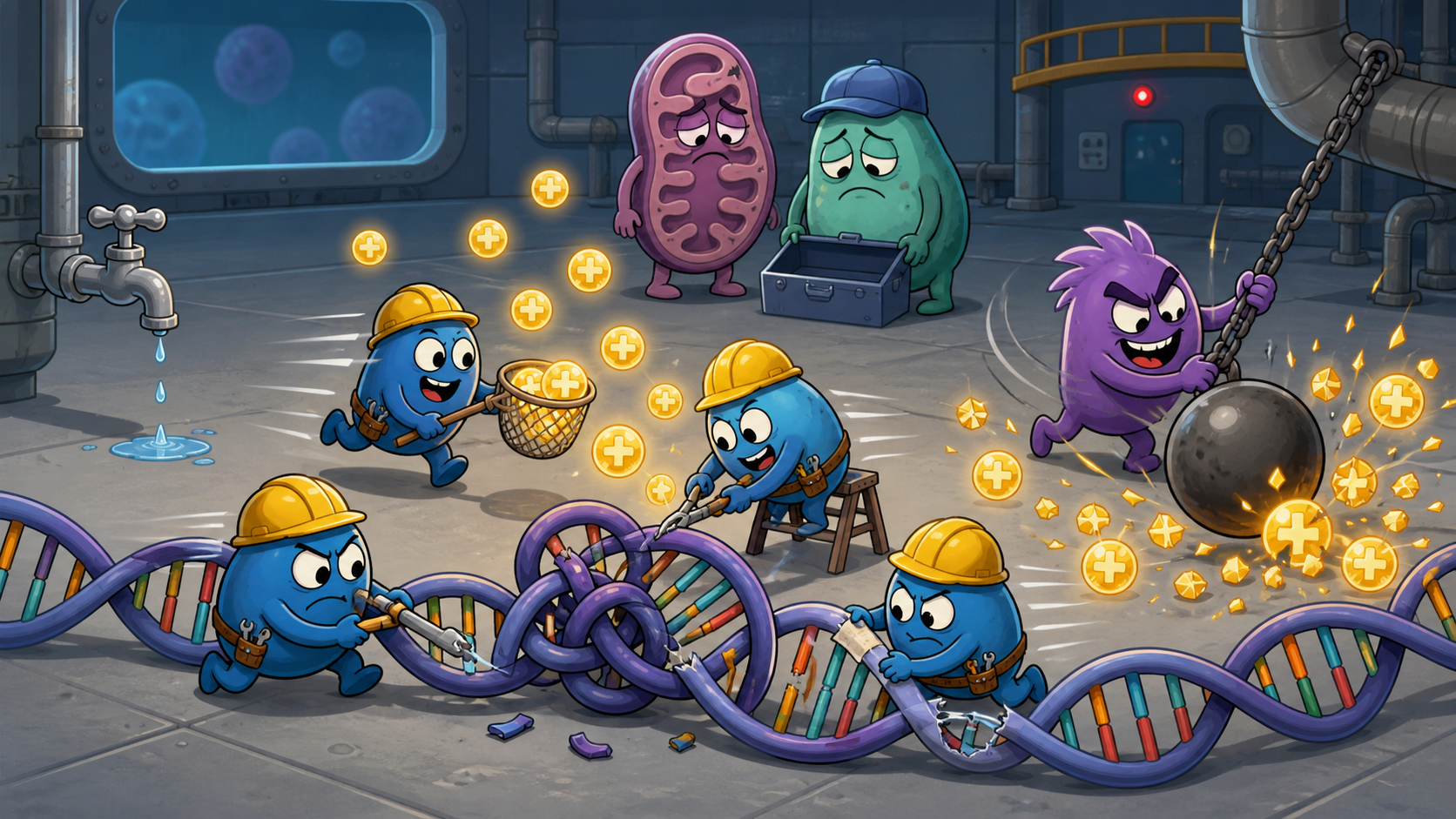
The result is a cellular energy crisis. With less NAD+ available, mitochondria produce less energy, and sirtuins cannot perform their vital repair work. This decline is linked to many age-related conditions, from cognitive decline to muscle weakness.
What the Research Shows: Brains, Muscle, and Cellular Health
Over the past decade, researchers have studied what happens when we restore NAD+ levels in aging bodies. The findings span across several major areas of human health.
Defending the Brain Against Cognitive Decline
One of the most energy-hungry organs in the body is the brain. When NAD+ levels drop, brain cells struggle to maintain their connections and clear out cellular waste.
A 2019 review in Cell Metabolism highlights that NAD+ depletion is closely tied to the hallmarks of brain aging, including mitochondrial dysfunction and the accumulation of damaged proteins. In conditions like Alzheimer’s disease, the brain struggles to clear out toxic protein clumps known as amyloid-beta and tau.
Research suggests that NAD+ helps activate a cellular cleanup process called mitophagy (my-TOFF-uh-gee). Mitophagy is how cells identify and recycle old, broken mitochondria. A 2019 study in Nature Neuroscience found that mitophagy is severely impaired in the brains of Alzheimer’s patients. When researchers gave NAD+ boosting compounds to animal models of Alzheimer’s, it restored the mitophagy cleanup process. This helped immune cells in the brain clear out amyloid-beta plaques, reduced neuroinflammation, and actually reversed memory impairment in the animals.
Similarly, a 2021 study in the Proceedings of the National Academy of Sciences showed that treating Alzheimer’s mouse models with an NAD+ precursor called Nicotinamide Riboside (NR) reduced DNA damage and prevented brain cell death.
Maintaining Muscle Mass and Strength
As we age, we naturally lose muscle mass and strength, a condition known as sarcopenia (sar-coh-PEE-nee-uh). This is not just about looking fit; loss of muscle leads to frailty, falls, and a loss of independence.
A 2019 study in Nature Communications analyzed muscle biopsies from older men across Singapore, the UK, and Jamaica. The researchers found a remarkably consistent pattern: individuals with sarcopenia had prominent mitochondrial dysfunction and significantly lower NAD+ levels in their muscle tissue compared to healthy peers of the same age. Their muscles simply lacked the energetic capacity to maintain themselves.
Can we fix this by providing more NAD+ building blocks? A 2024 study in Nature Metabolism identified a natural compound called trigonelline, found in coffee and fenugreek, which acts as an NAD+ precursor. The researchers found that older humans with sarcopenia had lower levels of trigonelline in their blood. When they supplemented older mice with this compound, it successfully raised NAD+ levels, enhanced mitochondrial activity, and improved muscle grip strength while preventing fatigue.
Clearing Out “Zombie Cells”
Another major driver of aging is cellular senescence (suh-NES-uhns). When cells experience too much stress or DNA damage, they stop dividing. Instead of dying off naturally, they linger in the tissue like “zombie cells,” secreting inflammatory chemicals that damage surrounding healthy cells.

Related: What Science Actually Says About Senolytics and Anti-Aging
A 2024 study in Cell Reports discovered a fascinating link between senescent cells and NAD+. Researchers found that when immune cells called macrophages become overloaded with cholesterol, they activate the NAD-destroying enzyme CD38. This rapidly drains the cell’s NAD+ supply, forcing the immune cell into a senescent “zombie” state. In the eye, this process drives age-related macular degeneration (AMD), a leading cause of blindness.
When the researchers supplemented the subjects with NMN (an NAD+ precursor), it reversed the cellular senescence, restored immune function, and prevented the physical signs of macular degeneration.
Where The Science Is Still Uncertain: The Human Gap
If NAD+ does all these wonderful things in mice and worms, should everyone take an NAD+ supplement? The scientific community advises caution because human biology is vastly more complex than that of a laboratory mouse.
A 2023 review in The Journals of Gerontology analyzed the current landscape of human clinical trials using NAD+ boosting compounds like Nicotinamide Riboside (NR) and Nicotinamide Mononucleotide (NMN). The good news is that these supplements appear to be very safe and well-tolerated. Blood tests confirm that taking these supplements successfully raises NAD+ levels in the human body.
However, the clinical evidence showing that this actually improves physiological function in humans remains unclear. While some small trials show mild improvements in insulin sensitivity or walking speed, many others show no significant physical changes. Researchers note that human trials have mostly been short-term and involved small sample sizes. It may take years or decades of supplementation to see the protective anti-aging effects in humans that we observe in short-lived mice.
Practical Guidance: How to Support Your NAD+ Levels
While we wait for long-term human supplement data, research shows there are evidence-based, natural ways to maintain healthy NAD+ levels and support your mitochondria.
- Regular Exercise: Physical activity is one of the most potent ways to boost mitochondrial health. A 2026 review in Nature Aging suggests that exercise acts almost like a pharmacological drug, activating pathways that delay molecular aging and preserve energy metabolism.
- Dietary Choices: Your body can make NAD+ from the amino acid tryptophan and from Vitamin B3 (niacin), found in poultry, fish, and mushrooms.
- Avoid Overeating: Constant overeating forces your mitochondria to work overtime, generating oxidative stress that damages DNA and forces PARP enzymes to drain your NAD+ supply.
- Calorie Restriction or Fasting: A 2019 paper in Nature notes that conditions of lower energy load, like fasting or calorie restriction, naturally increase NAD+ levels and activate protective sirtuin proteins.
Related: The Science of Calorie Restriction: How Eating Less Affects Health and Longevity
The Bottom Line
NAD+ is an undeniable cornerstone of human health. It is the molecular link between the food we eat, the energy we produce, and the repair systems that keep our DNA intact.
- What we know: NAD+ levels decline with age due to a combination of decreased production and increased destruction by inflammatory enzymes.
- What the evidence supports: In animal models, restoring NAD+ clears out toxic brain proteins, improves muscle strength, and reverses cellular senescence.
- What remains uncertain: While oral supplements safely raise NAD+ levels in human blood, we do not yet have definitive proof that they reverse aging or cure age-related diseases in people.
For now, the most scientifically sound way to protect your cellular energy is through the pillars of metabolic health: consistent exercise, a nutrient-dense diet, and avoiding chronic overconsumption.
Quick Reference: Key Studies
| Study Focus | Key Finding | Source |
|---|---|---|
| Sarcopenia and Muscle Health | Sarcopenic muscle shows severe mitochondrial dysfunction and low NAD+ levels across multiple human ethnicities. | PMID 31862890 |
| Alzheimer’s and Mitophagy | NAD+ supplementation restores mitophagy, clearing amyloid-beta and tau proteins while reversing memory loss in animal models. | PMID 30742114 |
| Cellular Senescence | Cholesterol overload triggers CD38 to drain NAD+, causing immune cell senescence. NAD+ precursors reverse this process. | PMID 38636518 |
| Muscle Aging and Trigonelline | A natural compound in coffee acts as an NAD+ precursor, improving muscle strength and preventing fatigue in aging models. | PMID 38504132 |
| Human Clinical Trials | NAD+ boosting supplements are safe and raise blood levels in humans, but functional physical improvements remain unclear. | PMID 37068054 |
| Brain Aging Hallmarks | NAD+ depletion is linked to mitochondrial dysfunction, oxidative damage, and impaired cellular cleanup in the aging brain. | PMID 31577933 |
Last updated: September 2026
This article synthesizes findings from peer-reviewed research. It is for educational purposes only and does not constitute medical advice. Consult a healthcare provider before starting any new regimen.

Leave a Reply