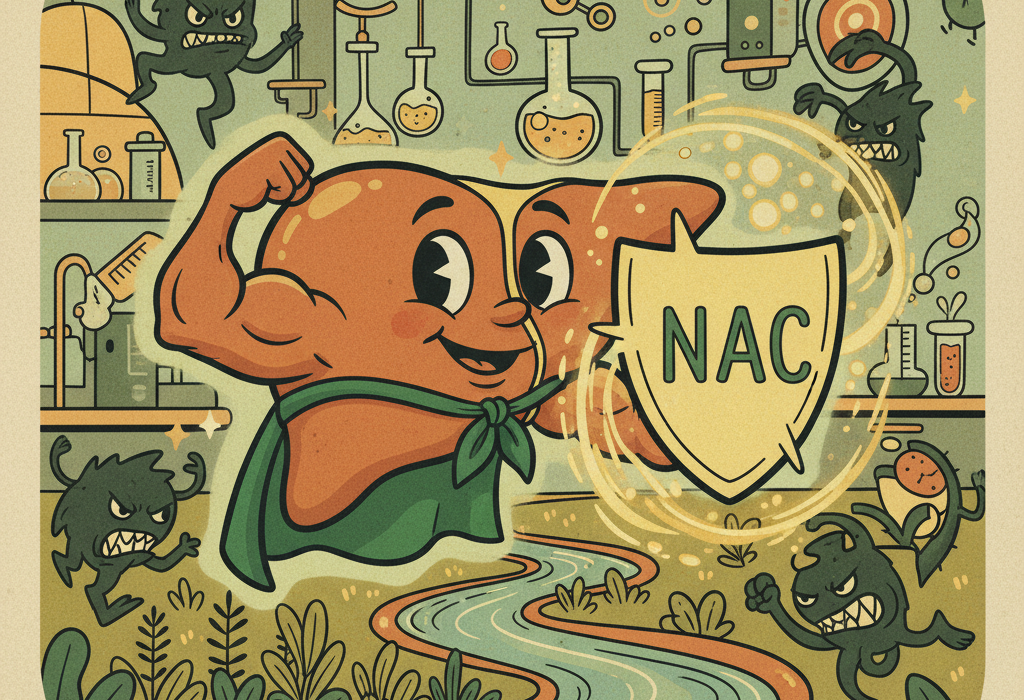
Your liver is your body’s primary chemical processing plant. It filters toxins, breaks down medications, and manages fats. However, when the liver encounters too many toxins at once, it can become overwhelmed and sustain serious damage.
For decades, emergency room doctors have used a compound called N-acetylcysteine to save livers from severe drug overdoses. Also known simply as NAC, this compound is now available as a dietary supplement. Because of its success in emergency medicine, many people wonder if taking NAC can protect their liver from everyday stress, alcohol, or metabolic diseases.
So, does NAC actually improve general liver health? The short answer is that NAC is highly effective for specific types of acute liver poisoning, particularly acetaminophen overdoses. For other conditions like fatty liver disease and alcohol-related liver injury, research shows it has promising benefits for reducing cellular stress, though it is not a cure-all.
Here is a breakdown of how NAC works in the body and what the latest scientific research shows about its effects on liver health.
How NAC Might Work in the Liver
To understand how NAC helps the liver, it is helpful to understand how the liver protects itself.
The liver relies heavily on a molecule called Glutathione (gloo-tuh-THIGH-own). Glutathione is the body’s master antioxidant. You can think of it as a cellular cleanup crew. When the liver breaks down toxins, it often produces harmful byproducts. Glutathione binds to these dangerous byproducts and neutralizes them so they can be safely removed from the body.

However, the liver only has a limited supply of glutathione. If a person consumes a massive amount of a toxin, the liver uses up its glutathione faster than it can make more. When the cleanup crew is gone, the toxic byproducts build up and begin killing liver cells. This leads to Oxidative stress (OX-ih-day-tiv stress), a condition where harmful molecules outnumber the body’s defenses, causing tissue damage.

This is where NAC steps in. NAC is a precursor to glutathione. It provides the body with cysteine, which is the exact raw material the liver needs to manufacture more glutathione. By supplying this crucial building block, NAC helps the liver restock its cleanup crew and neutralize the remaining toxins before they cause permanent damage.

Related: How Your Body Actually Detoxifies: The Science of Cellular Cleanup
What the Research Shows About NAC and Liver Health
Scientists have studied NAC extensively in emergency settings, and they are increasingly exploring its potential for chronic liver diseases. The evidence varies depending on the specific liver condition.
Acetaminophen Overdoses
Acetaminophen, commonly known by the brand name Tylenol, is a very safe pain reliever when used correctly. However, in large doses, it is highly toxic to the liver. Acetaminophen overdose is one of the leading causes of acute liver failure worldwide.
When acetaminophen is broken down, it forms a highly toxic byproduct. Normally, glutathione handles this easily. In an overdose, the glutathione runs out, leading to Hepatotoxicity (heh-PAT-oh-tok-SIS-ih-tee), which is severe chemical-driven liver damage.
NAC is the gold-standard, FDA-approved treatment for acetaminophen poisoning. If given promptly, it is incredibly effective at preventing liver failure. However, recent research suggests that the standard dose of NAC might need adjusting for massive overdoses.
A 2019 review in Clinical Toxicology found that patients who consume massive amounts of acetaminophen may develop liver damage even if they receive the standard NAC treatment. The researchers noted that doctors may need to increase the NAC dose in a step-wise fashion for these extreme cases to ensure the liver has enough raw materials to survive the toxin load.
Additionally, medical professionals are refining how NAC is delivered. Traditionally, intravenous NAC was given in a “three-bag” method over 21 hours. A 2025 meta-analysis in Clinical Toxicology compared this to a newer “two-bag” method. The researchers found that the simplified two-bag method is just as effective at preventing liver injury and causes significantly fewer allergic-type reactions, such as rashes and nausea.
Non-Acetaminophen Acute Liver Failure
Liver failure does not only happen from acetaminophen. It can also be caused by viral hepatitis, heat stroke, poisonous mushrooms, and other prescription medications. This is known as non-acetaminophen induced acute liver failure.
Because NAC is so effective for acetaminophen, scientists wondered if it could help these other patients. A 2024 review in Translational Gastroenterology and Hepatology looked at global health data to see if NAC could be repurposed for these cases. The evidence showed that NAC is a safe and valuable complement to supportive care, helping to improve liver function in patients suffering from heat stroke, viral hepatitis, and mushroom toxicity.
A 2016 systematic review in the British Journal of Clinical Pharmacology looked specifically at patients with liver failure caused by other drugs. The study found that NAC significantly improved transplant-free survival. In the NAC group, 40% of patients survived without needing a liver transplant, compared to only 27% in the placebo group. While NAC did not significantly change the overall survival rate, it helped more people survive using their own natural liver.
Alcohol-Related Liver Disease
Chronic heavy alcohol use causes constant inflammation and oxidative stress in the liver. Over time, this depletes the liver’s glutathione stores and leads to alcoholic liver disease.
A 2018 review in Expert Opinion on Investigational Drugs explored the rationale for using NAC in patients with alcohol use disorder. The researchers noted that restoring glutathione could protect against further liver injury. Furthermore, NAC appears to influence brain chemistry in a way that might reduce cravings for alcohol, though clinical trials are still ongoing to confirm this benefit in humans.
Metabolic Health and Fatty Liver Disease
Obesity and poor metabolic health can lead to Hepatic steatosis (heh-PAT-ik stee-uh-TOE-sis), which is the buildup of extra fat in liver cells. This fat buildup causes chronic inflammation and can eventually lead to liver scarring.
A 2026 review in Current Opinion in Clinical Nutrition and Metabolic Care examined how glutathione precursors like NAC affect metabolic health. The researchers found that NAC demonstrates promising benefits for improving insulin resistance and reducing hepatic steatosis. By lowering inflammation and oxidative stress, NAC helps protect liver cells from the damage caused by excess fat. However, the authors noted that large-scale human trials are still needed to determine the optimal daily dosage for metabolic health.
Related: What Science Actually Says About Weight Loss and Obesity
Where The Science Is Still Uncertain
While NAC is highly effective for toxic overdoses, it is not a universal cure for all liver problems.
For example, researchers tested NAC on infants with biliary atresia, a rare condition where the bile ducts are blocked. The infants undergo a surgery to restore bile flow, but the surgery has variable success. A 2025 clinical trial in Hepatology Communications tested whether giving intravenous NAC after surgery would improve bile flow. Unfortunately, the treatment did not meet its primary endpoint, showing no significant difference in clinical markers compared to historical controls. While the NAC was safe and well-tolerated, it did not solve the structural issue of bile flow in these infants.
Common Questions About NAC and Liver Health
Can taking NAC cure a hangover or prevent liver damage from drinking?
While NAC can help replenish antioxidants, it is not a “free pass” to consume excessive alcohol. Taking NAC before drinking may offer some antioxidant support, but it will not prevent intoxication or completely block the toxic effects of heavy alcohol use.
Is it safe to take an NAC supplement every day?
For most healthy adults, oral NAC supplements are generally considered safe and well-tolerated. However, it can cause mild stomach upset in some people. Because it influences how the body processes certain chemicals, you should consult a doctor before starting it, especially if you take prescription medications.
Does NAC heal liver cirrhosis?
Cirrhosis is advanced, permanent scarring of the liver. While NAC can reduce ongoing oxidative stress and inflammation, there is no strong evidence that it can reverse existing scar tissue or cure advanced cirrhosis.
The Bottom Line / Takeaways
N-acetylcysteine is a powerful tool for supporting liver health, primarily because it helps the body produce its most important antioxidant, glutathione.
Here is a summary of what we currently know:
- High Confidence: NAC is a highly effective, life-saving treatment for acetaminophen overdoses. Medical protocols are continually improving, with newer two-bag delivery methods showing fewer side effects.
- Moderate Confidence: For acute liver failure caused by other drugs, viruses, or toxins, NAC appears to improve the chances of surviving without a liver transplant.
- Emerging Evidence: For chronic conditions like alcohol-related liver disease and metabolic fatty liver, NAC shows promise in reducing inflammation and cellular stress. However, more large-scale human trials are needed to confirm the best dosages and long-term benefits.
Overall, NAC is a safe and beneficial compound that plays a critical role in emergency liver care and holds exciting potential for broader metabolic health.
Quick Reference: Key Studies
| Study Focus | Key Finding | Source |
|---|---|---|
| Acetaminophen Overdose Dosing | Massive overdoses may require step-wise increases in NAC dosing to prevent severe liver damage. | PMID 30777470 |
| Delivery Methods | A simplified two-bag NAC infusion method is as effective as the traditional three-bag method but causes fewer allergic-type reactions. | PMID 40013897 |
| Drug-Induced Liver Injury | In non-acetaminophen liver failure, NAC significantly improved transplant-free survival (40% vs 27% in placebo). | PMID 26757427 |
| Repurposing for Liver Failure | Global health data supports using NAC as a safe complement to care for liver failure caused by heat stroke, viruses, and toxins. | PMID 38317753 |
| Obesity and Fatty Liver | NAC demonstrates promising benefits for improving insulin resistance and reducing fat buildup in the liver. | PMID 42186383 |
| Alcohol Use Disorder | NAC safely replenishes depleted antioxidants in patients with alcoholic liver disease and may help manage cravings. | PMID 30019966 |
Last updated: November 2026
This article synthesizes findings from peer-reviewed research. It is for educational purposes only and does not constitute medical advice. Consult a healthcare provider before starting any new regimen.


Leave a Reply