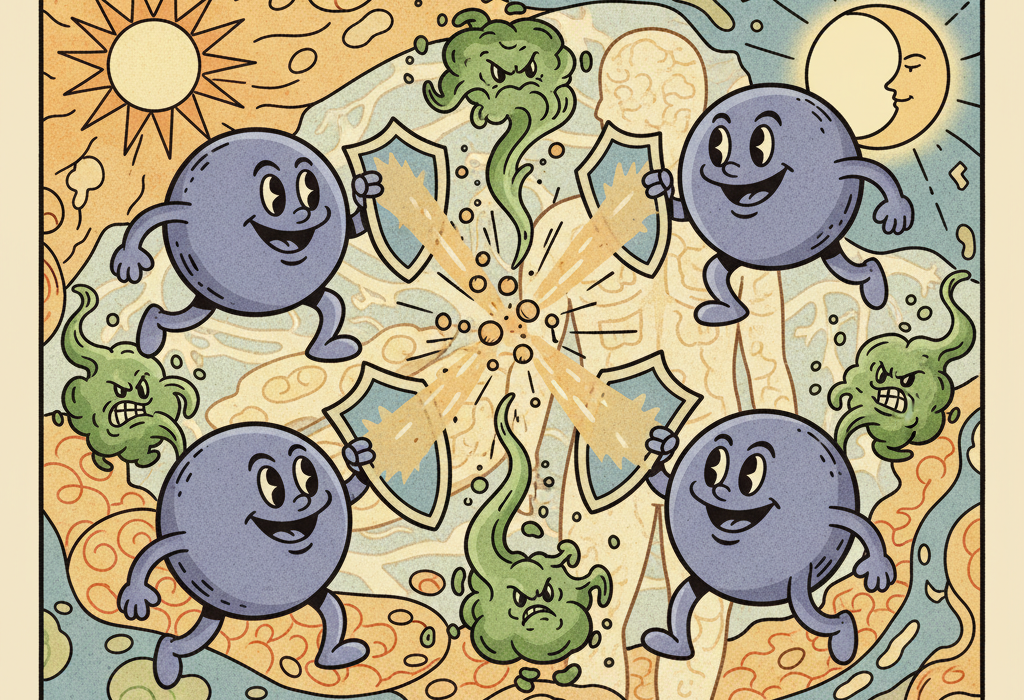
Most people know melatonin as the chemical that tells the body it is time to go to sleep. You might take a supplement to beat jet lag, or your body might release it naturally when the sun goes down. However, scientists have discovered that regulating sleep is only a small part of what melatonin does.
Over the last few decades, researchers have found that melatonin is also a highly effective cell protector. It operates as an antioxidant, defending the body against microscopic damage that occurs during normal daily life, illness, and aging.
But melatonin does not work like the vitamins in your morning glass of orange juice. It uses a unique, self-sacrificing chemical process to neutralize threats, and it appears to protect areas of the body that other antioxidants struggle to reach.
This article explores what the latest research actually shows about how melatonin works as an antioxidant, which parts of the body it protects, and where the science is still uncertain.
Understanding the Core Tension: Sleep Hormone or Cell Protector?
To understand why a sleep hormone is also protecting your cells, we have to look at how the body manages stress at a microscopic level.
Every day, your body produces Free radicals (free RAD-ih-kuhls). These are unstable molecules that bounce around inside your cells. In small amounts, they are normal and even help cells communicate. But in large amounts, they cause Oxidative stress (ox-ih-DAY-tiv stress), which is an imbalance where there are too many free radicals and not enough protection. This stress damages cell walls, proteins, and DNA.
Related: How Cortisol and Antioxidants Control Your Stress Response
An Antioxidant (an-tee-OX-ih-dant) is a molecule that stops this damage by neutralizing the unstable free radicals.
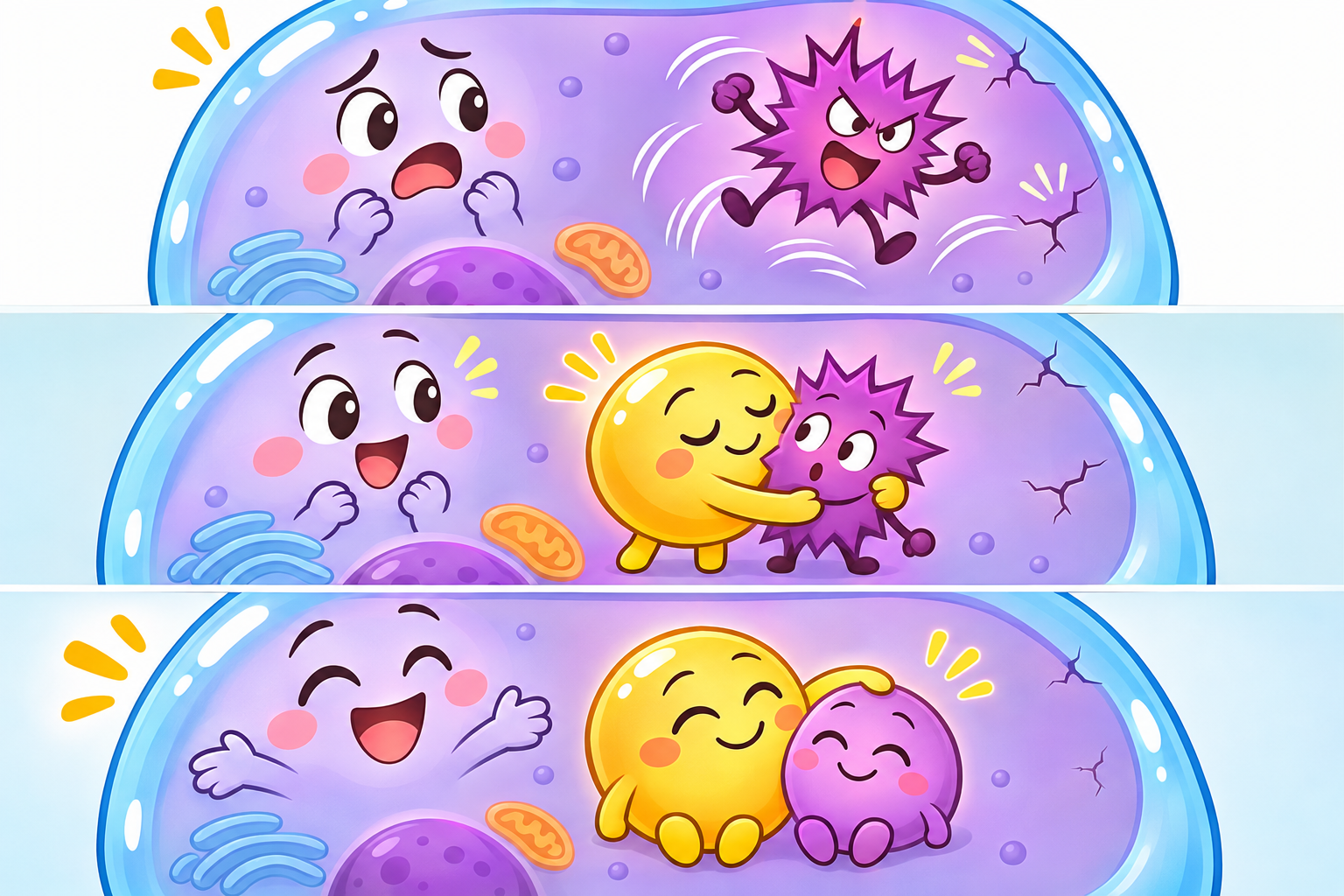
For a long time, scientists believed melatonin was strictly a hormone created by the pineal gland in the brain to manage the body clock. However, research now shows that melatonin is produced in many other places, including the gut, the skin, and the liver. In fact, the gut produces significantly more melatonin than the brain.
Why would the gut need a sleep hormone? It does not. In these areas, melatonin acts locally as a tissue protector and antioxidant.
How This Might Work: The Scavenging Cascade
Melatonin neutralizes free radicals in a very different way than classic dietary antioxidants like vitamin C or vitamin E.
Think of vitamin C like a kitchen sponge. It absorbs a spill (a free radical), and then the body can “squeeze it out” and use it again. In chemistry, this is called redox cycling.
Melatonin is more like a shield that breaks upon impact. It is known as a “suicidal antioxidant.” When melatonin neutralizes a free radical, it changes its chemical shape permanently and cannot go back to being melatonin.
However, melatonin has a unique advantage called the “scavenging cascade.” When the melatonin molecule breaks, the new broken pieces are also antioxidants.
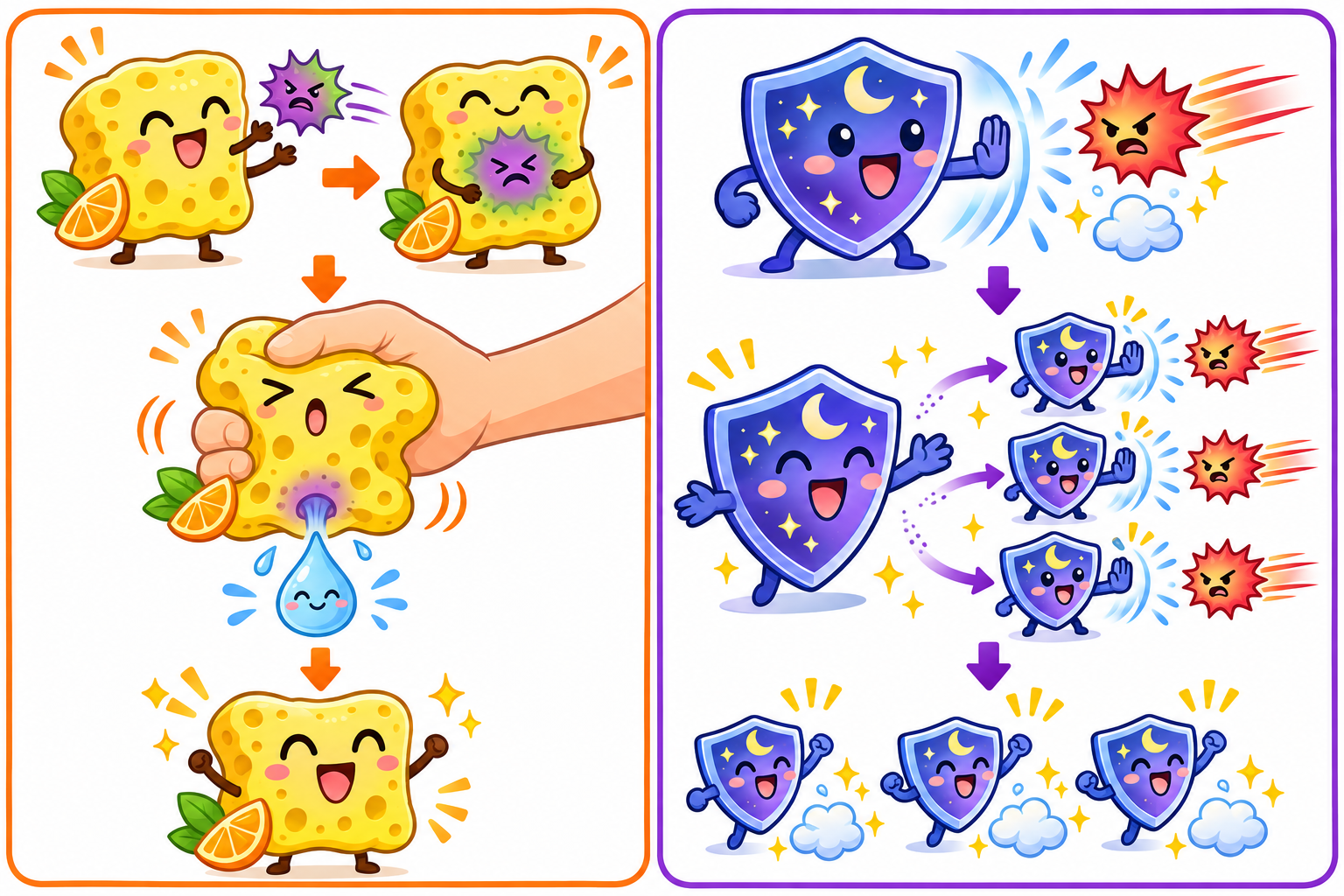
According to a 2014 study in Organic & Biomolecular Chemistry, when melatonin interacts with a free radical, it transforms into a metabolite called cyclic 3-hydroxymelatonin. That new molecule can then neutralize another free radical, transforming into a third molecule called AFMK, which can neutralize yet another free radical.
Because of this cascade, a 2002 review in Current Topics in Medicinal Chemistry notes that a single melatonin molecule can neutralize up to four reactive free radicals. This makes it highly efficient at clearing out cellular waste.
Melatonin vs. Classic Antioxidants
| Feature | Melatonin | Vitamin C & E |
|---|---|---|
| Mechanism | Suicidal (changes shape permanently) | Redox cycling (can be recycled) |
| Efficiency | One molecule neutralizes up to 4 free radicals | One molecule neutralizes 1 free radical |
| Solubility | Both fat-soluble and water-soluble | Vitamin C (water), Vitamin E (fat) |
| Pro-oxidant risk | Does not become toxic at high levels | Can sometimes promote oxidation at very high levels |
Because melatonin is both fat-soluble and water-soluble, it can easily cross cell membranes and enter the Mitochondria (my-toh-KON-dree-uh). These are the energy factories inside our cells. Mitochondria produce a lot of free radicals as a byproduct of making energy, so having an antioxidant that can easily enter the mitochondria is highly beneficial for cell health.
What the Research Shows
Scientists have studied melatonin’s protective effects across many different systems in the body. While much of this research is in the early stages, the patterns are consistent.
Brain Health and Neuroprotection
The brain consumes about 20% of the body’s oxygen. Because of this high energy demand, the brain produces a massive amount of free radicals. If these free radicals are not cleared away, they can contribute to age-related memory loss and cognitive decline.
Melatonin easily crosses the blood-brain barrier, which is a protective filter that keeps many other substances out of the brain. A 2023 review in Cellular and Molecular Neurobiology highlights that melatonin helps protect brain tissue from oxidative damage. In animal models of Alzheimer’s and Parkinson’s diseases, melatonin administration helped prevent the buildup of toxic proteins and reduced the death of brain cells.
By keeping the brain’s internal environment balanced, melatonin acts as a nightly cleanup crew, sweeping away the metabolic waste generated during the day.
Liver and Kidney Protection
The liver and kidneys are the body’s primary filtration systems, meaning they are constantly exposed to toxins and stress.
A 2024 review in Sub-cellular Biochemistry found that melatonin shows promise in managing liver conditions, particularly Non-Alcoholic Fatty Liver Disease (NAFLD). In clinical trials, patients taking melatonin showed improved liver enzyme levels, indicating reduced liver inflammation and stress.
Melatonin also appears to protect the liver from alcohol-induced damage. A 2021 review in Chronobiology International notes that chronic alcohol consumption suppresses the body’s natural melatonin production. Restoring melatonin levels in animal studies helped reduce the severity of alcoholic liver disease by lowering inflammation and preventing fat buildup in liver cells.
In the kidneys, melatonin has been studied alongside harsh medications. For example, cisplatin is a chemotherapy drug that is highly effective against cancer but can cause severe kidney damage. A 2001 study in the Journal of Pineal Research demonstrated that when rats were given melatonin alongside cisplatin, the melatonin significantly prevented kidney tissue damage and preserved kidney function by neutralizing the specific free radicals generated by the drug.
Surgical Recovery and Hospital Use
Because surgery causes significant physical stress and inflammation, researchers have tested melatonin as a tool for hospital patients.
A 2011 review in Anaesthesia and Intensive Care summarized several perioperative (around the time of surgery) uses for melatonin.
- Pre-surgery anxiety: Melatonin given before surgery helped reduce anxiety without the lingering grogginess associated with traditional sedatives.
- Emergence delirium: In children waking up from general anesthesia, melatonin significantly reduced cases of emergence delirium (waking up confused, thrashing, or crying).
- Ischemia and Reperfusion: Ischemia (iss-KEE-mee-uh) happens when blood flow to an organ is temporarily cut off during surgery. When blood flow returns (reperfusion), it causes a sudden spike in free radicals. Animal studies show that melatonin given before this process helps protect the spinal cord, heart, and kidneys from this sudden wave of oxidative stress.
Common Misunderstandings: Melatonin in Our Diet
A common myth is that melatonin is only found in the human brain or in synthetic supplement pills. In reality, melatonin is a very old molecule found in almost all living things, including plants.
Plants do not sleep, but they do experience stress from harsh sunlight, drought, cold weather, and salty soil. To survive, plants produce melatonin to protect their own cells from damage.
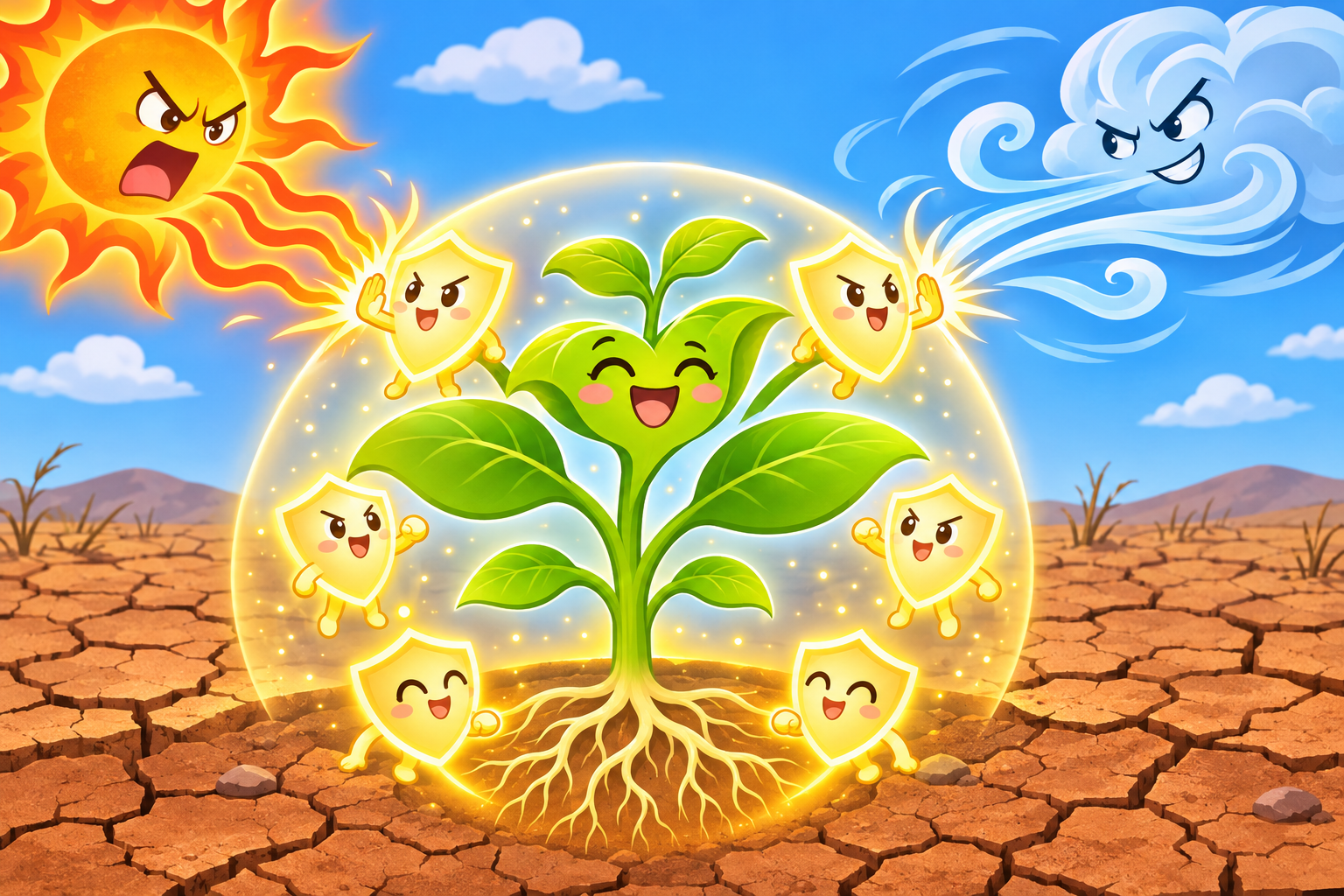
A 2020 study in Plant, Cell & Environment explained that when plants are exposed to high salt stress, they increase their melatonin production to protect their root cells. Similarly, a 2022 review in Comprehensive Reviews in Food Science and Food Safety found that applying melatonin to harvested fruits (like peaches and tomatoes) prevents them from rotting quickly by boosting the fruit’s own antioxidant defenses.
Because plants produce melatonin, it is naturally present in our diet. It can be found in tomatoes, strawberries, walnuts, and tart cherries. It is also a natural byproduct of fermentation. A 2023 review in the Journal of the Science of Food and Agriculture noted that the yeast used to ferment beer and wine produces melatonin. While the amounts in food and drink are much smaller than in a supplement pill, they still contribute to the body’s overall antioxidant defense system.
Related: Does Taking Antioxidants Actually Help You Live Longer?
Who Benefits Or Needs Caution
While melatonin is generally considered safe, its effects can vary based on individual health profiles.
Who might benefit most:
- Older Adults: Natural melatonin production drops significantly as we age. This drop is associated with poorer sleep and a weaker defense against oxidative stress.
- Shift Workers: People who work at night and sleep during the day often have disrupted circadian rhythms, which suppresses natural melatonin production.
Who should be careful:
- People with Autoimmune Conditions: Because melatonin can stimulate certain parts of the immune system, there are theoretical concerns it could worsen autoimmune conditions. For example, the 2024 review in Sub-cellular Biochemistry noted a few rare case reports where melatonin use was linked to flare-ups in Autoimmune Hepatitis (AIH).
- General Toxicity Warnings: A 2025 review in Chemico-Biological Interactions highlighted that while melatonin is highly beneficial, taking very large, unregulated doses for long periods requires more safety testing, especially regarding how it interacts with other daily medications.
Common Questions About Melatonin as an Antioxidant
Does taking melatonin stop my body from making its own?
Current research shows that taking oral melatonin supplements does not cause your pineal gland to stop producing its own melatonin. The body does not seem to have a negative feedback loop for melatonin like it does for testosterone or cortisol.
Can I get enough melatonin just from eating fruits and nuts?
The amount of melatonin in food is measured in picograms or nanograms (billionths of a gram). While a healthy diet provides a steady, low level of dietary melatonin that supports general health, it is not enough to mimic the clinical doses (1 to 10 milligrams) used in medical studies for treating specific diseases.
Related: How Your Circadian Rhythm Controls Sleep (And What Science Says About Fixing It)
Where The Science Is Still Uncertain
While the chemical ability of melatonin to neutralize free radicals is well-proven in laboratories and animal models, translating this to human medicine is still a work in progress.
First, scientists are still trying to determine the optimal dose for antioxidant protection. The dose required to help you fall asleep (often 1 to 3 milligrams) might be very different from the dose required to protect the liver from medication toxicity.
Second, because melatonin cannot be patented like a new pharmaceutical drug, there is less financial incentive for large drug companies to fund massive, expensive human clinical trials. Therefore, much of our best data still comes from cell cultures and animal models.
The Bottom Line
Melatonin is much more than a sleep aid. It is one of the oldest and most efficient antioxidants in nature.
- What we know: Melatonin neutralizes free radicals through a unique “scavenging cascade,” allowing a single molecule to clear out multiple threats. It protects the brain, liver, and kidneys from oxidative stress in laboratory settings, and it is naturally found in both humans and plants.
- What remains uncertain: We do not yet know the exact oral doses required to treat specific inflammatory or oxidative diseases in humans, and more large-scale clinical trials are needed.
- Confidence level: The scientific consensus is very high regarding melatonin’s chemical ability to act as an antioxidant. The confidence in using it as a primary medical treatment for organ disease remains moderate until more human trials are completed.
Quick Reference: Key Studies
| Study Focus | Key Finding | Source |
|---|---|---|
| Chemical Properties | Melatonin acts as a suicidal antioxidant, using a cascade effect to neutralize up to four free radicals per molecule. | PMID 11899100 |
| Theoretical Mechanisms | Melatonin is a potent electron donor, placing it in the same protective category as Vitamin E, but without pro-oxidant risks. | PMID 25164170 |
| Surgical & Hospital Use | Melatonin reduces pre-surgery anxiety, lowers emergence delirium in children, and protects tissues from restricted blood flow. | PMID 21485664 |
| Liver & Pancreas | Melatonin shows potential in managing fatty liver disease and protecting the liver from toxic stress, but caution is needed for autoimmune hepatitis. | PMID 39693027 |
| Kidney Protection | Melatonin administered alongside cisplatin (a chemotherapy drug) prevented severe kidney tissue damage in animal models. | PMID 11316323 |
| Plant & Food Sources | Melatonin is naturally produced by plants and yeast to survive environmental stress, meaning it is naturally present in our diets. | PMID 36004527 |
Last updated: November 2026
This article synthesizes findings from peer-reviewed research. It is for educational purposes only and does not constitute medical advice. Consult a healthcare provider before starting any new regimen.
Leave a Reply